
Your cart is empty Continue Shopping
Experience Scotland food: Highland flavors & culinary traditions
Scotland’s food gets dismissed too quickly. Most travelers picture haggis on a plate and move on, never realizing that the Scottish Highlands region holds one of the most quietly extraordinary food cultures in Europe. What looks simple on the surface is actually the result of centuries of ingenuity, survival, and fierce pride in local ingredients. This guide walks you through the authentic dishes, the traditions behind them, and the modern chefs who are reimagining Highland flavors for a new generation of food lovers.
Table of Contents
- What makes Highland cuisine unique?
- Classic dishes of Scotland: From haggis to cranachan
- Tradition vs. innovation: The new Scottish kitchen
- How to explore Scotland’s food culture as a traveler
- Why Highland food reveals Scotland’s true spirit
- Ready to savor Scotland? Start your Highland culinary adventure
- Frequently asked questions
Key Takeaways
| Point | Details |
|---|---|
| Unique Highland flavors | Highland foods are defined by preservation, native ingredients, and resilient recipes. |
| Classic dishes to try | Signature Scottish plates like haggis, Cullen skink, and cranachan are culinary highlights for visitors. |
| Tradition meets innovation | Modern chefs reimagine Scottish cuisine but honoring local roots is essential for authentic flavors. |
| Experience by exploring | Travelers can discover real Highland food culture through tours, markets, and engaging with locals. |
What makes Highland cuisine unique?
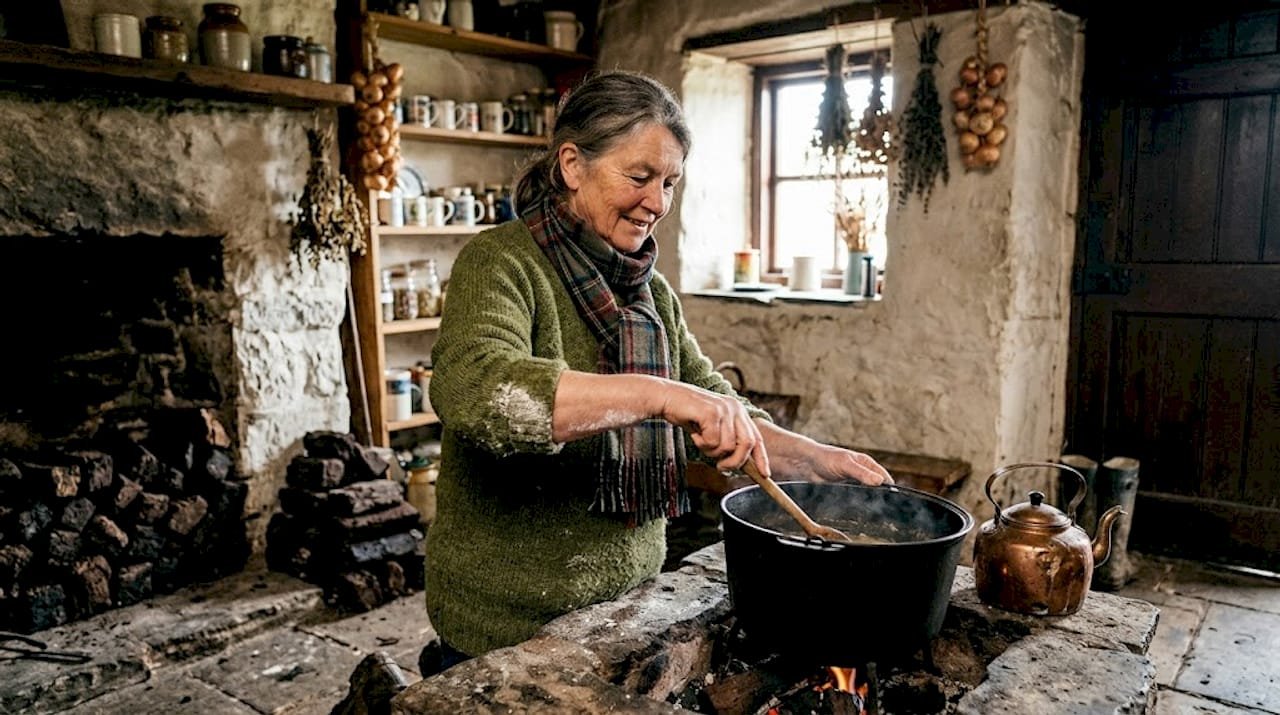
The Highlands are not exactly generous terrain. Long winters, short growing seasons, and miles of rugged, wind-swept land created a food culture built on one central principle: use everything, waste nothing. That mindset shaped every dish, every cooking method, and every ingredient choice you’ll encounter when eating your way through northern Scotland.
Preservation techniques like smoking, salting, and fermenting became essential tools for Highland communities, turning seasonal catches and harvests into year-round sustenance. A haddock smoked over a hardwood fire wasn’t a gourmet flourish; it was a practical solution to a cold, uncertain winter. That same practicality runs through every classic dish you’ll find today.
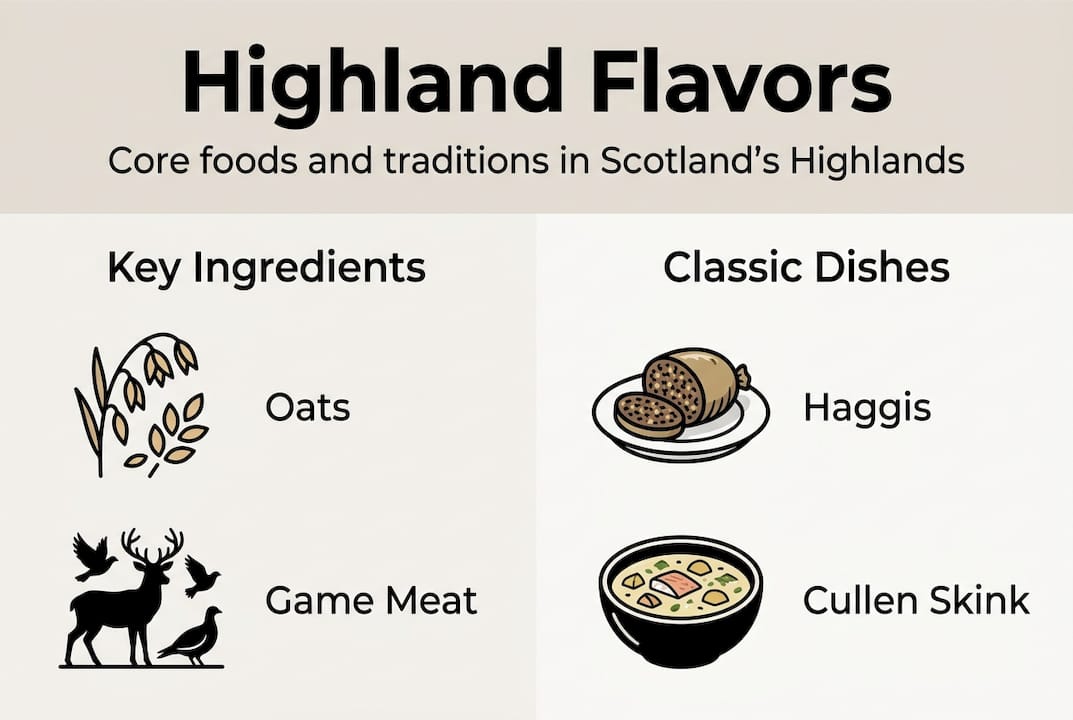
The core pantry of Highland cooking reflects what the land and sea offered:
- Oats: Hardy enough to grow in poor soil, used in everything from porridge to haggis
- Game: Venison, grouse, and rabbit from open moorlands
- Seafood: Herring, haddock, salmon, and shellfish from coastal waters
- Root vegetables: Turnips, potatoes, and carrots that store well through winter
- Dairy: Butter, cream, and crowdie (a soft fresh cheese) from Highland cattle farms
According to Scottish agricultural data, agriculture covers roughly 65% of Scotland’s land area, with sheep numbering 6.54 million and cattle at 1.65 million. That scale tells you just how deeply animal farming is woven into the landscape and the cuisine.
“The best Highland food tastes like the place it came from. You’re not just eating a dish; you’re tasting a geography.”
What makes this cuisine fascinating for travelers is that simplicity doesn’t mean dull. A bowl of Scotch broth made with lamb neck, pearl barley, and root vegetables slow-simmered for two hours is one of the most deeply satisfying meals you can eat anywhere. Minimalism, when done with quality ingredients, becomes its own form of luxury.
Classic dishes of Scotland: From haggis to cranachan
Every food culture has its signature dishes, and Scotland’s are more varied and interesting than most people expect. Before you visit, knowing what to order and why makes the whole experience richer.
Here’s a quick reference for the dishes you’ll encounter most often:
| Dish | Main ingredients | Flavor profile |
|---|---|---|
| Haggis | Sheep offal, oatmeal, spices | Savory, earthy, rich |
| Cullen skink | Smoked haddock, potatoes, onion, milk | Smoky, creamy, comforting |
| Scotch broth | Lamb, barley, root vegetables | Hearty, warming, mild |
| Clapshot | Mashed turnip, potato, butter, chives | Buttery, slightly sweet |
| Arbroath smokies | Whole smoked haddock over hardwood | Intensely smoky, flaky |
| Cranachan | Whipped cream, whisky, oats, raspberries | Sweet, boozy, textured |
These classic Scottish dishes each have their own story. Haggis is simmered for 3 to 4 hours, giving the oatmeal time to absorb all the rich, spiced fat from the offal. Cullen skink, named after the fishing village of Cullen in Moray, uses an infused milk method where potatoes and onions steep in smoky liquid before blending. Cranachan uses whisky not as a gimmick but as a genuine flavor anchor for the raspberries and cream.
Here’s a suggested order for tasting your way through the Highlands:
- Start with Cullen skink as a warming lunch soup
- Follow with haggis, neeps and tatties (turnip and potatoes) for a classic dinner
- Try Arbroath smokies at a coastal market for the freshest experience
- Order Scotch broth at a local inn on a cold afternoon
- Finish any meal with cranachan for dessert
For a deeper look at how these flavors show up in a specific location, the Isle of Skye traditional food scene is one of the best places to experience them all in one trip.
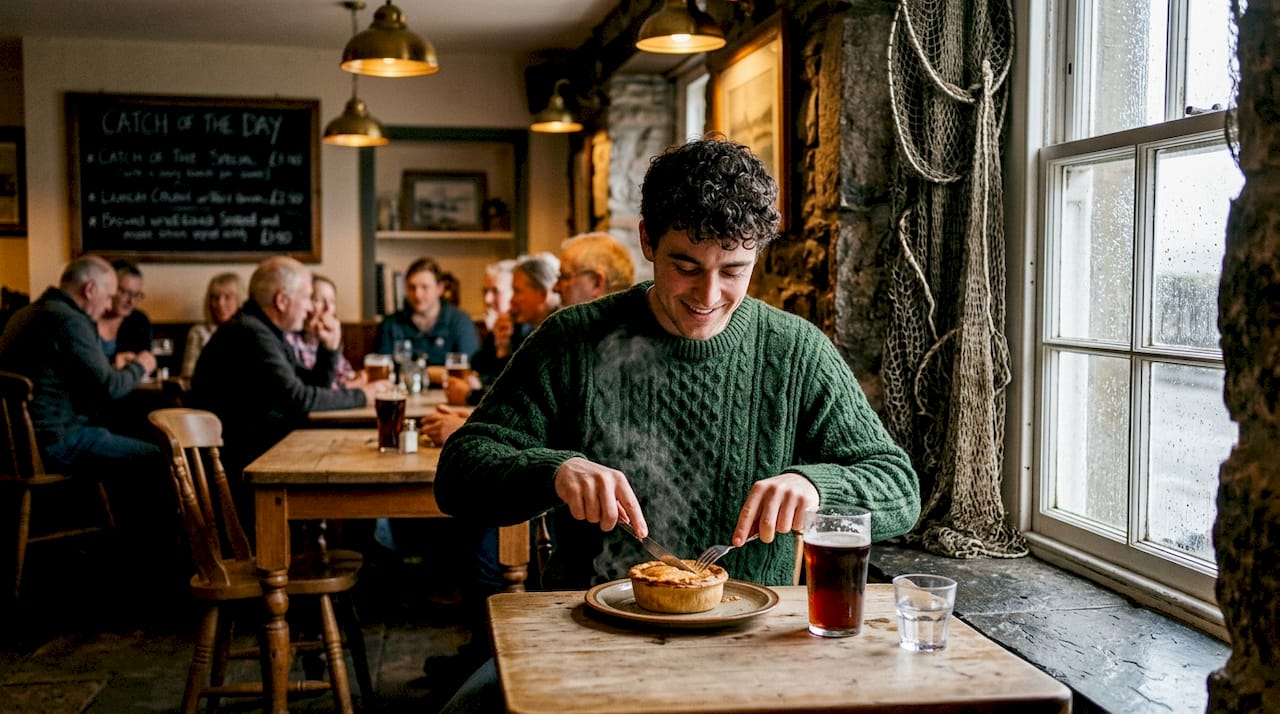
Pro Tip: Skip the tourist-trap restaurants near major castle sites. Ask your accommodation host where locals eat lunch on weekdays. That’s almost always where you’ll find the most honest, ingredient-driven versions of these dishes.
Tradition vs. innovation: The new Scottish kitchen
Something interesting is happening in Scottish restaurants right now. Chefs who trained in Paris, Copenhagen, and Tokyo are coming home to the Highlands and finding that the pantry they grew up with is world-class raw material. The result is a culinary scene pulling in two directions at once.
| Approach | Philosophy | Example |
|---|---|---|
| Traditional | Zero-waste, resilience-driven, hyper-local | Classic haggis with neeps and tatties at a village inn |
| Modern | Deconstructed, technique-forward, fine dining | Haggis bon bons with whisky foam at a Michelin spot |
The debate between traditional and modern Scottish cooking is genuinely contested. Restaurants like the Three Chimneys on Skye have earned Michelin recognition by treating local ingredients as fine dining centerpieces. Critics, however, point out that “excellence” framed around luxury pricing can quietly push out the everyday food culture that made Highland cuisine worth celebrating in the first place.
Scotland’s food and drink sector generated a GVA (gross value added) of £7.0 billion in 2023, with total sector turnover reaching £18.9 billion. That’s not a cottage industry. It’s an economy, and the pressure to grow it internationally creates genuine tension with keeping food culture rooted and authentic.
Where to experience the full range:
- Village pubs and inns: The most reliable spot for unpretentious, well-executed traditional dishes
- Farm shops and delis: Direct access to smoked fish, oatcakes, and artisan cheeses
- Michelin-recognized restaurants: Worth visiting once for the craft, but don’t let them define your whole experience
- Food festivals: Events like the Skye Food and Drink Festival put both traditions side by side
Booking Highland culinary tours lets you access all of these layers in a single, guided experience without spending hours researching where to go.
How to explore Scotland’s food culture as a traveler
Knowing that the food is extraordinary is one thing. Actually finding it requires a bit of strategy, especially when you’re working with limited time in the Highlands.
Here’s a step-by-step approach that works well for most travelers:
- Start at a local market: Farmers’ markets in Inverness, Fort William, and Portree carry seasonal produce, smoked fish, and artisan products you won’t find in supermarkets
- Visit a working farm or croft: Many Highland farms welcome visitors and offer direct sales of lamb, beef, and dairy; this connects food to landscape in a way no restaurant can replicate
- Book a whisky distillery tour: Whisky and food pairings are taken seriously here; most distilleries offer food experiences alongside tastings
- Eat at a local inn for at least one dinner: Avoid chain hotels for this meal; ask for something seasonal and off-menu if possible
- Join a guided food tour: A knowledgeable local guide opens doors and conversations that independent travelers rarely find
Scotland’s agricultural footprint of 5.03 million hectares, combined with 30,400 hectares of potato cultivation (the highest since 2011) and 473,700 hectares of cereals, means the raw ingredients are everywhere. You don’t have to look hard; you just have to know where to look.
For full-day itineraries that weave food into scenery, the Top of the Highlands tour covers dramatic northern landscapes where fishing villages and farm communities still practice traditional food ways. If whisky is a priority, the North Whisky Tour takes you through distillery country with expert context for every dram.
Pro Tip: Late summer and early autumn are the best seasons for Scottish food travel. Wild raspberries, freshly harvested oats, and the start of game season align perfectly from August through October.
Why Highland food reveals Scotland’s true spirit
Here’s something most food guides won’t tell you: Highland cuisine was never meant to impress anyone. It was built to keep people alive through brutal winters. That origin story matters because it explains why authenticity feels so different here compared to, say, French or Italian food culture, where cuisine evolved partly as an art form.
Scottish food evolved from survival to resilience, and modern evolution risks losing that local focus amid global trends. The simplicity of a bowl of porridge or a plate of smoked haddock isn’t poverty on a plate. It’s centuries of people figuring out how to eat brilliantly with what they had.
When modern chefs deconstruct haggis into elegant restaurant presentations, the craft is real and often impressive. But the risk is that visitors leave thinking they’ve understood Scottish food when they’ve only seen its most polished, expensive version. The soul of this cuisine lives in a fisherman’s kitchen in Ullapool, a crofter’s kitchen on the Isle of Lewis, and a roadside butcher shop in Dingwall.
Our view at Skye Highlands Tours is that food is a portal, not just a pleasure. When you eat something made from the same land you’re standing on, surrounded by the same landscape that shaped it, the experience becomes genuinely irreplaceable. Seek out both the Michelin-starred versions and the unassuming ones. The contrast will teach you more about Scotland than any museum.
Ready to savor Scotland? Start your Highland culinary adventure
If reading about smoky haddock, slow-cooked lamb broth, and whisky-laced desserts has made you hungry for the real thing, you’re ready to plan a proper Highland food experience.

Skye Highlands Tours connects you with expert local guides who know exactly where to eat, what to order, and which producers are worth visiting. Whether you’re drawn to Scottish Highlands experiences that combine scenery with food culture or you want to focus on whisky tour options that pair beautifully with Highland cuisine, we have itineraries built around genuine, memorable meals. Browse our more Highland tour ideas and find the experience that fits your pace, your appetite, and your curiosity.
Frequently asked questions
What are the must-try foods in Scotland’s Highlands?
Haggis, Cullen skink, Scotch broth, clapshot, Arbroath smokies, and cranachan are the classic Highland dishes that should be on every food traveler’s list.
How is Scottish food different from English or Irish cuisine?
Scottish food relies more heavily on smoked fish and game preserved through necessity, with oats playing a central role that wheat never does in English or Irish cooking.
Is Scottish cuisine good for vegetarians?
Historically meat-forward, Scottish food now includes solid vegetarian options, and dishes like clapshot with butter and chives are both traditional and entirely plant-based.
Where can travelers experience traditional Highland food?
Local inns, village farmers’ markets, and dedicated culinary food tours across the Highlands offer the most authentic access to regional Scottish cooking.
What role does whisky play in Scottish food culture?
Whisky functions as both a table pairing and a cooking ingredient, especially in modern fine dining where chefs integrate it into sauces, cures, and desserts like cranachan.
5 Comments