Your cart is empty Continue Shopping

See the Northern Lights in Scotland: Your 2026 Guide
Most travelers assume chasing the Northern Lights means booking a flight to Iceland or Norway. Scotland barely enters the conversation. But that assumption is costing aurora hunters one of the most dramatic backdrops on Earth, and during the current solar maximum, the Scottish Highlands and Isle of Skye are delivering displays that rival anything seen in Scandinavia. This guide gives you everything you need: the science behind visibility, the best locations from Skye to the North Coast 500, the ideal timing windows, and exactly how private guided tours can turn an uncertain night into an unforgettable memory.
Table of Contents
- Understanding aurora visibility in Scotland
- The best places to see the Northern Lights in the Highlands and Skye
- When to go: Timing your trip for maximum aurora success
- Essential tips for private guided aurora experiences
- Our take: What most aurora guides don’t tell you about Scotland
- Plan your Northern Lights adventure in Scotland
- Frequently asked questions
Key Takeaways
| Point | Details |
|---|---|
| Kp index is crucial | Watch for a Kp index of 4 or higher in the Highlands for optimal aurora chances. |
| Best sites are east and elevated | Seek out east-coast or elevated locations like Quiraing or Old Man of Storr to avoid clouds. |
| Peak season is September to March | Plan your trip during the autumn or spring equinox—late September to March—for the highest odds. |
| Guides and flexibility boost success | A private guide and a flexible itinerary significantly improve your chances of witnessing the aurora. |
| Cloud cover is the main challenge | Even in solar maximum years, weather can thwart most attempts—so prepare for unpredictability. |
Understanding aurora visibility in Scotland
Scotland sits at a higher latitude than most people realize. Edinburgh is roughly the same latitude as parts of Scandinavia, and the far north of Scotland, including Shetland, Orkney, Caithness, and Sutherland, genuinely rivals southern Norway for aurora frequency. But knowing that Scotland can produce stunning displays is different from understanding when and why it does.
The key measurement is the Kp index, a number on a scale from 0 to 9 that measures global geomagnetic activity. Higher numbers mean stronger storms and wider aurora visibility. Here’s the practical breakdown for Scotland:
- Kp 3 to 4: Visible in Shetland, Orkney, Caithness, and Sutherland on dark, clear nights
- Kp 4 to 5: Reaches the Highlands, Inverness area, and the Isle of Skye
- Kp 5 and above: Pushes visibility further south into central and lowland Scotland
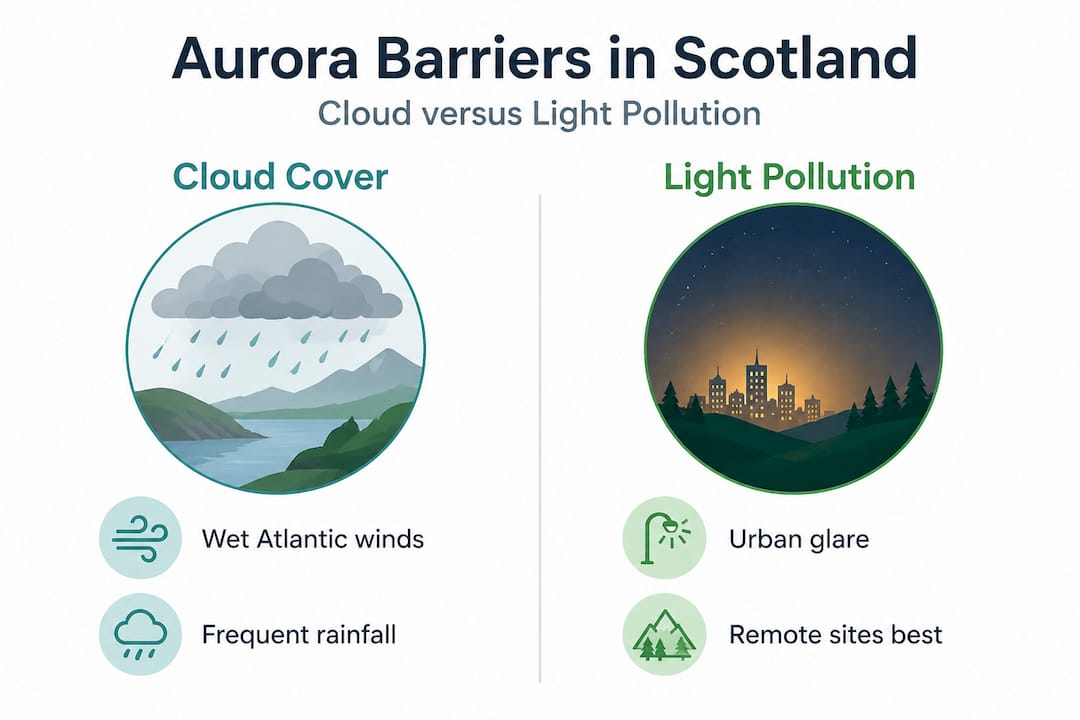
According to detailed visibility thresholds for Scotland, cloud cover and light pollution are the two biggest obstacles to a successful sighting. The Bortle scale measures light pollution on a scale of 1 (darkest) to 9 (most polluted). For aurora watching, you want Bortle 4 or below, which rules out most towns and city fringes. Remote Highland glens, the Cairngorms, and the quiet moorlands of the far north sit comfortably in the Bortle 1 to 3 range.
The other enemy is cloud. Scotland’s west coast receives some of the highest rainfall in Europe, which translates to persistent cloud cover that can blank out an active aurora display entirely. The east Highlands sit in a rain shadow that makes them statistically clearer, a fact that becomes genuinely important when you’re choosing your vantage point.
Why does 2026 matter so much? We are currently near the peak of Solar Cycle 25, which means the sun is producing significantly more coronal mass ejections (CMEs) than usual. CMEs are bursts of solar plasma that hit Earth’s magnetic field and trigger aurora activity. The optimal aurora season runs from late September through March, with a clear spike around the equinoxes in September to October and February to March, because Earth’s magnetic field geometry aligns favorably with solar wind during those periods. Best viewing hours are between 8pm and 2am local time.
There’s also a wealth of activities on the Isle of Skye that pair perfectly with aurora evenings, meaning a failed first night doesn’t waste your trip.
The best places to see the Northern Lights in the Highlands and Skye
Location scouting is where many first-time aurora hunters go wrong. They pick the most Instagrammed spot on the map and show up without accounting for cloud patterns, access difficulty, or light contamination from nearby settlements. Smart aurora hunting requires thinking like a local.
Based on terrain, cloud exposure, and darkness ratings, here is a comparison of the top aurora viewing locations across the Highlands and Skye:
| Location | Region | Cloud risk | Light pollution | Accessibility |
|---|---|---|---|---|
| Neist Point Lighthouse | Isle of Skye (west) | High (west coast) | Very low | Moderate walk |
| Old Man of Storr | Isle of Skye (east) | Moderate | Very low | Moderate hike |
| Quiraing | Isle of Skye (northeast) | Moderate | Very low | Easy to moderate |
| Kilt Rock and Loch Mealt | Isle of Skye (east) | Moderate | Very low | Very easy |
| Cairngorms National Park | Central Highlands | Low to moderate | Low | Variable |
| Caithness and Sutherland coastline | Far north | Low to moderate | Extremely low | Variable |
| North Coast 500 route | Northern Highlands | Low to moderate | Very low | Excellent roads |
The east coast of Skye, particularly around Old Man of Storr, Kilt Rock, and the Quiraing, consistently outperforms Neist Point for clear sky probability because it sits in the rain shadow of the island’s central mountains. You still get dramatic foreground scenery with sea cliffs and basalt columns, but the cloud frequency is genuinely lower.
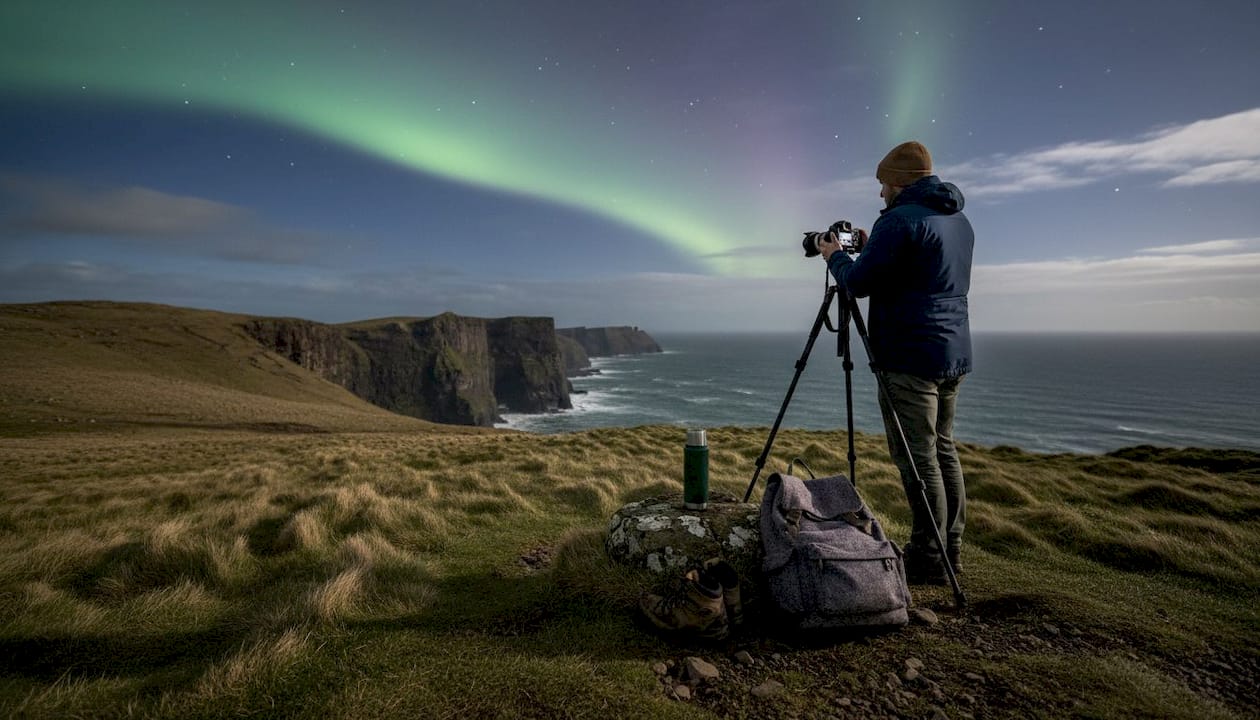
For those willing to travel further north, the Northern Highlands along the North Coast 500 offer some of Scotland’s most remote and darkest skies. Think empty moorlands, sea lochs, and no towns for miles. Caithness and Sutherland sit at latitudes where a Kp 3 storm can produce a visible display without needing a full geomagnetic event.
The Cairngorms National Park is often overlooked for aurora hunting, but it combines the rain shadow effect of the eastern Highlands with genuine altitude, which puts you above low-lying valley cloud on clear nights. Locations like Loch Morlich or the Ryvoan Pass give you open sky views to the north with minimal light pollution.
A full guide to the Scottish Highlands will show you just how varied the terrain is, and why no two aurora nights feel the same here.
There’s also a range of day-time things to do on Skye that make an aurora-focused trip feel full even when the clouds roll in.
Pro Tip: Always prioritize an east-facing or elevated vantage point when cloud is uncertain. The west coast produces the most dramatic aurora imagery, but it also sees the most failed attempts. Seasoned guides will often reroute to the east at short notice when forecast models show incoming cloud from the Atlantic.
When to go: Timing your trip for maximum aurora success
Perfect timing stacks multiple favorable conditions simultaneously: dark nights, clear skies, and elevated geomagnetic activity. Getting all three to align is genuinely satisfying when it happens.
Here is a seasonal breakdown of aurora probability across Scotland:
| Month | Darkness hours | Cloud risk | Geomagnetic activity | Overall rating |
|---|---|---|---|---|
| September | Moderate | Moderate | High (equinox peak) | Excellent |
| October | Good | Moderate | Good | Very good |
| November | Very good | Higher | Moderate | Good |
| December | Excellent | High | Moderate | Good |
| January | Excellent | High | Moderate | Good |
| February | Good | Moderate | High (equinox peak) | Excellent |
| March | Moderate | Low to moderate | High | Very good |
The equinox effect is real and measurable. Geomagnetic storm frequency statistically increases around equinoxes due to the Russell-McPherron effect, a phenomenon where Earth’s magnetic field orientation allows solar wind to couple more efficiently. September to October and February to March are consistently the sweet spots for Scotland.
Here’s a step-by-step approach to planning your viewing nights:
- Book your trip during an equinox window. Target the two weeks either side of September 22 or March 20.
- Check the lunar calendar. A full moon washes out faint aurora displays. New moon periods produce the best contrast.
- Monitor the 27-day solar cycle. Active regions on the sun rotate back into Earth-facing position roughly every 27 days. If a storm occurred 27 days earlier, watch that date carefully.
- Use short-range forecasts. The European Space Agency and NOAA issue 1 to 3 day Kp forecasts. For Scotland-visible aurora, you want Kp 4 or above.
- Watch the cloud forecast closely. Clear Sky Chart and Met Office Scotland regional forecasts are your best tools within 48 hours.
- Be ready to move. A 60-mile drive east can be the difference between a clouded sky and a dancing aurora.
The 2025 to 2026 solar maximum is already delivering. During a G5 geomagnetic storm in May 2024, the aurora was visible across all of the UK, including southern England, and April 2026 has already produced multiple confirmed sightings across the Highlands. Shetland, during active periods, is now seeing aurora frequency comparable to locations in southern Norway. This is genuinely an exceptional window for aurora tourism in Scotland.
The process of planning a Highlands trip is easier than most people expect, and building in aurora-hunting nights alongside daytime Highland exploration makes for an incredibly well-rounded itinerary.
Pro Tip: Check your cloud forecast within 6 hours of going out. Scotland’s weather moves fast, and a sky that looked hopeless at 6pm can clear completely by 10pm, especially on the east side of Skye and across the Cairngorms.
Essential tips for private guided aurora experiences
A knowledgeable guide doesn’t just drive you somewhere dark and point north. The best guides are actively monitoring aurora apps, reading weather models, and adjusting your itinerary in real time based on what the sky is doing.
Here’s what practical preparation looks like for a serious aurora night in Scotland:
- Download the right apps before you arrive. AuroraWatchUK provides real-time magnetometer alerts from sensors placed across the UK. AuroraMe gives a clean visual interface with cloud overlay. Both are recommended by aurora experts for real-time Kp, cloud, and moon phase monitoring.
- Layer your clothing generously. Standing still in a Highland winter at midnight is brutal. Thermal base layer, mid-layer fleece, waterproof outer shell, warm hat, gloves, and waterproof boots are not optional. The wind chill on open moorland or exposed coastal headlands drops the effective temperature significantly.
- Bring a red-light torch. White light destroys your night vision instantly. Red light preserves it. Your eyes need 20 to 30 minutes to fully dark-adapt, and a white phone screen can set you back to zero.
- Set up your camera correctly before it gets dark. For aurora photography, a wide-angle lens (14mm to 24mm) mounted on a stable tripod is the standard setup. Shoot in RAW format with ISO settings between 800 and 3200 and exposures of 5 to 15 seconds depending on aurora movement.
- Leave the telescope at home. The aurora is a naked-eye and wide-angle phenomenon. Binoculars or telescopes are not useful and actually make the experience worse.
- Build in multiple nights. No reputable guide will promise a sighting on a single night. Two to three nights increases your odds dramatically, and your guide can help select the best candidate nights based on forecast windows.
“We always tell our guests the same thing: we’re chasing something wild. The aurora doesn’t perform on schedule. But Scotland during solar maximum genuinely surprises people who thought they’d need to go to Norway. When the sky opens and the green starts moving, the wait feels very short.” — Aurora guide, Scottish Highlands
Guided Northern Lights tours through the Highlands are specifically designed to maximize flexibility, giving you the ability to shift between locations and nights based on real conditions rather than a fixed itinerary.
Our take: What most aurora guides don’t tell you about Scotland
Here’s something we’ve learned after years of running aurora experiences in the Highlands: the people who see the most auroras are the ones who let go of the checklist mentality.
Every guide will tell you to go to Neist Point. It photographs beautifully. The lighthouse framing, the sea cliffs, the sheer drama of the location are undeniable. But Neist Point sits on the western tip of Skye, directly exposed to Atlantic weather systems. Cloud thwarts roughly 70 percent of aurora attempts on the west coast, and Neist Point sees some of the worst cloud frequency of any popular aurora location in Scotland. The shots you see on Instagram represent the rare night when everything aligned. What you don’t see are the six previous visits where guests waited in fog.
Our real recommendation: build your base on the east side of Skye or in the eastern Highlands, and treat west-coast locations like Neist Point as a bonus. When the forecast genuinely looks clear from the west, go. When it doesn’t, don’t sacrifice a whole night for an icon.
The 2026 solar maximum genuinely shifts the odds in Scotland’s favor compared to an average year. But cloud cover doesn’t care about solar cycles. An experienced local guide who knows when to hold firm on a location and when to reroute based on a 30-minute forecast update is worth more than any app. Real flexibility means having a guide who knows five different dark-sky spots within driving range and can make a call at 9pm to head east instead.
The uncomfortable truth about aurora tourism anywhere in the world is that most trips don’t succeed on the first night. The travelers who build in multiple evenings, embrace the uncertainty, and use the cloudy nights for Skye travel experiences come away with the best memories, whether or not they scored a G5 display. The nights when it finally happens feel extraordinary precisely because the chase was real.
Plan your Northern Lights adventure in Scotland
If you’re seriously considering chasing the aurora in Scotland, now is genuinely the best window in over a decade.

Skye Highlands Tours offers fully private, expertly guided aurora experiences across the Scottish Highlands, tailored to your dates, your group size, and your flexibility. Our guides actively monitor real-time aurora forecasts and adjust routes to maximize your odds on every outing. You also get the full Highland experience alongside the aurora hunt, from ancient castles to dramatic sea cliffs by day. Browse our private guided tours to see what’s possible, or visit us at Skye Highlands Tours to start planning your itinerary for this solar maximum season.
Frequently asked questions
Can I see the Northern Lights in Scotland every year?
Yes, Scotland sees the aurora multiple times per season, especially during solar maximum years like 2026, but sightings depend on conditions and are never fully guaranteed.
What is the best time of year to see the aurora in Scotland?
Late September to March offers the best conditions, with the highest aurora probability occurring during the equinox periods in September to October and February to March, between 8pm and 2am.
What equipment do I need for Northern Lights photography in Scotland?
A wide-angle lens and a sturdy tripod are essential for aurora photography; layer warmly for conditions because cold, wet Highland nights can make even short exposures uncomfortable without proper gear.
Do I need a guide to see the Northern Lights in Scotland?
A guide isn’t required, but local guides provide real-time forecasting knowledge, safe navigation in remote terrain, and the flexibility to relocate quickly when cloud patterns shift.
How likely am I to see the aurora on Skye?
Skye offers spectacular backdrops, but cloud thwarts about 70 percent of attempts, particularly on the west coast; building in multiple nights and staying flexible significantly improves your overall odds.
1 Comment