
Your cart is empty Continue Shopping
Why family tours matter: benefits for every age
Family tours are defined as organised, guided travel experiences designed to bring families together through shared discovery, structured learning, and memorable moments. Research published in 2026 confirms that family travel promotes childhood development through a three-phase learning process involving anticipation, immersive experience, and reflection. The University of Pittsburgh Mind-Body Center has also confirmed that travel reduces stress hormones and lifts mood well before a trip even begins. Understanding why family tours matter goes beyond booking a holiday. It means choosing an experience that actively shapes your children, strengthens your relationships, and creates stories your family will tell for decades.
Why family tours matter for childhood development
Travel does not just entertain children. It builds them. Research shows that children aged 1.5 to 14 gain measurable improvements in self-efficacy, independence, and stress regulation through travel. That is a significant finding. It means a well-planned family trip does more for a child’s confidence than many classroom activities.
The informal learning process in travel moves through three clear stages:
- Anticipation: Children who help plan a trip develop a sense of ownership and responsibility before leaving home. Researching a destination, packing their own bag, or choosing one activity gives them agency.
- Immersive experience: During the trip, children absorb new languages, landscapes, foods, and social customs in real time. This kind of learning sticks far longer than textbook facts.
- Reflection: After returning home, children process what they saw and felt. Conversations, photos, and journals help cement those experiences into long-term memory.
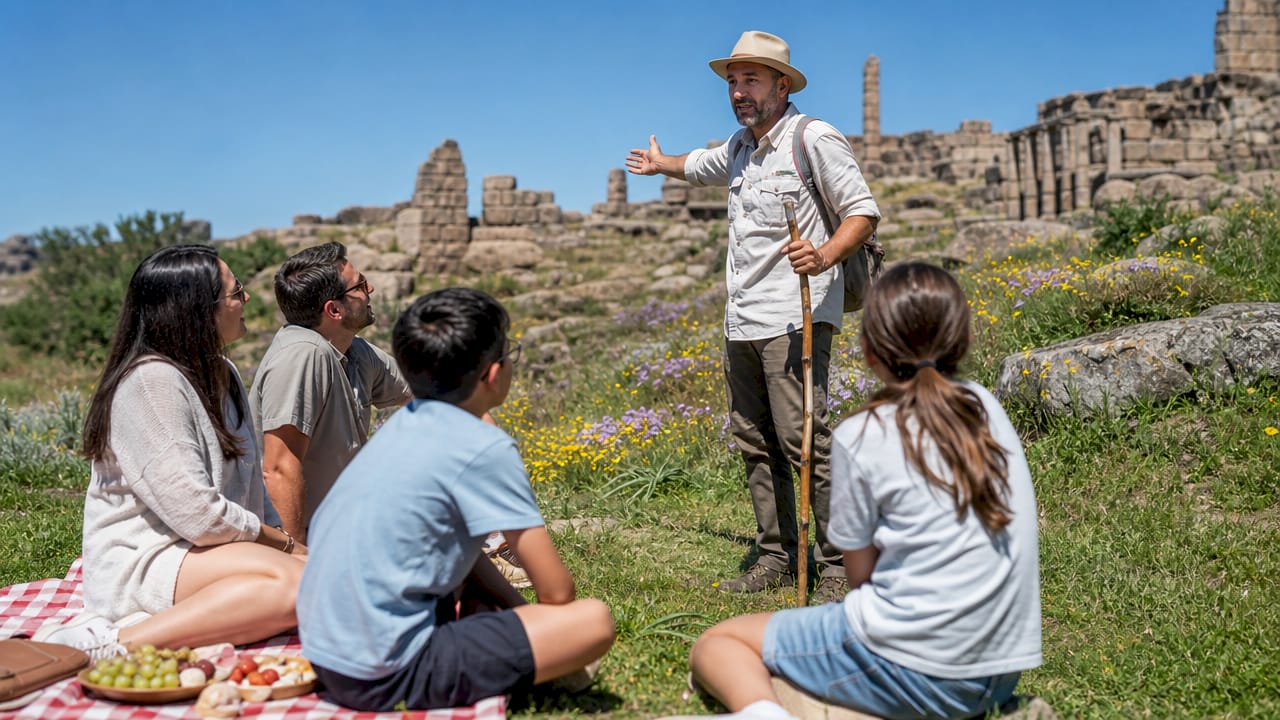
Guided tours accelerate all three stages. A skilled local guide transforms historical sites into engaging stories rather than dry facts, keeping children genuinely curious. At the Glenfinnan Viaduct, for example, a guide who connects the structure to Scottish railway history and popular culture makes the visit land differently than a sign on a wall ever could.
Pro Tip: Before your trip, ask your children to research one fact about each destination you will visit. Sharing those facts with the guide during the tour builds confidence and deepens their engagement.
How guided tours reduce stress and decision fatigue for parents
Planning a multi-destination family trip means making hundreds of small decisions every day. Where do we eat? How do we get there? Is this restaurant child-friendly? What time does the attraction close? Decision fatigue is a real and significant hidden stressor in family travel. Guided tours remove that burden almost entirely.
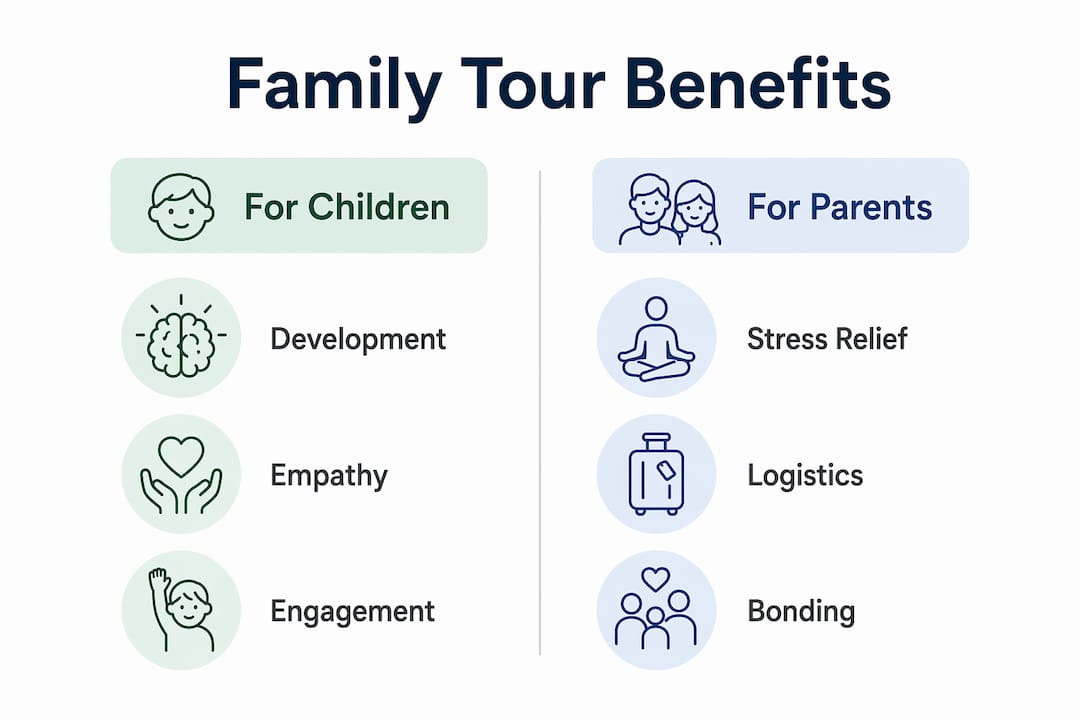
When a tour handles transport, meals, reservations, and pacing, parents stop managing logistics and start actually being present. That shift matters more than most families realise until they experience it. A parent who is not checking maps or arguing with a booking app is a parent who can notice their child’s face when they see a Highland stag for the first time.
| Factor | Independent family travel | Guided family tour |
|---|---|---|
| Transport planning | Family manages all routes and transfers | Included and pre-arranged |
| Meal decisions | Research and booking falls to parents | Recommendations or inclusions provided |
| Pacing | Family must judge timing themselves | Guide manages flow for all ages |
| Local knowledge | Relies on apps and reviews | Expert insight built into every stop |
| Emotional presence | Often reduced by logistics | Freed up for connection |
Small-group tours add another layer of benefit. Shared activities create instant peer connections for children and natural socialising opportunities for adults. Families who travel in isolation often miss this. A group tour turns a collection of strangers into a temporary community within hours.
Pro Tip: When booking a guided tour, ask specifically about group size. Smaller groups of 8–12 people tend to offer the best balance of social connection and personal attention from the guide.
What emotional and bonding benefits do family tours offer?
Travel breaks routine. That sounds simple, but the effect on family relationships is profound. Stepping away from everyday settings removes the social roles families perform at home. Parents stop being the homework enforcer or the taxi driver. Children stop being the distracted teenager or the difficult toddler. Everyone gets to be just a person, curious and present.
Family travel has evolved from a leisure activity into what researchers now describe as an experiential laboratory for family identity. Families reconnect not through grand gestures but through small shared moments: a wrong turn that becomes an adventure, a meal that nobody expected to enjoy, a view that leaves everyone quiet. These ordinary moments become the stories families return to for years.
“Travel acts as a backdrop where families reconnect by removing the performance barriers of home life.”
— Bethany Grace Travels, 2026
The mental health benefits are equally well documented. The University of Pittsburgh Mind-Body Center confirms that travel reduces depression, lowers stress hormone levels, and increases pleasant emotions. Crucially, these benefits begin weeks before departure, during the anticipation phase. Booking a family tour is not just planning a holiday. It is investing in your family’s wellbeing from the moment you confirm the dates.
Multi-generational trips amplify these effects further. When grandparents, parents, and children share a guided experience, the tour creates a common reference point across three generations. That shared memory becomes part of the family’s identity in a way that separate holidays never can.
How do family tours build cultural empathy in children?
Cultural empathy is the ability to understand and respect people whose lives look very different from your own. Textbooks describe it. Travel builds it. Guided tours with community involvement go further still, developing children as genuine global citizens rather than passive tourists.
Exposure to new customs, cuisines, and traditions during a guided tour gives children a lived reference point for difference. A child who has watched a local craftsperson work, tasted unfamiliar food, or heard a story told in a different accent carries that experience permanently. It shapes how they see the world and the people in it.
| Learning outcome | Independent sightseeing | Guided cultural tour |
|---|---|---|
| Cultural context | Surface level, self-directed | Deep, expert-facilitated |
| Community interaction | Rare and unstructured | Built into the itinerary |
| Child engagement | Variable, often passive | Active and age-appropriate |
| Empathy development | Incidental | Intentional and consistent |
| Memory retention | Lower without narrative | Higher with storytelling |
Travel experts note a clear shift in family travel priorities, away from leisure and towards experiential learning that fosters unplugged family identity and global awareness. Families who choose guided cultural tours are not just seeing more. They are understanding more.
Pro Tip: Choose tours that include at least one community-based activity, such as a local craft demonstration, a farm visit, or a guided walk with a resident. These moments produce the deepest cultural learning and the strongest memories.
The Scottish Highlands offer a particularly rich environment for this kind of learning. The Isle of Skye, the Black Isle, and Loch Ness each carry layers of Gaelic history, folklore, and natural heritage that a knowledgeable guide can bring to life for children of every age.
Key takeaways
Family tours deliver measurable benefits across childhood development, parental wellbeing, and cultural learning that independent travel rarely matches.
| Point | Details |
|---|---|
| Childhood development | Travel builds self-efficacy and independence in children aged 1.5 to 14 through structured informal learning. |
| Parental stress reduction | Guided tours remove decision fatigue, freeing parents to be emotionally present throughout the trip. |
| Family bonding | Removing daily routines and roles allows families to reconnect through shared, unscripted moments. |
| Cultural empathy | Guided cultural experiences develop genuine global citizenship in children beyond what textbooks provide. |
| Memory formation | Families who anchor trips around guided tours report stronger, more cohesive shared memories. |
What I have learned from watching families travel
I have spent considerable time observing how families respond to guided versus unguided travel, and the pattern is consistent. Families who arrive with a guide relax within the first hour. Families navigating independently often spend the first day managing friction rather than enjoying the place they have come to see.
The research supports this, but the lived reality is more nuanced. The best family tours are not the ones with the most packed itinerary. They are the ones that leave room for a child to ask a question the guide was not expecting, or for a grandparent to share a memory triggered by a landscape. Structure matters, but so does breathing space.
What surprises most families is how quickly connections form beyond their own group. On a small-group tour, children find peers within minutes. Adults find conversation partners who share their interests. The tour becomes a social event as much as a sightseeing one. That community feeling is something no amount of independent planning can manufacture.
My honest recommendation: treat the guided tour as the anchor of your trip, not an optional add-on. Plan your free days around it, not the other way around. Families who do this consistently describe their holidays as the best they have ever taken. Those who treat the tour as a single afternoon activity often wish they had committed more fully.
The storytelling that skilled guides bring to a destination is genuinely irreplaceable. No app, no guidebook, and no review site replicates the experience of standing at Glenfinnan Viaduct while someone who knows its history makes it come alive for your eight-year-old.
— Alin
Scottish Highlands family tours with Skyehighlandstours
Skyehighlandstours designs private guided tours specifically for families travelling across the Scottish Highlands, covering destinations including the Isle of Skye, Loch Ness, the Glenfinnan Viaduct, and the Black Isle. Every itinerary is tailored to your group’s ages, interests, and pace, so no family member is left bored or overwhelmed.
Expert local guides handle all logistics, from transport to timing, leaving you free to focus on the moments that matter. Whether you are travelling with toddlers, teenagers, or three generations at once, Skyehighlandstours builds the experience around your family. Explore Scottish Highlands family adventures to find the right tour for your group, or browse private Highland tour options to start planning a trip your family will talk about for years.
FAQ
Why do family tours matter more than independent travel?
Family tours remove logistical stress and replace it with expert-guided experiences that actively support childhood development, cultural learning, and family bonding. Research confirms that guided experiences create stronger shared memories than unstructured sightseeing.
What age groups benefit most from guided family tours?
Children aged 1.5 to 14 show the clearest developmental gains from structured travel, including improved self-efficacy and stress regulation. Guided tours make experiences age-appropriate for the full range, keeping younger children engaged and older ones genuinely interested.
How do family tours help parents enjoy the holiday too?
Guided tours eliminate decision fatigue by managing transport, timing, and recommendations. Parents who are not managing logistics are emotionally present, which improves both their own wellbeing and the quality of connection with their children.
Can family tours help children develop empathy?
Guided cultural tours build empathy through direct exposure to new customs, community interactions, and expert-facilitated storytelling. This kind of learning produces lasting cultural awareness that classroom education alone cannot replicate.
How do I choose the right family tour?
Prioritise tours with small group sizes, experienced local guides, and at least one community-based activity. A well-planned family itinerary should balance structured learning with free time, and cater to the youngest and oldest members of your group equally.
Recommended
- Family-friendly tours: what every family needs to know – Skye Highlands Tours
- How to plan a family trip to the Scottish Highlands – Skye Highlands Tours
- Top 6 Family Tour Providers for Top Family Tours Isle of Skye 2026 – Skye Highlands Tours
- Why personalized Highland tours create lasting memories – Skye Highlands Tours