
Your cart is empty Continue Shopping
Packing checklist for the Scottish Highlands: 2026 guide
A comprehensive packing checklist for the Highlands centres on one non-negotiable principle: waterproof, layered clothing is the foundation of every successful trip. The Scottish Highlands receive three times more rainfall than cities like Edinburgh, and the wind arrives horizontally rather than vertically. That combination makes showerproof jackets, fashion trainers, and umbrellas genuinely useless. Whether you are heading to the Isle of Skye, Loch Ness, or the Glenfinnan Viaduct, the right gear separates a memorable trip from a miserable one. Skyehighlandstours guides travellers through these landscapes daily, and the advice below reflects what actually works on the ground.
1. What goes on a packing checklist for the Highlands: clothing essentials
Layering is the most effective dressing strategy for Highland weather. A moisture-wicking base layer, an insulating mid-layer, and a fully waterproof shell give you the flexibility to adapt as conditions shift within a single afternoon. Temperatures in the countryside run 3–5°C colder than urban locations due to wind exposure, so what feels mild in Inverness can feel biting on an open ridge.
The core clothing list:
- Base layers: Merino wool or synthetic fabrics only. Cotton traps moisture against your skin and chills your body rapidly. Avoid it entirely.
- Mid-layers: A fleece or lightweight down jacket adds warmth without bulk. Pack at least one.
- Outer shell: A fully waterproof jacket with taped seams and a structured hood is the single most important item you will bring. Structured hoods stay on in wind; unstructured ones do not.
- Waterproof over-trousers: Useful for boggy trails and sustained rain. Lightweight versions pack down small.
- Gloves, hat, and neck gaiter: Necessary from september through may and useful on exposed summits even in summer.
- Smart casual layer: One or two items for restaurant or distillery visits. A merino jumper doubles as both.
Pro Tip: Pack 3–4 versatile layers rather than one heavy winter coat. You can always remove a layer; you cannot add one you left at home.
The layering system works because it traps warm air between each layer while allowing moisture to escape outward. That keeps you dry from both rain and sweat, which matters enormously on a full-day hike.
2. Which footwear and accessories suit Highland terrain?
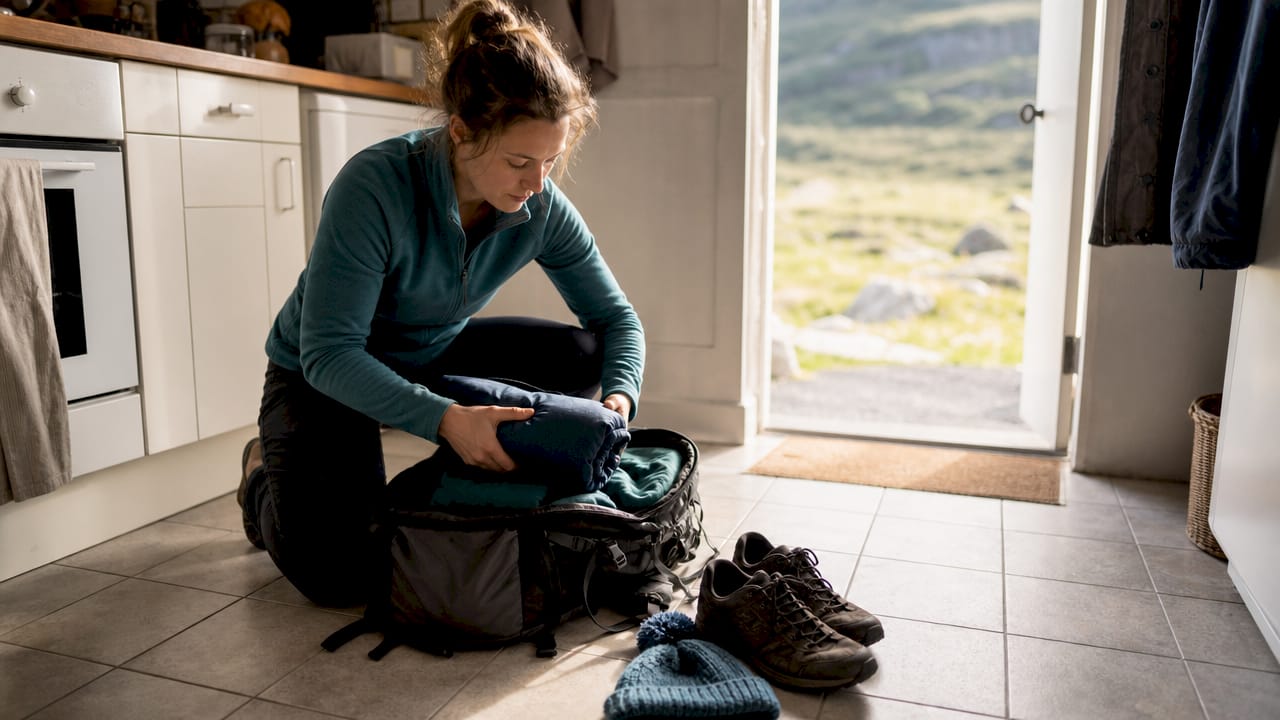
Footwear is the second most important decision after your jacket. Highland terrain means boggy peat, wet rock, and muddy paths. Waterproof hiking boots with a Gore-Tex lining are the standard recommendation. Trail shoes with waterproof membranes work for lighter days. Fashion trainers offer no grip on wet rock and no protection from standing water.
Footwear and accessories checklist:
- Waterproof hiking boots or trail shoes: Gore-Tex lining keeps feet dry on boggy ground. Break them in before you arrive to avoid blisters.
- Merino wool or synthetic socks: Quick-dry fabrics prevent blisters and keep feet warm when wet. Pack two to three pairs per day of hiking.
- Gaiters: Protect the lower leg and boot collar from mud and water on longer walks.
- Head torch: Essential for rural navigation after dark. Unlit paths, hostel corridors, and outdoor areas all require one. Most travellers forget it.
- Portable battery bank: Your phone functions as map, ticket, and camera. Running out of battery in a remote glen with no signal is a genuine safety issue.
- Reusable water bottle: Highland streams are clean, and refilling reduces plastic waste. A 750ml bottle suits most day trips.
Pro Tip: Never wear brand-new boots on day one of a Highland trip. Walk them in at home for at least two weeks beforehand.
Highland temperatures in the countryside are typically 3–5°C colder than urban locations due to wind exposure. That gap feels much larger when you are standing still at a viewpoint with wet feet.
3. How to protect yourself from midges and other environmental factors
Midges are the most underestimated challenge for first-time Highland visitors. They are active from may to september, particularly on the west coast and in remote glens like Glen Etive. Smidge repellent and a simple midge head net are the two most effective defences. The head net costs around £5 and weighs almost nothing. Pack both without question if you are visiting between may and september.
Midges are not generally a problem on the east coast or in urban centres. If your trip focuses on Inverness, Aberdeen, or the Black Isle, midge protection is less critical. On the west coast or in remote glens, it is non-negotiable.
Environmental protection checklist:
- Smidge repellent: More effective than DEET-based products for Scottish midges. Apply before stepping outside in the morning and again after lunch.
- Midge head net: Fits over a hat or cap. Use it during dawn and dusk when midges are most active.
- Sunscreen SPF 30 or higher: Highland air is clear and UV levels can be surprisingly high even on overcast days. Apply daily.
- Leave the umbrella at home: Strong winds invert umbrellas consistently across the Highlands. A waterproof jacket with a structured hood is the only reliable rain defence.
Schedule outdoor activities for the middle of the day when possible. Midges peak at dawn and dusk, and a light breeze keeps them grounded. Checking the must-visit Highland spots in advance helps you plan timing around both weather and midge activity.
4. Travel safety and convenience: what to pack beyond clothing
Non-clothing essentials determine how smoothly your trip runs in remote areas. The Highlands are genuinely rural. Mobile signal drops out, card readers disappear, and the nearest town can be an hour away.
- Cash (£50–£100): Many rural Highland pubs, shops, and cafes operate cash-only. Ferries and honesty boxes at farm gates also require it. Do not rely on contactless payment outside larger towns.
- Portable battery bank: Charge it fully each night. A 10,000mAh bank provides two to three full phone charges, which covers a long day out.
- Basic first aid kit: Plasters, blister pads, antiseptic wipes, and paracetamol. Pharmacies are sparse in remote areas.
- Whistle and map: A physical OS map of your walking area and a whistle for emergencies. Phone maps fail without signal.
- Dry bags or zip-lock bags: Protect your phone, documents, and spare socks from rain. A waterproof phone case adds a second layer of protection.
- Rolling your clothes: Rolling rather than folding reduces volume by roughly a third and keeps items visible in your bag. Use packing cubes to separate wet and dry gear.
Pro Tip: If you are doing laundry mid-trip, three to four days of clothing is enough for a week-long visit. Most Highland towns have launderettes or accommodation with washing facilities.
For travellers planning customised Highland itineraries, knowing your daily schedule in advance helps you pack precisely rather than speculatively.
5. How to adapt your packing list for different Highland activities and seasons
Your trip type changes what you need to bring. A whisky tour along Speyside requires different gear from a week of hillwalking in Torridon. Getting this right means packing less and using everything you bring.
By season:
- Summer (june to august): Lighter base layers, a packable down jacket, and full waterproofs. Midge protection is non-negotiable. Evenings can still be cold.
- Shoulder seasons (april to may, september to october): Add heavier mid-layers and waterproof over-trousers. Expect more rain and wind. Fewer midges by october.
- Winter (november to march): Thermal base layers, a heavyweight mid-layer, and a windproof outer shell. Microspikes for icy paths if you plan to walk. Daylight is limited to around seven hours.
By activity:
| Activity | Key additions | What to leave behind |
|---|---|---|
| Hillwalking and hiking | Gaiters, OS map, trekking poles | Heavy cotton clothing |
| Cultural and distillery visits | Smart casual layer, comfortable shoes | Full hiking boot setup |
| Whisky tours | Compact day bag, notebook | Bulky waterproof trousers |
| Coastal and island trips | Wind-resistant layer, sea-spray protection | Lightweight summer sandals |
| Photography and wildlife | Lens cloth, extra battery, binoculars | Anything that restricts movement |
Versatile gear earns its place in every category. A merino wool jumper works on a Highland adventure hike and at a distillery dinner. A packable waterproof jacket fits every row of the table above. Prioritise items that serve multiple purposes and you will never overpack.
For cultural experiences in the Highlands, one smart casual outfit is sufficient. The Highlands are informal by nature, and locals dress practically rather than formally.
Key takeaways
A fully waterproof jacket with taped seams, a three-layer clothing system, and a portable battery bank are the three items that most directly determine comfort and safety on a Highland trip.
| Point | Details |
|---|---|
| Waterproof jacket is non-negotiable | Taped seams and a structured hood are required; showerproof jackets fail in Highland rain. |
| Layer, do not bulk | Three functional layers outperform one heavy coat and adapt to rapid weather changes. |
| Cash and battery bank matter | Remote areas rely on cash payments and have no charging points; carry both. |
| Midge protection is seasonal | Pack Smidge repellent and a head net for west coast trips between may and september. |
| Match your kit to your activity | Hillwalking, whisky tours, and cultural visits each need different gear combinations. |
A local’s honest view on Highland packing
Perspective by Alin
The single biggest mistake I see travellers make is buying a fashionable waterproof jacket that is not actually waterproof. Showerproof membranes saturate within twenty minutes of sustained Highland rain. By the time most visitors realise this, they are already cold and wet on a hillside with no shelter nearby. Spend the money on a jacket with fully taped seams. It is the one item where quality directly determines your experience.
The second mistake is overpacking. I have watched people arrive with enormous suitcases full of clothes they never touch because they packed for every theoretical scenario. Three to four versatile layers, one smart casual option, and solid waterproof boots cover almost every situation the Highlands will throw at you.
The items that genuinely surprise people when they forget them are the head torch and the cash. Nobody thinks they will need a head torch until they are walking back to their accommodation on an unlit rural road at 9pm. Nobody thinks they will need £80 in cash until the only pub for thirty miles turns out to be card-free. Both cost almost nothing to bring and solve real problems.
Accept that the weather will change. It will rain when the forecast says sun, and it will clear when you expect grey skies. The travellers who enjoy the Highlands most are the ones who pack for all conditions and then stop worrying about the forecast entirely.
— Alin
Plan your Highland trip with Skyehighlandstours
Packing well is only half the preparation. Knowing where you are going and what each day holds makes every item on your list work harder.

Skyehighlandstours offers private guided tours across the Scottish Highlands, from the Isle of Skye to Loch Ness and the Glenfinnan Viaduct. Each tour is tailored to your group size, interests, and physical ability, so your packing list reflects your actual itinerary rather than a generic one. For travellers who want expert guidance on what to bring and where to go, the specialised tour options at Skyehighlandstours remove the guesswork from Highland planning entirely. If you are travelling with family, a whisky focus, or a tight schedule, there is a tour built around your needs.
FAQ
What is the most important item to pack for the Highlands?
A fully waterproof jacket with taped seams and a structured hood is the single most critical item. The west coast Highlands receive approximately three times more rainfall than Edinburgh, and horizontal wind makes umbrellas useless.
When are midges worst in the Scottish Highlands?
Midges are most active from may to september, particularly on the west coast and in remote glens. They are not generally a problem on the east coast or in urban centres like Inverness.
Do I need cash in the Scottish Highlands?
Many rural Highland pubs, cafes, and ferries are cash-only. Carrying £50–£100 avoids payment problems in remote locations where card readers are unreliable or absent.
What footwear is best for Highland walking?
Waterproof hiking boots or trail shoes with a Gore-Tex lining are the standard recommendation. Fashion trainers offer no grip on wet rock and no protection from boggy ground.
Should I pack sunscreen for a Highland trip?
Yes. Highland air is clear and UV levels can be surprisingly high even on overcast days. Apply SPF 30 or higher daily, regardless of cloud cover.
5 Comments