
Your cart is empty Continue Shopping
Best scenic routes Scotland: top 10 drives
Scotland’s best scenic routes are defined by their capacity to combine dramatic natural landscapes with cultural depth and genuinely memorable road experiences. The North Coast 500, Bealach na Bà, and the Glenelg to Skye drive represent the gold standard of Scottish road travel, each offering something the others cannot. Choosing the right route depends on your timeline, driving confidence, and what you want to feel at the end of the day. This guide covers the top ten drives, practical safety advice for single-track roads, and the seasonal timing that separates a good trip from an extraordinary one.
What makes a scenic drive in Scotland exceptional?
Scotland’s scenic drives earn their reputation through variety, not just beauty. The country packs Atlantic coastline, ancient mountain passes, freshwater lochs, and centuries-old castles into distances that would take days to cover elsewhere. The best scenic landscapes in Scotland combine natural diversity with accessible road networks, making them genuinely driveable rather than merely photogenic.
What separates a top-tier Scottish drive from an ordinary one comes down to four factors:
- Landscape variety: The best routes shift between terrain types within a single journey, from open moorland to sea loch to mountain pass.
- Landmark density: Iconic stops like Inverness Castle, Applecross Bay, and Ullapool harbour give structure to otherwise open roads.
- Road character: Single-track roads with passing places are not a drawback. They slow you down in the best possible way, forcing you to notice what surrounds you.
- Seasonal responsiveness: Light, wildlife, and road conditions change dramatically across the year, and the finest routes reward those who time their visit well.
Pro Tip: Download offline maps via OS Maps or Maps.me before setting off on remote routes. Mobile signal disappears quickly north of Ullapool, and paper maps are not always stocked at rural petrol stations.
1. North Coast 500
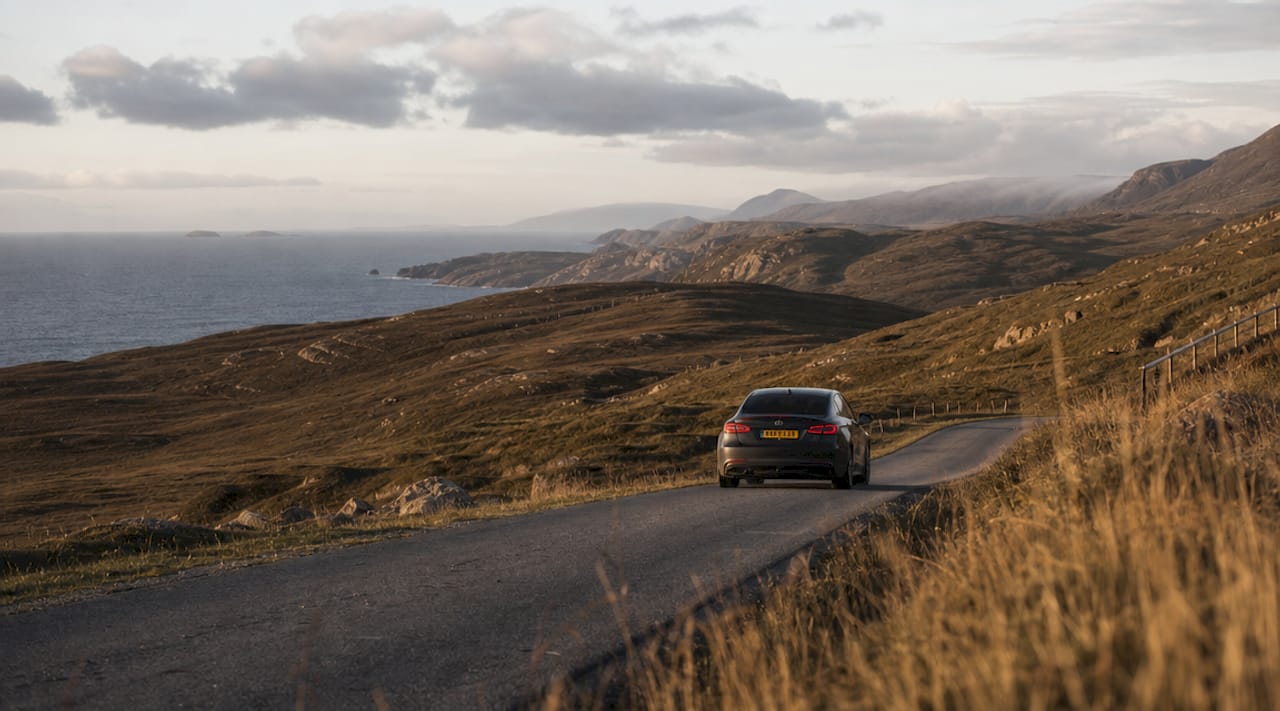
The North Coast 500 is a signposted 516-mile circular route starting and finishing at Inverness Castle, taking in Atlantic beaches, mountain passes, and remote fishing villages across the far north. Adding detours to Cape Wrath and the Assynt peninsula extends the journey to approximately 650 miles. This is Scotland’s most celebrated road trip, and it earns that status by delivering genuinely different scenery every 20 miles. The key mistake most first-timers make is treating it as a continuous loop to complete rather than a region to explore in sections.
2. Bealach na Bà and the Applecross coastal road
Bealach na Bà is Britain’s third-highest public road, rising to 626 metres in just six miles through tight hairpin bends before opening onto views across Applecross Bay and the Outer Hebrides. It is one of the most photographed drives in Scotland, and rightly so. The descent into Applecross village rewards the effort with a seafood restaurant and a pub that feels genuinely earned. Return via the coastal road around the peninsula for a completely different but equally spectacular experience.
3. Edinburgh to St Andrews coastal drive
This route follows the Fife coast from Edinburgh across the Forth Road Bridge through Kirkcaldy, Anstruther, and Crail before arriving in St Andrews. The RAC recommends this drive for its combination of historic fishing villages, sandy beaches, and the iconic skyline of St Andrews itself. It suits travellers who want scenic value without committing to remote Highland roads. The East Neuk villages of Anstruther and Pittenweem offer excellent seafood stops and are far less crowded than comparable coastal towns further north.
4. Balloch and the Trossachs via the A82
The A82 from Glasgow to Balloch and into the Trossachs National Park follows the western shore of Loch Lomond with views across to the Arrochar Alps. This route carries literary connections to Sir Walter Scott, whose poem “The Lady of the Lake” was set on Loch Katrine. Stop at Loch Venachar for a picnic, or take the SS Sir Walter Scott steamship across Loch Katrine for a perspective no car can offer. This is the most accessible of Scotland’s top scenic drives, sitting within 90 minutes of Glasgow.
5. Ullapool to Durness
The road from Ullapool north to Durness covers some of the most sparsely populated terrain in Europe. You pass through Assynt, where the mountains of Suilven, Canisp, and Quinag rise from flat moorland in shapes unlike anything else in Britain. Sandwood Bay, accessible via a four-mile walk from Blairmore, is one of Scotland’s finest beaches and sees a fraction of the visitors that Luskentyre on Harris attracts. This stretch forms the northwest section of the North Coast 500 but deserves recognition as a standalone drive.
6. Glenelg to the Isle of Skye via Kylerhea
The Glenelg route to Skye avoids the busy Kyle of Lochalsh bridge and instead uses the only manually operated turntable ferry in the United Kingdom, crossing the Kylerhea straits in minutes. The road to Glenelg itself crosses the Mam Ratagan pass, which offers a view of the Five Sisters of Kintail that rivals anything on the NC500. The ferry operates seasonally, so check the Glenachulish ferry timetable before planning this as your primary crossing. The slower pace is the point.
Pro Tip: The Kylerhea ferry typically runs April through October. Arrive early in peak season as queues form quickly and the boat holds only a handful of vehicles per crossing.
7. Moray Firth coastal route
The Moray Firth coast from Inverness east through Nairn, Forres, and Elgin to Buckie offers a gentler but genuinely rewarding scenic drive. Bottlenose dolphins are regularly spotted from Chanonry Point near Fortrose, one of the most reliable dolphin-watching spots in Europe. The route passes Cawdor Castle, Brodie Castle, and the Speyside whisky distilleries of Glenfiddich and Cardhu. For travellers who combine scenic drives with whisky tours, this corridor is unmatched in Scotland.
8. Deeside tourist route from Perth to Aberdeen
The Deeside route follows the River Dee from Perth through Blairgowrie, Braemar, and Balmoral Castle before descending to Aberdeen. This is Royal Deeside, the stretch of Cairngorms countryside that the British royal family has visited since Queen Victoria first fell for it in the 1840s. The autumn colours along this route between September and November are among the finest in Scotland. Braemar itself hosts the famous Highland Games each September, which adds a cultural dimension that purely coastal routes cannot match.
9. Angus coastal route and the SnowRoads
The Angus coastal road from Dundee north through Arbroath, Montrose, and Stonehaven follows clifftop roads above the North Sea with views that feel more dramatic than their modest elevation suggests. Pair this with the SnowRoads Scenic Route, a 90-mile drive through the Cairngorms from Blairgowrie to Grantown-on-Spey, for a two-day itinerary that covers both coast and mountain. The SnowRoads is particularly rewarding in winter when the Cairngorm plateau carries snow and the light turns the landscape copper and white.
10. Carter Bar to Edinburgh through the Borders
The A68 from Carter Bar on the English border north to Edinburgh crosses the Cheviot Hills before descending through Jedburgh, Melrose, and the Eildon Hills. This is the most underrated of Scotland’s top road trips, largely because it lacks the Highland drama that dominates most lists. What it offers instead is a rolling, pastoral beauty and a density of historic abbeys, including Jedburgh, Melrose, and Dryburgh, that no Highland route can match. The final approach to Edinburgh with the Pentland Hills to the west makes for a genuinely cinematic arrival.
How to drive safely on Scotland’s single-track roads
Single-track roads are a defining feature of Scotland’s most scenic routes, and they require a specific mindset rather than advanced driving skill. The rules are straightforward, but ignoring them creates real danger.
- Use passing places correctly. Pull into a passing place on your left to let oncoming traffic through. If the passing place is on your right, wait opposite it. Never park in a passing place.
- Scan ahead constantly. Look for passing places 200 to 300 metres ahead so you can plan your approach without emergency braking or reversing under pressure.
- Never assume priority. Uphill traffic has informal priority, but courtesy and common sense matter more than any rule.
- Watch for livestock and cyclists. Sheep, cattle, and red deer appear without warning on Highland roads. Reduce speed near farms and open moorland.
- Be aware of roe deer in late spring. Roe deer collisions rise sharply in late May and early June as young deer disperse. Brake carefully rather than swerving, which risks losing control.
Pro Tip: If you find a queue forming behind you, pull into the next passing place and wave them through. It takes 30 seconds and removes the pressure that causes accidents on narrow roads.
When to visit for the best driving experience
Timing your Scottish road trip correctly transforms the experience. Spring through autumn offers the best combination of daylight, road conditions, and wildlife activity, though each season brings its own rewards.
- May and June deliver long daylight hours, wildflowers on the moorland, and the best chance of clear skies. The downside is increased roe deer activity on roads, particularly in the central belt.
- July and August are peak season. Roads are busier, accommodation books out months in advance, and the midges are at their worst in the west. Book everything early.
- September and October are the finest months for photography. The bracken turns amber and rust, the crowds thin, and the light sits lower and warmer all day.
- Winter driving on routes like Bealach na Bà can be genuinely hazardous. The pass closes in ice and snow, and daylight is limited to six or seven hours this far north.
Check the Glenachulish ferry operating dates if the Kylerhea crossing features in your plans, as it closes for winter and operates on reduced hours in shoulder months.
Scenic drives for different traveller types
Not every route suits every traveller, and choosing the right drive for your group makes the difference between a highlight and a headache.
- Couples seeking a romantic drive should prioritise Bealach na Bà and the Applecross peninsula, or the Glenelg to Skye crossing. Both offer intimacy, drama, and the sense of discovery that makes a trip memorable. These are among the top scenic drives for couples in Scotland.
- Families with children do better on the Trossachs route or the Deeside road, where roads are wider, stops are more frequent, and the driving is less demanding.
- History and culture enthusiasts should prioritise the Borders route through Jedburgh and Melrose, or the Deeside road past Balmoral and Crathes Castle.
- Short on time (one or two days)? The Edinburgh to St Andrews coastal drive or the Trossachs loop from Glasgow both deliver high scenic value within a manageable distance.
- Adventurous drivers ready for the full Highland experience should commit to at least five days on the North Highland Tour circuit, including the NC500 and its best detours.
Key takeaways
Scotland’s best scenic routes reward travellers who plan around timing, road type, and personal preference rather than simply following the most famous circuit.
| Point | Details |
|---|---|
| NC500 is the benchmark | The 516-mile North Coast 500 from Inverness Castle sets the standard for Scottish road trips, but works best explored in sections. |
| Single-track roads need patience | Passing place etiquette and early scanning reduce stress and keep traffic flowing safely on narrow Highland roads. |
| Timing changes everything | September and October offer the finest light, thinner crowds, and spectacular autumn colour across most routes. |
| Lesser-known routes deliver | The Borders route and Moray Firth coast offer cultural depth and wildlife that Highland-only itineraries miss entirely. |
| Match the route to your group | Couples, families, and solo drivers each have different ideal routes based on road difficulty and stop variety. |
Why I think most people drive Scotland wrong
I have spent years watching travellers arrive in Scotland with a single goal: complete the North Coast 500. They rush it in three days, miss the Assynt detour, skip Applecross because it adds time, and leave wondering why the experience felt thinner than expected. The NC500 is not a race circuit. Planning detours as pacing tools rather than optional extras is what separates a genuinely memorable trip from an expensive tick-box exercise.
The routes I return to most are not the famous ones. The Carter Bar to Edinburgh drive through the Borders is something I recommend to almost everyone who asks, because it surprises people. They expect Highland drama and instead find a quieter, older Scotland that stays with them longer. The same applies to the Moray Firth coast, which most visitors drive through without stopping because they are focused on getting to Inverness.
My honest advice: pick two routes and do them properly rather than attempting five in a week. Stop when something catches your eye. Optimal photo stops on narrow roads require courtesy as much as timing, so pull fully off the road, check your mirrors, and take your time. Scotland rewards the unhurried traveller in ways that no itinerary can fully capture.
— Alin
Explore Scotland’s scenic routes with Skyehighlandstours
Driving Scotland’s most spectacular roads is one thing. Doing it with a local expert who knows every passing place, hidden viewpoint, and unmissable detour is another experience entirely.
Skyehighlandstours offers private guided tours across the Scottish Highlands, tailored to your group size, pace, and interests. Whether you want a full-day circuit through Glencoe and the Isle of Skye, a specialist whisky tour through Speyside, or a custom itinerary built around the routes in this guide, the team designs every trip around you. Browse the full range of Highland tour options and book your preferred dates directly online.
FAQ
What is the most scenic drive in Scotland?
The North Coast 500 is widely regarded as Scotland’s most scenic drive, covering 516 miles from Inverness Castle through Atlantic coastline, mountain passes, and remote villages. Bealach na Bà is the single most dramatic road, rising to 626 metres in six miles.
How long does the North Coast 500 take to drive?
Most travellers allow five to seven days to drive the NC500 comfortably, including stops. Rushing it in three days means missing the detours to Assynt and Cape Wrath that define the route’s best moments.
Are Scotland’s scenic roads suitable for nervous drivers?
Many of Scotland’s top scenic drives use single-track roads, which can feel daunting at first. Successful navigation depends on patience and passing place etiquette rather than advanced skill, and most nervous drivers adapt quickly within the first hour.
When is the best time to drive Scotland’s scenic routes?
Spring through autumn offers the best conditions, with September and October particularly recommended for autumn colour, lower visitor numbers, and excellent photography light. Winter driving on high passes like Bealach na Bà carries genuine risk.
Can I do a scenic Scottish drive as a couple on a short trip?
The Edinburgh to St Andrews coastal drive and the Trossachs route from Glasgow both deliver exceptional scenery within one to two days, making them ideal for couples with limited time. The Glenelg to Skye crossing via the Kylerhea ferry is the most romantic option for those with an extra day.
Recommended
- Must-visit spots in the Highlands: your 2026 guide – Skye Highlands Tours
- Top 15 Unforgettable Things to Do on the Isle of Skye – Skye Highlands Tours
- Famous viaducts in Scotland: iconic stops every traveler needs – Skye Highlands Tours
- Romantic highland trip ideas for couples in 2026 – Skye Highlands Tours
4 Comments