
Your cart is empty Continue Shopping
How to choose Scottish Highlands destinations wisely
Planning a Scottish Highlands trip sounds thrilling until you’re staring at a map full of jaw-dropping options and no clear way to narrow them down. Do you chase the moody peaks of Glencoe, the fairy-tale coastline of the Isle of Skye, or the mysterious shores of Loch Ness? Add in single-track roads, unpredictable weather, and the pressure of making every moment count on a special occasion, and the planning process can feel genuinely overwhelming. This guide cuts through that noise with practical steps, real destination comparisons, and insider tips to help you build a Highland itinerary that fits you perfectly.
Table of Contents
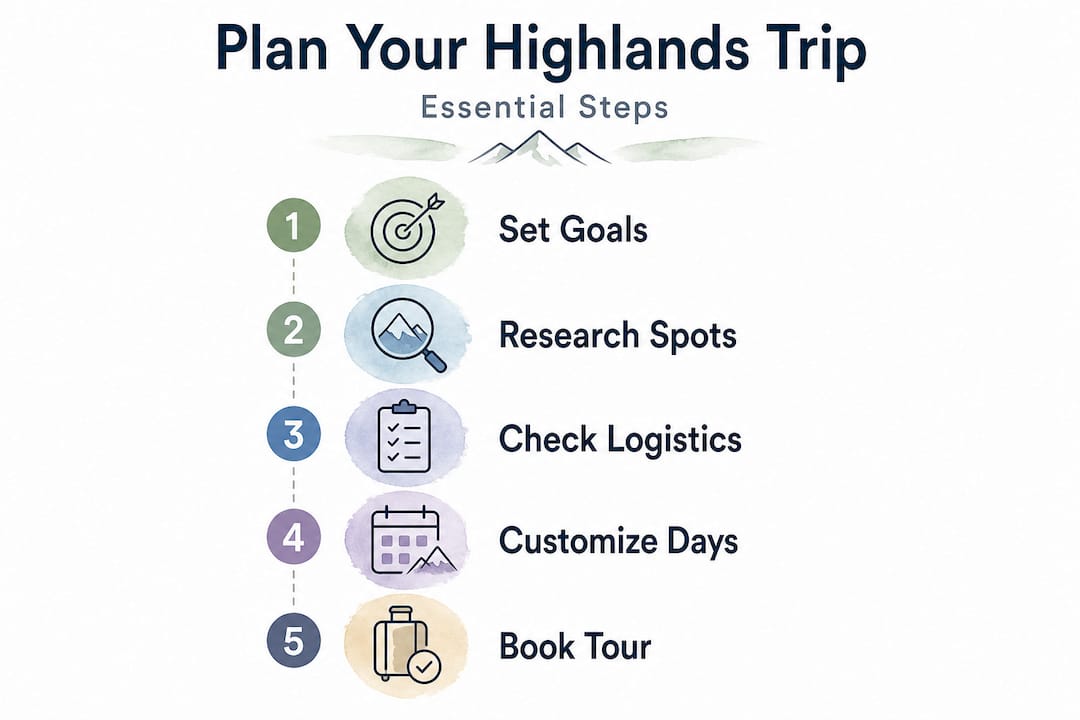
- Clarify your travel goals and preferences
- Research iconic and underrated Highland spots
- Understand Scottish Highland logistics and road realities
- Customize your itinerary for unforgettable experiences
- Why most Highland destination guides miss the mark
- Tailored Highland tours for a stress-free adventure
- Frequently asked questions
Key Takeaways
| Point | Details |
|---|---|
| Define trip goals | Knowing your priorities helps target the best Highland destinations for scenery, culture, or events. |
| Balance famous and hidden spots | Combine iconic attractions with lesser-known gems to maximize your Highland adventure. |
| Account for logistics | Scottish Highland roads and weather demand careful planning—guided tours simplify the process. |
| Customize your itinerary | Tailor your trip plan to blend major sights, activities, and celebration needs for a memorable journey. |
| Leverage local expertise | Relying on local guides and tour operators reveals unique experiences and reduces travel stress. |
Clarify your travel goals and preferences
Every great Highland trip starts with an honest conversation about what you actually want. Scenery? Culture? An adrenaline rush? A birthday celebration surrounded by ancient castles? The answer shapes everything from which regions you target to what time of year makes the most sense to visit.
Many travelers make the mistake of trying to see everything. The Scottish Highlands cover roughly 16,000 square miles, and no single week-long itinerary can do them justice. Instead, focus on your top priorities and build outward from there.
Here are the most common travel priorities and how they affect your planning:
- Scenic landscapes: Target areas with high-impact viewpoints, lochs, and mountain passes. Loch Lomond & The Trossachs offers high-density scenery, storybook villages, trails, and waterfalls with year-round access, making it a strong anchor for scenic-focused trips.
- Cultural immersion: Focus on regions with strong Gaelic heritage, whisky distillery routes, crofting history, and local festivals. The Black Isle and Inverness area are particularly rich.
- Adventure activities: Hiking, kayaking, wild swimming, and mountain biking opportunities are spread across the region but concentrated in areas like Torridon, Glen Affric, and the Cairngorms.
- Special occasions: Birthdays, anniversaries, and proposals benefit from a mix of dramatic scenery, elegant accommodation, and guided experiences that remove logistical stress entirely.
- Family trips: Accessibility, shorter distances between stops, and kid-friendly activities are critical. If planning a family Highland trip, prioritize gentle trails, interactive visitor centers, and locations with facilities.
Pro Tip: Before looking at any map, write down three non-negotiable experiences and two things you want to avoid. This simple list becomes your filter for every destination decision that follows.
Understanding your physical ability and pace preferences matters just as much as your interests. A traveler who loves photography needs long, unhurried stops at viewpoints. A couple celebrating an anniversary wants intimacy and memorable meals. Getting this clarity upfront transforms a scattered wishlist into a focused, satisfying route. For deeper guidance on structuring this process, a personalized Highlands itinerary framework can help you move from vague goals to concrete daily plans.
Research iconic and underrated Highland spots
With your travel goals clear, you can move on to selecting specific scenic and cultural destinations. The Highlands reward travelers who mix famous landmarks with lesser-known spots. The big names, think Eilean Donan Castle, the Fairy Pools on Skye, and the Glenfinnan Viaduct, deliver on their promise. But they also attract crowds, especially between June and August.
Scotland’s oldest national park, Loch Lomond & The Trossachs, features 22 lakes and storybook villages spread across a relatively accessible region just north of Glasgow. It’s an excellent starting point for first-time Highlands visitors because the infrastructure is well-developed and the scenery is immediately rewarding.
Here’s a practical comparison of famous versus underrated Highland destinations:
| Destination | Fame level | Crowd level | Best for | Best season |
|---|---|---|---|---|
| Isle of Skye | Very high | High in summer | Drama, photography, hiking | May, September |
| Loch Ness | Very high | Moderate year-round | History, family trips | Year-round |
| Torridon | Low | Low | Serious hiking, solitude | June to September |
| Glenfinnan Viaduct | High | High on train days | Harry Potter fans, photography | Spring, fall |
| Black Isle | Low | Low | Wildlife, local culture | Spring, summer |
| Glen Affric | Moderate | Low to moderate | Ancient forest, scenic walks | May to October |
Planning flexibility is not optional in the Highlands. A road closure, a sudden mist rolling in, or an unexpected local event can reshape your entire day. Build buffer time into every segment of your itinerary, especially if you’re traveling between April and October when tourist volumes peak.
The practical takeaway is to anchor your itinerary around one or two iconic spots and then fill the gaps with underrated gems that align with your interests. If you need a curated starting point, browsing Highland tours options gives you a clear picture of what’s achievable across different regions and durations.
For travelers drawn to the far north, the area around Cape Wrath and Durness is one of Scotland’s most dramatic and least-visited stretches of coastline. The North Highland tour details cover this region specifically, including stops that most independent travelers never find on their own. More general Scottish Highlands info is also useful for understanding the sheer geographic range of what’s possible.
Understand Scottish Highland logistics and road realities
Now that you’ve researched where you want to go, it’s time to address the unique logistics of Highland travel. This is where most independent travelers underestimate the challenge.
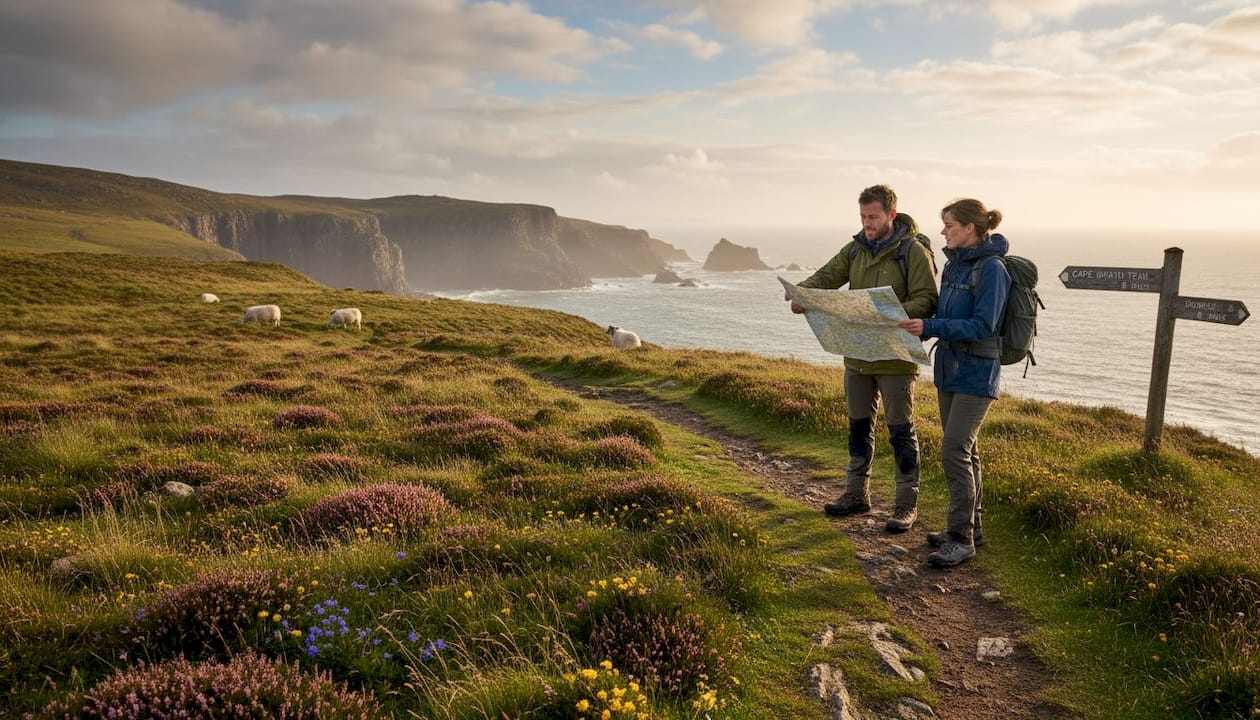
Much of the best scenery is accessed via single-track roads, which require passing-place etiquette and significant flexibility for weather changes. A passing place is a short section of widened road that allows vehicles traveling in opposite directions to pass safely. Failing to use them correctly is not just rude, it’s genuinely dangerous and a source of real frustration for local residents and other visitors.
Here’s what you need to know about Highland road conditions:
| Road type | Where found | Speed expectation | Key challenge |
|---|---|---|---|
| A-roads (main) | Inverness, Fort William corridors | 50 to 60 mph | Volume of tourist traffic |
| B-roads | Secondary routes, rural areas | 30 to 45 mph | Narrowing, blind corners |
| Single-track | Remote glens, island routes | 15 to 25 mph | Passing place etiquette |
| Unclassified tracks | Remote estates, beaches | 10 mph or less | Ground clearance needed |
Steps for managing Highland road logistics successfully:
- Download offline maps before you leave. Cell coverage drops significantly in remote glens and along the far north coast. Google Maps offline or apps like maps.me are essential backup tools.
- Add 30 to 50 percent extra time to any journey estimate. What looks like a 45-minute drive on paper can easily take 75 minutes on a single-track road with tourist traffic.
- Check road condition updates daily. Traffic Scotland and the local council websites publish real-time alerts on road closures, especially during winter months when snow and ice create hazards.
- Fuel up whenever you see a station. In remote areas, fuel stations can be 40 or 50 miles apart. Running low in Sutherland or Wester Ross is a situation you want to avoid completely.
- Know the weather patterns by region. The west coast receives significantly more rainfall than the east. The Isle of Skye averages around 1,750mm of rain per year, compared to roughly 650mm in Inverness. This affects both road safety and visibility at key viewpoints.
Pro Tip: Always allow extra time for stops and potential traffic delays, especially on routes to popular spots like the Fairy Pools or Neist Point Lighthouse. The most memorable moments on a Highland trip often happen at unplanned stops, so build in the breathing room to take advantage of them.
For travelers who prefer to leave the driving entirely to someone else, guided tour options remove all of these logistics instantly. A local guide who knows when the Fairy Pools are quietest, which passing places have the best photo angles, and where to stop for the best pie in Portree adds a layer of experience you simply cannot replicate from a travel blog. Isle of Skye tours are a particularly popular way to experience the island’s highlights without the stress of navigating unfamiliar roads.
Customize your itinerary for unforgettable experiences
With logistics squared away, you’re ready to design your itinerary around your personal travel style and event needs. Customization is where good Highland trips become great ones.
Self-drive maximizes freedom but forces you to manage narrow road logistics entirely on your own. Organized tours bundle those logistics with local expertise that takes years to accumulate. The right choice depends entirely on your comfort level, your group size, and whether you want flexibility or depth of experience.
Here’s a step-by-step approach to customizing your Highland day-to-day itinerary:
- Anchor each day to one major destination. Don’t try to tick off five sites in a day. Choose one anchor, such as Loch Ness or the Quiraing, and let the rest of the day flow naturally around it.
- Build in a cultural half-day for every two days of scenic exploration. This balance prevents landscape fatigue and creates richer memories. A whisky distillery visit or a local history walk adds narrative texture to what might otherwise feel like an endless series of viewpoints.
- Plan your celebration moments intentionally. If you’re marking a birthday or anniversary, identify the single most dramatic or meaningful location and save it for that specific day. Sunrise at the Old Man of Storr on your birthday creates a memory that no restaurant dinner can match.
- Leave one full day unplanned. This sounds counterintuitive, but the Highlands consistently reward spontaneity. A local farmer who invites you in for tea, a sudden clearing that reveals a rainbow over a glen, or a puffin colony discovered by accident are the stories you’ll tell for years.
- Match your activity types to your group’s energy. Long ridge walks suit fit travelers with hiking experience. Gentle lochside paths, scenic drives, and village walks work beautifully for mixed-ability groups or older travelers.
Experiences worth weaving into any customized Highland itinerary:
- Nature walks through ancient Caledonian pine forest in Glen Affric
- Castle explorations at Eilean Donan, Urquhart, or Dunrobin
- Highland whisky tour tips for distillery visits along the Speyside route
- Attending a local ceilidh or Highland Games event if the timing aligns
- Wildlife watching for red squirrels, red deer, ospreys, and bottlenose dolphins off the Black Isle coast
- Exploring the otherworldly landscapes of the Trotternish Peninsula on Skye
For travelers wanting to push north, the Top of the Highlands tour covers some of the most remote and visually stunning terrain in the entire country, including the far north coast and areas most visitors never see.
Why most Highland destination guides miss the mark
Here’s something worth saying plainly: most Highland travel guides focus on a checklist of famous spots and completely ignore the two factors that most directly affect the quality of your trip, road logistics and weather unpredictability.
You can have the most beautifully constructed itinerary in the world, but if you’ve underestimated a single-track road between Torridon and Applecross, you’re spending two anxious hours white-knuckling past sheep and reversing into passing places while your passengers miss the scenery entirely. That’s not an edge case. It happens to a significant portion of independent Highland travelers every summer.
Organized tours reduce planning stress and enrich the journey with local expertise that DIY travelers often miss. But beyond stress reduction, the real value of a locally led tour is the knowledge that no travel blog can fully replicate: which side road leads to an unmarked viewpoint that’s better than the official one, which cafe the locals actually eat at, and which stretch of coastline is best at low tide. That’s knowledge built over years of daily Highland driving, not a few weekend trips.
There’s also a persistent myth that guided tours sacrifice flexibility. The best private Highland tours are actually the opposite of rigid. They adapt in real time to weather, road conditions, and your mood on the day. A good guide reads their group and adjusts constantly, something no self-drive app can do.
Pro Tip: When booking any guided Highland experience, ask specifically about seasonal highlights and local shortcuts. A guide who answers confidently and specifically is one who knows the terrain deeply. Vague answers are a signal to look elsewhere.
The travelers who leave the Highlands most satisfied are rarely the ones who ticked off the most sights. They’re the ones who slowed down, followed a recommendation from someone who knew the land, and let the landscape surprise them. A personalized itinerary tips approach, combined with expert local guidance, is how you consistently achieve that outcome.
Tailored Highland tours for a stress-free adventure
Building the perfect Highland itinerary takes research, flexibility, and honest self-awareness about what you want from your trip. We’ve walked through all the moving parts here because we believe informed travelers have better experiences.
At Skye Highlands Tours, we specialize in turning that planning work into seamless, privately guided experiences across the full range of Highland destinations. Whether you’re drawn to the dramatic geology of the Isle of Skye, the cultural depth of whisky country, or the raw solitude of the far north, our local guides bring the kind of expertise and genuine enthusiasm that transforms a good trip into an exceptional one. From family adventures to milestone celebrations, our personalized Highlands planning process makes sure every detail works for your specific group and goals. Browse our tour options and start building your Highland story today.
Frequently asked questions
What are the best Scottish Highlands destinations for scenic landscapes?
Loch Lomond & The Trossachs National Park is a top choice, featuring 22 lakes and multiple Great Trails and storybook villages with year-round accessibility. The Isle of Skye and Glencoe are equally dramatic options for travelers seeking high-impact Highland scenery.
How do driving conditions affect destination choices in the Highlands?
Many scenic areas require single-track road etiquette and genuinely flexible planning due to unpredictable weather and road conditions. This is one of the strongest practical arguments for choosing a guided tour over self-drive in remote Highland regions.
Should I choose self-drive or organized Highland tours?
Self-drive maximizes freedom but places the full burden of narrow road logistics and weather management on you. Organized tours bundle expert planning and local insights, which typically deliver a richer experience with far less stress.
How can I personalize a Highland itinerary?
Start by writing down your three non-negotiable experiences and then anchor each travel day to one major destination, leaving room for spontaneous discoveries. Mixing iconic landmarks with locally recommended spots consistently produces the most satisfying results.
What cultural experiences are possible on a Highland tour?
You can explore local ceilidhs, centuries-old castles, whisky distilleries, and storybook villages throughout the national parks and Highland regions. Wildlife watching for dolphins, red deer, and ospreys adds a natural history layer that surprises many first-time visitors.
1 Comment