
Your cart is empty Continue Shopping
The role of historical context in tours: a 2026 guide
Historical context in tours is defined as the narrative framework that connects physical sites to the events, people, and cultures that shaped them. Without it, a tour is simply a list of locations. With it, a visit becomes a coherent, emotionally resonant experience that travellers remember long after they return home. The cultural significance in tours is not decorative. It is the difference between standing at a castle wall and understanding why that wall was built, who defended it, and what was lost there.
How does historical context enhance visitor engagement in tours?
Historical context transforms disconnected stops into a coherent story. Tours lacking narrative context are perceived as simple collections of sites, while contextual tours produce immersive experiences that hold a visitor’s attention and deepen their understanding. That distinction matters because engagement is not just about enjoyment. It shapes how much travellers learn, how long they stay, and how strongly they connect with a place.
Narrative structure is the mechanism behind this shift. When a guide frames each location within a broader story, visitors build what psychologists call a cognitive map: a mental picture that links events across time and space. Local expert Milton Walker Jr. argues that narrative is essential to avoid tours becoming a mere series of stops. Without that thread, even the most spectacular sites feel arbitrary.
Emotional connection follows naturally from good storytelling. Travellers who understand why a place matters are more likely to feel something standing in it. That emotional response is not accidental. It is the result of deliberate narrative construction by a skilled guide.
“Skilled guides facilitate a ‘suspension of disbelief’ that allows visitors to emotionally connect with history beyond passive observation. They do not recite facts. They build worlds.”
— Research on storytelling in heritage tourism, 2025
The practical implication for travellers is clear. A tour that opens with dates and architectural details will lose most visitors within minutes. A tour that opens with a human story, a conflict, a decision, a consequence, will hold them for hours.
Pro Tip: Before booking, ask the tour operator how their guides structure their narratives. If the answer focuses only on facts and dates, look elsewhere.
What psychological and emotional benefits do historical context-rich tours provide?
Historical context does more than educate. It restores. Research published in Frontiers in Psychology in 2026 shows that visitors attributing high cultural and historical significance to a site report greater positive emotional affect and measurable stress reduction compared to visitors who engage with the same site without contextual understanding. That finding reframes what a well-designed tour actually delivers.
The concept at work here is perceived restorativeness: the degree to which an environment helps a person recover from mental fatigue. Historical and cultural meaning amplifies this effect. A visitor who understands the human weight of a site engages with it on multiple levels simultaneously, cognitive, emotional, and sensory. That multi-level engagement is what produces the restorative response.
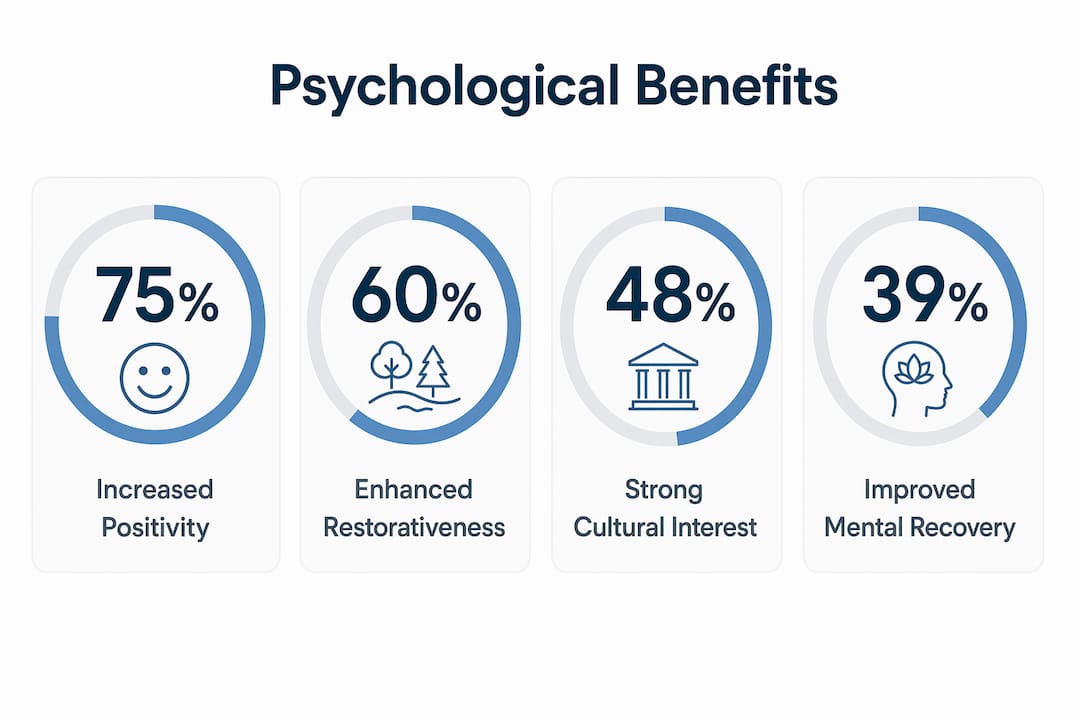
Individual differences do shape the experience. Restorativeness during tours is influenced by personal factors including baseline stress levels and a visitor’s existing connection to nature and culture. A traveller arriving exhausted from a long journey may feel the restorative effect more acutely than one who is already relaxed.
| Visitor characteristic | Effect on restorativeness |
|---|---|
| High cultural interest | Stronger positive emotional response |
| High baseline stress | Greater mood improvement after contextual tour |
| Strong nature connectedness | Enhanced engagement with outdoor heritage sites |
| Low prior knowledge of site | Larger perceived benefit from guided narrative |
The table above illustrates that historical context does not deliver a uniform benefit. It amplifies whatever the visitor brings to the experience. That is precisely why a skilled guide tailors the narrative to the group in front of them, not to a generic audience.
Statistic to note: Visitors who perceive high historical significance in a site report greater positive affect than those who do not. This is not a marginal difference. It represents a fundamentally different quality of experience.
Which multisensory storytelling techniques best support historical context in tours?
Multisensory engagement is the most effective method for deepening historical understanding. Combining visual, tactile, and audio stimuli produces stronger memory retention and greater curiosity than traditional linear, text-based accounts. This finding holds across all age groups, which means it applies equally to a family visiting Glenfinnan Viaduct and a solo traveller exploring the Black Isle.
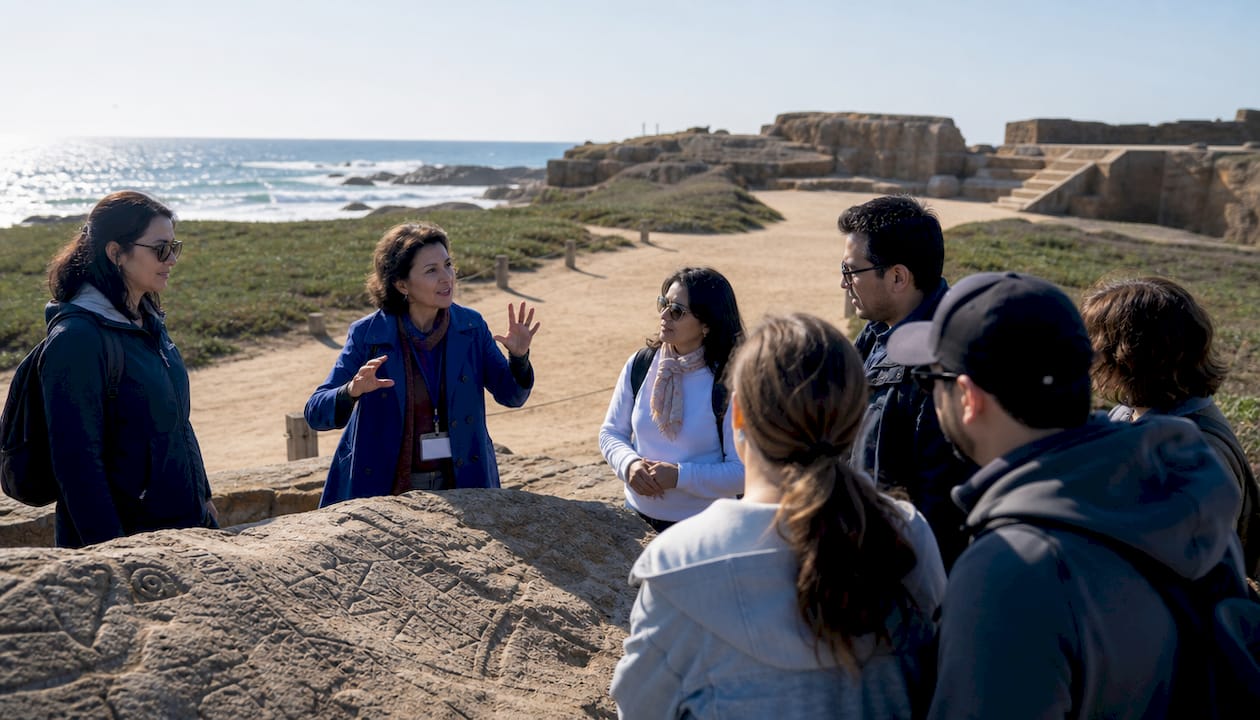
The techniques that deliver the strongest results fall into three categories.
Voice and performance: Expert guides use voice modulation, gesture, and ritual acts to move visitors from passive observation into narrative immersion. A guide who drops their voice to a near-whisper when describing a massacre, then raises it sharply to mark a turning point, creates a physical experience of the story. That is not theatre for its own sake. It is a proven method for building emotional memory.
Tactile engagement: Handling replica artefacts, touching original stonework, or tracing the outline of a carved inscription activates a different part of the brain than listening alone. Tactile contact creates a sense of physical connection to the past that no amount of description can replicate.
Soundscapes and environmental cues: Ambient sound, whether recorded or naturally present, anchors a visitor in time and place. Standing in a Highland glen while a guide describes a clan battle becomes a different experience entirely when the wind, the silence, and the scale of the landscape are woven into the narrative.
| Technique | Primary sense engaged | Key benefit |
|---|---|---|
| Voice modulation and performance | Auditory | Emotional resonance and narrative immersion |
| Replica and artefact handling | Tactile | Physical connection to historical period |
| Soundscapes and environmental cues | Auditory and spatial | Contextual anchoring in time and place |
| Visual storytelling and maps | Visual | Cognitive mapping and spatial understanding |
Understanding tour guide responsibilities makes clear that these techniques require training, not just enthusiasm. A guide who has studied narrative construction will use these tools deliberately. One who has not will default to recitation.
Pro Tip: When on a tour, actively engage with every sensory prompt your guide offers. Touch what you are invited to touch. Listen to the silences as well as the words. Your memory of the experience will be significantly richer for it.
How can travellers choose or enhance tours that prioritise historical context?
The quality of historical context in a tour is visible before you book. Tourists seeking cultural and historical understanding transform their experience from sightseeing into meaningful engagement, but only when the tour is designed to support that transformation. Knowing what to look for saves you from a disappointing day.
Use this checklist when evaluating any tour:
- Ask about guide training. A well-contextualised tour uses guides trained in narrative construction, not just local geography. Ask directly: “How do your guides prepare their historical narratives?” Vague answers are a red flag.
- Look for multisensory elements. Tour descriptions that mention storytelling, artefact handling, or immersive techniques signal a higher level of contextual engagement. Descriptions that list only sites and timings do not.
- Check for personalisation. Storytelling tailored to audience identity creates stronger emotional resonance. A tour that asks about your interests before you depart is more likely to deliver relevant historical context than one that follows a fixed script.
- Prioritise local guides. Local knowledge produces authentic narratives. A guide who grew up near Loch Ness or the Isle of Skye carries contextual understanding that no amount of research fully replicates. Skyehighlandstours builds its tours around local knowledge guides precisely because of this advantage.
- Participate actively. Ask questions during the tour. Request that your guide expand on a detail that interests you. Narrative immersion deepens when visitors engage rather than observe.
The single most reliable indicator of a contextually rich tour is a guide who treats the narrative as the product, not the sites themselves. Sites are fixed. Narrative is the variable that determines whether you leave informed or transformed.
Key takeaways
Historical context is the defining factor that separates a memorable tour from a forgettable one, and travellers who prioritise it will consistently have richer, more restorative experiences.
| Point | Details |
|---|---|
| Narrative transforms tours | Historical context turns disconnected sites into coherent, emotionally resonant stories. |
| Emotional restoration is measurable | Visitors who perceive high cultural significance in a site report greater positive affect and stress reduction. |
| Multisensory techniques deepen retention | Combining voice, touch, and environmental cues produces stronger memory than facts alone. |
| Guide training is the key variable | Guides trained in narrative construction deliver fundamentally different experiences than those who recite information. |
| Active participation amplifies benefit | Travellers who engage with the narrative, ask questions, and use their senses retain more and feel more. |
Why historical context is the most underrated part of any tour
I have spent years watching travellers leave heritage sites with a photograph and very little else. They stood in extraordinary places and felt ordinary. The sites were not the problem. The absence of narrative was.
The common misconception is that historical context means facts: dates, names, and architectural periods. It does not. Historical context is narrative construction, and a skilled guide is not a lecturer. They are a storyteller who uses the physical environment as their stage. The moment travellers understand this distinction, they start choosing tours very differently.
What surprises most people is the restorative dimension. They book a tour expecting to learn something. They leave feeling genuinely lighter, less stressed, more connected. That is not coincidence. Emotional restoration is a documented outcome of contextually rich heritage visits. The history does not just inform you. It works on you.
My honest advice: stop treating historical context as a bonus feature. Treat it as the primary criterion when you choose a tour. The role of storytelling in guided tours is not supplementary. It is the entire point.
— Alin
Skyehighlandstours: where historical context shapes every tour
Skyehighlandstours builds every private tour around the principle that narrative is the product. Each guide is selected for local knowledge and trained to construct historical narratives that connect the Scottish Highlands’ landscapes to the clans, conflicts, and cultures that formed them.

Whether you are visiting the Isle of Skye, Loch Ness, or the Glenfinnan Viaduct, Skyehighlandstours designs your itinerary around the stories that make each site matter. Private tours mean your guide can adapt the narrative to your interests in real time. For travellers who want to understand Scotland rather than simply see it, the sightseeing tour guide explains exactly what to expect. Those ready to go deeper can explore specialised tour options built around cultural heritage and immersive storytelling.
FAQ
What is the role of historical context in tours?
Historical context is the narrative framework that connects physical sites to the events and cultures that shaped them. It transforms a tour from a sequence of locations into a coherent, emotionally meaningful experience.
Why does historical context improve visitor engagement?
Narrative structure gives visitors a mental framework for understanding what they see. Research shows that contextual tours produce immersive experiences, while tours without narrative are perceived as simple site collections.
Do historical tours have psychological benefits?
Research published in Frontiers in Psychology in 2026 confirms that visitors who perceive high cultural and historical significance in a site report greater positive emotional affect and measurable stress reduction compared to uninformed visitors.
What makes a guide effective at delivering historical context?
Effective guides use voice modulation, gesture, tactile prompts, and narrative tailored to their audience. These techniques create emotional resonance and move visitors from passive observation to genuine engagement with history.
How do I know if a tour prioritises historical context?
Look for tour descriptions that mention storytelling, guide training, and multisensory elements. Ask operators directly how their guides structure historical narratives. Vague or fact-focused answers suggest limited contextual depth.