
Your cart is empty Continue Shopping
Custom tour planning tips for families and enthusiasts
Personalised itinerary design is the practice of building a trip around your specific interests, pace, and group rather than following a fixed package. Personalised itineraries achieve 40% higher traveller satisfaction than generic tours. That gap exists because a well-built custom plan puts your priorities first, not a tour operator’s convenience. The custom tour planning tips in this article follow the same principles used by professional travel designers: anchor experiences, flexible scheduling, and local verification.
1. How to identify your non-negotiable anchor experiences
The single most effective custom tour planning tip is to define your anchor experiences before you book anything else. An anchor experience is an activity, site, or meal that you would consider the trip a failure without. Prioritising personal interests over popular sights improves travel quality significantly. Spending a full afternoon at one place you genuinely love outscores rushing through five landmarks you feel obligated to visit.
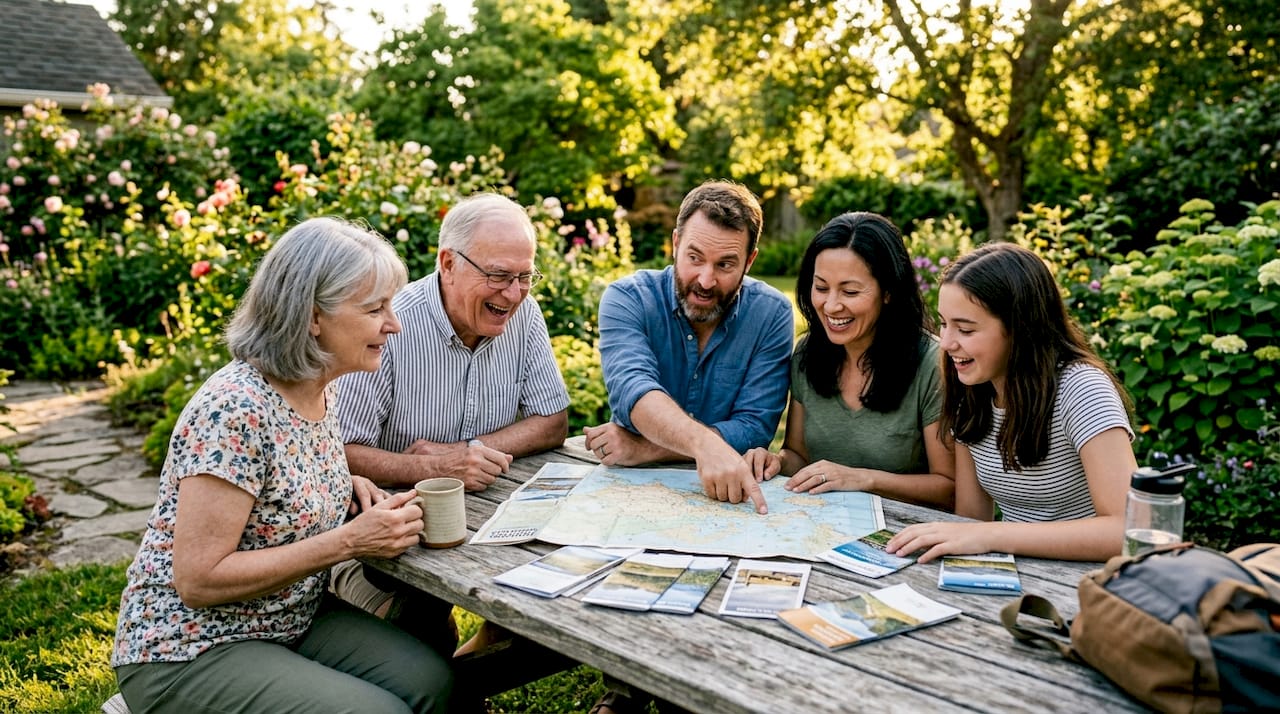
Aim for 3–5 anchor experiences per trip. For families, these might include a wildlife encounter, a scenic train journey like the Glenfinnan Viaduct route, and a hands-on cultural activity. For enthusiasts, they might centre on whisky distillery visits, coastal hikes, or heritage castles. The key is that every other decision, where you sleep, how you travel between stops, what you skip, flows from protecting these anchors.
For groups, define anchors collaboratively. Ask each person to name their single most important experience. Then look for overlap. You can plan your perfect trip around shared priorities while leaving room for individual detours on free afternoons.
- Write each anchor experience on a shared document before researching destinations.
- Rank them by importance so trade-offs are easier if time runs short.
- Attach a realistic time estimate to each anchor, including travel to and from the site.
- Treat anchors as fixed commitments. Build everything else around them.
Pro Tip: If your group cannot agree on anchors within one planning session, use a simple vote. Each person picks their top two choices. The experiences with the most votes become the anchors. This avoids weeks of indecision.
2. Balancing structure with free time
The 70/30 rule is the most practical scheduling framework for personalised travel. A 70/30 split of planned to free time daily reduces traveller fatigue and creates space for spontaneity. Seventy per cent of each day has a clear plan. Thirty per cent stays open for rest, unexpected discoveries, or simply sitting in a café without a schedule.
Most travellers over-schedule because they fear wasting time. The result is the opposite: exhaustion by day three, irritability by day five, and a trip that feels like a checklist rather than an experience. A well-structured travel itinerary prevents this by building breathing room into the design from the start.
For trips longer than ten days, include at least one full rest day. A rest day has no planned activities. It is not a travel day dressed up as a break. It is a genuine pause that resets energy and often produces the most memorable moments of a trip, a spontaneous walk, a conversation with a local, a meal you would never have found on a tour list.
Here is how to apply the 70/30 principle in practice:
- Block your anchor experiences into the itinerary first.
- Add essential logistics: airport transfers, check-ins, travel between destinations.
- Fill no more than 70% of each remaining day with planned activities.
- Leave the rest blank. Write “free time” if it helps you resist the urge to fill it.
- For trips of 10 days or more, mark one full day per week as a rest day with zero obligations.
Pro Tip: Schedule your most physically demanding activities for days two and three of any trip. Your energy is high, jet lag has settled, and you have not yet accumulated fatigue. Save lighter activities for the final days.
3. Planning logistics efficiently for groups
Group logistics fail when too many people are involved in every decision. Scheduling for at least 80% group consensus avoids decision paralysis and missed bookings. Trying to achieve complete agreement on every detail slows progress and reduces the quality of the final plan.
Assign one person as the trip organiser. This person makes final calls on logistics, not on what the group does for fun, but on which flight, which hotel, and which booking deadline to meet. The role is administrative, not authoritarian. It simply removes the bottleneck of collective indecision.
- Book group international flights 8–12 weeks in advance to secure the best fares and seat availability.
- Present the group with no more than 2–3 accommodation options. More choices create longer debates with no better outcome.
- Use a shared document or app to track the itinerary, costs, and responsibilities. Transparency prevents confusion.
- Clear expense-splitting agreements prevent money-related tension. Agree on how costs are split before the first booking is made.
- Phase your bookings logically: flights first, accommodation second, activities third.
Money is the most common source of conflict in group travel. Agreeing upfront on whether costs are split equally or proportionally, and who pays for shared meals, removes the awkwardness before it starts. A simple shared spreadsheet is enough. You do not need a dedicated app, though several free options exist for tracking group expenses.
Pro Tip: Create a group chat specifically for trip logistics and a separate one for general conversation. Mixing the two means important booking details get buried under casual messages.
4. Avoiding common itinerary pitfalls
The most frequent planning mistake is what travel designers call a “geographic logic” failure. Ignoring local transport realities causes backtracking, wasted time, and genuine frustration. A classic example: booking a morning activity on the east side of a city and an afternoon activity on the west, without accounting for peak-hour traffic or limited public transport connections.
The fix is a mental walkthrough. Before finalising any day’s plan, trace the route from your accommodation to each activity and back, in order, using realistic transport times. Check whether roads are single-track in rural areas, whether ferries run on the days you need them, and whether seasonal closures affect any sites you have planned. In the Scottish Highlands, for instance, some roads and visitor centres close or reduce hours outside the main season.
AI tools produce quick itinerary drafts but lack nuance and real-time updates. They do not know that a particular distillery is closed for renovation, that a popular viewpoint requires a timed entry ticket, or that a scenic road floods in autumn. AI cannot fully replace local insights. A five-minute conversation with a local guide or a quick scan of a regional travel forum adds context that no algorithm currently provides.
The most reliable approach combines both. Use an AI tool or a planning app to cluster activities by geography and generate a draft structure. Then verify every detail manually: check official transport schedules, confirm opening hours directly with venues, and read recent posts on local travel forums or blogs. This hybrid method produces itineraries that are both logically structured and grounded in reality.
Pro Tip: Search for “[destination] + travel forum + [current year]” to find recent, first-hand accounts of transport changes, closures, and hidden gems. These posts are often more accurate than official tourism websites.
Key takeaways
Personalised itineraries built around anchor experiences, flexible scheduling, and verified logistics consistently outperform generic packages in traveller satisfaction.
| Point | Details |
|---|---|
| Define anchor experiences first | Choose 3–5 non-negotiable activities and build every other decision around them. |
| Apply the 70/30 rule | Plan 70% of each day and leave 30% unscheduled to reduce fatigue and allow spontaneity. |
| Assign a trip organiser | One person making logistics decisions prevents group indecision and missed bookings. |
| Verify all logistics manually | Check transport schedules, opening hours, and seasonal closures before finalising any day plan. |
| Combine AI drafts with local knowledge | Use planning tools for structure, then consult local sources to confirm accuracy and relevance. |
What I have learned from planning trips the hard way
The most memorable trips I have been part of were not the most meticulously planned. They were the ones where the plan was solid enough to provide direction but loose enough to bend when something better appeared. That balance is harder to achieve than it sounds.
The biggest mistake I see travellers make is treating the itinerary as a contract rather than a guide. When a plan is too rigid, every delay feels like a failure. When it is too loose, the group drifts and anchors get missed. The 70/30 structure solves this, but only if you actually protect the free time. The moment you start filling those gaps with “just one more thing,” the whole system collapses.
For group trips specifically, the dynamics matter as much as the logistics. I have seen well-planned itineraries fall apart because no one wanted to be the person who made a call. Assigning a trip organiser is not about control. It is about giving someone the permission to decide, so the group can get on with enjoying themselves.
Local knowledge remains irreplaceable. I have had guides in the Scottish Highlands point out viewpoints, timing tricks, and local spots that no planning tool had surfaced. That kind of insight changes a good trip into a genuinely memorable one. No amount of research from a desk fully replicates it.
— Alin
How Skyehighlandstours supports your personalised trip
Applying these planning principles to the Scottish Highlands is exactly what Skyehighlandstours does for every traveller. The platform specialises in private personalised tours across the Isle of Skye, Loch Ness, Glenfinnan Viaduct, and the Black Isle, built around your group’s specific interests, pace, and occasion.
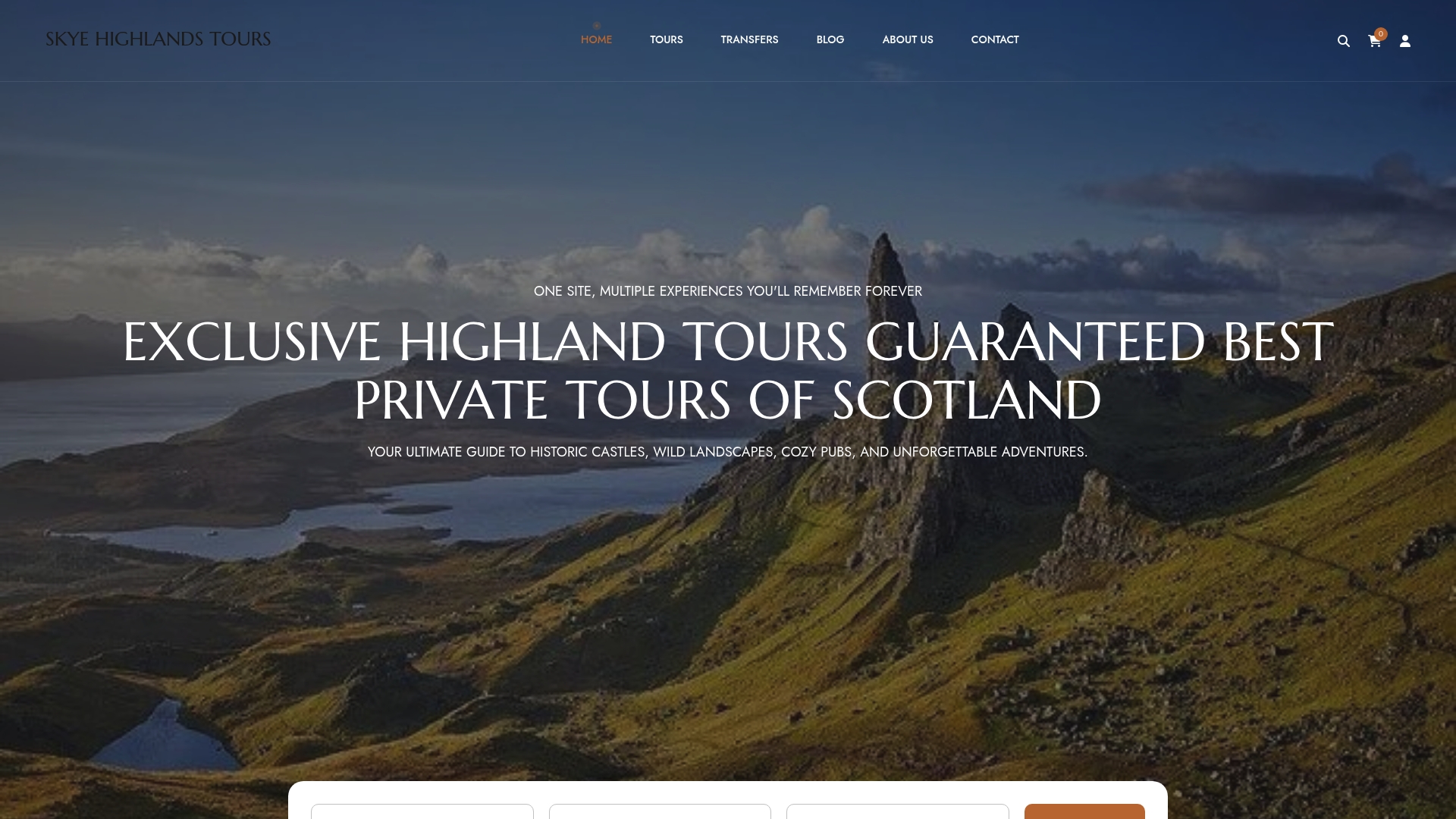
Whether you are planning a family trip, a birthday celebration, or a whisky-focused Highland adventure, Skyehighlandstours pairs you with expert local guides who know the roads, the seasons, and the hidden spots. You bring the anchor experiences. They handle the geographic logic, the timing, and the local insight. The result is a trip that combines the best of your own planning with professional knowledge of the terrain. You can also customise Highland itineraries directly through the platform to match your exact preferences before you book.
FAQ
What are the most important custom tour planning tips?
Define 3–5 anchor experiences before booking anything else, then apply a 70/30 planned-to-free-time ratio each day. These two steps alone produce significantly better trips than starting with destinations or dates.
How far in advance should a group book travel?
Group international flights should be booked 8–12 weeks ahead to secure availability and reasonable fares. Accommodation and activities can follow once flights are confirmed.
Can AI tools replace a travel planner for custom itineraries?
AI tools generate useful draft structures but miss real-time details like closures, transport changes, and local conditions. A hybrid approach, using AI for clustering and local sources for verification, produces the most reliable results.
How do you avoid over-scheduling on a group trip?
Use the 70/30 rule and assign a trip organiser who has the authority to cap the daily activity list. Aiming for 80% group consensus rather than full agreement also speeds decisions and prevents itinerary bloat.
What is the best way to handle money on a group trip?
Agree on a cost-splitting method before the first booking. A shared spreadsheet tracking all group expenses is enough to prevent the financial tension that causes most group travel conflict.
5 Comments