
Your cart is empty Continue Shopping
Step by step whisky tour planning: your 2026 guide
Step by step whisky tour planning is the process of organising a Scottish whisky trip by combining a structured itinerary, deliberate distillery selection, and local cultural experiences. Done well, it turns a loose idea into a genuinely memorable journey. Done poorly, it means driving two hours to a distillery that was fully booked months ago, or arriving at your fourth tasting of the day with a palate too tired to appreciate anything. The industry term for this discipline is whisky trail planning, and it covers everything from pacing your daily visits to booking premium experiences well ahead of peak season. This guide walks you through every stage.
How to create a balanced whisky tour itinerary
The single most important rule in any whisky tour itinerary is this: visit 1–3 distilleries per day. Visiting more than three in a single day produces diminishing sensory returns. Your palate loses its ability to distinguish between expressions, and the visits blur together.
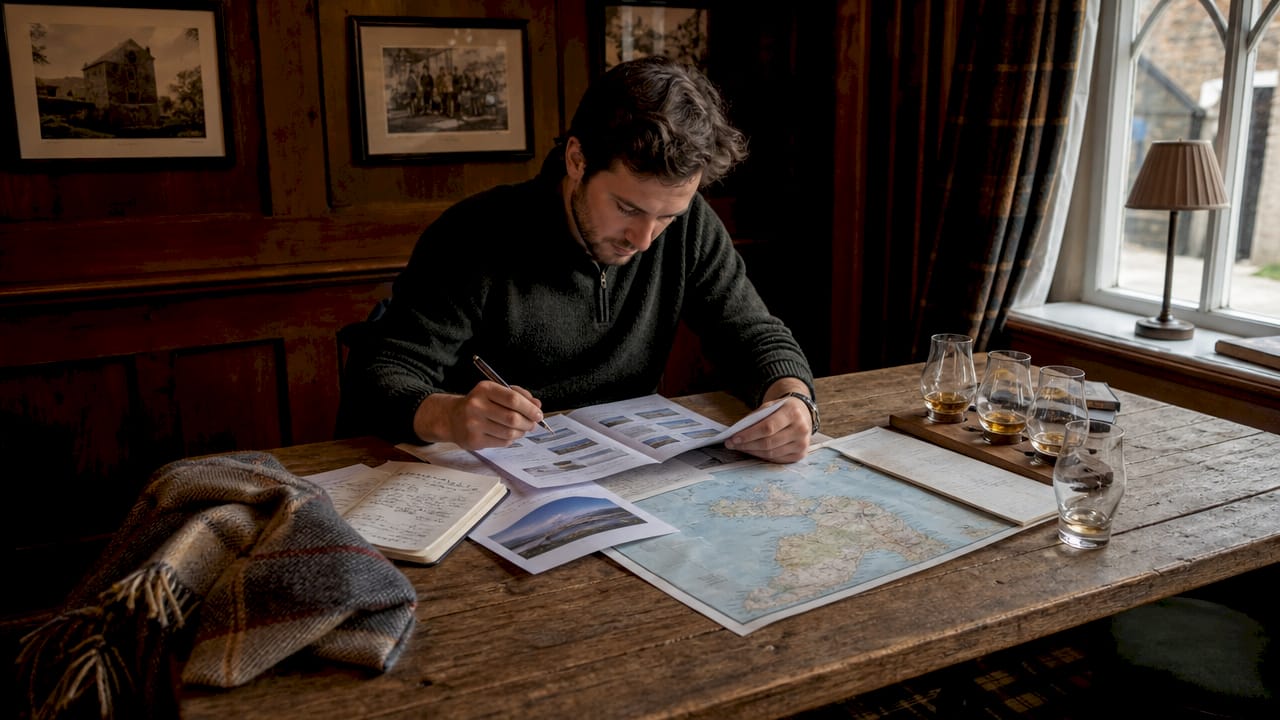
Build your daily schedule around that limit. A morning distillery visit at 10:00 AM, a lunch break in a local village, and an afternoon visit at 2:00 PM is a rhythm that works well. It leaves room for travel between sites without rushing, and it gives your senses time to reset between tastings.
Travel time is a planning variable that travellers consistently underestimate. In remote Highland regions, a 30-mile drive can take over an hour on single-track roads. Map your chosen distilleries before committing to a daily sequence, and check whether the route is circular or linear. A linear route that ends far from your accommodation adds unnecessary mileage at the end of a long day.
- Limit daily distillery visits to 1–3 to protect your palate and enjoyment.
- Schedule at least 90 minutes between visits to allow for travel and a proper break.
- Use mapping tools to confirm driving times on Highland roads before finalising your route.
- Build in at least one free afternoon per three days for spontaneous exploration or rest.
- Consider your accommodation location as the anchor point for each day’s routing.
Pro Tip: Plan your itinerary backwards from your accommodation each evening. This prevents you from ending a long day with an hour of backtracking on unfamiliar roads.
How do you choose which distilleries to visit?
Scotland has five recognised whisky regions: Speyside, Highlands, Islay, Lowlands, and Campbeltown. Each produces whiskies with distinct character. Speyside is known for fruity, sherried expressions. Islay produces heavily peated, coastal whiskies. The Highlands range from light and floral in the south to rich and robust in the north. Anchoring your itinerary by flavour profile rather than geography alone significantly improves satisfaction with your choices.
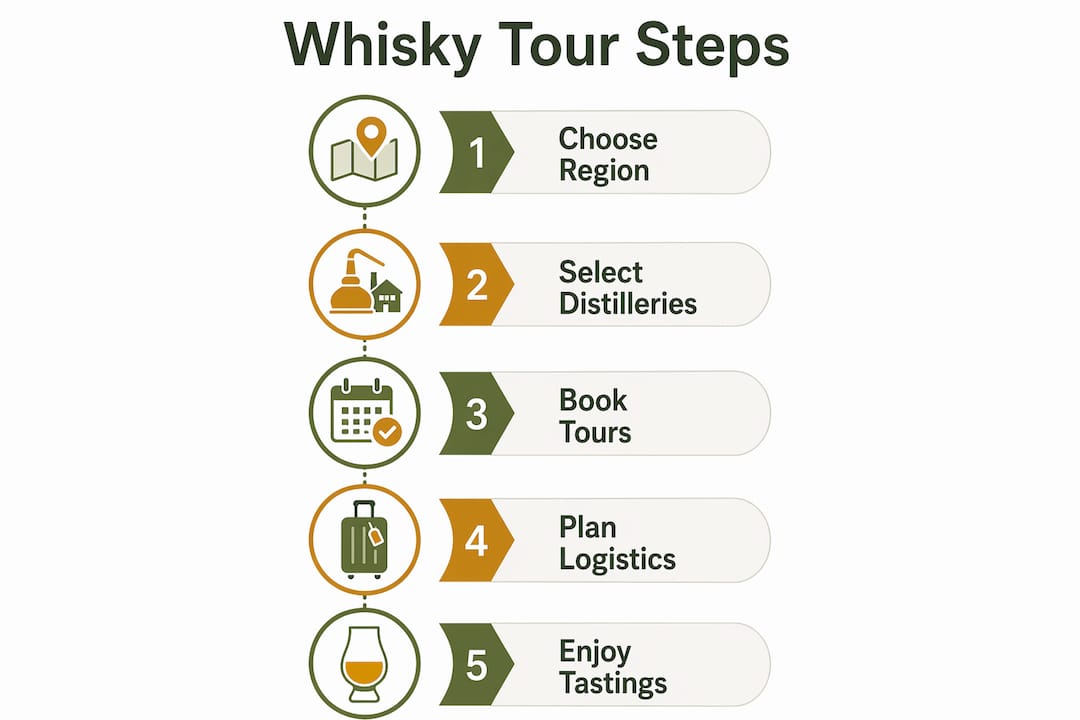
Once you know your preferred flavour direction, mix your selections deliberately. Smaller boutique distilleries offer intimate experiences and memorable personal interactions that large visitor centres simply cannot replicate. A well-balanced whisky tasting trip guide includes at least one or two smaller producers alongside the iconic names.
Booking logistics matter as much as taste preferences. Popular distilleries require bookings 6 months in advance during peak season, which runs from may through september. Leave this too late and your first-choice distilleries will be fully booked.
| Tour type | Typical cost | What to expect |
|---|---|---|
| Standard tour | £15–£25 | 60–90 minute guided tour with 2–4 expressions tasted |
| Premium experience | £50–£150+ | In-depth tasting, rare casks, or private guide |
| Guided day tour (with transport) | £80–£150 per person | Transport from a city hub, entry, and tastings included |
Standard distillery tours last 60–90 minutes and typically cost £15–£25. Premium and bespoke experiences range from £50 to over £150. If your budget allows, book one premium experience per trip. It reframes everything else you taste that day.
Pro Tip: Check each distillery’s website for exclusive “warehouse experience” or “cask sampling” add-ons. These are often bookable separately and sell out faster than the standard tour.
What practical logistics do you need to plan before you go?
Transport is the most consequential logistical decision in planning a distillery tour. Driving yourself gives flexibility but rules out drinking at tastings. Guided tours from cities like Edinburgh or Inverness cost £80–£150 per person for a full day and include transport, entry, and tastings. That removes the driving concern entirely and often includes a knowledgeable guide.
If you drive, designate a non-drinking driver before the trip begins. Designated drivers should not drink on tours, though many distilleries offer soft drinks or miniatures to take home as an alternative. Policies on “driver’s drams” vary by distillery, so check in advance rather than assuming.
Distilleries are active industrial sites. Floors are frequently wet and uneven, and grated walkways are common. Wearing practical, flat-soled closed shoes is a safety requirement, not a style suggestion. Sandals and heels are genuinely dangerous in a working production environment.
A few additional considerations that experienced travellers flag:
- Confirm opening times directly with each distillery. Many close on Sundays or reduce hours outside peak season.
- Check carry-on rules for whisky bottles if you are flying home. Most airlines allow bottles in checked luggage only, within standard liquid limits.
- Pack a small insulated bag if you plan to buy bottles during the trip. Highland temperatures can fluctuate, and direct sun affects spirit quality over a long day in a car boot.
- Allow for seasonal weather. Highland conditions change quickly, and a waterproof layer is non-negotiable regardless of the forecast.
How to enrich your whisky tour with local culture and experiences
A whisky tour that only visits distilleries misses half of what makes Scotland worth the trip. The best itineraries weave in cultural stops that deepen the context of what you are tasting.
Visit a cooperage. The Malt Whisky Trail in Speyside connects nine distilleries and a cooperage, forming a self-guided route with clear signage. Watching coopers build and repair casks by hand changes how you think about maturation and flavour.
Time your visit around a whisky festival. The Spirit of Speyside Whisky Festival, held each may, offers exclusive distillery events, tastings, and dinners that are not available at any other time of year. Tickets sell out months ahead.
Pair whisky with regional food. Smoked salmon, aged cheddar, and dark chocolate each interact differently with peated or sherried expressions. Many distilleries now offer food pairing sessions, and local restaurants in whisky regions often build menus around this.
Book a local guide. A local Scottish guide provides cultural context that no guidebook replicates. They know which distillery manager will spend an extra twenty minutes with a curious group, and which back roads cut through genuinely spectacular scenery.
Include a castle or landscape stop. Eilean Donan Castle near Dornie, the Cairngorms National Park, and the Black Isle all sit within reach of major whisky regions. A two-hour stop at a landscape or heritage site mid-afternoon refreshes your senses before an evening tasting.
Consider urban distilleries as a starting point. Edinburgh and Glasgow both have city-centre distilleries that offer accessible, well-produced visitor experiences. Starting your trip there before heading north eases you into the rhythm of distillery visits without the pressure of remote Highland logistics on day one.
Key takeaways
Effective whisky tour planning requires pacing daily visits to 1–3 distilleries, booking popular experiences at least 6 months ahead, and aligning distillery choices with your personal flavour preferences.
| Point | Details |
|---|---|
| Limit daily visits | Visit 1–3 distilleries per day to protect your palate and maintain enjoyment throughout the trip. |
| Book well in advance | Secure popular distillery tours at least 6 months ahead, especially for peak season visits between may and september. |
| Match distilleries to your palate | Choose distilleries by flavour region first, then layer in iconic and boutique producers for variety. |
| Sort transport before you go | Decide between self-driving and guided tours early, as this determines whether you can drink at tastings. |
| Add cultural depth | Include cooperages, festivals, food pairings, and landscape stops to make the trip more than a series of tastings. |
What I have learned from planning whisky tours in Scotland
The plans that work best are the ones with deliberate gaps in them. Every whisky tour I have seen go wrong followed the same pattern: too many distilleries, too little time between them, and no room for the unexpected. The best day I ever spent in Speyside involved abandoning the afternoon plan entirely because the distillery manager at a small producer invited our group into the warehouse for an impromptu cask tasting. That does not happen if your schedule has no slack.
Smaller distilleries consistently deliver more memorable encounters than the large, heavily marketed visitor centres. That is not a criticism of the big names. Their tours are polished and informative. But the intimacy at a family-run operation, where the person pouring your dram might also be the one who filled the cask three years ago, is something different entirely.
Palate fatigue is real and arrives faster than most travellers expect. After three or four tastings, sensory discernment drops noticeably. Drinking water between expressions, eating something substantial at lunch, and resisting the urge to cram in one more stop all make a measurable difference to how much you actually enjoy the final tasting of the day.
The logistics surprise that catches most travellers off guard is Highland driving time. Roads that look short on a map take twice as long as expected. Build that buffer in from the start, and your trip will feel relaxed rather than rushed.
For anyone considering a personalised Highland itinerary, the single best investment is local knowledge. A guide who knows the region removes the logistical friction and replaces it with the kind of detail that makes a trip genuinely worth telling people about.
— Alin
Plan your whisky tour with Skyehighlandstours
Skyehighlandstours specialises in private, guided whisky tours across the Scottish Highlands, including dedicated routes through Speyside and the Northern Highlands. Every itinerary is built around your flavour preferences, group size, and travel dates, with expert local guides handling the logistics so you can focus entirely on the experience.
Whether you want a full-day Speyside whisky tour or a multi-day private route through the Highlands, Skyehighlandstours builds the schedule, secures the bookings, and provides the cultural context that turns a good trip into an exceptional one. Explore the full range of whisky tour options and start planning your 2026 visit today.
FAQ
How many distilleries should I visit per day?
Visiting 1–3 distilleries per day is the recommended pace. Visiting more than three results in palate fatigue and diminishing enjoyment.
How far in advance should I book distillery tours?
Book at least 6 months ahead for popular distilleries during peak season, which runs from may through september. Smaller distilleries may have more availability at shorter notice.
What does a standard distillery tour cost?
Standard tours cost £15–£25 and last 60–90 minutes. Premium and bespoke experiences range from £50 to over £150 per person.
Can I drive myself between distilleries and still drink?
Designated drivers should not drink at tastings. Many distilleries offer soft drinks or miniatures as an alternative, but driver’s dram policies vary by site. A guided tour with included transport removes this concern entirely.
What should I wear to a distillery visit?
Wear flat-soled closed shoes at every distillery. Floors are wet and uneven in active production areas, making practical footwear a genuine safety requirement.
3 Comments