
Your cart is empty Continue Shopping
Types of couple adventure experiences that bring you closer
The most effective couple adventures fall into six clear categories: land-based challenges, water activities, air experiences, micro-adventures, culinary and sensory outings, and wellness or mixed itineraries. Maverick Family Life reports that shared adrenaline moments release dopamine and oxytocin, helping couples feel closer and more in sync. That chemistry is the engine behind what practitioners now call “darecations” — holidays built around controlled shared challenges rather than passive relaxation. Skyehighlandstours delivers several of these categories across the Scottish Highlands, from Isle of Skye ridge walks to private whisky tastings.
Quick-pick categories:
- Land: hiking, rock climbing, mountain biking, canyoning
- Water: coasteering, sea kayaking, white-water rafting, surfing
- Air: paragliding, skydiving, scenic helicopter flights
- Micro-adventures: wild camping, overnight bothy stays, dawn swims
- Culinary/sensory: whisky tours, foraging walks, private tasting experiences
- Wellness/retreats: yoga retreats, thermal spa breaks, forest bathing
- Mixed itineraries: morning hike + afternoon tasting; kayak + coastal picnic
Table of Contents
- What are the main types of couple adventure experiences?
- How do you pick the right adventure as a couple?
- Practical planning and safety for couple adventures in the UK
- Five UK couple adventure mini-itineraries you can book now
- How do you balance thrill and intimacy on a couple trip?
- Key takeaways
- Why the darecation approach works better than most couples expect
- Private couple adventures in the Scottish Highlands with Skyehighlandstours
- Useful sources
- FAQ
What are the main types of couple adventure experiences?
Each category has a distinct feel, a different physical demand, and a different emotional payoff. Here is what to expect from each one, with UK examples.
| Category | Intensity | Time needed | UK example | Best for |
|---|---|---|---|---|
| Land adventures | Low–High | Half-day to multi-day | Isle of Skye Cuillin ridge, Lake District canyoning | Fitness-focused couples |
| Water adventures | Medium–High | 2–6 hours | Pembrokeshire coasteering, Welsh surf lessons | Thrill-seekers who love the sea |
| Air adventures | High | 1–3 hours | Scottish Highlands paragliding, tandem skydiving | Bucket-list moments |
| Micro-adventures | Low–Medium | Overnight | Cairngorms wild camping, Highland bothy stays | Couples short on time or budget |
| Culinary/sensory | Low | 2–4 hours | Speyside whisky tours, foraging in the New Forest | Intimacy-focused couples |
| Wellness/retreats | Low | Weekend | Lake District spa, Scottish coastal yoga retreat | Recovery and reconnection |
| Mixed itineraries | Variable | Full day or weekend | Skye hike + private tasting; kayak + seaside spa | Couples who want both thrill and calm |
Land adventures range from a gentle coastal path on the Isle of Skye to full-day scrambles on the Cuillin ridge. Lake District canyoning sits at the higher end: expect cold water, short jumps, and a guide who keeps the pace honest. Manawa lists rock climbing, fat biking and dog sledding alongside the more familiar options, which is a useful reminder that “land” covers far more than hiking.
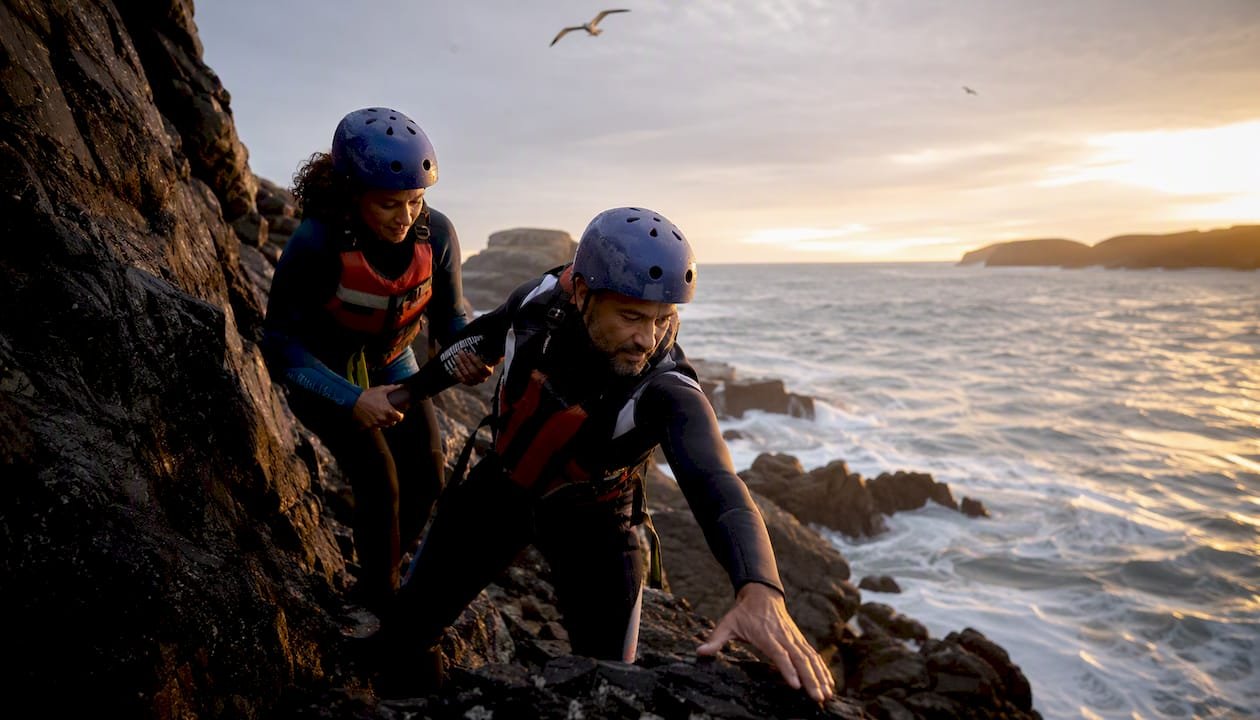
Water adventures in the UK are genuinely world-class. Pembrokeshire coasteering involves scrambling along sea cliffs, jumping into Atlantic swells, and swimming through sea caves — a two-hour session that feels like a shared survival story. Scottish sea kayaking around the Skye coastline is quieter but no less striking.
Air experiences are short, intense, and unforgettable. A tandem skydive over the Scottish Highlands or a paragliding flight above the Cairngorms lasts under an hour but tends to dominate conversation for years.
Micro-adventures are the most underrated category. An overnight bothy stay in the Cairngorms costs almost nothing, requires no specialist kit beyond a sleeping bag and a map, and delivers the kind of shared vulnerability that expensive holidays rarely manage.
Culinary and sensory experiences work differently. Honeymoon Experiences’ analysis shows that adventure activities and sensory culinary experiences are complementary, with many itineraries mixing both for deeper connection. A private Speyside whisky tour or a guided foraging walk followed by a cook-up is low on adrenaline and high on intimacy.
Wellness retreats serve couples who need to decompress together rather than push limits. A coastal yoga weekend or a thermal spa break in the Scottish Borders pairs well with a more demanding activity earlier in the trip.
How do you pick the right adventure as a couple?
Use four filters before you book anything: fitness and health, thrill tolerance, budget and time, and seasonality.
Fitness and health is the filter most couples skip. Canyoning and coasteering require a reasonable baseline of swimming confidence and physical fitness. Rock climbing demands upper-body strength. Be honest with each other before you commit.
Thrill tolerance is rarely equal between partners. Start with a beginner-friendly darecation — gentle white-water rafting or a zip-line — to test shared comfort levels before booking a skydive. Progressive exposure works far better than throwing both of you in at the deep end.
Budget and time narrow the field quickly. Micro-adventures and culinary experiences are the most accessible; air activities and multi-day expeditions carry higher costs and longer lead times.
Seasonality matters more in the UK than most couples realise. Coasteering in Pembrokeshire runs April–October. Highland hiking is best May–September. Winter brings its own rewards — snow-covered glens, fewer crowds — but requires proper kit and realistic expectations.
Pre-booking checklist:
- Discuss any medical conditions, injuries or physical limits honestly
- Agree on a shared goal for the trip (thrill, intimacy, challenge, or rest)
- Decide: guided or self-led? For technical activities, guided is non-negotiable
- Check cancellation policies and weather contingencies
- Pack layers — UK weather changes fast at altitude and on the coast
Professional guides allow couples to focus on each other rather than logistics and safety decisions. For rock climbing, canyoning, or skydiving, a qualified guide is not optional. Manawa’s guidance makes the point clearly: offloading safety concerns to an expert lets couples stay present in the experience rather than anxious about it.
Questions to ask any provider: What is the guide-to-participant ratio? Is the session private or shared with strangers? What happens if one partner wants to stop? What is the minimum fitness requirement?
Practical planning and safety for couple adventures in the UK
Professional guides and proper kit are the two non-negotiables for safe, memorable couple adventures. Everything else is secondary.
- Book early. Private guided experiences in peak season (June–August) fill up fast. Aim for 6–8 weeks’ lead time minimum; 12 weeks for multi-day Highland expeditions.
- Sort insurance first. Standard travel insurance rarely covers adventure activities. Check your policy covers the specific activity — many require an adventure sports add-on.
- Do a medical check. Skydiving, canyoning, and high-altitude hiking all carry contraindications. Confirm with your GP if either partner has a heart condition, recent injury, or respiratory issue.
- Pack for UK conditions. Layering is the system: moisture-wicking base, insulating mid-layer, waterproof shell. Conditions on the Isle of Skye can shift from sunshine to horizontal rain in 20 minutes.
- Brief each other on boundaries. Agree before you set off on a signal word that means “I need to stop.” This is not pessimism — it is the thing that keeps a difficult moment from becoming a relationship flashpoint.
- Plan recovery time. A full-day canyoning session followed by a long drive and a late dinner is a recipe for exhaustion and irritability. Build in a quiet evening or a slow morning after any high-intensity activity.
Pro Tip: Check tidal charts before coasteering or sea kayaking. Many UK coastal activities are tide-dependent, and a session booked at the wrong state of tide can be cancelled or, worse, dangerous. Your provider should handle this — but ask them directly.
Seasonality shapes everything in the UK. Highland rivers run highest in autumn and early spring, which affects canyoning and white-water grades. Winter Highland hikes require crampons and navigation skills. Coastal activities in Wales and Cornwall are warmest July–September.
Five UK couple adventure mini-itineraries you can book now
Five compact itineraries cover beginner, intermediate, and bucket-list levels, all bookable within the UK.
| Itinerary | Duration | Price band | Activity level | Best season | Locality |
|---|---|---|---|---|---|
| Isle of Skye private Highland day | Full day | £££ | Moderate | May–September | Isle of Skye |
| Pembrokeshire coasteering weekend | 2 days | ££ | Moderate–High | April–October | Pembrokeshire |
| Lake District canyoning day | Full day | ££ | High | June–September | Lake District |
| Snowdonia beginner hike + spa | 2 days | ££ | Low–Moderate | April–October | Snowdonia |
| Cairngorms wild camp + whisky tasting | 2 days | £–££ | Low–Moderate | May–August | Cairngorms |
The Isle of Skye option is the one most couples underestimate. A private guided Highland day with Skyehighlandstours covers dramatic coastal scenery, Fairy Pools, and a private whisky tasting — all without the logistics of self-navigation on unfamiliar terrain. The private guide format means the itinerary bends around your pace, not a group’s.
Pro Tip: For any private guided experience in the Scottish Highlands, book at least eight weeks ahead in summer. Mention your fitness levels, any mobility considerations, and whether you want a more active or scenic-focused day when you enquire. Skyehighlandstours builds itineraries around that information from the first contact.
How do you balance thrill and intimacy on a couple trip?
Pairing a high-adrenaline activity with a slower, sensory experience creates the best bonding balance. The sequencing matters as much as the activities themselves.
Schedule the high-intensity moment in the morning when energy and nerve are highest. Follow it with something that requires almost no effort: a private tasting, a long lunch, a coastal walk at sunset. The contrast is the point. After shared adrenaline, the body is primed for connection — conversation flows differently after you have both just jumped off a sea cliff or navigated a river together.
Honeymoon Experiences’ research supports this directly: mixing high-intensity adventure with culinary and sensory experiences produces deeper connection than either type of activity alone. A morning of coasteering followed by an afternoon whisky tour is not just a nice itinerary — it is structurally sound bonding design.
Practical pairings that work well in the UK:
- Morning canyoning + afternoon private distillery tasting
- Sunrise Skye ridge walk + long lunch at a lochside restaurant
- Tandem paraglide + secluded Highland picnic
- Sea kayaking + coastal spa evening
Avoid stacking two high-intensity activities back to back. Physical exhaustion kills intimacy faster than almost anything else.
Key takeaways
The most effective couple adventures combine a shared physical challenge with a slower, sensory experience — and the adventure holiday benefits are strongest when both partners feel genuinely stretched but not overwhelmed.
| Point | Details |
|---|---|
| Start with darecations | Begin with accessible challenges like rafting or zip-lining before committing to high-stakes expeditions. |
| Use the four filters | Match activity to fitness, thrill tolerance, budget, and UK seasonality before booking anything. |
| Pair thrill with intimacy | Schedule high-intensity activities in the morning; follow with culinary or sensory experiences for optimal bonding. |
| Always use guides for technical activities | Professional guides let couples focus on each other while experts handle safety and logistics. |
| Skyehighlandstours for Highland adventures | Offers private, customisable couple itineraries across the Isle of Skye and Scottish Highlands, from half-day to full-day. |
Why the darecation approach works better than most couples expect
The conventional wisdom on couple travel tends to split into two camps: pure relaxation (beach, spa, good food) or pure adventure (multi-day trek, extreme sport, bucket list). Both miss the point.
What actually produces lasting connection is the combination of a moment that felt slightly beyond your comfort zone and a recovery period where you process it together. That is the darecation model, and it works because the adrenaline does something neurological — the dopamine and oxytocin released during shared intensity create a genuine sense of closeness that a pleasant dinner alone cannot replicate.
The other thing most articles get wrong: they treat guided experiences as a compromise for people who are not “real” adventurers. A private guide on a Highland ridge or a canyoning instructor in the Lake District is not a safety crutch. It is the thing that lets both partners stay fully present rather than one of them quietly managing risk while the other enjoys the view. Honest pre-trip conversations about physical limits and a willingness to call a halt when needed matter more than the activity you choose.
Private couple adventures in the Scottish Highlands with Skyehighlandstours
The sharpest alternative to piecing together a couple adventure yourself is a private guided day with Skyehighlandstours across the Scottish Highlands. You get a local expert who knows the terrain, a route built around your fitness levels and interests, and none of the logistical friction that turns a romantic trip into a planning exercise.
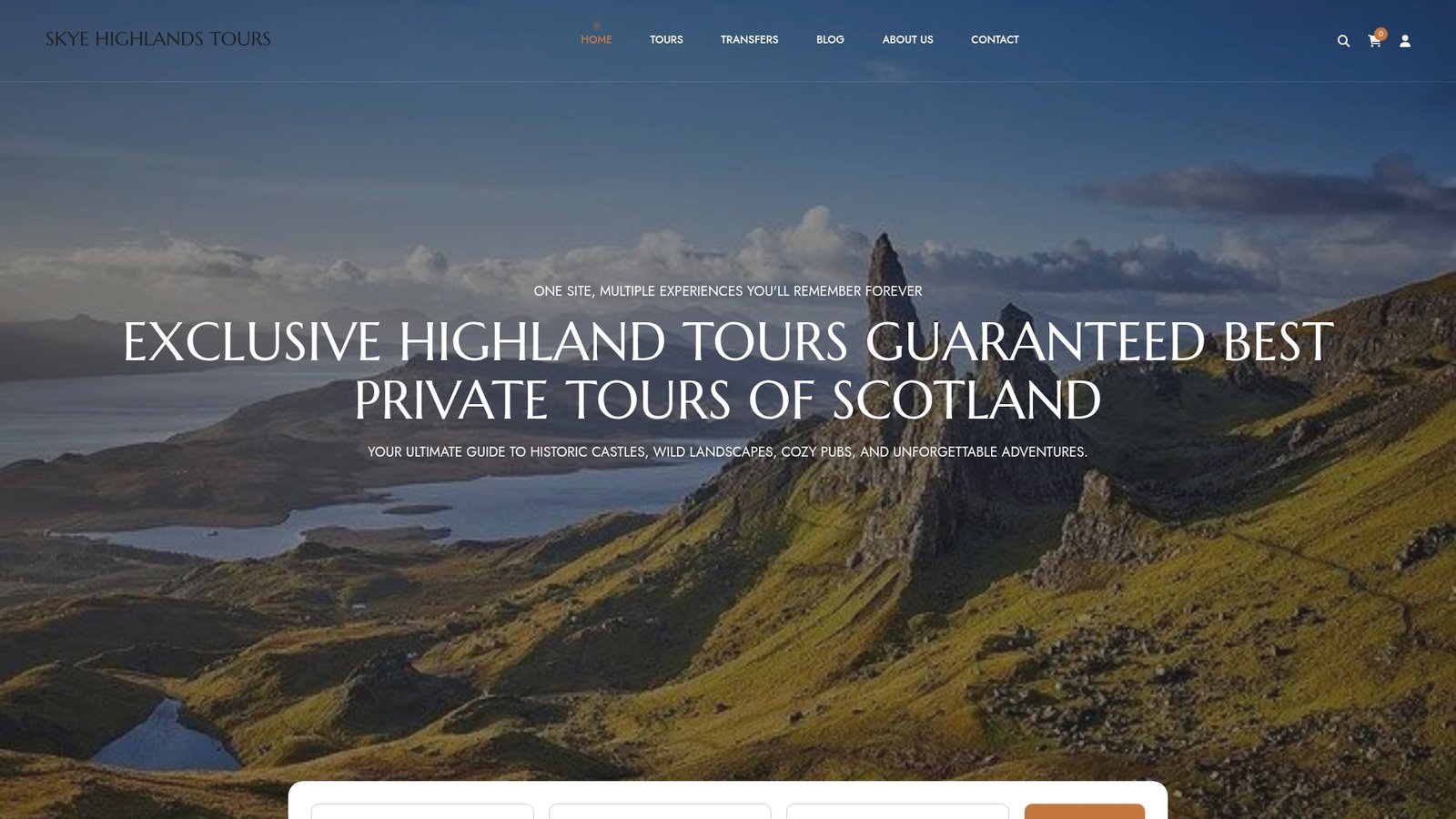
Skyehighlandstours offers half-day and full-day private itineraries covering the Isle of Skye, Loch Ness, Glenfinnan Viaduct, and the Black Isle. Special occasions — anniversaries, proposals, milestone birthdays — can be built into the itinerary from the start. The customised Highland itinerary process starts with your preferences: active or scenic, whisky-focused or landscape-led, gentle or challenging. Pricing and testimonials are on the private tours page. To start planning your couple adventure, visit Skyehighlandstours and request a bespoke itinerary.
Useful sources
- Maverick Family Life: 15 adrenaline trips for couples — bonding chemistry and darecation rationale
- Honeymoon Experiences: adventure vs culinary for couples — mixing thrill and sensory experiences
- Manawa: top adventure activities for couples — activity lists and the case for professional guides
- iClick Tours: romantic adventure tours — itinerary variety and customisation ideas
- Traveling Portrait: benefits of guided adventure tours — practical case for using guides
FAQ
What are the best adventure activities for couples in the UK?
Coasteering in Pembrokeshire, sea kayaking around the Isle of Skye, canyoning in the Lake District, and tandem paragliding in the Cairngorms are among the most popular. Pair any of these with a whisky tasting or coastal spa for a balanced darecation.
How do shared adventures help couples bond?
Maverick Family Life reports that shared adrenaline releases dopamine and oxytocin, which help couples feel closer and more in sync — the neurological basis for the darecation approach.
Do we need a professional guide for couple adventure activities?
For technical activities such as rock climbing, canyoning, skydiving, or Highland navigation, a qualified guide is strongly recommended. Guides handle safety decisions so both partners can focus on the experience and each other.
How can Skyehighlandstours help us plan a couple adventure?
Skyehighlandstours offers private guided Highland itineraries customised to your fitness levels, interests, and any special occasion, with options from half-day to full-day across the Isle of Skye and wider Scottish Highlands.
What is a darecation?
A darecation is a holiday built around controlled shared challenges — activities that feel slightly beyond your comfort zone — paired with downtime for recovery and intimacy. It is the most effective structure for couple bonding through travel.