Your cart is empty Continue Shopping
Skye distilleries for visitors: Tour Talisker and Torabhaig in one day
Talisker Distillery in Carbost and Torabhaig Distillery on the Sleat Peninsula are the two whisky sites you can actually tour on Skye, and they couldn’t be more different: one is a maritime, peaked icon dating to 1830, the other an independent newcomer building its own house style. Book Talisker well ahead, especially in summer, and check smaller producers for same-week availability.
TL;DR:
- Booking Talisker well in advance is essential during peak summer months due to high demand, while smaller producers like Torabhaig and 57º SKYE often accept walk-ins outside busy periods.
- Talisker offers structured, heritage-focused tours emphasizing its maritime, peated profile, whereas Torabhaig provides more flexible, conversational visits with a gentler smoke character.
- Tasting experiences range from standard tours to premium masterclasses, with prices starting around £15 at smaller sites and higher at Talisker, especially during peak season.
- Distillery visits typically last 45 to 90 minutes and include production area walks and tastings, but scheduling and mobility should be planned ahead because of site size and terrain.
- Fitting multiple distilleries into one day benefits from private tours that coordinate transport, timing, and personalized guides to maximize limited time on Skye.
Table of Contents
- How many distilleries are on Skye?
- What happens on a distillery tour?
- Visitor notes: Talisker, Torabhaig and the craft sites
- Getting there: transport, timing and booking strategy
- How a private whisky tour makes the most of limited time
- The history behind Skye’s whisky
- What actually makes Skye whisky taste like Skye whisky
- Signature drams and what to expect in the glass
- How Skye’s weather shapes the spirit
- Where to eat and stay near the distilleries
- Which Skye distillery suits you?
- Book a private whisky day on Skye
- Sources
- FAQ
How many distilleries are on Skye?
Two whisky distilleries currently welcome visitors: Talisker, the island’s oldest working distillery, and Torabhaig, a newer independent house on the Sleat Peninsula. Beyond whisky, a handful of craft spirit producers round out the picture, mostly working in gin and small-batch experimental spirits rather than single malt.
Here’s how the sites map out:
- Talisker Distillery — Carbost, on the shores of Loch Harport. Whisky, established 1830.
- Torabhaig Distillery — Teangue, Sleat Peninsula. Whisky, independent, opened this century.
- 57º SKYE Distillery — Broadford. Gin and experimental small-batch spirits.
- Isle of Skye Distillers — Portree area. Artisan gin and local spirits.
- Skye Bridge Distillery — near Kyle of Lochalsh, on the mainland side of the bridge crossing. Small-scale craft production; tours limited, so check ahead.
If your itinerary is whisky-first, Talisker and Torabhaig do the heavy lifting. If you’re curious about what else the island distils, the Broadford and Portree sites are worth a detour, particularly if gin is more your thing than peat.
What happens on a distillery tour?
Most Skye distillery visits follow a similar shape, whatever the size of the operation: a walk through the production area, a look at the stills and washbacks, then a seated tasting; to know more about what to expect, check this distillery tour experience. What changes site to site is depth and formality.
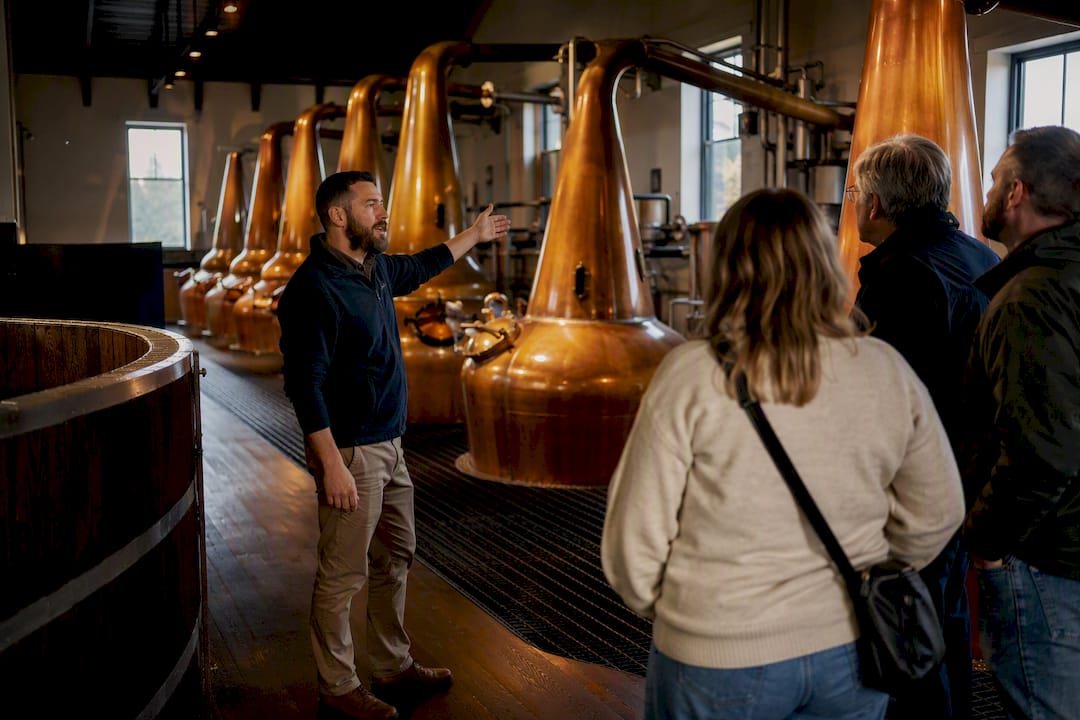
Larger, established operations like Talisker run structured group tours with a set script, moving through mash tun, still house, and warehouse before finishing in a dedicated tasting room and shop. Smaller producers tend to be looser. At sites like 57º SKYE, you’re more likely to get direct access to production areas and a genuine back-and-forth with the person who actually made the spirit, rather than a rehearsed tour narrative.
Pro Tip: If you only have time for one tasting, ask whether the distillery offers a comparative flight against a sister release or limited edition. It tells you far more about house style than a single dram does.
Expect these formats across the island:
- Standard tour and tasting — the core experience at every visitor centre, usually 45 to 90 minutes.
- Premium or masterclass sessions — smaller groups, rarer expressions, sometimes a cask draw.
- Tasting-only visits — no production tour, just a guided flight in the shop or tasting room.
Prices vary sharply by scale. 57º SKYE tastings start from around £15 per person, while Talisker’s guided experiences sit at a higher tier reflecting the brand and the queue to get in during peak season. Book Talisker in advance if you’re visiting between June and September; smaller producers often take walk-ins outside their own busiest weeks. Most sites are step-free on the ground floor, though warehouse visits can involve uneven surfaces, so mention any mobility needs when you book.
Visitor notes: Talisker, Torabhaig and the craft sites
Each Skye distillery offers a distinct kind of visit, not just a different whisky. Here’s what to expect at each.
- Talisker Distillery, Carbost. The maritime peat profile here is the reason people fly to Skye specifically to taste it: salt, smoke, and a pepper kick that’s become the benchmark island style. The visitor centre on Loch Harport runs multiple tour tiers, from an introductory session to premium tastings with older expressions. It’s the busiest site on the island by a wide margin, so advance booking is strongly recommended, particularly for anything beyond the basic tour.
- Torabhaig Distillery, Teangue, Sleat. A newer, independent operation with a house style its own team describes as “smoke with taste”, a more restrained peat character than Talisker’s. Torabhaig runs limited-release series (including its Ephemera range) and keeps its tours smaller and more conversational, which suits visitors who want to ask questions rather than follow a script.
- 57º SKYE Distillery, Broadford. Gin and experimental spirits rather than whisky, but a genuinely different kind of visit: small-batch production, tastings from roughly £15, and a good chance of meeting the person who distilled what’s in your glass.
- Isle of Skye Distillers, Portree area. Artisan gin with a visitor shop and tasting sessions. Handy if you’re basing yourself near Portree and want a short, flexible stop rather than a full tour commitment.
- Skye Bridge Distillery and nearby craft producers. Smaller-scale operations near Kyle of Lochalsh with limited or seasonal tour availability. Worth a call or email before you build them into a fixed itinerary, since opening hours can shift outside peak season.
Torabhaig and 57º SKYE both share a trait worth knowing before you book: smaller distilleries tend to be more flexible on scheduling and more willing to let you into the working parts of the site, which appeals if you’d rather understand process than tick off a brand name.
Getting there: transport, timing and booking strategy
Distances on Skye are short on the map and long on the clock. Carbost sits roughly 40 minutes from Portree by car, while Teangue in Sleat is closer to Skye Bridge and Broadford than to the north of the island. There’s no meaningful public transport link between the distilleries, so a hire car, a taxi, or an organised tour is the realistic way to visit more than one site in a day.
Summer is the busiest season across every Highland distillery, and visitor centres sometimes announce maintenance closures in the shoulder or low season, so check the official page for your chosen date before you travel. Talisker’s demand is high enough that availability can shift with little notice, particularly around July and August.
- Book Talisker at least a few weeks ahead in summer; smaller producers usually take bookings within days.
- Walk-in odds are decent at craft sites outside peak hours, poor at Talisker on a summer afternoon.
- Nominate a driver if you’re tasting at more than one site, and pace yourself: most tastings pour in small measures, but two or three stops adds up.
- Stay behind marked lines in production areas. Distilleries are working sites with hot stills and moving equipment, not museums.
Pro Tip: Ring ahead the morning of your visit if you’re flexible on timing. Small producers will often squeeze you into a quieter slot than the one showing as available online.
How a private whisky tour makes the most of limited time
Fitting Talisker, Torabhaig, and a craft stop into one day is a logistics problem as much as a whisky one: driving times, staggered booking slots, and the fact that nobody should be driving between tastings. A private itinerary solves that by sequencing bookings around drive times and building in a local driver, so nobody in the group has to abstain to get everyone home safely.
A well-planned private day typically includes transport between sites, a guide who knows which tours are worth the premium price and which aren’t, and tastings pitched to the group’s actual interest rather than a generic script. Skyehighlandstours’ own step-by-step whisky tour planning guide covers how that sequencing works in practice, and the whisky tasting experience guide is worth a read if you want to taste more critically once you’re there.
The history behind Skye’s whisky
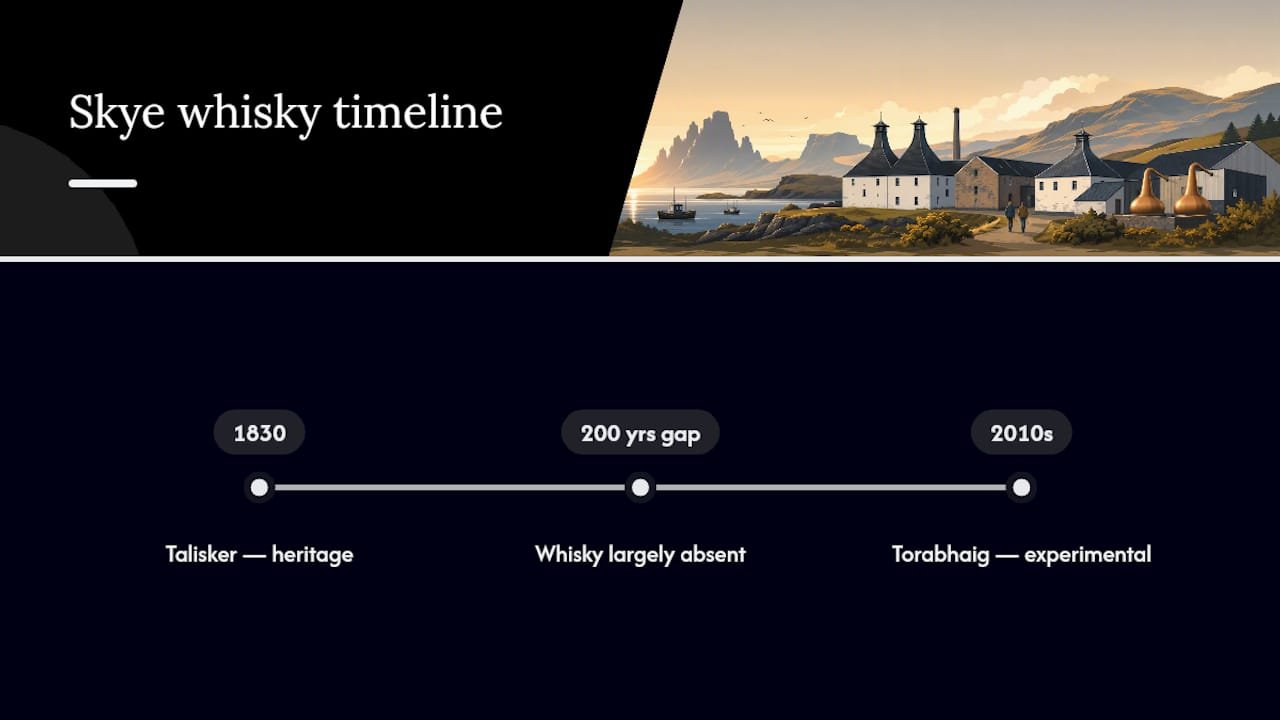
Talisker’s story starts in 1830, when the MacAskill brothers built a distillery on Loch Harport to serve a Highland whisky market already booming after excise reforms opened up legal production. It survived fires, ownership changes, and the industry’s long twentieth-century contractions to become the island’s defining spirit, eventually passing into the hands of what’s now Diageo.
Torabhaig is the newer chapter. Whisky distilling had effectively vanished from the rest of Skye for the best part of two centuries until Torabhaig opened in the 2010s on the Sleat Peninsula, in a building that once housed a farm steading. Its arrival mattered because it broke Talisker’s long monopoly on “Skye whisky” as a category, giving drinkers a second reference point for what island malt could taste like.
That gap between the two founding dates explains a lot about how each site presents itself today. Talisker leans into heritage: a Victorian-era name, a long-established visitor centre, and a house style that’s barely shifted in decades. Torabhaig leans into experimentation, releasing limited series and talking openly about how its style is still being defined. Visiting both back to back gives you a compressed version of two centuries of island distilling, which is more interesting than either site manages alone.
What actually makes Skye whisky taste like Skye whisky
Peat is the obvious answer, but it’s not the whole one. Both Talisker and Torabhaig use peated malt, though the character of the peat itself, and how it’s handled at each site, produces genuinely different results rather than two versions of the same smoke.
Talisker’s process leans on its coastal stills and a distinctive still design, credited by many in the industry with contributing to the “wave”-shaped copper heads, said to add texture to the spirit before it ever touches a cask. The result is the pepper-and-brine finish the brand is known for.
Torabhaig takes a more restrained approach to peat, aiming for what it calls a “smoke with taste” balance rather than a heavy, smoke-forward dram. That’s a deliberate house decision, not an accident of geography, and it’s why tasting the two side by side is more instructive than tasting either alone.
Water source matters too. Both distilleries draw on Skye’s abundant hill and loch water, filtered through peat-rich ground before it ever reaches the stills, which locals and distillers alike credit with softening the spirit’s edges. None of this is unique to Skye in isolation. Islay and other coastal Scottish distilleries use similar principles. What’s specific to Skye is the particular combination of maritime exposure, hill water, and each distillery’s own choices about peat level and still shape.
Signature drams and what to expect in the glass
Talisker’s core range centres on its 10-year-old, a smoky, peppery dram with a strong maritime finish, sea salt and black pepper up front, then a slow-burning smoke that lingers. Older expressions in the range soften that pepper edge in favour of dried fruit and a rounder sweetness, but the brine never fully disappears; it’s the throughline across the whole range.
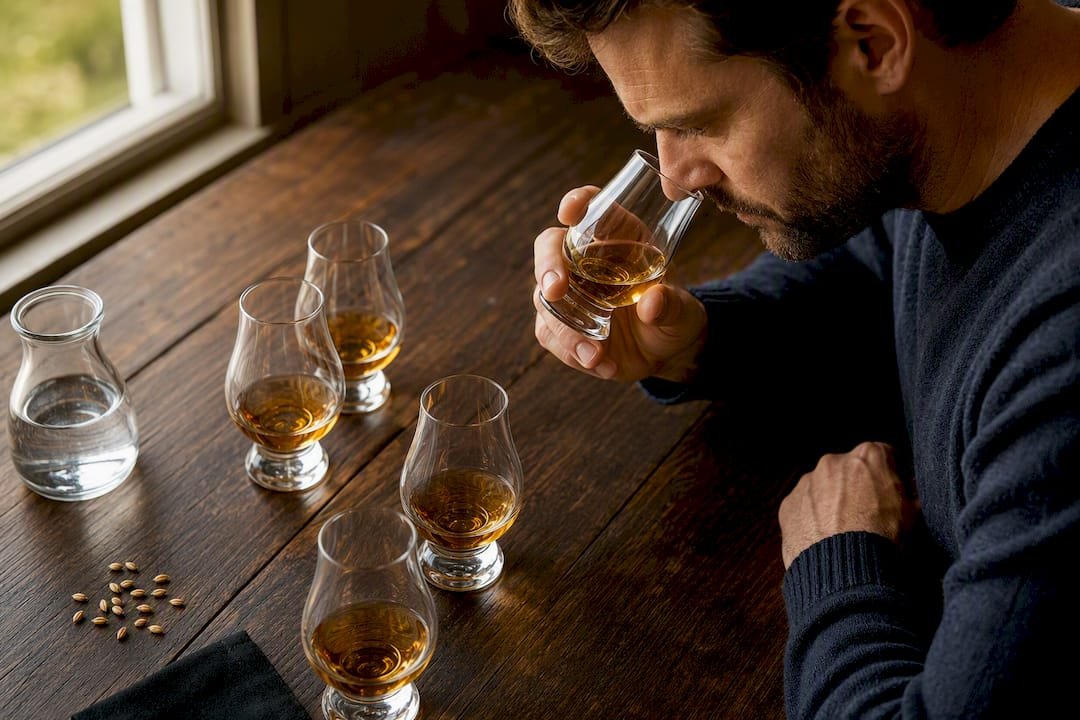
Torabhaig’s releases sit at the gentler end of the peat spectrum. Where Talisker announces itself immediately, Torabhaig’s “smoke with taste” style holds the peat back a little, letting fruit and cereal notes come through before the smoke arrives. Its limited Ephemera series pushes further into experimental cask finishes, which makes it worth trying if you’ve already got a fixed idea of what “Skye whisky” tastes like from Talisker alone.
If you’re stopping at a craft site too, don’t expect a whisky comparison. 57º SKYE and Isle of Skye Distillers work in gin, so the tasting notes shift entirely, botanical, citrus-forward profiles that make an interesting contrast to a peated flight rather than a competing version of it. Tasting order matters here: do the gin stop before the whisky, not after, or the peat will flatten everything that follows.
How Skye’s weather shapes the spirit
Skye’s climate isn’t gentle on anything, least of all a whisky warehouse. Constant sea air, high humidity, and wide temperature swings between seasons all act on casks maturing on-site, encouraging faster interaction between spirit and wood than you’d get in a drier inland climate. That’s part of why coastal Scottish whisky, Skye’s included, so often carries a briny, maritime edge that inland Speyside malts simply don’t develop.
The exposure runs both ways. Warehouses sitting close to open water lose more spirit to evaporation (the “angel’s share”) in a way that’s widely understood to concentrate remaining flavour compounds over a long maturation. Distillers on Skye work with that trade-off rather than against it, which is part of why patience with older expressions tends to pay off on this coastline more than most.
Where to eat and stay near the distilleries
Carbost has limited dining of its own, so most Talisker visitors base themselves in Portree or Broadford and drive in for the tour. Portree gives you the widest choice of restaurants and seafood, plus enough accommodation variety to suit most budgets, and it sits within a manageable drive of both Talisker and the Trotternish coast if you’re stacking sightseeing around the tasting.
Sleat, where Torabhaig sits, has a quieter but well-regarded food scene built around local seafood and game, reflecting the peninsula’s reputation as one of Skye’s more refined dining corners. Broadford works well as a base if you’re visiting 57º SKYE and Torabhaig on the same day, since it sits roughly midway between the two.
Wherever you stay, pair the tasting with a walk if you can. The Talisker Bay walk is a short, scenic coastal route close to the distillery and makes a good way to clear your head between a tour and dinner, rather than driving straight from tasting room to restaurant.
Which Skye distillery suits you?
If you want the definitive island dram and don’t mind planning ahead, Talisker earns its reputation; it’s the maritime, peat-forward benchmark most people come to Skye for. If you’d rather talk to the people making the whisky and watch a house style still being shaped, Torabhaig is the better fit. Enthusiasts chasing something outside whisky entirely should carve out time for 57º SKYE or Isle of Skye Distillers.
Whichever you choose, pair the visit with a walk or a nearby attraction. A tasting on its own is 45 minutes; a tasting plus a coastal walk is a proper afternoon.
— Alin
Book a private whisky day on Skye
A private whisky tour sequences distilleries’ slots, stops at various producers, and the driving between them, so nobody in your group has to skip a dram to get everyone home safely.

A typical private day can include transport between distilleries, a local guide familiar with premium tastings, and a route built around your interests rather than a fixed coach schedule. It can also include a coastal walk or a heritage stop without adding a second booking headache. If that sounds like the kind of day you want on Skye, take a look at the whisky tours available through Skyehighlandstours and check dates before your visit.
Sources
FAQ
How many distilleries are there on Skye?
Two whisky distilleries currently welcome visitors on Skye: Talisker in Carbost and Torabhaig on the Sleat Peninsula. A handful of craft producers, including 57º SKYE and Isle of Skye Distillers, add gin and experimental spirits to the island’s line-up.
What are the best distilleries to visit on the Isle of Skye?
Talisker and Torabhaig are the two essential whisky stops, each offering a different side of island distilling, one long-established and maritime, the other independent and still evolving its style. For a broader spirits picture, 57º SKYE in Broadford is worth adding if you’re interested in gin.
What distillery is on the Isle of Skye?
Talisker, established in 1830 in Carbost, is the island’s original and best-known distillery. Torabhaig, in Teangue on the Sleat Peninsula, is the newer independent site that has since given Skye whisky a second identity.
Which Skye whisky is considered the best?
Talisker’s 10-year-old is the most widely recognised expression and the benchmark for the island’s peppery, maritime style, though Torabhaig’s limited releases have built a strong following among drinkers who prefer a gentler smoke profile. Which one you’ll rate higher comes down to whether you want peat announced immediately or held back.
Do I need to book Talisker in advance?
Yes, especially between June and September, when Talisker’s popularity means slots for premium tastings and even standard tours can fill up days ahead. Smaller producers such as Torabhaig and 57º SKYE are generally easier to book at short notice.