Your cart is empty Continue Shopping
Discover What Makes Skye Unique: Landscapes, Heritage, and Folklore
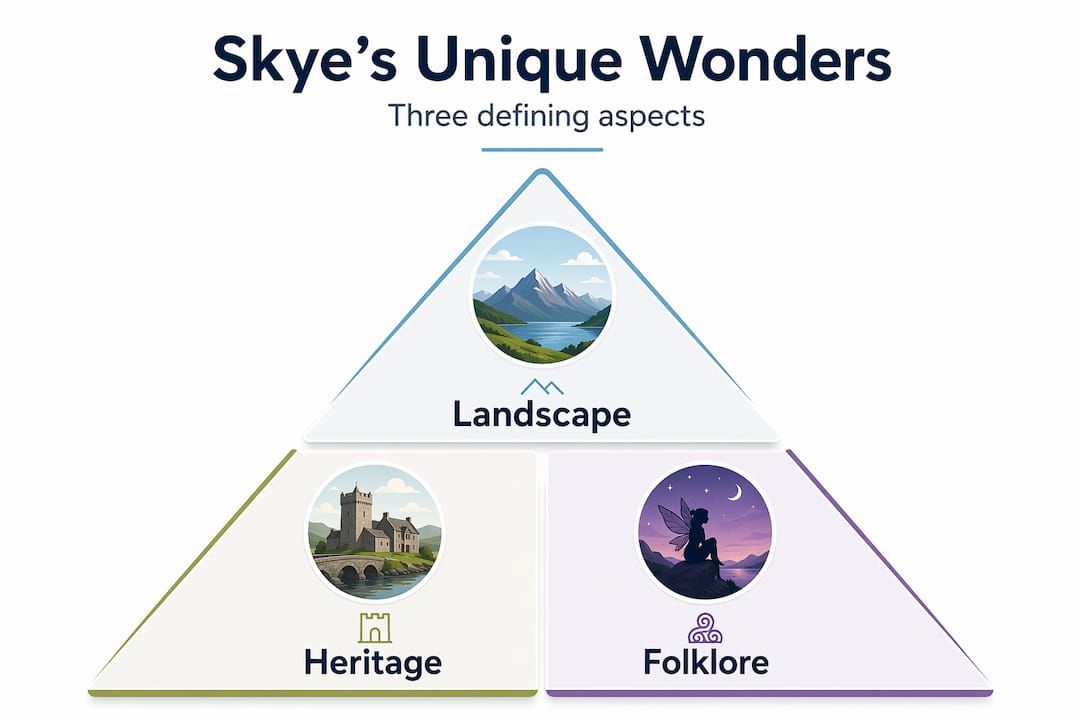
Most travelers arrive on the Isle of Skye expecting beautiful views. What they don’t expect is to feel like they’ve stepped into a living geological museum, a language lesson rooted in ancient mythology, and a fairy tale all at once. Skye isn’t simply scenic. It’s a layered world where volcanic rock, Gaelic tradition, and centuries of folklore stack on top of each other to create something no postcard fully captures. If you’re planning a visit and want more than just a photo at the Old Man of Storr, this guide will show you exactly why Skye rewards those who look deeper.
Table of Contents
- Skye’s dramatic landscape: A geological masterpiece
- Cultural heritage: Scottish Gaelic and place names
- Fairy folklore and otherworldly motifs
- Planning your Skye adventure: Tips for truly unique experiences
- Why a cookie-cutter tour misses Skye’s real magic
- Explore Skye’s unique wonders with a personalized tour
- Frequently asked questions
Key Takeaways
| Point | Details |
|---|---|
| Geological wonder | Skye’s landscape owes its drama to ancient volcanic origins and glacial sculpting. |
| Gaelic heritage | Scottish Gaelic and unique place names enrich your understanding of Skye’s culture. |
| Magical folklore | Fairy legends and local stories inspire a sense of magic at sites like the Fairy Glen. |
| Flexible planning | Weather and terrain call for adaptable itineraries to unlock Skye’s uniqueness. |
| Personalized tours | Local guides and tailored experiences transform your visit into something memorable and meaningful. |
Skye’s dramatic landscape: A geological masterpiece
Before you understand why Skye looks the way it does, you need to understand what’s underneath it. The island’s terrain didn’t just happen. It was forged through two distinct, violent processes separated by millions of years.
Around 60 million years ago, intense volcanic activity pushed magma through the Earth’s crust across what is now northwestern Scotland. On Skye, this produced enormous lava flows and intrusive rock formations. Then, during the last Ice Age, glaciers carved across these volcanic structures, scraping, grinding, and reshaping everything they touched. The result is a landscape of almost theatrical contrast: rolling moorland cut open by sudden, dramatic ridgelines, sea lochs pushing deep inland, and rock faces that look freshly split.
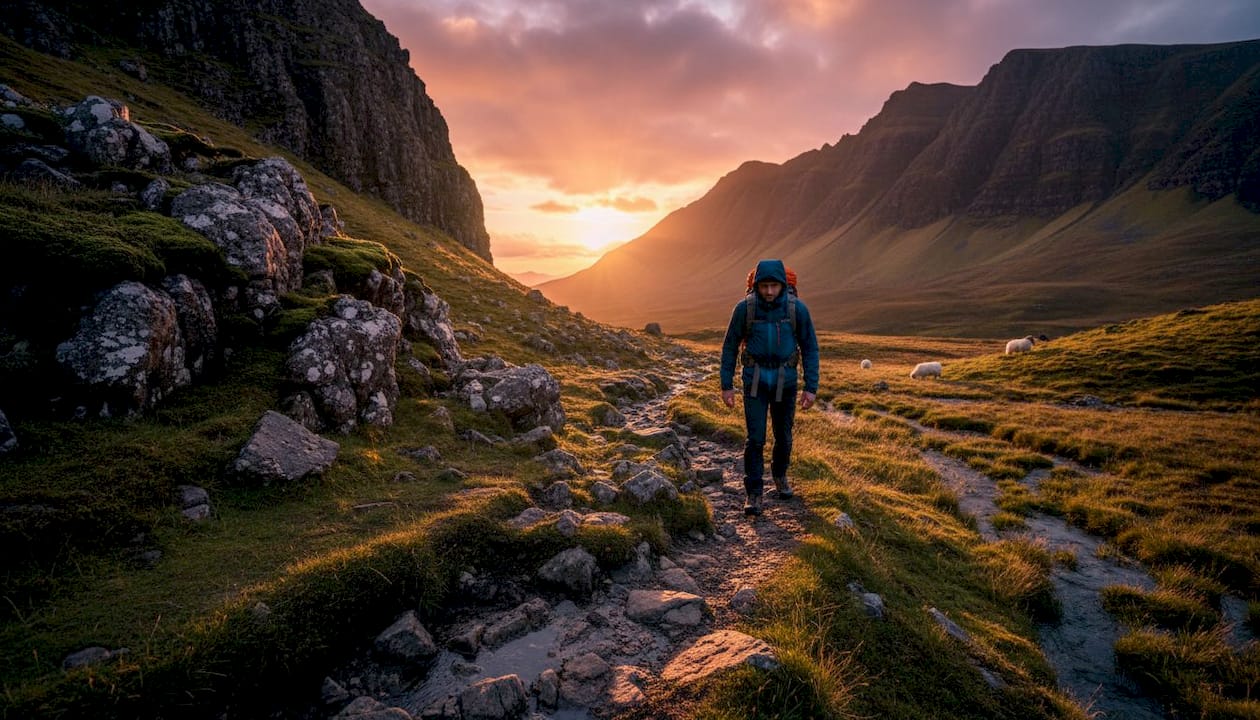
Skye’s geology is a showcase of volcanic history and relentless glacial sculpting, with the Black Cuillin as a standout feature. The Cuillin mountains are primarily made of gabbro, a dark, coarse-grained igneous rock that’s unusually rough to the touch. That texture isn’t just interesting trivia. It gives climbers and hikers exceptional grip on rock faces that would be lethal if they were smooth. The gabbro’s resistance to erosion also explains why the Cuillins haven’t worn down like softer hills elsewhere. They still stand sharp and severe, looking almost out of place on a Scottish island.
| Feature | Rock type | Approximate age |
|---|---|---|
| Black Cuillin peaks | Gabbro and basalt | 60 million years |
| Red Cuillin hills | Granite | 58 million years |
| Trotternish ridge | Basalt lava over Jurassic rock | 55 million years |
| Staffin Bay cliffs | Jurassic sedimentary layers | 150 million years |
The Trotternish peninsula offers another angle on this geological story. Here, massive basalt lava flows sit on top of much softer Jurassic sediments. Over time, the heavy basalt causes the underlying rock to collapse and slide, creating the bizarre, tilted formations you see at the Quiraing and the Storr. These aren’t just pretty. They’re still moving. Geological survey data shows measurable landslip activity in Trotternish even today.
“The Cuillins are not just mountains. They are evidence of a primordial eruption frozen in time, shaped further by ice that is now long gone but whose marks remain everywhere you look.”
For travelers, this geology defines what’s physically possible. Certain things to do on Skye like ridge walking or sea cliff scrambling are only accessible because of how the rock behaves. Knowing the geology helps you choose the right experiences for your fitness level and interests.
Pro Tip: If you’re joining Skye guided tours, ask your guide specifically about the rock underfoot at each location. That context transforms a walk into a story told over 60 million years.
Cultural heritage: Scottish Gaelic and place names
Once you’ve absorbed the landscape, the next layer is language. Skye has one of the highest concentrations of Gaelic speakers in Scotland, and the language shows up everywhere, most powerfully in place names.
Scottish Gaelic is an important cultural anchor, and place names preserve ecological, historic, and mythic knowledge that would otherwise be lost. When you learn that “Portree” comes from the Gaelic Port Rìgh, meaning “King’s Port,” you’re suddenly standing in the harbor where King James V anchored in 1540. The name carries the history. When you see “Sligachan,” you’re reading a Gaelic word meaning “shelly place,” describing exactly what you’d find at the river mouth. These aren’t decorative names. They’re compressed information about landscape, ecology, and events stretching back centuries.
Here’s what that looks like across some of Skye’s most visited spots:
- Dunvegan comes from Dùn Bheagain, meaning “small fort,” referencing the ancient fortification predating the current castle
- Uig derives from the Old Norse vík, meaning “bay,” a reminder that Vikings settled and named parts of Skye
- Elgol likely comes from Ealgol, which some linguists connect to references of a rocky outcrop or hiding place
- Kilt Rock is a modern English name, but the Gaelic equivalent describes the columnar basalt pattern locals noticed long before tourists arrived
Understanding even a handful of these names changes how you move through the island. You stop seeing signs as navigation and start reading them as historical text.
| Place name | Gaelic origin | Meaning in English |
|---|---|---|
| Portree | Port Rìgh | King’s harbor |
| Sligachan | Sligeachan | Shelly place |
| Dunvegan | Dùn Bheagain | Small fort |
| Staffin | Stàphain | Pillar place |
Gaelic also lives in daily interactions. Local guides who speak the language can shift your experience entirely. They’ll point out a hillside name that translates to “the place where the cattle were lost” and suddenly that unremarkable slope carries weight. This is one reason why immersing yourself in Skye traditional food and local culture alongside landscape sightseeing creates a fuller, more memorable visit. The culture and the scenery aren’t separate things on Skye. They describe each other.
Fairy folklore and otherworldly motifs
If geology is Skye’s bones and Gaelic is its language, then folklore is its imagination. The island has accumulated centuries of stories about the supernatural, and unlike folklore that feels purely academic, Skye’s fairy legends still feel physically present in specific landscapes.
The Fairy Glen near Uig features conical hills, winding paths, and stone spirals, with local tradition connecting it to fairy belief. The place is genuinely strange. Rolling grass humps rise and fall in unexpected patterns, and the scale feels slightly off, as if the landscape belongs to a different world’s proportions. Visitors describe it as disorienting in the best possible way. The stone spirals left by previous visitors echo a much older tradition of marking fairy ground to signal respect or request passage.
Here’s why this matters for your itinerary:
- The Fairy Glen near Uig is small enough to be easily skipped on a standard route but rich enough to anchor a morning’s exploration. Arrive early before other visitors show up and the atmosphere is genuinely eerie.
- Dunvegan Castle holds the Fairy Flag, a silk banner said to have been gifted to the MacLeod clan by fairies. The clan believed it had protective powers, and clan members reportedly carried it into battle twice. It survives in the castle today, worn thin but intact.
- The Fairy Pools at Glenbrittle are named not just for their color but because local tradition held that these pools were gathering places for the supernatural. The vivid turquoise water, fed by snowmelt from the Cuillins, does look like it shouldn’t exist in the natural world.
- Talisker Bay sits near landscapes tied to old sea legends, where the boundary between the human world and the fairy world was considered especially thin.
These sites aren’t just interesting because of the stories. The stories change how you see the physical landscape. A waterfall isn’t just water when you know it’s also a threshold. A hillside isn’t just terrain when local tradition says it was once home to beings that didn’t follow human rules.
Pro Tip: Ask your guide about the Sìthichean (pronounced “shee-han”), the Gaelic word for fairies. It translates more accurately to “the peaceful ones,” and that naming choice alone reveals something important about how Skye’s people historically related to the supernatural: with caution, not dismissal. That perspective unlocks the folklore in a way no guidebook can replicate.
Folklore also creates unexpected connections to the landscape that unforgettable Skye sights become genuinely richer when you understand them in context.
Planning your Skye adventure: Tips for truly unique experiences
Knowing what makes Skye special is one thing. Building an itinerary that actually lets you experience it is another challenge entirely, and the biggest mistake most visitors make is treating Skye like a checklist.
Cuillin and related experiences depend on terrain and weather, so flexibility in your itinerary is key. Skye receives around 250 days of rainfall per year on average, and conditions in the Cuillins specifically can shift within an hour. Low cloud can completely hide peaks that were visible at breakfast. That sounds frustrating, but experienced travelers know it also means that a clouded-out ridge walk can pivot into an incredible visit to a sea cave, a croft museum, or a distillery you hadn’t originally planned to see.
Here’s how to build a Skye itinerary that handles that unpredictability well:
- Book your guide early but discuss contingencies. The best local guides come prepared with two or three alternative plans for every day, depending on weather. Discuss this when you book, not the morning of.
- Separate physical and cultural experiences. On a clear day, push toward the Cuillins or the Quiraing. On a gray day, dive into Dunvegan Castle, the Skye Museum of Island Life, or a tasting room. Weather becomes a scheduling tool, not an obstacle.
- Allow time between named sites. The roadside pull-offs, unnamed lochs, and sudden coastal views often outperform the famous landmarks. Schedule buffer time to stop unexpectedly.
- Plan for the golden hour. Skye’s northern position means long summer evenings with light that photographers describe as almost unfair in its quality. If your itinerary ends at 4pm, you’re missing the best part of the day photographically and atmospherically.
A 2022 visitor survey from VisitScotland found that travelers who used local guides rated their experiences significantly higher than those who self-navigated, specifically citing unexpected stops and local knowledge as the deciding factors. That statistic reflects something real about Skye. The island doesn’t give up its best moments to people following a map app.
For travelers who want depth rather than breadth, advanced Skye tours are structured exactly around this kind of intentional flexibility. And if you’re building a longer Scotland trip, tailored Scotland tours can weave Skye into a broader Highland itinerary that maintains the same quality of experience across multiple days.
Why a cookie-cutter tour misses Skye’s real magic
Here’s the honest truth that most travel content won’t tell you: following the “top 10 must-see” list on Skye is almost guaranteed to give you a mediocre experience. Not because those places aren’t stunning. They are. But because Skye’s magic isn’t in the landmarks themselves. It lives in the connections between them.
The Fairy Pools aren’t just waterfalls. They’re waterfalls that make sense when you’ve already learned the Gaelic vocabulary for the supernatural and walked through a glen where the rock itself looks like it was placed by something nonhuman. The Old Man of Storr isn’t just a rock formation. It becomes genuinely moving when your guide explains the landslip mechanics underneath it and the Gaelic legends that grew up around it over generations.
We’ve seen this play out on hundreds of tours. Groups who arrive with rigid, pre-planned itineraries often feel rushed and finish their days with a folder full of photos but not much else. Groups who allow guides to read conditions, adjust timing, and follow conversational threads into unexpected territory come away saying things like, “I didn’t expect to care this much about a rock or a word.”
The tailored tour benefits go beyond logistics. A guide who knows why a particular loch matters to local history can make that loch memorable. A rigid audio tour playing the same script cannot. Skye rewards curiosity and punishes rigid scheduling. Build your trip around that reality and the island will exceed every expectation you arrived with.
Explore Skye’s unique wonders with a personalized tour
Everything covered in this article, the volcanic geology, the Gaelic place names, the fairy traditions, the weather-dependent flexibility, comes together most powerfully when you have a local guide interpreting it in real time.

At Skye Highlands Tours, our private guided tours are designed around exactly this kind of depth. We don’t run scripted routes. We build itineraries around your interests, your pace, and what the island is actually doing on the day you visit. Whether you’re drawn to the raw drama of the Scottish Highlands destinations or want a focused day on Skye’s most extraordinary landscapes and stories, our Skye Highland tours give you access to the island’s real character, not just its surface.
Frequently asked questions
What geological features make Skye’s landscape unique?
Skye’s landscape is shaped by ancient volcanic activity and glacial sculpting, most dramatically visible in the jagged Black Cuillin mountains, which are composed primarily of erosion-resistant gabbro and basalt.
How does Scottish Gaelic influence the experience of visiting Skye?
Gaelic place names connect visitors directly to Skye’s ecological history, mythic traditions, and local events, giving landscapes a depth of meaning that pure sightseeing rarely reaches.
Are fairy legends still part of Skye’s local culture?
Yes, fairy folklore remains genuinely embedded in Skye’s cultural identity, particularly at sites like the Fairy Glen near Uig, where local tradition still recognizes these landscapes as connected to ancient supernatural belief.
Why is itinerary flexibility recommended when visiting Skye?
Skye’s weather and terrain shift quickly, and Cuillin conditions specifically can change within hours, making a flexible approach essential for safely reaching the most rewarding sites and turning unexpected changes into genuine highlights.
2 Comments