
Your cart is empty Continue Shopping

What is group-friendly travel? Your complete guide
What group-friendly travel actually means
Group-friendly travel is travel designed to accommodate multiple people together, whether through a professionally organised tour or a trip that friends, family, or colleagues arrange themselves. The core idea is shared logistics: instead of each person planning independently, the group moves, eats, sleeps, and explores together, with varying degrees of structure depending on the format.
Organised group tours bundle transportation, lodging, meals, and excursions into a single package, typically led by a professional guide. Operators such as Intrepid Travel, G Adventures, and Contiki have built entire businesses around this model, catering to travellers who want the social benefits of group travel without the headache of coordinating every detail. Self-organised trips sit at the other end: a group of friends books flights, accommodation, and activities independently, usually relying on shared documents, group chats, and planning apps to keep everyone aligned.
Key defining features of group-friendly travel:
- Group size typically ranges from intimate small groups to larger motorcoach parties
- Bundled logistics in organised tours cover transport, accommodation, and often meals
- Pre-set or flexible itineraries depending on whether the trip is operator-led or self-arranged
- Shared costs that often reduce per-person spend compared with solo travel
- Social structure that creates built-in companionship and shared memories
The real benefits and drawbacks of travelling with a group
The strongest argument for group travel is financial. Shared accommodation, group transport rates, and bulk-booked activities all reduce what each person pays. Beyond cost, there is the practical comfort of shared logistics: someone else handles the transfers, the restaurant bookings, and the day-to-day decisions, which frees you to actually enjoy the destination.

Organised tours add another layer: a guide who provides cultural context that is genuinely hard to replicate on an independent trip. Knowing why a particular ruin matters, or which local dish is worth ordering, changes the quality of the experience. For solo travellers especially, joining a structured group tour reduces risk and delivers ready-made social connections from day one.
Benefits at a glance:
- Cost savings through shared accommodation, transport, and activities
- Reduced planning burden, particularly on operator-led tours
- Built-in companionship and social opportunities
- Professional guides offering cultural insight and local knowledge
- Greater safety, especially in unfamiliar destinations
The drawbacks are real, though. Group travel trades flexibility for convenience. If the itinerary says you leave at 8AM, you leave at 8AM, regardless of how good the conversation was the night before. Interpersonal friction is another genuine risk: different budgets, energy levels, and travel styles can create tension, particularly on longer trips. Coordination complexity grows quickly as group size increases.
Disadvantages to weigh up:
- Less flexibility to change plans spontaneously
- Potential for interpersonal conflict over preferences and pace
- Scheduling complexity, especially with larger groups
- Compromise on activities that may not suit every member
Pro Tip: Apps such as Plan Harmony and Trips Together, both available to UK users, help reduce planning stress by centralising votes, itineraries, and communication in one place rather than across multiple chat threads.
What types of group travel look like in practice
The clearest distinction in group travel is between operator-led tours and self-organised trips. Each suits a different kind of traveller, and understanding which fits your situation saves a lot of frustration later.
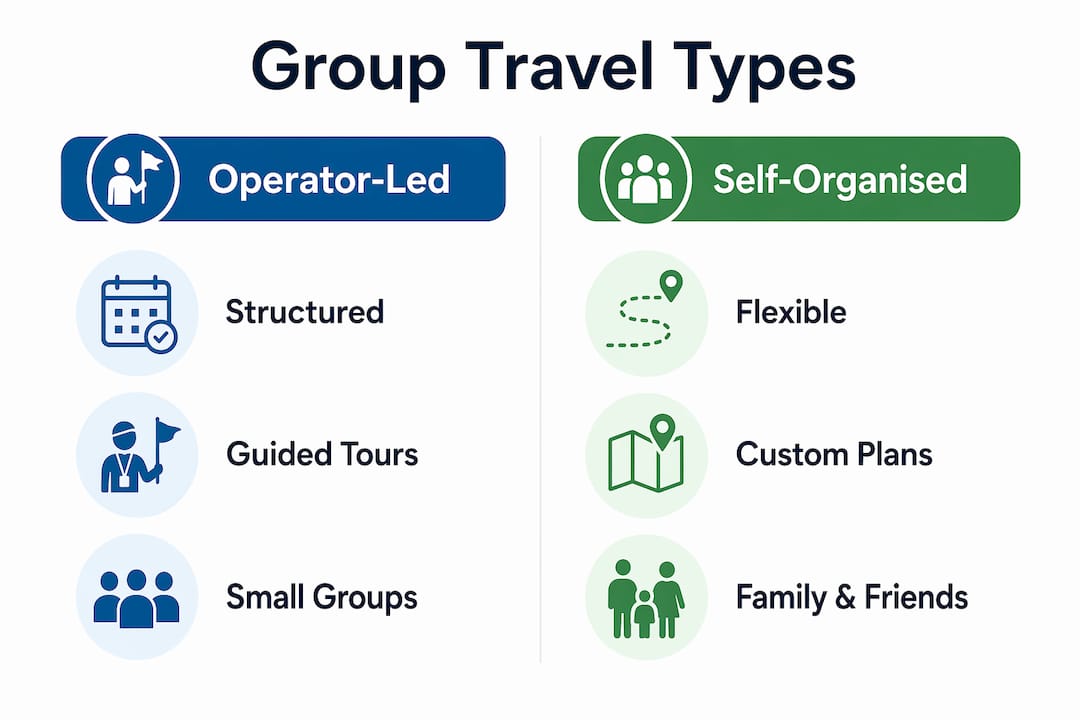
Operator-led group tours are the most structured option. Intrepid Travel specialises in small-group adventures, typically capping groups at a modest size, with a focus on responsible travel and local immersion. G Adventures takes a similar approach, offering tours across more than 100 countries with an emphasis on community-based experiences. Contiki targets younger adults specifically, building itineraries around social activity and exploration across Europe, Asia, and beyond. All three handle the logistics entirely, so participants arrive, follow the programme, and leave without having managed a single booking themselves.
Self-organised group trips are more common among friend groups, families, and work colleagues. Here, one or two people typically take the lead on planning while others contribute preferences and costs. The experience can be deeply personal and flexible, but it demands more coordination effort upfront.
Common types of group-friendly travel:
- Small organised tours (6–12 people): intimate, guide-led, often culturally focused
- Large motorcoach tours (30–50 people): structured, efficient, suited to sightseeing itineraries
- Self-organised friend or family trips: flexible, personal, requires active coordination
- Corporate or incentive travel: team-building focused, often with a fixed programme
- Private guided tours: bespoke itineraries for a specific group, led by a dedicated local guide
For those considering small group travel specifically, the dynamics differ considerably from larger tours. Smaller groups tend to move faster, adapt more easily, and build stronger connections among participants.
How to plan a group trip that actually works
The single biggest predictor of a successful group trip is not the destination. It is whether the group aligned on expectations before anyone booked a flight. Travel experts consistently advise sorting budget, activity levels, and accommodation preferences early, because mismatched assumptions are the root cause of most group travel conflicts.
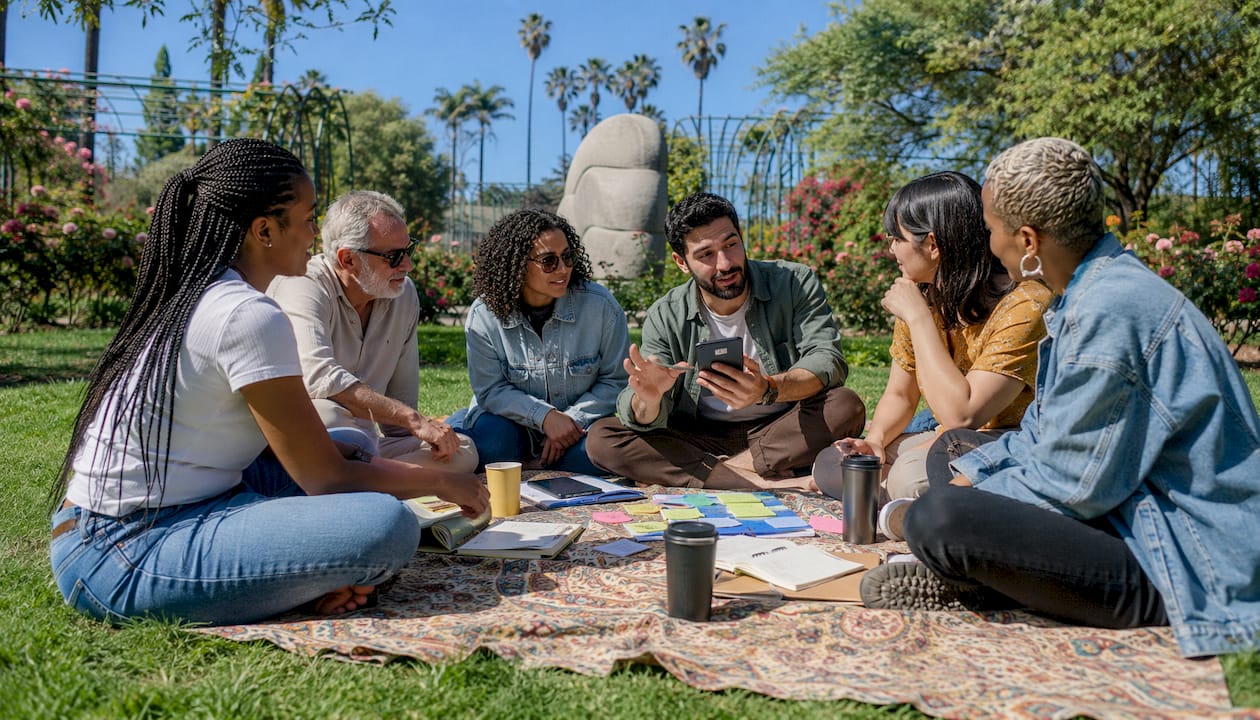
Start with a group conversation about the basics: what is the rough budget per person, what pace suits everyone, and are there any mobility or dietary considerations? Getting this on the table early prevents the awkward moment three days into a trip when someone realises they cannot afford the restaurant the group has chosen every evening.
Planning steps that make a difference:
- Agree on a budget range before any bookings are made
- Identify each person’s travel style (active explorer vs. relaxed sightseer)
- Book group-friendly accommodation early, as larger rooms and villa-style properties fill quickly
- Use a single shared document or app for all itinerary details
- Schedule at least one free afternoon per two days to accommodate different energy levels
- Assign one person as the primary point of contact for each booking
Centralising all planning on one platform prevents the confusion that comes from multiple chat threads carrying different versions of the same information. That fragmentation is the main source of group friction, and it is entirely avoidable.
For money, expense-splitting apps handle the maths automatically, removing the awkward end-of-trip conversation about who owes what. Splitwise is widely used in the UK for exactly this purpose.
Packing and preparation tips for groups:
- Share a packing list so no one duplicates bulky shared items (first aid kit, travel adaptor)
- Agree on luggage limits if the group is sharing transport
- Carry a printed copy of key bookings in case of connectivity issues
- Designate a group emergency contact and share it with everyone before departure
Pro Tip: Nominate a single “source of truth” platform, whether that is a shared Google Doc, Notion page, or a dedicated travel app, and make it the only place where confirmed plans live. Scheduling conflicts almost always trace back to information living in too many places at once.
For families planning a private group tour, working with a specialist provider removes most of this coordination burden entirely.
Group travel in the Scottish Highlands: a private tour case study
The Scottish Highlands offer one of the most compelling settings for group-friendly travel in the UK. The combination of dramatic scenery, manageable driving distances between landmarks, and a strong local guide culture makes it particularly well-suited to private group tours.
Skyehighlandstours provides private guided tours for groups across the Highlands, covering destinations including the Isle of Skye, Loch Ness, Glenfinnan Viaduct, and the Black Isle. Each tour is built around the group’s specific preferences, whether that means a full-day whisky-focused itinerary, a family trip that balances walking with accessible stops, or a photography-led route timed around the light on the Quiraing.
| Feature | Private group tour (Skyehighlandstours) | Standard group tour |
|---|---|---|
| Itinerary | Fully customised to group preferences | Pre-set, fixed for all participants |
| Group size | Flexible, typically small and intimate | Often larger groups typical of motorcoach tours |
| Guide | Dedicated local expert for your group | Shared guide across all participants |
| Pace | Adjusted to your group’s energy and interests | Fixed schedule for all |
| Flexibility | High: stops and timing can change on the day | Low: departures are fixed |
What makes private Highland tours work for groups:
- Itineraries tailored to the group’s physical abilities and interests
- A dedicated local guide whose knowledge goes well beyond the standard commentary
- No compromise with strangers: the experience belongs entirely to your group
- Flexibility to linger at Eilean Donan Castle or skip a stop that does not appeal
- Suitable for special occasions including birthdays, anniversaries, and family reunions
The Scottish Highlands reward groups who travel with someone who knows the roads, the weather patterns, and the hidden viewpoints that do not appear in any guidebook. That local knowledge is what separates a memorable trip from a competent one.
Key takeaways
Group-friendly travel succeeds when logistics, budget, and expectations are aligned before the trip begins, not managed reactively once problems arise.
| Point | Details |
|---|---|
| Definition | Group-friendly travel covers both operator-led tours and self-organised trips designed for multiple people. |
| Main benefit | Shared costs and logistics reduce per-person spend and planning burden. |
| Biggest risk | Mismatched expectations on budget and pace cause most group travel conflicts. |
| Planning priority | Centralise all confirmed plans on one shared platform to prevent scheduling confusion. |
| Scottish Highlands | Private guided tours offer full itinerary customisation and a dedicated local guide for your group. |
FAQ
What is an example of group travel?
A group of friends booking a private guided tour of the Isle of Skye is a typical example. Operator-led tours by companies such as Intrepid Travel or G Adventures, where individuals join a pre-formed group, are another common format.
What are the disadvantages of travelling with a group?
The main drawbacks are reduced flexibility, potential interpersonal conflict, and the coordination complexity that grows with group size. Mismatched budgets and activity preferences are the most frequent sources of friction.
How much does a group travel package typically cost?
Costs vary widely depending on destination, duration, and whether the tour is operator-led or self-organised. Operator-led packages bundle transport, accommodation, and activities, which often reduces the per-person cost compared with booking each element separately.
How do you survive group travel without falling out?
Align on budget, pace, and expectations before departure. Use a single shared planning platform, schedule free time so individuals can recharge, and use an expense-splitting app to keep finances transparent throughout the trip.