Your cart is empty Continue Shopping
Why opt for local experiences: the 2026 guide
Local experiences are defined as direct, participatory encounters with a destination’s everyday culture, guided by residents rather than commercial operators. 75% of travellers rank authentic cultural experiences as their top travel priority, yet most still book with large, impersonal operators. That gap between what travellers want and what they actually book is the central problem this guide addresses. The advantages of local tourism go well beyond sentiment. They include measurable economic benefits, stronger personal memories, and practical savings that mass tourism simply cannot match. Skyehighlandstours exists precisely to close that gap for travellers exploring the Scottish Highlands.
Why opt for local experiences over traditional tours?
The core reason to choose local experiences is emotional depth. Passive sightseeing delivers information. Participatory cultural immersion delivers memory. A 2025 study links authenticity directly to higher enjoyment, better education, and stronger long-term recall of travel encounters. That finding matters because it means the quality of your memory is shaped by the quality of your engagement, not the number of sites you visit.
The difference shows up clearly when you compare formats. Standing outside a castle with a headset is one kind of experience. Sitting with a local family to learn how they prepare a traditional dish is another. The second version activates more senses, creates personal connection, and gives you a story worth telling. Immersive local experiences work because they treat you as a participant, not an audience member.
“Authentic local experiences rely on reciprocity, treating locals as partners, which enriches memories and protects cultural dignity.”
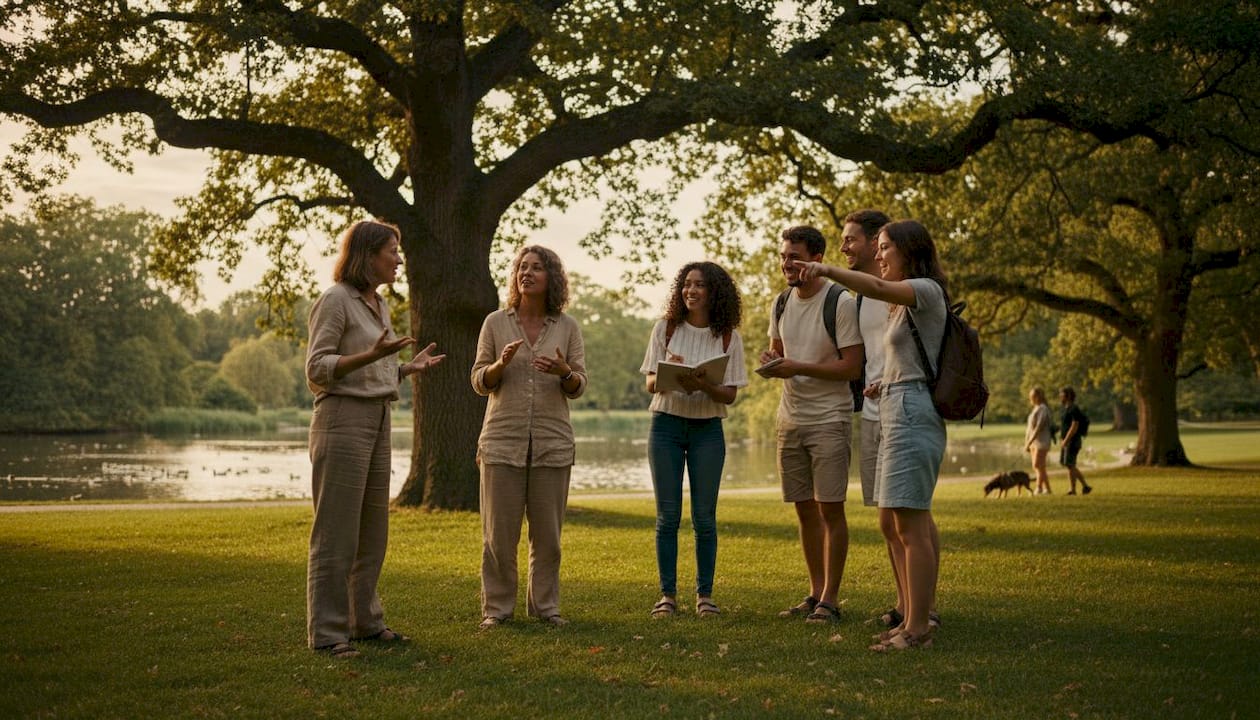
Small groups of eight or fewer allow real conversation, flexible pacing, and personalised storytelling that larger tours cannot replicate. That group size is not a minor detail. It is the structural condition that makes genuine interaction possible. When a guide knows every person by name, the whole dynamic of the tour changes.
The benefits of local experiences also include learning traditions that are not staged for tourists. Attending a cèilidh in a village hall in the Scottish Highlands, for example, is a fundamentally different encounter from watching a folk performance in a hotel ballroom. One is lived culture. The other is a representation of it.
How does spending with local operators benefit communities?
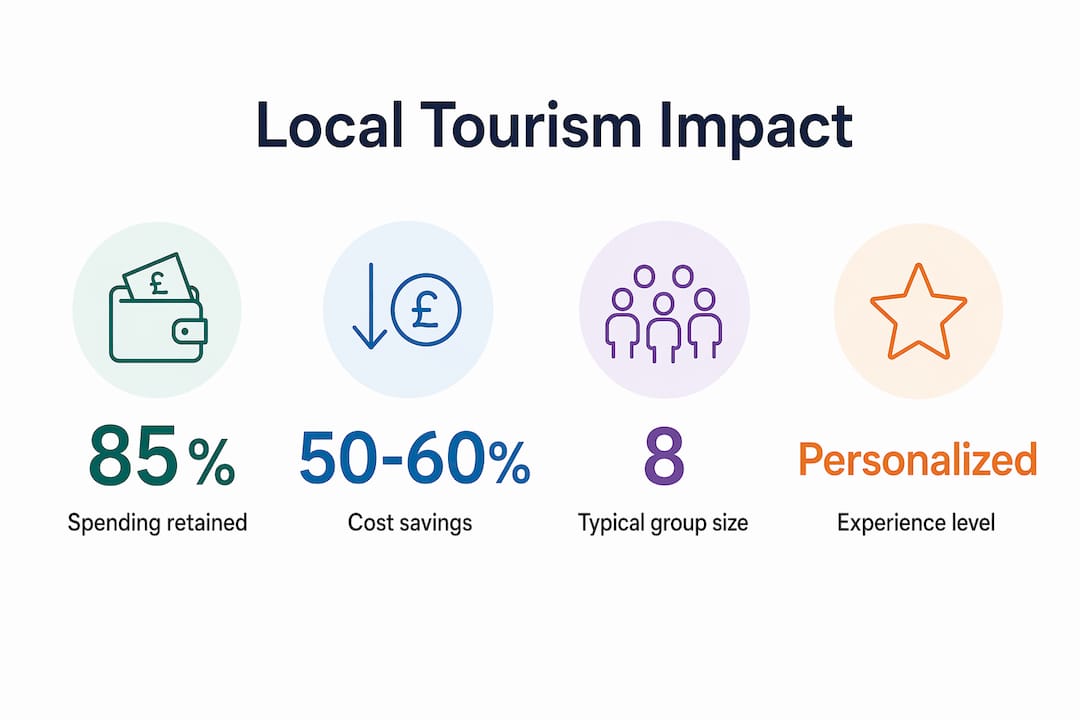
The economic case for choosing local activities is stark. Only 20% of tourist spending typically stays in the local community when travellers book through large commercial operators. Book directly with a local provider, and that figure rises to 85%. That is not a marginal difference. It represents the difference between a community that thrives from tourism and one that merely hosts it.
| Booking type | Spending retained locally | Typical group size | Personalisation level |
|---|---|---|---|
| Large commercial operator | ~20% | 20–50 people | Low |
| Local independent operator | ~85% | 8 or fewer | High |
Community-designed tourism improves local incomes and visitor satisfaction compared to mass tourism, according to a 2024 study. The mechanism is straightforward. When residents design and lead experiences, the money circulates through local shops, families, and suppliers rather than leaving the region immediately.
Supporting local businesses while travelling also protects cultural heritage. When a craft tradition or a local food practice generates income, communities have a financial reason to preserve it. Mass tourism, by contrast, tends to flatten local distinctiveness into generic “tourist versions” of culture.
A common misconception is that local experiences cost more. Booking local experiences can save travellers 50–60% compared to commercial tours. A neighbourhood walking tour priced at £30–50 often delivers more genuine insight than a commercial equivalent at £80–120. The value of local cuisine in tourism follows the same logic, as explored in this guide to culinary travel.
Pro Tip: When vetting a local operator, look for named guides with individual reviews and confirmed group sizes of eight or fewer. Those two signals reliably indicate a genuine local experience rather than a rebranded mass tour.
What practical advantages do local guides provide?
Local guides provide logistical intelligence that no travel app can replicate. Local hosts offer real-time advice on pacing, transport, and safety that reduces travel stress and wasted time. A guide who grew up near Loch Ness knows which road floods in october, which car park fills by 9AM, and which viewpoint the crowds miss entirely. That knowledge is not in any guidebook.
The practical benefits of travelling with local guides include:
- Avoiding tourist traps. Local guides steer you away from overpriced, low-quality stops and towards places where residents actually eat, shop, and gather.
- Transport efficiency. A guide familiar with Highland roads can save hours on a single day trip by choosing routes that match the season and weather.
- Safety awareness. In remote terrain like the Cairngorms or the Trotternish Ridge on the Isle of Skye, a local guide’s knowledge of conditions is a genuine safety asset.
- Insider access. Some locations, private estates, and community events are simply not accessible to independent travellers without a local introduction.
- Flexible pacing. Small group tours with local guides adapt to your energy and interests on the day, rather than following a fixed commercial schedule.
Understanding how local guides shape tours in the Scottish Highlands illustrates how deeply this insider knowledge affects the quality of every hour you spend in the field.
Pro Tip: Ask your guide before the tour what they personally find most interesting about the route. Their answer tells you immediately whether you are dealing with a genuine local expert or someone reading from a script.
How do you overcome common concerns about local travel?
The three most common barriers to choosing local experiences are language, safety, and uncertainty about logistics. All three are manageable with straightforward preparation.
- Language. Basic local phrases ease communication and build genuine goodwill, even when fluency is nowhere near the goal. Learning to say hello, thank you, and please in Scots Gaelic before visiting the Hebrides, for example, signals respect and opens conversations that would otherwise never happen.
- Safety. Travelling with a vetted local guide is one of the safest ways to explore unfamiliar terrain. Local operators know which areas require care, which weather patterns change quickly, and how to respond if plans need to change. The advantages of local Scottish guides include precisely this kind of on-the-ground safety awareness.
- Logistics. The fear of the unknown is the main reason travellers default to packaged tours. The practical solution is to start with one local activity on a trip rather than restructuring the entire itinerary. A single afternoon with a local host builds familiarity and confidence quickly.
- Comfort zone. Meaningful engagement requires a small shift away from the predictable. Repeated visits to the same region compound this effect. Travellers who return to the Scottish Highlands a second time with the same local guide report significantly richer experiences because the relationship already exists.
- Cost uncertainty. Request a full breakdown of what is included before booking. Reputable local operators are transparent about pricing, and the value of private excursions becomes clear once you compare what is actually delivered.
Key takeaways
Local experiences consistently outperform commercial tours on cultural depth, economic impact, and practical value, making them the most rewarding choice for travellers in destinations like the Scottish Highlands.
| Point | Details |
|---|---|
| Authenticity drives memory | A 2025 study confirms that perceived authenticity directly increases enjoyment and long-term recall of travel experiences. |
| Local spending stays local | Booking with local operators retains up to 85% of your spending in the community, compared to 20% with large commercial operators. |
| Small groups enable real connection | Groups of eight or fewer allow genuine conversation, flexible pacing, and personalised storytelling. |
| Local guides reduce stress | Real-time advice on transport, safety, and pacing from local guides saves time and prevents costly mistakes. |
| Cost savings are real | Local experiences can cost 50–60% less than equivalent commercial tours while delivering greater insider access. |
Why I think most travellers underestimate local experiences
By Alin
Most travellers treat local experiences as a bonus rather than the main event. That is the wrong way to think about it. After spending time in the Scottish Highlands with guides who were born and raised there, I can say with confidence that the difference between a local-led day and a commercial tour is not incremental. It is categorical.
The moment that changed my thinking was a conversation near Glenfinnan Viaduct. Our guide mentioned, without prompting, that his grandfather had helped lay the track. That single sentence reframed everything I was looking at. No commercial script would have included it. It happened because the guide was a person with a real connection to the place, not a performer delivering a rehearsed narrative.
What I have also noticed is that travellers who choose local experiences tend to leave with questions rather than just answers. They want to come back. They want to understand more. That curiosity is the mark of a genuinely good travel experience, and it is almost impossible to manufacture at scale. The importance of historical context in tours is part of this. When a guide embeds personal and community history into what you are seeing, the landscape stops being scenery and starts being a story.
My honest advice is to treat local experiences not as an alternative to sightseeing, but as the reason to travel at all.
— Alin
Authentic Scottish Highlands tours with Skyehighlandstours
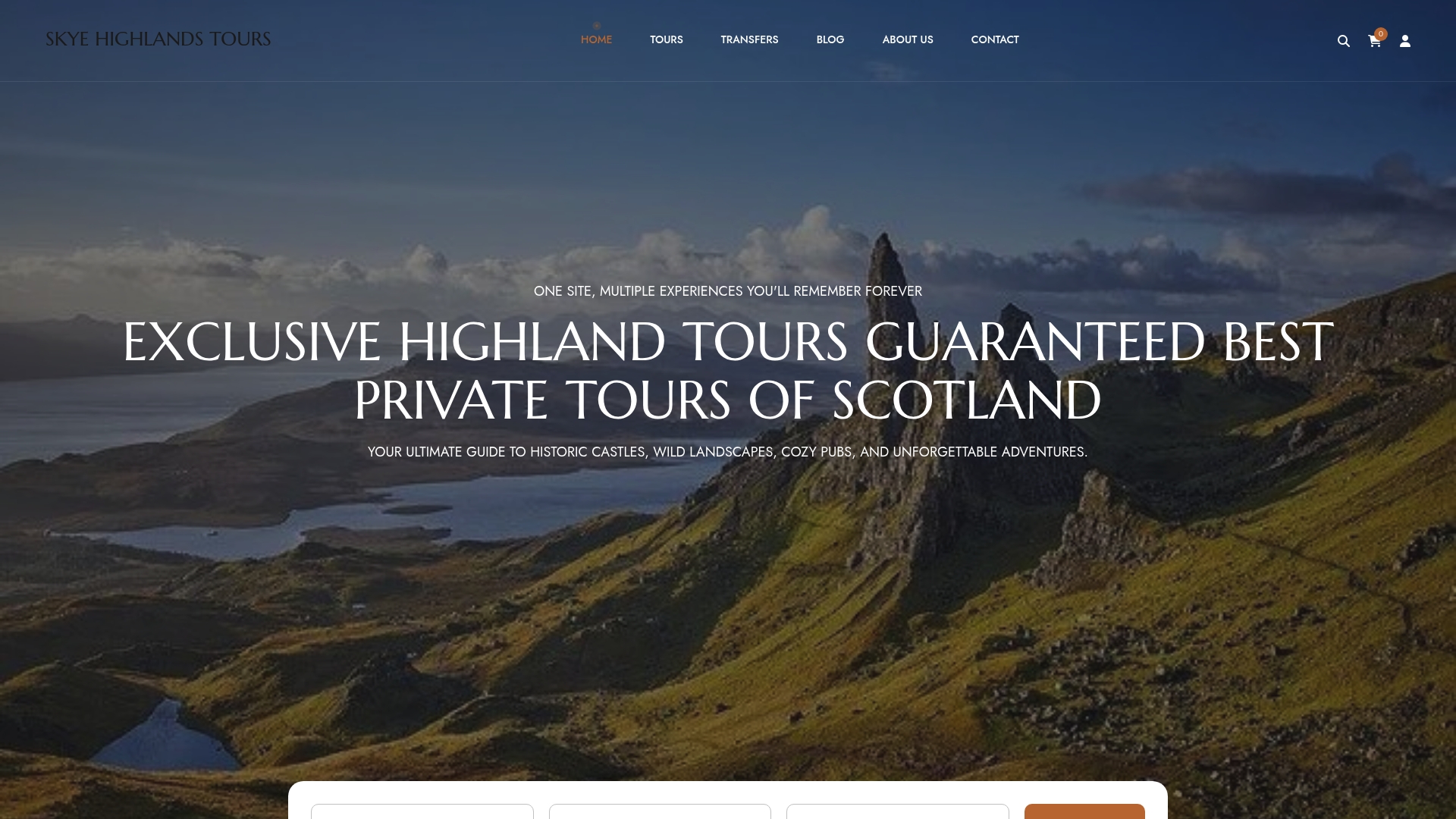
Skyehighlandstours offers private, local-led tours across the Scottish Highlands, including the Isle of Skye, Loch Ness, the Glenfinnan Viaduct, and the Black Isle. Every tour is led by a named local guide with deep knowledge of the region’s history, terrain, and culture.
Itineraries are built around your group’s interests, pace, and occasion, whether that is a family trip, a birthday, or a specialist interest like whisky distilleries. Skyehighlandstours keeps group sizes small to protect the quality of every interaction. You can explore the full range of Scottish Highlands tours or use the custom itinerary planning tool to build a trip that fits exactly what you are looking for.
FAQ
What makes a local experience different from a standard tour?
A local experience is led by a resident with personal knowledge of the destination, rather than a commercial operator following a fixed script. The key differences are group size, flexibility, and the authenticity of the cultural access provided.
Are local experiences more expensive than commercial tours?
Local experiences typically cost 50–60% less than equivalent commercial tours. A local guided activity priced at £30–50 often delivers more genuine access than a commercial equivalent at £80–120.
How much of my travel spending reaches the local community?
When you book with a local operator, up to 85% of your spending stays in the community. With large commercial operators, that figure drops to around 20%.
Do I need to speak the local language to enjoy local experiences?
Fluency is not required. Learning a few basic phrases shows respect and opens conversations, but most local guides in destinations like the Scottish Highlands are fully English-speaking and experienced with international travellers.
How do I identify a genuine local operator?
Look for named guides with individual traveller reviews, confirmed group sizes of eight or fewer, and transparent pricing. These three signals consistently distinguish genuine local operators from rebranded commercial products.
1 Comment