
Your cart is empty Continue Shopping

Famous viaducts in Scotland: iconic stops every traveler needs
Scotland’s famous viaducts are among the most photographed and emotionally stirring structures in Europe. But choosing which ones to visit is harder than it looks. The country’s railway heritage spans over 150 years, and Scottish viaducts range from thundering UNESCO-listed bridges to quiet stone arches buried in misty glens. Whether you’re chasing a steam train photo or soaking up Jacobite history, this guide cuts through the noise and tells you exactly what to expect, how to plan, and why each of these structures is worth your time.
Table of Contents
- How to choose which famous Scottish viaducts to visit
- Glenfinnan Viaduct: Scotland’s cinematic and engineering marvel
- Other famous viaducts across Scotland: exploring variety and history
- Comparing Scotland’s famous viaducts: features, accessibility, and visitor experience
- How to decide which viaduct fits your Scottish adventure
- The overlooked realities and hidden joys of visiting Scotland’s viaducts
- Explore Scotland’s famous viaducts with personalized tours
- Frequently asked questions
Key Takeaways
| Point | Details |
|---|---|
| Glenfinnan Viaduct’s iconic status | The Glenfinnan Viaduct combines dramatic architecture and pop culture fame, best experienced with seasonal steam train crossings. |
| Timing is essential | Plan visits during May to October and arrive early for optimal light, parking, and fewer crowds at Scottish viaducts. |
| Diverse viaduct options | Scotland offers a variety of famous viaducts, from engineering marvels like the Forth Bridge to scenic railway arches like Ballochmyle. |
| Accessibility varies | Some viaduct viewpoints require hikes and advance planning; knowing logistics improves your experience. |
| Tours simplify exploration | Personalized tours offer hassle-free access, expert insights, and coordinated timing for memorable viaduct visits. |
How to choose which famous Scottish viaducts to visit
The question isn’t whether Scotland has impressive viaducts. It absolutely does. The real challenge is matching the right one to your trip. Not every viaduct suits every traveler, and arriving unprepared can turn a bucket-list moment into a frustrating afternoon.
Here’s what actually matters when evaluating your options:
- Scenic setting: A viaduct surrounded by open Highland glen hits differently than one in an urban rail corridor. The visual drama of the landscape is half the experience.
- Cultural and historical depth: Some structures connect to defining moments in Scottish history. The Jacobite heritage around Glenfinnan adds a layer of meaning that pure engineering feats don’t offer.
- Accessibility and physical demand: A few iconic viewpoints require uphill walking on uneven terrain. If you’re traveling with older relatives or young children, this matters more than the brochure suggests.
- Active heritage train services: Watching a steam locomotive roll across an arched stone viaduct is a completely different experience from standing at an empty structure. Check timetables before you book anything.
- Visitor facilities and parking: Some sites fill up by mid-morning in summer. Knowing this in advance changes how you plan your day.
- Seasonal conditions: Light, weather, and crowds shift dramatically between June and October versus the shoulder months of May and September.
Narrow down your priorities before you go. That single step saves more frustration than any travel hack.
Glenfinnan Viaduct: Scotland’s cinematic and engineering marvel
No conversation about famous viaducts in Scotland starts anywhere else. Glenfinnan is the one. Built between 1897 and 1901, the viaduct has 21 masonry arches, spans approximately 380 meters, and sits 30 meters above the valley floor. That scale is genuinely hard to grasp until you’re standing beneath it.
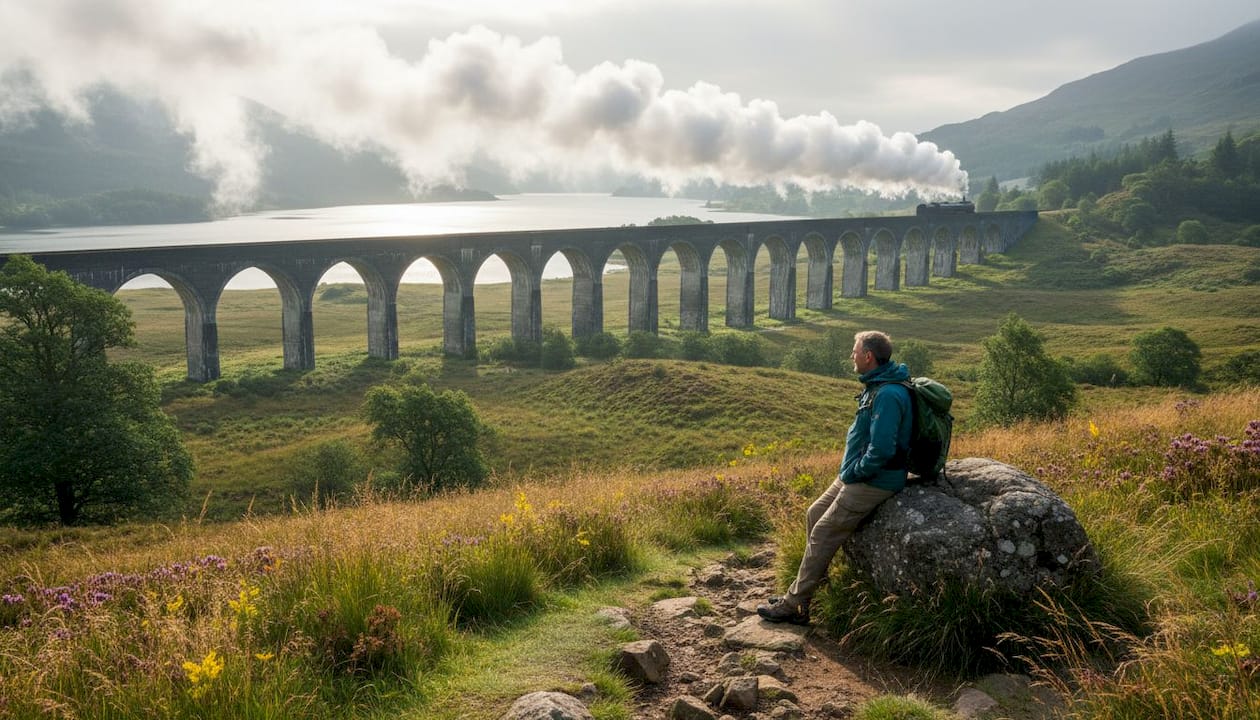
The structure carries the West Highland Line’s Mallaig Extension, one of the most scenic rail routes in the world. What made it famous beyond railway circles was the moment the first Harry Potter film in 2001 used it as the route for the Hogwarts Express, putting the viaduct on screens in over 70 countries overnight.
Key facts for planning your visit:
- Steam train crossings: The Jacobite steam train crosses the viaduct twice daily from May through October. These are the moments worth photographing.
- Viewpoint access: The main viewpoint requires a 10-to-15-minute uphill walk from the car park at Glenfinnan Station. It’s manageable for most people but not trivial.
- Parking: The car park fills fast on summer mornings, often by 9 a.m. Arriving late means parking on the roadside and adding a longer walk.
- Best light: Early morning and late afternoon offer the softest light and the fewest people. Midday in July is both harsh and crowded.
- The curve factor: Unlike most viaducts, Glenfinnan curves. That gentle arc is what makes it so photogenic and so architecturally unusual for its era.
Pro Tip: Cross-reference the Jacobite steam train timetable with the golden hour calculator for your specific date. Getting both to align on the same visit requires a little pre-planning but produces the kind of photos people spend years trying to replicate.
For a deeper look at the site and surrounding area, the Glenfinnan Viaduct travel guide covers viewpoint logistics, nearby Loch Shiel, and the Glenfinnan Monument in one sweep.
Other famous viaducts across Scotland: exploring variety and history
Glenfinnan tends to dominate the conversation, but Scotland holds far more. Wikipedia’s viaduct catalog lists 26 viaducts across the country, each with its own story.
Here are four worth serious consideration:
- Forth Bridge (near Edinburgh): Opened in 1890, this cantilever railway bridge is a UNESCO World Heritage Site and was voted Scotland’s greatest man-made wonder. The engineering is staggering. Three massive diamond-shaped towers support a span that was the longest of its kind in the world when completed. It still carries active rail traffic today, which makes it unusual among heritage structures.
- Tay Viaduct (near Dundee): The replacement for the original Tay Bridge, which collapsed catastrophically in 1879 during a storm, killing 75 people. The current structure carries the Edinburgh-to-Dundee line and serves as both a functional railway crossing and a reminder of Victorian engineering hubris. Walking the Dundee waterfront gives you a solid ground-level view.
- Ballochmyle Viaduct (Ayrshire): This one surprises people. Built in 1848, it features the largest masonry arch ever constructed at the time of its completion. The arch spans 55 meters, and the viaduct stands over the River Ayr. It’s quieter than Glenfinnan but genuinely spectacular from the river path below.
- Almond Valley Viaduct (West Lothian): Less visited but a fine example of industrial-era railway construction. It now sits within a local country park, making it accessible for a casual walk combined with some industrial history.
Each of these structures adds a different dimension to Scotland’s railway heritage. If you’re building a multi-day itinerary, combining two or three across different regions makes for a richer trip than repeating the same Highland scenery. The Glenfinnan Viaduct destination page offers useful context for how these structures fit into a broader Highland route.
Comparing Scotland’s famous viaducts: features, accessibility, and visitor experience
Here’s a direct comparison to make planning easier:
| Viaduct | Location | Era | Key feature | Steam trains | Accessibility |
|---|---|---|---|---|---|
| Glenfinnan | Highland | 1901 | 21-arch curve, Harry Potter fame | Yes, May-Oct | Short uphill walk |
| Forth Bridge | near Edinburgh | 1890 | UNESCO, cantilever design | No (active rail) | Urban, easy access |
| Tay Viaduct | near Dundee | 1887 | Tay Bridge disaster legacy | No | Waterfront walk |
| Ballochmyle | Ayrshire | 1848 | Largest masonry arch at time | No | River path walk |
| Almond Valley | West Lothian | 1869 | Country park setting | No | Flat, easy |
A few things stand out in this comparison. Glenfinnan’s 380-meter span is modest compared to the Forth Bridge’s sheer scale, but the combination of active steam trains, dramatic scenery, and cinematic fame makes it unmatched for visual experience. The Forth Bridge’s engineering legacy is the draw for those who want to stand beneath something that genuinely changed how humans build bridges.
Highlights worth noting before you decide:
- Glenfinnan is the only one where steam train timing is central to the experience
- Forth Bridge is the most accessible from a major city and requires zero hiking
- Ballochmyle rewards visitors who enjoy lesser-known sites with serious architectural credentials
- Almond Valley is ideal for families with young children given its flat terrain and park setting
- Tay Viaduct adds historical drama if the story of Victorian engineering disasters interests you
Pro Tip: If you’re combining multiple viaducts in one trip, use full-day Highland tours as your logistics framework rather than trying to self-drive between sites. The timing math gets complicated fast.
How to decide which viaduct fits your Scottish adventure
The comparison table tells you the facts. This section tells you how to act on them.
- Want the iconic photo? Go to Glenfinnan. Arrive before 8 a.m., check the Jacobite steam train timetable, and position yourself on the upper viewpoint before the crowds build. Morning light from the east illuminates the arch beautifully.
- Interested in engineering history? The Forth Bridge is your answer. It’s near Edinburgh, easy to reach by train, and the visitor experience on the neighboring Forth Road Bridge gives you eye-level views of the cantilever arms you simply cannot get anywhere else.
- Traveling with mixed-ability groups? Almond Valley or Forth Bridge. Both are accessible without significant walking demands.
- Seeking something off the tourist trail? Ballochmyle Viaduct in Ayrshire combines the River Ayr gorge walk with a genuine Victorian engineering landmark. You’ll likely have the place to yourself outside of weekends.
- Planning a multi-stop Highland trip? Glenfinnan pairs naturally with Loch Shiel, the Glenfinnan Monument, and a drive west to Mallaig. Read up on planning a personalized Highland itinerary before you lock in your dates.
- Visiting in shoulder season (May or September)? Any of the above. Crowds drop significantly, parking is manageable, and the light is often better than the peak summer months.
The overlooked realities and hidden joys of visiting Scotland’s viaducts
Most travel guides will tell you to go to Glenfinnan and get there early. That’s correct, but it skips the part that actually determines whether you leave satisfied or disappointed.
The value of a Glenfinnan visit depends almost entirely on whether you time it around the steam train crossing. Arriving at 11 a.m. on a clear August day and watching an empty viaduct is pleasant but forgettable. Watching a steam locomotive pull coaches across those 21 arches with Loch Shiel glittering below is something else entirely. The difference between those two experiences is a timetable lookup done the night before.
There’s also a physical reality that gets glossed over. The main viewpoint involves an uphill walk on uneven ground. It’s not a hike. But if you’re in flip-flops or pushing a stroller, it’s genuinely awkward. Scotland doesn’t always match the frictionless experience implied by Instagram posts.
What the photos also don’t capture is scale. Standing at the base of the Forth Bridge, looking up at steel tubes as wide as a house, changes how you think about what 1890s engineers actually accomplished. The Harry Potter filming locations draw the first wave of visitors to Glenfinnan, but the people who come back are the ones who got genuinely curious about the engineering and history behind the structure.
Combining viaduct visits with local context is also underrated. Glenfinnan isn’t just a photo spot. The monument at the loch commemorates the 1745 Jacobite Rising. The village has a small but worthwhile museum. Spending three hours there instead of forty minutes turns a good photograph into an actual experience.
Explore Scotland’s famous viaducts with personalized tours
Knowing which viaducts to visit is one thing. Getting there at the right time, with someone who knows the terrain, is another.

Private Scottish Highlands tours from Skye Highlands Tours are built around exactly this kind of visit. Your guide handles the timetable coordination, the parking, and the logistics, while you focus on the landscape. The Glenfinnan Viaduct and Mallaig tour times your arrival around the steam train crossing, includes stops at Loch Shiel and the monument, and pairs it with the dramatic coastal scenery of Mallaig. If you want to combine multiple landmarks in one day, the full-day Highland tours give you flexibility without the planning headache. Book early for summer dates; these fill up quickly.
Frequently asked questions
What makes Glenfinnan Viaduct so famous compared to other Scottish viaducts?
Glenfinnan Viaduct stands out for its dramatic curved 21-arch design, its Highland setting above Loch Shiel, and the fact that the first Harry Potter film in 2001 used it as the Hogwarts Express route, giving it global recognition that no other Scottish viaduct has matched.
When is the best time to see the Jacobite steam train cross the Glenfinnan Viaduct?
The Jacobite steam train crosses twice daily from May through October, with early morning or late afternoon crossings offering better light and smaller crowds at the viewpoint.
Are there other Scottish viaducts worth visiting besides Glenfinnan?
Yes. Scotland’s 26 listed viaducts include the Forth Bridge near Edinburgh, the Tay Viaduct near Dundee, and Ballochmyle Viaduct in Ayrshire, each offering distinct history and a very different visitor experience.
What should I know about visiting viaduct viewpoints in Scotland?
At Glenfinnan, the viewpoint requires a 10-minute uphill walk from the station car park, parking fills by mid-morning in peak season, and timing your visit around train crossings makes the difference between a good and a great experience.
1 Comment