
Your cart is empty Continue Shopping

Your guide to booking private tours in 2026
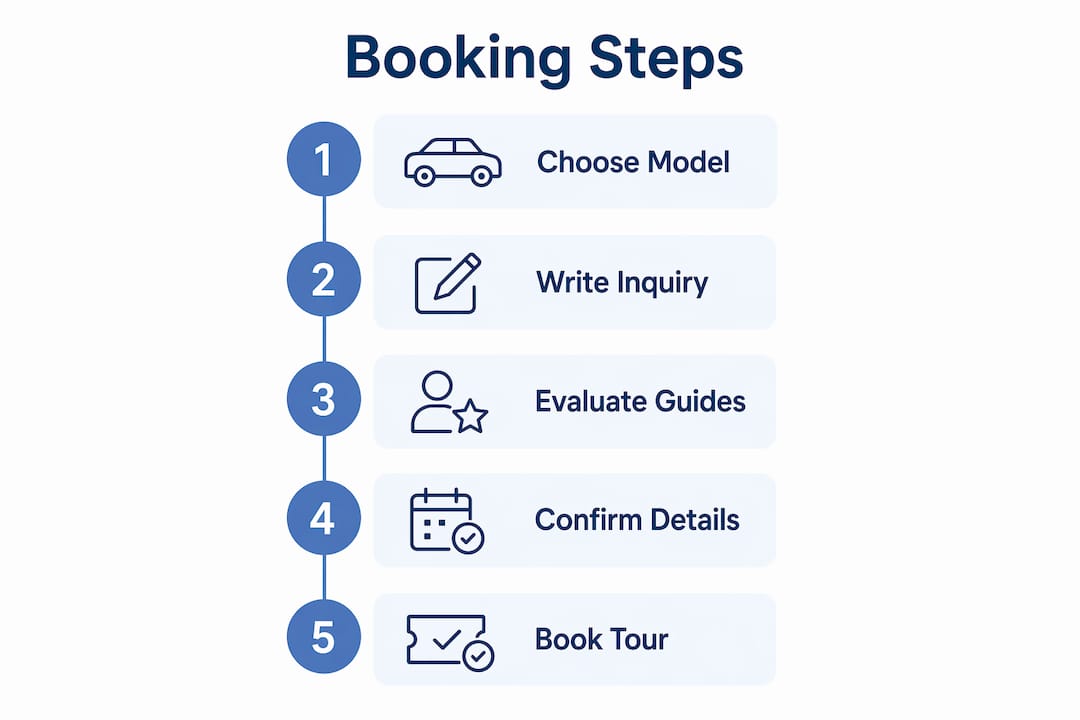
A private tour is a bespoke, guide-led experience arranged exclusively for your group, tailored to your pace, interests, and accessibility needs. Unlike group tours, where a fixed itinerary serves twenty strangers, a private tour belongs entirely to you. This guide to booking private tours covers everything from choosing the right booking model to crafting a structured inquiry, vetting your guide, and confirming every detail before you pay. Platforms such as ToursByLocals, GetYourGuide, and direct operators like Skyehighlandstours each offer different levels of control, communication, and customisation. Understanding those differences is the single most important step before you book.
What you need to know about different private tour booking models
The booking model you choose determines how much control you have over guide selection, communication, and pricing before your tour begins. Three main models exist: aggregator platforms, marketplaces, and direct operators.
| Model | Guide assignment | Communication | Typical commission |
|---|---|---|---|
| Aggregator platforms | 24 to 48 hours before tour | Limited pre-tour contact | 20 to 30% |
| Marketplaces (e.g. ToursByLocals) | Before payment | Direct with guide | 10 to 20% |
| Direct operators | Varies, often immediate | Full pre-tour dialogue | None or minimal |
Aggregator platforms assign guides only 24 to 48 hours before the tour date, which means you may have no idea who is leading your experience until the day before. That carries real risk: last-minute guide changes, no opportunity to share accessibility requirements in advance, and limited ability to co-create the itinerary. Marketplaces allow you to browse guide profiles, read verified reviews, and confirm your specific guide before payment. This gives you far more control and is the better choice when you have particular interests or accessibility needs.
Aggregator platforms charge 20 to 30% commission, which directly reduces what the guide earns. Lower guide compensation often correlates with less motivation to tailor the experience, prepare personalised commentary, or go beyond the standard route. Booking directly with an operator or through a marketplace typically benefits both the guide and you. The guide earns more and has greater incentive to deliver an outstanding experience. You often pay a comparable or lower price because there is no platform taking a large cut.
Direct operators, including specialist providers like Skyehighlandstours, sit in a strong position here. They combine the personal communication of a marketplace with the local expertise of a dedicated team. You speak directly with the people who will lead your tour, which makes it far easier to discuss route preferences, group dynamics, and special occasions such as birthdays or family milestones.
How to write an inquiry that gets you the tour you want
A structured, concise inquiry is the fastest route to an accurate proposal. Guides and operators receive dozens of requests each week. A clear message that covers the essentials gets prioritised; a long, rambling paragraph full of vague wishes gets a slow, generic response.
Your inquiry should cover six points in this order:
- Group size and composition. State the number of adults, children, and any elderly or mobility-limited members. This affects vehicle choice, pacing, and site selection immediately.
- Date range. Give a window of two or three dates rather than a single fixed date. Flexibility increases your chances of securing your preferred guide.
- Duration. Specify whether you want a half-day, full-day, or multi-day experience.
- Top three priorities. Name the specific sites, themes, or experiences that matter most. For a Scottish Highlands trip, that might be the Glenfinnan Viaduct, a whisky distillery visit, and a coastal walk on the Isle of Skye.
- Accessibility requirements. Describe accessibility needs concretely: step-free access, maximum walking distance, seating requirements at stops. Vague phrases like “not very mobile” leave guides guessing and lead to poorly matched itineraries.
- Budget range. A ballpark figure prevents wasted time on both sides.
Categorising your requests into must-haves and nice-to-haves is a technique that professional travel planners use consistently. Must-haves are non-negotiable: the Loch Ness shoreline, a specific whisky region, or a route that avoids steep terrain. Nice-to-haves are additions you would welcome but will not miss if the schedule does not allow them. This distinction gives guides the flexibility to build a proposal that protects what matters most to you.
Pro Tip: Send your inquiry to two or three operators simultaneously and compare not just price but how quickly and thoroughly each one responds. Response quality at the inquiry stage is the clearest signal of how well they will communicate throughout your trip.
How to evaluate and choose the right private tour guide
Choosing a guide is not the same as choosing a product. You are selecting a person who will shape your entire experience of a place. Price is the least useful filter at this stage.
The most reliable starting point is a personal referral. Travel advisor Kimberly Denison recommends personal referrals over online reviews when selecting local guides, because referrals carry an implicit guarantee of professionalism that star ratings cannot replicate. Ask your hotel concierge, a local tourism board, or a trusted friend who has visited the same destination. These sources have reputational skin in the game and will not recommend someone unreliable.
When you do assess guides online, ask these questions before committing:
- Does the guide hold any formal qualifications or accreditations from a recognised tourism body?
- How long have they been leading private tours in this specific region?
- Can they provide references from travellers with similar group compositions or accessibility needs?
- How do they handle itinerary changes on the day, for example unexpected weather or a site closure?
- What languages do they guide in fluently, not just conversationally?
Comparing itinerary proposals in detail reveals far more than price alone. A guide who responds with a thoughtful, specific draft itinerary that references your stated priorities is demonstrating exactly the kind of attentiveness you want on the day. A guide who sends a generic PDF with no acknowledgement of your inquiry is showing you their ceiling.
Pro Tip: Ask each guide one specific question about the destination that only a genuine local expert would know. For the Scottish Highlands, try asking about the best viewpoint for the Quiraing at different times of day. The depth and enthusiasm of the answer tells you everything.
What to confirm in writing before you pay
Written confirmation before payment is not bureaucracy. It is the document that protects your experience and gives you recourse if something goes wrong. Request a written tour summary that covers every operational detail before you transfer any money.
The summary must include:
- Route and key stops. Named locations, not vague descriptions like “scenic viewpoints.”
- Meeting point and time. Exact address or GPS coordinates, not just “the town centre.”
- Inclusions and exclusions. Confirm whether entrance tickets, transport, meals, and gratuities are included or billed separately.
- Overtime rules. What happens if the tour runs long? Is there an hourly rate, or is the guide flexible?
- Cancellation policy. What is the deadline for a full refund? What happens if the guide cancels?
- Guide replacement procedure. If your confirmed guide becomes unavailable, who replaces them and how will you be notified?
- Accessibility accommodations. Confirm that the specific adjustments you requested are noted and confirmed, not just acknowledged.
| Confirmation item | Why it matters |
|---|---|
| Named meeting point | Prevents confusion on the day, especially in busy tourist areas |
| Inclusions list | Avoids unexpected costs at ticket offices or restaurants |
| Cancellation deadline | Protects your deposit if plans change |
| Guide replacement clause | Ensures you are not assigned an unknown substitute without notice |
The most common mistake travellers make is assuming that what was discussed verbally is what will happen. Guides work with many clients. Without a written record, details get misremembered or omitted. A reputable operator will have no hesitation in providing this summary. Reluctance to do so is a warning sign worth taking seriously.
When should you book your private tour?
Timing your booking correctly is one of the most overlooked private tour planning tips. Book private tours 2 to 4 weeks ahead for standard dates outside peak season. For popular destinations during summer or school holidays, extend that window to 6 to 8 weeks minimum. The best guides in high-demand regions fill their calendars quickly, and late bookings often mean settling for a less experienced substitute.
For exclusive group experiences, milestone celebrations, or tours requiring specialist knowledge, a lead time of 6 months is the recommended standard. This allows time for detailed itinerary co-creation, vehicle arrangements for larger groups, and securing permits for restricted sites. The Scottish Highlands in July and August, for example, sees significant demand for private tours to the Isle of Skye and Loch Ness. Guides with strong reputations are often fully booked by April for the summer season.
If your dates are flexible, use that flexibility strategically. Midweek tours in shoulder season, such as May or September in Scotland, often cost less, attract smaller crowds at key sites, and allow guides more time to linger at locations you find particularly compelling.
Pro Tip: When booking private tours online, ask the operator directly whether your preferred guide has availability on your chosen dates rather than relying solely on a booking calendar. Calendars are not always updated in real time, and a quick message can unlock dates that appear blocked.
Key takeaways
Booking a private tour successfully requires choosing the right booking model, preparing a structured inquiry, vetting your guide beyond price, and confirming every detail in writing before payment.
| Point | Details |
|---|---|
| Choose your booking model carefully | Direct operators and marketplaces offer better communication and guide control than aggregator platforms. |
| Structure your inquiry | Include group size, dates, priorities, accessibility needs, and budget to get faster and more accurate proposals. |
| Vet guides beyond reviews | Personal referrals from hotel staff or tourism boards are more reliable than star ratings alone. |
| Get everything in writing | Request a written summary covering route, inclusions, cancellation terms, and guide replacement before paying. |
| Book early for peak seasons | Aim for 6 to 8 weeks ahead in high-demand periods; 6 months ahead for exclusive group experiences. |
What I have learnt from watching travellers book private tours
The travellers who get the most out of private tours are not the ones who spend the most. They are the ones who communicate the most clearly before the tour begins. I have seen groups spend considerable sums on a tour and leave disappointed because they never told the guide what actually mattered to them. Equally, I have seen modest budgets produce extraordinary days because the traveller sent a precise, thoughtful inquiry and the guide had everything they needed to prepare properly.
The instinct to negotiate hard on price is understandable, but it is often counterproductive. A guide who has agreed to a rate that barely covers their costs is not in the right frame of mind to spontaneously extend your tour when you find a hidden glen worth exploring. Paying a fair rate and treating the booking as a genuine partnership produces better outcomes than treating it as a transaction to be optimised.
What I find most telling is how travellers handle the unexpected. The best private tours I have encountered involved guides who adapted the plan mid-day because conditions changed or because a traveller expressed genuine curiosity about something off-route. That kind of spontaneous enrichment only happens when the pre-tour communication has been thorough enough that the guide trusts their own judgement about what you will value. You create the conditions for that by being honest, specific, and open in every exchange from the first inquiry onwards.
— Alin
Discover private tours across the Scottish Highlands with Skyehighlandstours
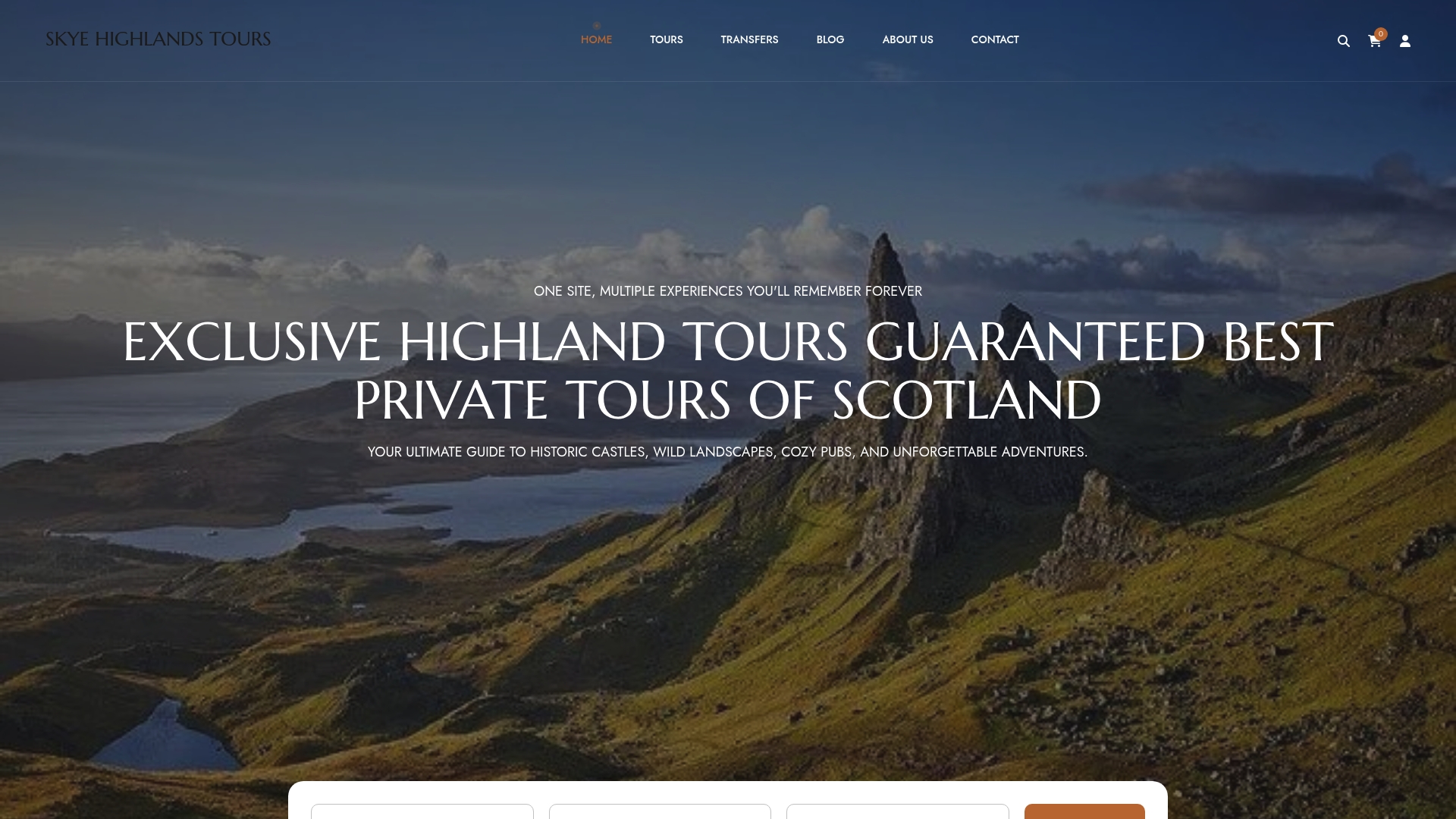
Skyehighlandstours specialises in personalised Scottish Highlands tours led by expert local guides who know the region intimately. Whether you are planning a full-day journey to the Isle of Skye, a visit to Loch Ness, or a bespoke whisky tour through Speyside, every itinerary is built around your group’s interests, pace, and accessibility requirements. There are no fixed group departures and no compromises on what you want to see. You can also follow the step-by-step booking guide to understand exactly what to expect from the enquiry stage through to your tour day. Contact Skyehighlandstours early, particularly if you are planning a summer visit, to secure your preferred guide and dates.
FAQ
What is the difference between a private tour and a group tour?
A private tour is reserved exclusively for your group, with an itinerary tailored to your interests, pace, and accessibility needs. A group tour follows a fixed schedule shared with other travellers you do not know.
How far in advance should I book a private tour?
Book 2 to 4 weeks ahead for standard dates, 6 to 8 weeks ahead during peak seasons, and up to 6 months ahead for exclusive group experiences or specialist tours.
Is it better to book through a platform or directly with an operator?
Booking directly with an operator or through a marketplace gives you more control over guide selection and communication. Aggregator platforms charge 20 to 30% commission, which can reduce guide motivation and limit pre-tour contact.
What should I always confirm in writing before paying?
Request a written summary that includes the route, meeting point, inclusions and exclusions, cancellation policy, overtime rules, and the guide replacement procedure.
How do I know if a private tour guide is trustworthy?
Personal referrals from hotel staff or local tourism boards are the most reliable indicator of a guide’s professionalism. Supplement referrals with a pre-booking conversation and a request for a specific itinerary draft based on your stated priorities.
Recommended
- Your step-by-step guide to booking a private Scotland tour – Skye Highlands Tours
- Guide to booking Skye tours for private adventures – Skye Highlands Tours
- Private tours: The personalized Scottish Highlands experience – Skye Highlands Tours
- What is a specialized tour? Your complete guide – Skye Highlands Tours
5 Comments