
Your cart is empty Continue Shopping
Custom itinerary workflow scotland: plan your perfect trip
A custom itinerary workflow for Scotland is a structured, step-by-step planning process that transforms your travel interests, dates, and logistics into a coherent, personalised route through one of Europe’s most varied destinations. Scotland rewards careful planning more than almost any other country. The Highlands alone span thousands of square kilometres, the islands require ferry bookings weeks in advance, and peak season accommodation in rural areas sells out months before arrival. Getting your Scotland trip planning process right from the start means the difference between a trip that flows and one that fragments.
What core elements start your custom scotland itinerary?
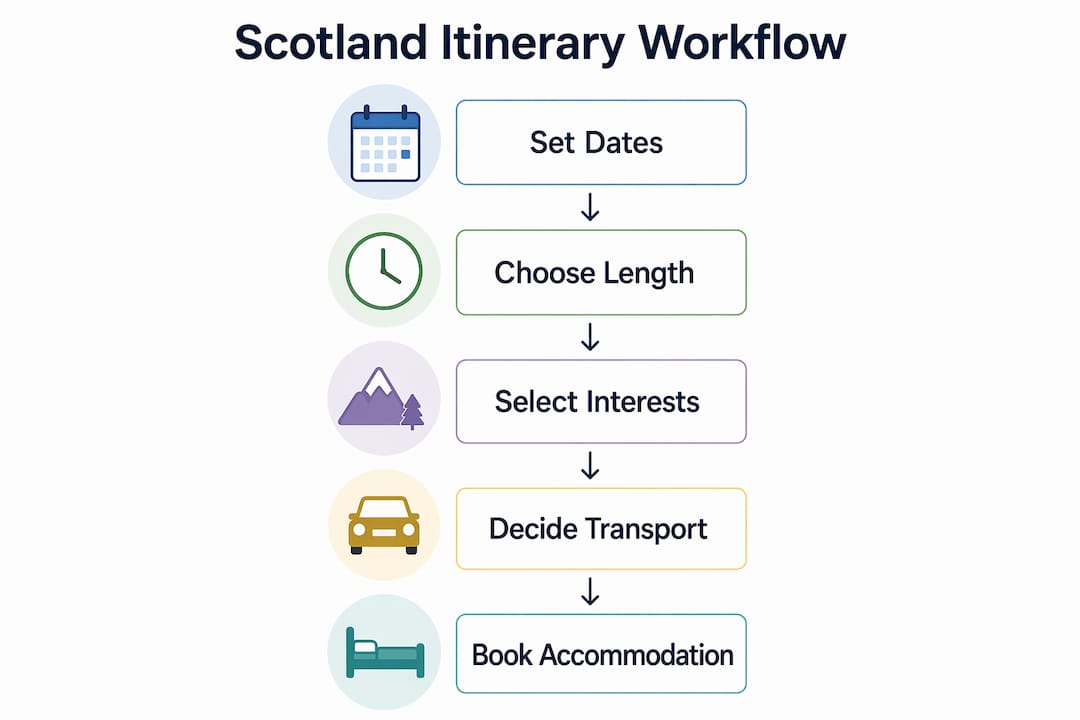
Every effective Scotland itinerary creation process begins with four fixed inputs: your travel dates, trip length, primary interests, and preferred travel mode. Without these, any route you build is guesswork.
Travel dates and season shape everything downstream. May, june, and september offer long daylight hours, manageable crowds, and reasonable accommodation availability. July and august are peak months. Accommodation in rural and Highland areas during those months requires booking 3–6 months ahead to avoid inflated prices and sold-out options.
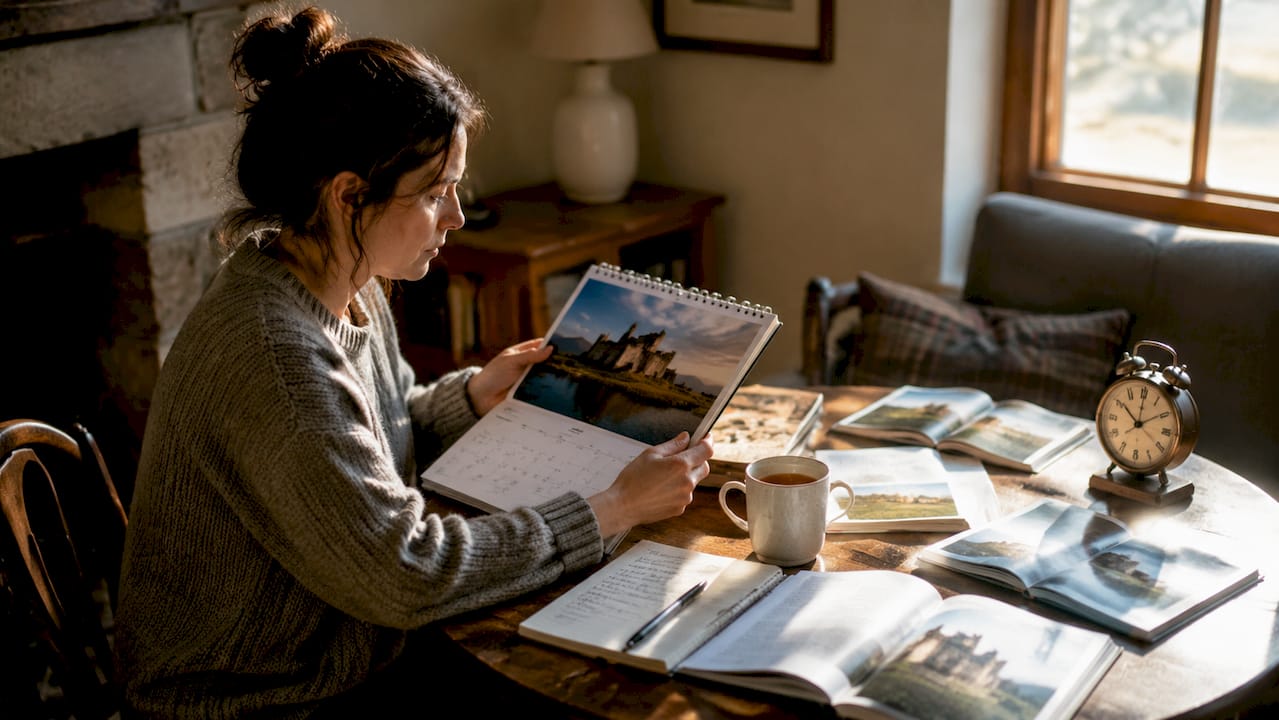
Trip length determines scope. A 7–14 day window is the practical range for most first-time visitors. Fewer than seven days forces you to choose between depth and breadth. More than fourteen days allows genuine immersion in two or three distinct regions.
Primary interests define your themed route. The three most common focus areas are:
- History and heritage: castles, battlefields, and Jacobite sites such as Culloden, Eilean Donan, and Stirling Castle
- Nature and landscape: the Cairngorms National Park, the NC500 coastal route, and the Trossachs
- Culture and whisky: Speyside distilleries, Highland Games events, and traditional ceilidh experiences
Travel mode is the final prerequisite. Trains cover Edinburgh, Glasgow, and main corridors well. Car hire is non-negotiable for the NC500, Isle of Skye, Cairngorms, and Argyll.
| Planning Input | Recommended Action |
|---|---|
| Travel dates | Book accommodation 4–6 weeks ahead for May, June, September; 3–6 months for July–August |
| Trip length | Target 7–14 days for a balanced, focused experience |
| Primary interests | Choose one or two themes to anchor your route |
| Travel mode | Combine train for cities with car hire for remote regions |
Pro Tip: Use a structured intake questionnaire before you build a single day of your itinerary. Capture your must-see sites, pace preference (relaxed versus packed), budget per day, and any physical considerations. A detailed questionnaire reduces revision cycles and produces a far more accurate plan on the first attempt.
How do you build a custom scotland itinerary step by step?
The most reliable Scotland trip planning process follows a sequence. Skipping steps creates conflicts between accommodation, transport, and activities that are difficult to unpick later.
Fix your season and length first. Decide whether you are travelling in spring, summer, or autumn before touching any map or route planner. Season determines daylight hours, ferry schedules, and accommodation availability.
Choose one city base plus one Highland or island focus. Covering cities, Highlands, and islands in a single trip is the most common mistake first-time visitors make. It produces a rushed, unfocused experience. Edinburgh or Glasgow as your city anchor, combined with either the Isle of Skye, the NC500, or the Cairngorms, gives you genuine depth in two distinct environments.
Plan your logical travel route. Draw a rough geographic arc rather than zigzagging. If you fly into Edinburgh and out of Inverness, build your route north. If both flights use the same airport, plan a circular route. Zigzagging adds hours of driving and drains energy.
Book accommodation before finalising activities. Locking in lodging early in Highland and island hubs prevents itinerary collapse when your preferred dates sell out. Glencoe, Portree on Skye, and Ullapool have limited bed stock relative to visitor demand.
Allocate days realistically. A common error is assigning half a day to Glencoe or the Quiraing on Skye. Both deserve a full day minimum. Build in at least one completely free afternoon per four days of travel for rest, weather delays, or unexpected discoveries.
Sequence activities by geography, not excitement. Group all your Skye activities together rather than driving back and forth across the island. The same logic applies to Speyside distilleries or Cairngorms walks.
Build weather flexibility into every Highland day. Flexible daily plans that adapt to conditions are not a luxury in Scotland. They are a necessity. Have an indoor alternative for every outdoor activity, particularly in the western Highlands and on the islands.
Pro Tip: Budget roughly £700–£1,000 per person for a mid-range week in Scotland, covering accommodation, transport, and activities. Knowing this figure before you build your itinerary prevents you from designing a trip you cannot afford to execute.
How do you tailor your itinerary to specific interests?
Personalised travel planning in Scotland works best when you anchor your route to one or two clear themes rather than trying to sample everything. A themed custom travel route through Scotland is easier to pace, easier to book, and far more satisfying to experience.
History and castle routes
Scotland has more than 2,000 castles. A history-focused itinerary might run Edinburgh Castle, Stirling Castle, Doune Castle, Eilean Donan, and Dunrobin Castle in a logical north-west arc. Each site pairs well with nearby accommodation in a market town, keeping driving distances manageable.
Whisky trail itineraries
The Speyside region alone contains more than 50 distilleries within a 50-mile radius. A dedicated whisky-themed tour through Speyside, combined with a day at Glenmorangie near Tain or Talisker on Skye, creates a coherent narrative rather than a random collection of tastings. Skyehighlandstours offers a Speyside Whisky Tour that handles the logistics of distillery visits so you can focus on the experience.
Nature and landscape routes
The NC500 is Scotland’s most famous scenic driving route, covering roughly 500 miles around the north coast. It suits travellers who prioritise landscape over cultural sites. The Cairngorms National Park suits walkers and wildlife enthusiasts. Both require car hire and early accommodation booking.
Comparison: Themed Route Approaches
| Interest Theme | Best Region | Key Consideration |
|---|---|---|
| History and castles | Central Belt to Inverness | Combine with city base in Edinburgh or Stirling |
| Whisky and distilleries | Speyside, Skye, Northern Highlands | Book distillery tours in advance; some require tickets |
| Nature and landscape | NC500, Cairngorms, Trossachs | Allow full days per location; weather flexibility critical |
| Family adventure | Loch Ness, Glencoe, Isle of Skye | Prioritise shorter driving days and child-friendly stops |
Personalised tours and expert local advice are particularly valuable for themed itineraries. A local guide who knows Speyside distillery opening hours, or which Cairngorms trail is accessible after rain, saves you hours of research and prevents wasted days.
What are the most common custom itinerary mistakes in scotland?
Most Scotland itinerary problems fall into four categories. Recognising them before you finalise your plan saves significant frustration.
- Booking accommodation too late. Remote Highland and island lodging sells out months before peak season. Portree, Ullapool, and Durness have very limited stock. If your preferred dates are July or august, start booking in january or february.
- Covering too many destinations. Three regions in ten days sounds achievable on a map. On Scottish roads, it produces two-hour drives between every stop and no time to actually experience any location.
- Underestimating road travel times. The A82 along Loch Lomond and the roads on Skye are single-track in places and heavily trafficked in summer. A 60-mile drive can take 90 minutes. Build this into every day.
- Ignoring weather contingencies. Travel insurance, weather gear, and contingency plans are overlooked in most itinerary drafts. Scotland’s west coast receives some of the highest rainfall in the UK. A waterproof jacket and a backup indoor plan are not optional.
“Insiders recommend locking lodging before finalising routes to avoid itinerary failure due to sold-out accommodation.” — TripSCOT
Pro Tip: Always confirm ferry bookings for island destinations such as Skye via the Mallaig crossing, Mull, or the Outer Hebrides at the same time you book accommodation. Ferries operated by CalMac fill up quickly in summer, and a missed ferry can collapse an entire day’s plan.
How can technology and expert resources improve your planning?
Modern tools and professional services reduce the time and guesswork involved in Scotland itinerary creation. The right combination of digital resources and human expertise produces a plan that is both thorough and realistic.
Useful resources include:
- Editable itinerary templates from platforms such as TripSCOT, which provide pre-built frameworks for 7-day and 14-day Scotland routes
- Structured intake questionnaires from services like Europe Express, which capture timeline, budget, and travel style upfront to reduce back-and-forth revisions
- Local expert consultations with guides who know road conditions, seasonal closures, and hidden sites that no template captures
- Booking platforms for transport: ScotRail for intercity trains, CalMac Ferries for island crossings, and Arnold Clark or Enterprise for car hire
| Resource Type | Best Use Case |
|---|---|
| Itinerary templates | First-time visitors building a route framework |
| Structured questionnaires | Travellers using bespoke planning services |
| Local expert consultation | Themed or specialist trips requiring insider knowledge |
| Transport booking platforms | Securing ferries, trains, and car hire early |
Tailored tours that transform your trip go beyond logistics. A private guide from Skyehighlandstours brings contextual knowledge of sites like Glenfinnan Viaduct or the Black Isle that no travel app replicates. That knowledge turns a scenic stop into a genuinely memorable experience.
Key takeaways
A successful custom itinerary workflow for Scotland depends on fixing your season, limiting your scope, and booking accommodation before you finalise any route.
| Point | Details |
|---|---|
| Fix season and length first | Choose your travel window before building any route to align availability and daylight hours. |
| Limit scope to one city plus one region | Avoid spreading across cities, Highlands, and islands in one trip to prevent a rushed experience. |
| Book accommodation before activities | Secure Highland and island lodging months ahead, especially for July, August, and Hogmanay. |
| Use a structured questionnaire | Capturing interests, pace, and budget upfront reduces planning revisions and improves accuracy. |
| Build weather flexibility into every day | Always have an indoor alternative for outdoor Highland activities, particularly on the west coast. |
Why i think most scotland itineraries fail before the trip starts
After working with travellers planning Scottish Highlands trips, the pattern I see most often is not a lack of enthusiasm. It is a lack of sequence. People fall in love with a photograph of the Quiraing or the Glenfinnan Viaduct and build their entire trip backwards from that image, without first asking whether the dates work, whether the accommodation exists, or whether the driving time is realistic.
The travellers who have the best experiences are almost never the ones with the most ambitious itineraries. They are the ones who chose two or three things they genuinely cared about and gave those things enough time. A family who spent three full days on Skye, walking the Old Man of Storr, visiting Dunvegan Castle, and eating fresh seafood in Portree, will remember that trip for decades. A family who tried to do Skye, Glencoe, Loch Ness, and Edinburgh in six days will remember being tired.
The other thing I have found is that local knowledge is irreplaceable. You can read every travel blog about the NC500 and still not know that the Kylesku Bridge viewpoint is best in morning light, or that the Smoo Cave near Durness is worth an hour of your time even if caves are not your thing. That kind of detail only comes from someone who has been there repeatedly, in different seasons, with different types of travellers. If you are planning a specialist trip, whether that is a private Highland tour or a whisky-focused route through Speyside, invest in that expertise. It pays back every time.
— Alin
Let Skyehighlandstours build your personalised highland route
Skyehighlandstours specialises in private guided tours across the Scottish Highlands, covering the Isle of Skye, Loch Ness, Glenfinnan Viaduct, the Black Isle, and beyond. Every tour is designed around your group’s interests, pace, and occasion, whether that is a family adventure, a whisky-focused excursion, or a historic castle route.
If you want a personalised Scottish Highlands experience without the planning burden, Skyehighlandstours handles the logistics, the local knowledge, and the sequencing. You show up and experience Scotland the way it deserves to be seen. Browse the full range of custom Highland tours and find the option that fits your trip.
FAQ
What is a custom itinerary workflow for scotland?
A custom itinerary workflow for Scotland is a structured planning process that sequences your travel dates, interests, transport, and accommodation into a coherent, personalised route. It replaces ad-hoc planning with a repeatable, logical method that reduces errors and improves trip quality.
How far in advance should i book scotland accommodation?
Book 4–6 weeks ahead for May, June, and September travel. For July, August, and Hogmanay, book 3–6 months ahead, particularly for rural Highland and island locations where availability is limited.
How many regions can i realistically cover in one scotland trip?
One city plus one Highland or island region is the recommended scope for a 7–14 day trip. Covering all three categories in a single visit commonly produces a rushed, unfocused experience.
Do i need a car to follow a custom scotland itinerary?
You need a car for any itinerary that includes the NC500, Isle of Skye, Cairngorms, or Argyll. Trains serve Edinburgh, Glasgow, and Inverness well, but car hire is essential for remote Highland and island destinations.
What is the best way to personalise a scotland itinerary for specific interests?
Anchor your route to one or two themes such as whisky distilleries, historic castles, or coastal landscapes, then build geography and accommodation around those themes. Consulting a local expert or using a bespoke tour service adds insider knowledge that generic templates cannot provide.