
Your cart is empty Continue Shopping
The role of Scottish cultural heritage in identity and arts
Scottish cultural heritage is defined as the living body of customs, symbols, languages, and traditions that shape Scotland’s national identity and inform its artistic expression across every generation. From the tartan and kilt that emerged as national symbols in the 18th century to the Gaelic songs still sung in the Outer Hebrides, this heritage operates through both physical and intangible forms. Organisations such as Creative Scotland, Museum Galleries Scotland, and UNESCO all recognise Scottish heritage as a dynamic force rather than a static relic. Understanding its role means understanding how a nation continuously defines itself.
How does the role of Scottish cultural heritage shape national identity?
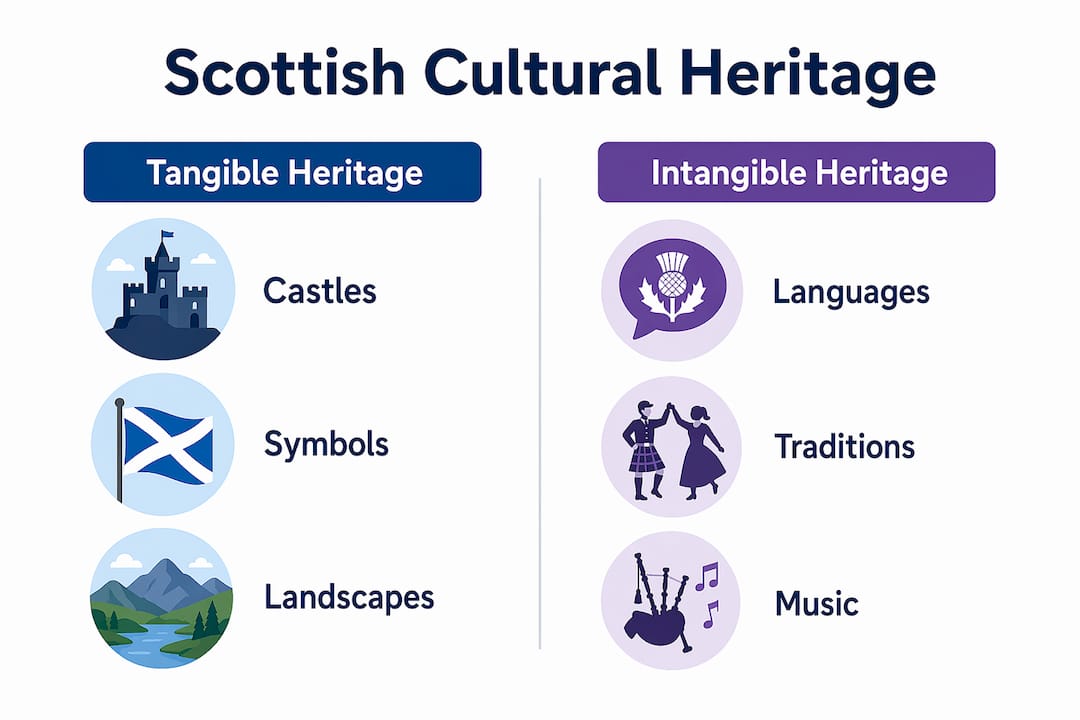
Physical heritage forms the most visible layer of Scottish identity. Historic buildings, castles, and landscapes do not merely attract visitors. They provide what researchers describe as a stage for social and cultural networks, shaping identity on a level most people never consciously register. When Glasgow’s Mackintosh building suffered fire damage, the public grief was immediate and widespread, illustrating precisely how treasured buildings influence a community’s sense of belonging and emotional connection to place.
Symbols carry equal weight. The modern kilt and its associated tartan patterns became codified in the 18th century, evolving from clan markers into nationally recognised symbols of Scottish identity. Their meaning has shifted across centuries, reflecting political upheaval, diaspora culture, and eventually global tourism. Today, a visitor wearing a hired kilt at Edinburgh Castle and a Highlander whose family has worn the same tartan for generations are both participating in the same symbolic system, though from very different positions within it.
| Tangible heritage element | Role in identity formation |
|---|---|
| Historic castles and abbeys | Anchor community memory and create a physical sense of continuity |
| Tartan and kilt | Serve as internationally recognised markers of Scottish belonging |
| Urban architecture | Provides the backdrop for social life and collective memory |
| Landscapes and glens | Generate emotional attachment and a distinct sense of place |
Pro Tip: When visiting Scottish heritage sites, ask your guide about the specific clan or historical event connected to each location. The personal story behind a site deepens its meaning far beyond what any information board can convey.
The loss of built heritage is not merely an aesthetic problem. It disrupts the implicit identity formation that communities rely on without realising it. Preservation bodies such as Historic Environment Scotland work to prevent that disruption, but funding pressures mean difficult choices are made constantly about which buildings receive protection and which do not.
What is intangible cultural heritage and why does it matter in Scotland?
Intangible cultural heritage, or ICH, is defined by TRACS as the community knowledge passed down through generations in the form of songs, dances, storytelling, crafts, and customs, often expressed through Scots or Gaelic languages. This definition matters because it shifts the focus from objects to practices. A castle can be photographed and catalogued. A tradition of Gaelic lullabies requires living practitioners to survive.
Scotland’s ICH is remarkably varied. Consider the following examples, each representing a distinct form of living tradition:
- Gaelic and Scots languages carry distinct worldviews and poetic traditions that cannot be fully translated. Gaelic, spoken by approximately 57,000 people in Scotland, encodes a relationship with landscape and community that shapes identity at a linguistic level.
- Shinty, the ancient Highland stick-and-ball game, sustains community networks across rural Scotland in ways that go well beyond sport. Matches are social events that reinforce local belonging.
- Traditional music festivals such as Celtic Connections in Glasgow draw international audiences while keeping local musicians employed and visible.
- Shetland knitting traditions represent a particularly well-documented case. Research from the University of Aberdeen shows that knitting connects community networking, wellbeing, and tourism, with digitisation reviving global interest in Fair Isle patterns while simultaneously creating new tensions between commercial production and traditional craft.
- Storytelling and oral history remain active through organisations like the Scottish Storytelling Centre in Edinburgh, which trains practitioners and hosts public events year-round.
The Living Heritage Inventory project, reported by the BBC in January 2026, represents Scotland’s most structured response to the challenge of ICH preservation. The project invites community submissions to document traditions that remain relevant in daily life, with Museum Galleries Scotland named as a Community Support Hub to enable direct engagement from tradition bearers. This is a significant departure from older archival approaches, which tended to record traditions after they had already faded.
Pro Tip: If you speak or have family connections to Scots or Gaelic, the Living Heritage Inventory welcomes personal submissions. Contributing your own family traditions is one of the most direct ways to participate in preserving Scottish cultural narratives.
Digitisation plays a dual role here. It makes traditions accessible to diaspora communities worldwide, which sustains interest and sometimes funding. It also risks flattening living practices into consumable content, stripping away the community context that gives them meaning.
How does Scottish heritage influence contemporary arts and global exchange?
Scottish cultural heritage does not sit behind glass in a museum. It feeds directly into contemporary creative work, from the visual arts to literature, film, and music. The Scottish Government’s evidence from March 2026 confirms that international collaboration helps practitioners access wider audiences and additional income streams, making cultural exchange a professional necessity rather than a luxury.
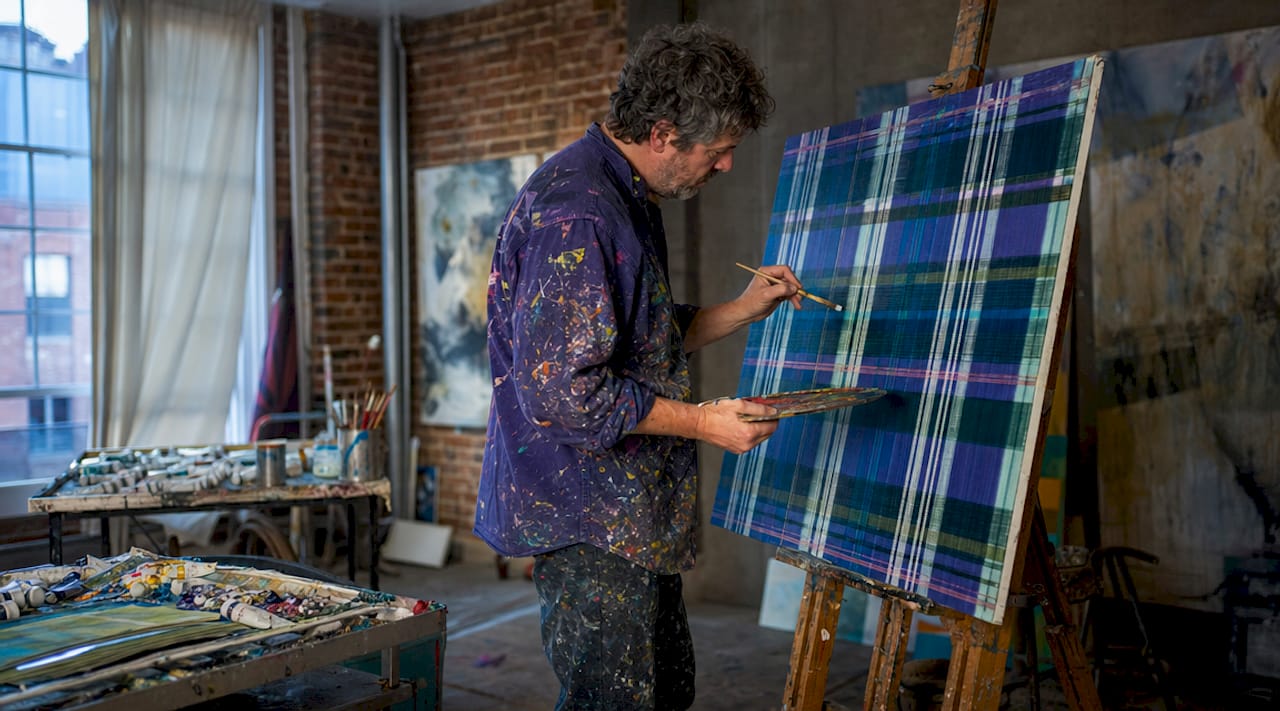
The financial context matters. The Scottish Budget for 2026 to 2027 records a £70 million uplift since 2023 to 2024, directed at Creative Scotland’s programmes and both domestic and international cultural networks. This investment reflects a government position that heritage and contemporary creativity are not competing priorities. They are the same priority.
Several dynamics define how heritage shapes modern Scottish arts:
- Heritage themes in contemporary Scottish literature, from Alasdair Gray’s reimagining of Glasgow mythology to Karen Campbell’s crime fiction rooted in Highland landscapes, show how the past provides material for urgent present-day storytelling.
- Scottish film and television productions, including those filmed at Glenfinnan Viaduct and across the Cairngorms, use landscape as a character in itself, drawing on centuries of cultural meaning attached to specific places.
- Folk musicians such as Karine Polwart and Niteworks blend traditional Gaelic and Scottish folk structures with electronic production, creating work that is simultaneously rooted and forward-looking.
- International co-productions between Scottish arts organisations and European counterparts generate funding, audiences, and creative cross-pollination that neither party could achieve alone.
“International cultural exchange sustains Scottish culture professionally and innovatively, expanding global influence.” — Scottish Government evidence, March 2026
The Highland heritage and culture that visitors encounter on tours is not separate from this creative ecosystem. It is the same material, experienced at ground level.
What are the main challenges in preserving Scottish cultural heritage?
Preservation is not a simple act of documentation. Peter Hewitt of Museum Galleries Scotland has stated clearly that safeguarding traditions requires real-world viability approaches, not just recording. A tradition that exists only in an archive is already lost in the sense that matters most.
The tensions in heritage preservation are real and worth examining honestly:
| Pressure | Community-centred approach | Commercially driven approach |
|---|---|---|
| Tourism demand | Prioritise authentic local participation | Scale up for visitor volume, risk dilution |
| Digitisation | Use technology to connect diaspora and practitioners | Produce content for global consumption without community input |
| Funding | Seek grants tied to community outcomes | Pursue sponsorship tied to brand visibility |
| Language preservation | Fund living speakers and immersive education | Produce translated content for passive consumption |
Mass tourism creates particular friction. The commercialisation versus tradition tension documented in Shetland knitting research applies across Scottish heritage broadly. When a craft, festival, or landscape becomes a tourism product, the community that sustains it gains economic benefit but risks losing control of how it is represented and experienced.
Creative tourism offers a more constructive model. Rather than positioning communities as performers for visitors, it invites visitors into genuine participation. A whisky distillery tour that includes a conversation with the master distiller about local barley varieties is a different experience from a themed tasting event designed for social media. Both exist in Scotland. Only one genuinely transmits heritage.
Ethical questions around digitisation are equally pressing. Whose consent is required before a community’s oral traditions are uploaded to a public database? Who controls access and commercial use? These questions do not yet have settled answers in Scottish heritage policy, and they deserve more public attention than they currently receive.
Key takeaways
Scottish cultural heritage is most effectively preserved when communities lead the process, combining living transmission with selective digitisation and international exchange.
| Point | Details |
|---|---|
| Tangible heritage anchors identity | Historic buildings and symbols like tartan shape belonging on a subconscious, community-wide level. |
| Intangible heritage requires living practitioners | Recording traditions is insufficient; viable transmission through active community practice is what keeps them alive. |
| International exchange sustains creativity | Scottish Government evidence confirms global collaboration expands income and audiences for heritage practitioners. |
| Digitisation carries risk and opportunity | Technology can revive diaspora interest but risks stripping traditions of their community context. |
| Creative tourism outperforms mass tourism | Participatory visitor experiences transmit heritage more authentically than scaled-up cultural performances. |
Why Scottish heritage still surprises me after years of engagement
I have spent considerable time working with and around Scottish cultural heritage, and the thing that still catches me off guard is how contested it is from the inside. From the outside, Scottish heritage looks cohesive: kilts, castles, bagpipes, whisky. From the inside, there are genuine arguments about who owns a tradition, who has the right to perform it, and whether digitisation is saving or slowly hollowing out the practices it claims to preserve.
The Living Heritage Inventory strikes me as genuinely different from previous archival efforts, precisely because it centres the tradition bearer rather than the institution. That shift is harder than it sounds. Institutions have funding cycles, reporting requirements, and professional incentives that do not always align with what a community of knitters in Shetland or a Gaelic choir in Lewis actually needs.
What I find most encouraging is the growing recognition that heritage and contemporary creativity are not in opposition. The best Scottish artists working today are not rejecting their heritage. They are arguing with it, reinterpreting it, and sometimes deliberately breaking with it. That is exactly what a living culture does. The risk is not that Scottish heritage will be forgotten. The risk is that it will be preserved so carefully that it stops being alive.
If you engage with Scottish heritage, whether as a historian, a visitor, or someone with family roots in Scotland, the most valuable thing you can do is seek out the people who carry it. Not the brochure version. The actual practitioners.
— Alin
Experience Scottish heritage through a guided Highland tour
Scottish cultural heritage is best understood when you encounter it in the places where it was made.

Skyehighlandstours offers private Highland tours designed around your specific interests, whether that means standing at Glenfinnan Viaduct with a guide who can explain its place in Jacobite history, or exploring the Black Isle with someone who grew up speaking Scots. Local guides do not simply recite facts. They carry the cultural knowledge that no guidebook replicates. For those wanting to go deeper, Skyehighlandstours also offers specialised cultural experiences that connect visitors directly with Scotland’s living traditions, from whisky heritage to clan history. This is the difference between observing Scottish culture and genuinely engaging with it.
FAQ
What does Scottish cultural heritage include?
Scottish cultural heritage includes both tangible elements such as castles, tartans, and historic landscapes, and intangible elements such as Gaelic and Scots languages, traditional music, storytelling, shinty, and craft traditions. TRACS defines intangible cultural heritage as community knowledge passed down through generations, critical for local identity.
Why is the Living Heritage Inventory significant?
The Living Heritage Inventory, reported in January 2026, is significant because it invites community members to submit living traditions directly, shifting heritage preservation from institutional archiving to community-led documentation. Museum Galleries Scotland serves as a Community Support Hub within the project.
How does Scottish heritage influence modern arts?
Scottish heritage provides direct material for contemporary literature, music, and film, with artists such as Karine Polwart and Alasdair Gray drawing on traditional structures and cultural narratives. The Scottish Government’s 2026 to 2027 budget allocated a £70 million uplift to support Creative Scotland’s programmes connecting heritage and contemporary creativity.
What is the difference between mass tourism and creative tourism in heritage contexts?
Mass tourism scales heritage experiences for visitor volume, risking dilution of authenticity, while creative tourism invites genuine participation from visitors alongside local communities. Research on Shetland knitting traditions shows that commercialisation pressures can reshape how heritage is performed and experienced publicly.
How can visitors engage respectfully with Scottish cultural heritage?
Visitors engage most respectfully by seeking out local guides and practitioners rather than purely commercial heritage products, and by learning basic context about the traditions they encounter. Skyehighlandstours recommends local Scottish guides as the most direct route to authentic cultural understanding.
Recommended
- Discover Highland Heritage: Culture, Clans, and Scenic Scotland – Skye Highlands Tours
- Examples of Scottish Heritage Sites Worth Visiting – Skye Highlands Tours
- Experience Scotland food: Highland flavors & culinary traditions – Skye Highlands Tours
- What Is Authentic Scottish Travel: A Real Traveler’s Guide – Skye Highlands Tours
2 Comments