
Your cart is empty Continue Shopping
Cultural experiences in Scotland: your 2026 guide
Cultural experiences in Scotland are defined as immersive engagements with the country’s living traditions, festivals, crafts, history, and cuisine that allow travellers to connect directly with Scottish identity. Scotland’s cultural organisations contribute approximately £4 billion annually to the economy, with 85% of that impact driven by cultural attractions. Visitors who engage with Scottish cultural heritage stay longer and spend more, benefiting local communities across the country. From Highland Games to whisky distillery tours, the range of authentic activities available makes Scotland one of Europe’s most rewarding destinations for cultural tourism.
1. What are the most vibrant traditional Scottish festivals?
Scotland’s festival calendar is one of the richest in the British Isles, covering every season with events rooted in centuries of tradition. Scottish cultural festivals are highly seasonal, with Highland Games running from may to september, winter festivals from november to january, and events like the SPECTRA light festival in february. That spread means there is no bad time to visit if you plan around what matters most to you.
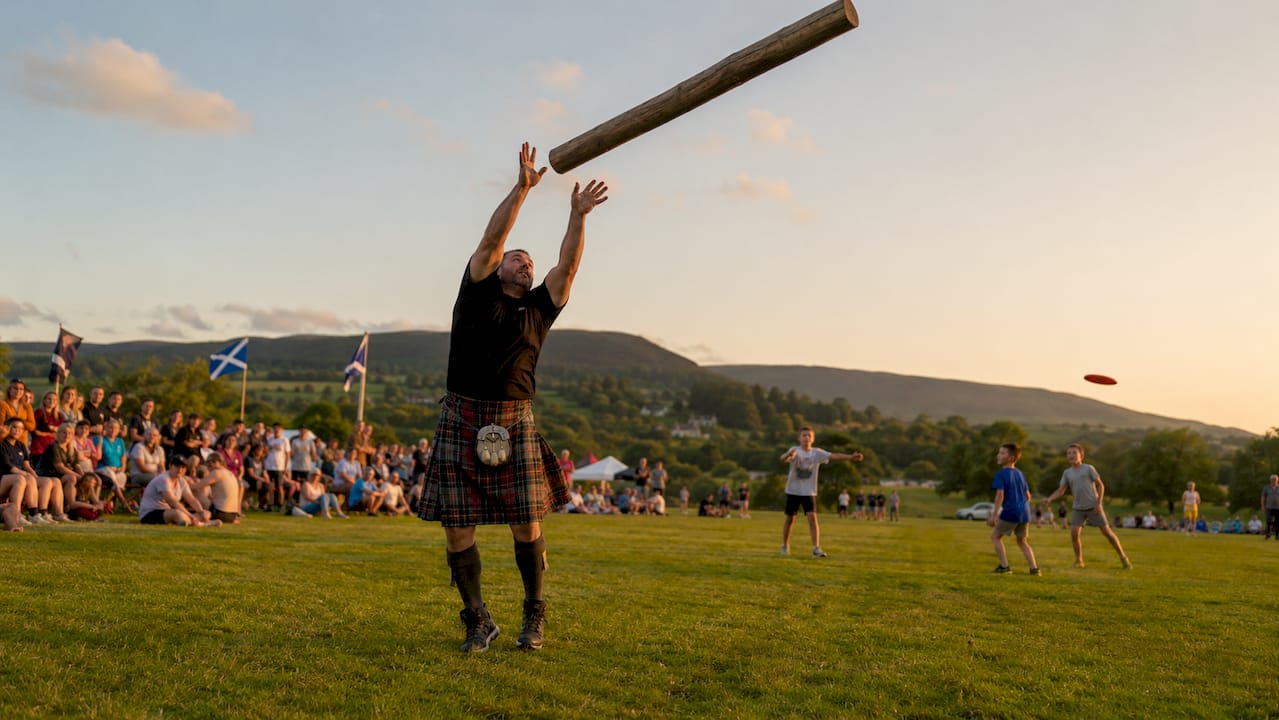
The Highland Games are the most recognisable of all traditional Scottish festivals. Held at venues from Braemar to Inveraray, they feature caber tossing, hammer throwing, pipe bands, Highland dancing, and clan gatherings. The Braemar Gathering, held each september in Aberdeenshire, is the most famous and regularly attended by the Royal Family.
Edinburgh’s Hogmanay is Scotland’s defining winter celebration, running from 30 december through 1 january. The street party on Princes Street draws tens of thousands of visitors, and the torchlight procession through the Old Town is genuinely unlike anything else in Europe. Celtic Connections, held in Glasgow each january, blends traditional folk music with contemporary artists across more than 300 events at venues including the Royal Concert Hall.
The Beltane Fire Festival, held on Calton Hill in Edinburgh on 30 april, is one of Scotland’s most dramatic and lesser-known events. It revives an ancient Celtic fire ceremony with performers, drummers, and fire artists. Synthetic clothing is unsafe at Beltane due to open flames, and bags and glass are restricted on site.
Pro Tip: Book accommodation for Hogmanay and the Braemar Gathering at least six months in advance. Both events sell out quickly, and hotels within walking distance command a significant premium.
2. How can travellers experience authentic Scottish crafts and living heritage?
Scotland’s intangible cultural heritage includes practices that cannot be found in any museum because they are still alive in communities across the country. Scotland’s living heritage is rooted in community knowledge, expressed through storytelling, Gaelic song, Highland dance, and traditional crafts. Travellers who engage with these practices directly support their survival.
The UK ratified UNESCO’s Convention on Safeguarding Intangible Cultural Heritage, giving formal protection to practices such as sporran-making, kiltmaking, and oral storytelling. The Traditional Arts and Culture Fund increased its grant limit by 20% in 2026, funding community workshops and apprenticeship projects that travellers can often join as participants.
Crafts worth seeking out include:
- Kiltmaking: Lamhan in Edinburgh offers multi-week kiltmaking courses that teach the full process from measuring to finishing. Authentic kiltmaking requires immersive learning over multiple sessions, reflecting the precision standards of master crafters.
- Sporran-making: A handful of leatherworkers in the Highlands still produce sporrans by hand. Visiting their workshops and watching the process is a rare privilege.
- Gaelic storytelling: Community events in the Western Isles and Skye feature seanachaidh (traditional storytellers) who carry oral histories passed down across generations.
- Weaving and Harris Tweed: The Isle of Harris produces the only hand-woven tweed in the world certified under the Harris Tweed Act 1993. Visiting a weaver’s shed on the island is a genuinely memorable experience.
Pro Tip: Contact Traditional Arts and Culture Scotland (TRACS) before your trip. They maintain a directory of community events and workshops that are open to visitors but rarely advertised to tourists.
3. Which Scottish cities offer the richest cultural landmarks?
Scotland’s cities each carry a distinct cultural identity shaped by history, architecture, and the arts. The table below summarises what each major city offers for travellers focused on Scotland art and history.
| City | Key cultural landmarks | Signature experience |
|---|---|---|
| Edinburgh | UNESCO Old Town, Edinburgh Castle, Royal Mile, National Museum of Scotland | Edinburgh Festival Fringe (August) |
| Glasgow | Kelvingrove Art Gallery, Gothic Cathedral, Mackintosh buildings | Celtic Connections (January) |
| Aberdeen | Maritime Museum, Aberdeen Art Gallery, Marischal College | Granite architecture walking tours |
| St Andrews | Cathedral ruins, British Golf Museum, medieval streets | Golf heritage and coastal walks |
| Inverness | Inverness Castle, Eden Court Theatre, Highland Archive Centre | Gateway to Highland clan history |
Edinburgh’s Old and New Towns form a UNESCO World Heritage Site, and the city hosts the world’s largest arts festival in the Edinburgh Festival Fringe each august. Glasgow holds UNESCO City of Music status, a designation that reflects its extraordinary density of live music venues, from King Tut’s Wah Wah Hut to the SSE Hydro. Aberdeen’s granite architecture gives it a visual character unlike any other British city, and its proximity to Speyside makes it a natural base for whisky tourism.
Smaller towns carry their own weight. St Andrews is the home of golf and holds one of Scotland’s oldest universities, founded in 1413. Ayrshire is the birthplace of Robert Burns, and the Robert Burns Birthplace Museum in Alloway draws visitors from across the world each january for Burns Night.
4. What culinary experiences best reflect Scotland’s cultural heritage?
Scottish culinary experiences are inseparable from the land, sea, and climate that shaped them. The country’s food traditions reflect centuries of farming, fishing, and distilling, and the best way to understand Scottish culture is often through its table.
Whisky tourism is now the most commercially significant form of Scottish culinary and cultural immersion. Modern distillery tours incorporate history, craftsmanship, and landscape appreciation far beyond simple tastings. Speyside, home to distilleries including Glenfiddich, Macallan, and Strathisla, offers the highest concentration of working distilleries in the world. The Skyehighlandstours Speyside Whisky Tour covers this region with expert local guides who connect the whisky to the land and the people who make it.
Traditional Scottish dishes worth seeking out include:
- Haggis: Scotland’s national dish, made from sheep offal, oatmeal, onion, and spices, traditionally served with neeps (turnip) and tatties (potato). Try it at a traditional pub rather than a tourist restaurant for the authentic version.
- Cullen skink: A thick, smoked haddock and potato soup from the Moray Firth town of Cullen. It is one of the finest cold-weather dishes in British cooking.
- Arbroath smokie: A hot-smoked haddock with Protected Geographical Indication status, produced only in Arbroath. The smoking process has not changed in over a century.
- Scottish seafood: Langoustines, hand-dived scallops, and wild salmon from the West Coast are among the finest in Europe. The Loch Fyne Oyster Bar in Argyll is the benchmark for quality.
Local food festivals such as Taste of Grampian and the Ayr Food and Drink Festival offer concentrated access to regional producers, chefs, and artisan makers in a single venue.
5. How to plan authentic cultural activities in Scotland
Planning is the difference between a surface-level visit and a genuinely immersive one. Advance booking is critical for peak cultural experiences such as distillery tours and golf tee times at St Andrews, where reservations months ahead are standard and some slots are allocated by lottery.
Follow these steps to plan well:
- Fix your festival dates first. Build your itinerary around the cultural event you most want to attend, then fill in travel and accommodation around it.
- Book distillery tours directly. Most major distilleries, including Glenfiddich and Talisker, offer online booking. Premium experiences such as private cask tastings sell out weeks in advance.
- Choose local guides. A guide with deep roots in a region will tell you stories that no guidebook contains. Skyehighlandstours local Scottish guides bring cultural and historical context to every stop on a route.
- Dress appropriately for outdoor events. Scotland’s weather is unpredictable. Layers are always right. At Beltane, avoid synthetic fabrics entirely due to fire safety rules.
- Support local. Buy directly from craft makers, eat at independent restaurants, and attend community-run events rather than large commercial productions. Your spending reaches the people who keep these traditions alive.
Pro Tip: The Spirit of Speyside Whisky Festival in may and the Speyside Whisky Festival in spring both require tickets purchased weeks in advance. Set a calendar reminder for when bookings open.
Cultural preservation must be community-focused and dynamic to keep traditions authentic and sustainable. Travellers who participate rather than merely observe make a genuine contribution to that process.
Key takeaways
Scotland’s richest cultural experiences come from direct participation in living traditions, not passive sightseeing at famous landmarks.
| Point | Details |
|---|---|
| Festivals drive the calendar | Highland Games, Hogmanay, and Celtic Connections each offer distinct immersive experiences across different seasons. |
| Crafts need visitor support | Kiltmaking, sporran-making, and Gaelic storytelling survive partly because travellers engage with and fund community workshops. |
| Cities offer layered culture | Edinburgh, Glasgow, and Aberdeen each hold UNESCO designations and world-class cultural institutions worth dedicated time. |
| Whisky is cultural immersion | Modern distillery tours connect visitors to landscape, history, and craftsmanship, not just tasting. |
| Plan and book early | Distillery tours, festival tickets, and golf tee times at St Andrews require advance booking, often months ahead. |
What I have learned from Scotland’s living culture
By Alin
I have attended the Beltane Fire Festival twice, and neither time did I feel like a tourist. That is the test I apply to any cultural experience: does it ask something of you, or does it just let you watch? Beltane asks something of you. So does sitting in a weaver’s shed on Harris while the loom fills the room with noise and the smell of lanolin.
The mistake most travellers make is treating Scotland’s culture as a backdrop. They photograph the castle, eat the haggis, and move on. The social benefits of cultural engagement include genuine wellbeing and a sense of connection that outlasts the trip itself. That is not marketing language. I have felt it, and I have watched other people feel it too.
My honest advice is to spend less time at the famous sites and more time at the community events that do not appear in the top ten lists. A ceilidh in a village hall in Wester Ross will stay with you longer than a photograph of Eilean Donan Castle. Both are worth your time. But only one of them will change how you think about Scotland.
— Alin
Discover Scotland’s culture with Skyehighlandstours
Skyehighlandstours designs private Highland tours that go beyond the postcard version of Scotland. Whether you want to follow the whisky trail through Speyside, explore clan history in the Great Glen, or attend a traditional festival with a guide who knows the stories behind it, every itinerary is built around what you actually want to experience. Groups of any size, any occasion, any pace. Skyehighlandstours connects you with expert local guides who treat cultural context as the point of the trip, not an afterthought. See the full range of tailored Scottish tours and start planning your visit today.
FAQ
What is cultural tourism in Scotland?
Cultural tourism in Scotland is travel motivated by engagement with the country’s heritage, traditions, festivals, crafts, and cuisine. It accounts for a significant share of Scotland’s £4 billion annual tourism economy.
When is the best time for traditional Scottish festivals?
Highland Games run from may to september, Hogmanay takes place on 31 december, and Celtic Connections fills Glasgow each january. Scotland offers cultural events in every month of the year.
Do I need to book distillery tours in advance?
Yes. Popular distilleries such as Glenfiddich and Talisker fill their premium experiences weeks ahead. Some specialist tastings and festival events require booking several months in advance.
Is haggis the only traditional Scottish dish worth trying?
No. Cullen skink, Arbroath smokies, hand-dived West Coast scallops, and langoustines are all deeply rooted in Scottish food culture and widely available at quality independent restaurants.
How can I support Scottish cultural heritage as a visitor?
Buy directly from craft makers, attend community-run events, and choose tours led by local guides. Participation in workshops funded by bodies such as the Traditional Arts and Culture Fund directly supports the preservation of living traditions.