
Your cart is empty Continue Shopping
What is a full-day tour? Your complete 2026 guide
A full-day tour is a guided excursion lasting 7 to 10 hours that takes you through multiple sites, activities, or cultural experiences within a single, well-managed day. Unlike a quick highlights trip, a full-day excursion gives you time to actually absorb a place rather than photograph it from a moving coach. The format suits travellers who want depth over breadth, whether that means walking the shores of Loch Ness, exploring the Glenfinnan Viaduct, or combining a coastal hike with a traditional Scottish lunch. This guide covers the full-day tour definition, how it compares to shorter options, what modern tours look like in 2026, and how to choose the right one for your trip.
What is a full-day tour, and how does it differ from a half-day excursion?
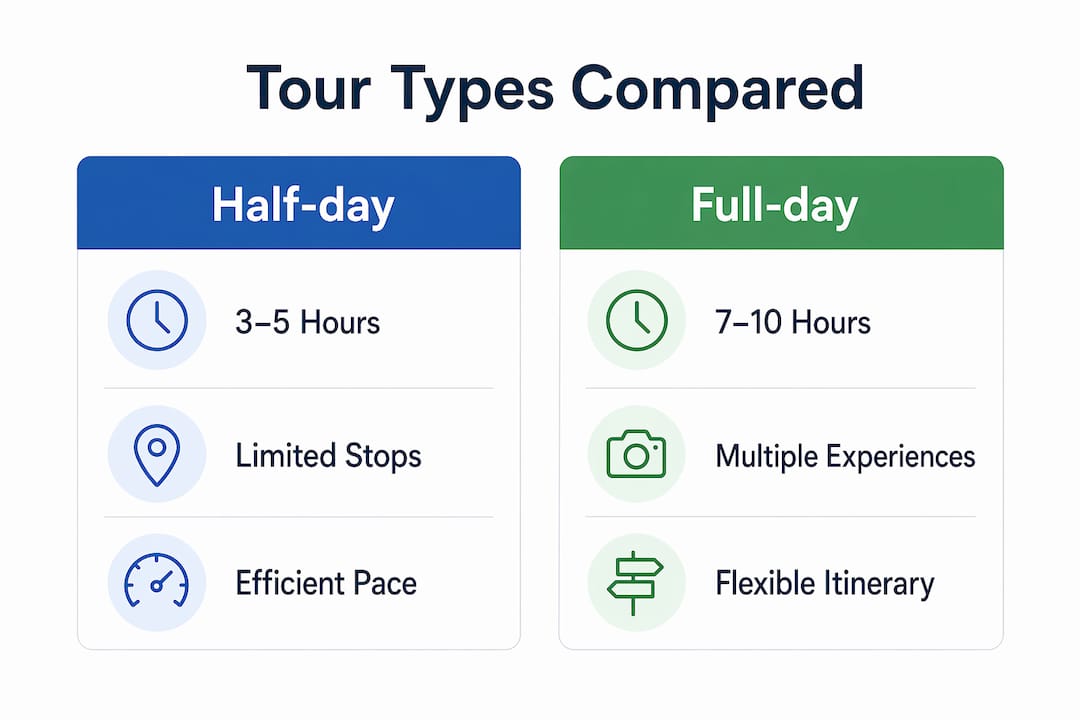
A full-day tour runs for 7–10 hours, while a half-day tour typically spans just 3–5 hours. That difference in time changes everything about the experience. A half-day trip gives you highlights. A full-day excursion gives you context, stories, and the chance to linger.
Half-day tours are built around efficiency. You visit the landmark, take the photo, and move on. Full-day tours are built around understanding. Your guide has time to explain why a place matters, not just what it is. That shift from information to meaning is what most travellers remember long after they return home.
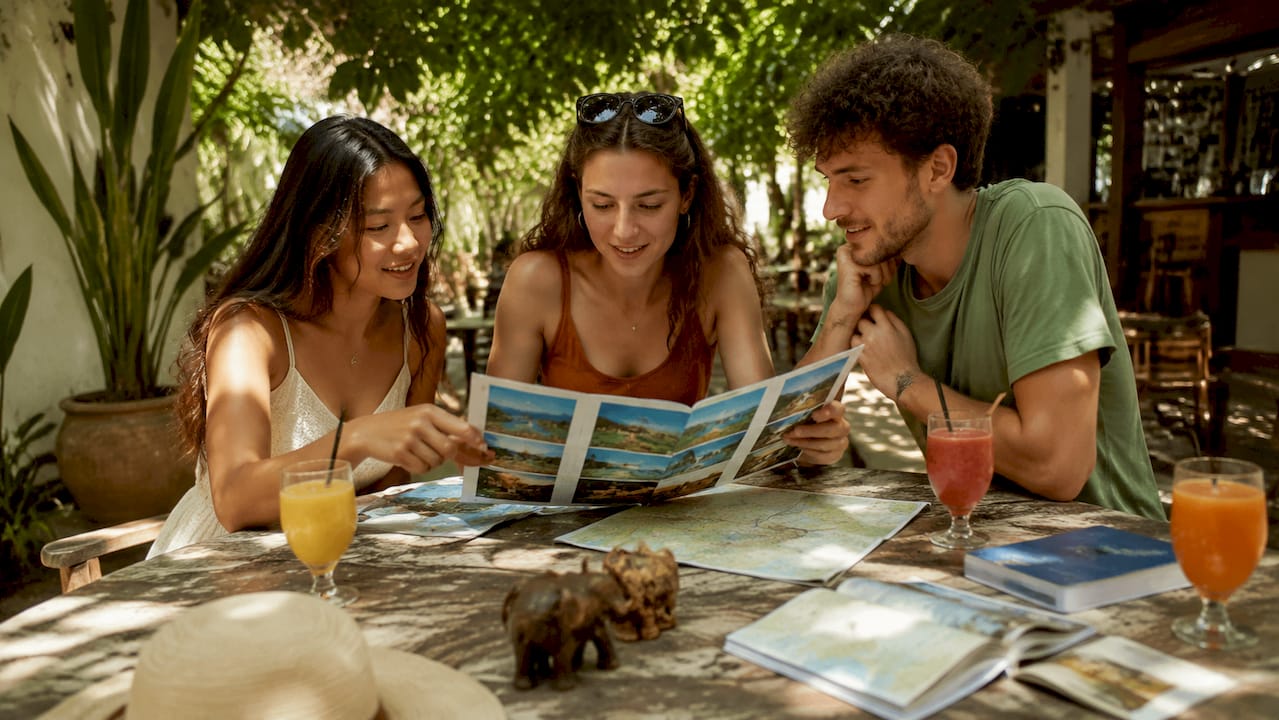
The pacing is also fundamentally different. Full-day tours include buffer time for weather changes, tidal windows, or unexpected crowds. That flexibility prevents the frantic, clock-watching energy that can ruin an otherwise beautiful day. You are not racing to the next stop. You are actually present at the one you are already at.
Here is a direct comparison to help you decide which format suits your trip:
| Parameter | Half-day tour | Full-day tour |
|---|---|---|
| Duration | 3–5 hours | 7–10 hours |
| Number of stops | 2–4 | 4–8 |
| Meals included | Rarely | Frequently |
| Pacing | Fast, highlights-focused | Relaxed, context-rich |
| Best for | Short stopovers, first-time visitors | Deeper exploration, dedicated travel days |
| Typical group size | Up to 20+ | Often 6–10 |
If you are on a cruise with limited port time, a half-day option may be your only realistic choice. For a dedicated travel day, the full-day format consistently delivers more value per hour.
How have full-day tours evolved for modern travellers?
The full-day excursion has changed significantly over the past decade. The old model, a 40-person coach stopping at car parks for ten minutes each, has largely given way to something far more personal.
Modern full-day tours favour groups of 6–10 participants. Smaller numbers mean your guide can actually talk with you rather than project at you. Questions get answered properly. Stops get adjusted based on what the group finds interesting. That responsiveness is impossible in a large coach setting.
Local guides are now central to the experience. Guides who are rooted in a place transform a tour into a narrative rather than a recitation of dates and distances. A local Highlander explaining the clearances at a ruined township carries a weight that no pre-recorded audio guide can replicate. Skyehighlandstours builds its full-day tours around exactly this principle, pairing travellers with guides who have genuine personal connections to the landscapes they cover.
Authentic meals have also become a standard feature rather than an afterthought. Full-day tours frequently include local cuisine, from street food stops to sit-down lunches at family-run restaurants. Eating where locals eat is one of the most direct routes into a culture.
Key features that define a quality full-day tour in 2026:
- Small group sizes (6–10 people) for genuine interaction with your guide
- Local storytelling that goes beyond memorised facts
- Authentic meals representing regional cuisine
- Flexible itineraries that adapt to group interests and conditions
- Multiple activity types combined into one booking
Pro Tip: Ask your operator how many people will be on the tour before you book. If the answer is over 15, the experience will feel noticeably less personal, regardless of how good the itinerary looks on paper.
How much does a full-day tour cost?
Full-day tour pricing varies considerably depending on format, destination, and what is included. Shared group tours typically start around £45 per person and can reach £160 for premium destinations or specialist themes. Private tours, where a vehicle and guide are reserved exclusively for your party, range from approximately £160 upwards and can exceed £600 for larger vehicles or remote itineraries.
The private versus shared distinction is the single biggest driver of price. Private tours cost more per person but offer complete flexibility on timing, stops, and pace. For families, couples, or small groups travelling together, the per-person cost of a private tour often compares favourably once you factor in the added control and comfort.
What is included matters as much as the headline price. A tour priced at £120 per person that covers entry fees, a two-course lunch, and all transport represents better value than a £75 tour where you pay separately for every attraction. Always read the inclusions list before comparing prices.
Full-day adventure packages in destinations like Costa Rica demonstrate the value clearly. Combining trekking, waterfall visits, and cultural stops into one booking eliminates the logistical overhead of arranging each activity separately. You pay once and the day is handled.
Pro Tip: Calculate the cost per hour of your tour, then compare it to what you would spend arranging the same activities independently. Full-day tours almost always win on both cost and convenience once you account for transport, entry fees, and your own time.
What should you consider before booking a full-day excursion?
Choosing the right full-day tour requires honest self-assessment before you browse itineraries. The format delivers the most value when it matches your actual travel goals, physical stamina, and schedule.
Matching the tour to your travel goals
Full-day tours are designed to balance one or two key activities with unstructured time for discovery. If you want to understand a region rather than tick off a list, the format suits you well. If you prefer to move quickly through many locations, a half-day tour repeated across two days may serve you better.
Physical stamina and group needs
Multi-activity full-day tours can be physically demanding. A day that combines a coastal walk, a boat trip, and a distillery visit requires reasonable fitness and comfortable footwear. Check the activity descriptions carefully, particularly if you are travelling with children, older family members, or anyone with mobility considerations. Reputable operators like Skyehighlandstours offer private excursions that can be tailored around physical ability and personal pace.
Practical booking considerations
Work through this checklist before confirming any full-day booking:
- Confirm group size. Smaller groups deliver a better experience. Ask directly.
- Check guide credentials. Local expertise matters more than a polished brochure.
- Read the inclusions list. Know exactly what meals, entries, and transport are covered.
- Verify the return time. This is critical if you have a flight, train, or cruise departure.
- Assess the itinerary balance. A good full-day tour has one centrepiece activity, not seven equal stops crammed together.
For cruise passengers, official operators guarantee timely returns within port docking windows. Independent tours may offer more flexibility, but the risk of missing your ship is real. When the stakes are high, book with a trusted operator.
Many travellers find full-day tours more relaxing than shorter alternatives, despite the longer duration. The unhurried pace removes the pressure that tight, multi-stop half-day itineraries create. You arrive at each location with energy rather than exhaustion.
Key takeaways
A full-day tour lasting 7–10 hours consistently delivers deeper cultural connection, better value per hour, and a more relaxed experience than any shorter alternative.
| Point | Details |
|---|---|
| Duration defines the format | Full-day tours run 7–10 hours, giving time for context, meals, and genuine exploration. |
| Small groups improve quality | Groups of 6–10 participants allow guides to personalise the experience and respond to your interests. |
| Inclusions determine real value | Compare what is covered, meals, entries, transport, before judging price. |
| Pacing is a key advantage | Buffer time for weather and crowds makes full-day tours more comfortable than rushed half-day alternatives. |
| Match the tour to your stamina | Multi-activity full-day excursions require reasonable fitness; always check activity descriptions before booking. |
Why I think full-day tours are the most underrated format in travel
People often assume that longer means more tiring. In my experience, the opposite is true. A well-constructed full-day tour is less exhausting than a frantic half-day one, because the pace is built around enjoyment rather than efficiency.
The tours I remember most vividly are not the ones where I saw the most landmarks. They are the ones where I had time to sit with a place. To eat something local, ask a question that went slightly off-script, and watch how a guide’s face changes when they talk about somewhere they genuinely love. That only happens when the clock is not against you.
I have seen travellers dismiss full-day excursions as too long, then spend the same hours wandering without direction or queuing for overpriced attractions they did not particularly want to see. A well-planned day trip removes that uncertainty entirely. You hand the logistics to someone who knows the terrain, and you focus on actually being there.
The Scottish Highlands reward this approach more than almost anywhere I know. The landscapes are vast, the history is layered, and the distances between meaningful places are real. Trying to cover the Isle of Skye or the Black Isle independently in a single day without local knowledge is an exercise in frustration. With a guide who knows when the light hits Eilean Donan Castle, or which single-track road bypasses the tourist coaches, the same day becomes something you will talk about for years.
My advice: stop treating full-day tours as a fallback for when you cannot be bothered to plan. Treat them as the centrepiece of your itinerary, and build the rest of your trip around them.
— Alin
Explore the Scottish Highlands with Skyehighlandstours
Skyehighlandstours specialises in private Scottish Highlands tours built around exactly what this article describes: small groups, expert local guides, flexible itineraries, and enough time to actually experience the places you visit. Whether you want to trace the shores of Loch Ness, stand beneath the Glenfinnan Viaduct, or spend a full day exploring the Isle of Skye at your own pace, every itinerary is tailored to your group’s interests, fitness level, and schedule.
Booking through Skyehighlandstours means you are not choosing from a fixed catalogue. You are working with guides who know these landscapes personally and can shape the day around what matters to you. Browse the full-day tour options and find the itinerary that fits your trip.
FAQ
How long is a full-day tour?
A full-day tour typically runs for 7–10 hours. This duration allows for multiple stops, meals, and flexible pacing without the rushed feel of shorter excursions.
What is the difference between a full-day and a half-day excursion?
A half-day excursion lasts 3–5 hours and focuses on highlights, while a full-day excursion runs 7–10 hours and offers deeper cultural immersion, meals, and a more relaxed pace.
Are full-day tours suitable for families with children?
Yes, provided you choose a tour matched to your group’s stamina and interests. Private full-day tours are particularly well-suited to families, as the itinerary can be adjusted around the needs of younger travellers.
What is typically included in a full-day tour?
Most full-day tours include transport, a local guide, and several planned stops. Many also include meals or refreshments and entry fees to key attractions. Always confirm the inclusions list before booking.
Is a full-day tour worth the cost compared to a half-day option?
For travellers with a dedicated day to spend, a full-day tour delivers significantly more value per hour. The combination of multiple activities, meals, and unhurried pacing makes it the stronger choice when time allows.