
Your cart is empty Continue Shopping
Role of customer preferences in tours: 2026 guide
Customer preferences in travel are the single most powerful force shaping whether a tour feels memorable or forgettable. The role of customer preferences in tours, known in the industry as preference-driven personalisation, determines everything from how itineraries are structured to how prices are presented and which activities make the final cut. A 2026 survey of 25,000 travellers found that 91% want flexible, well-planned itineraries, and 63% plan to increase their travel spend while demanding value and relevance in return. Those numbers tell a clear story: travellers know what they want, and operators who listen win.
How does the role of customer preferences in tours shape flexible itineraries?
Flexible itinerary design is the most direct expression of preference-driven personalisation. When operators build tours around traveller input rather than fixed schedules, engagement rises and complaints fall. The research is unambiguous: 97% of travellers want 20–30% of their itinerary as unstructured free time, which means nearly every person on a tour values breathing room over back-to-back activities.

The industry model that best captures this is the base-plus design. A base-plus itinerary provides a solid logistical foundation, covering transport, key sites, and guide expertise, then reserves 20–30% of the day for traveller-chosen activities. This prevents the rigidity that frustrates experienced travellers while still giving first-timers the structure they need.
Operators who layer choices into the base structure cater to wildly different travel styles without multiplying their operational complexity. A morning at Loch Ness might be fixed, but the afternoon could offer a choice between a boat trip, a walk along the shore, or time in a local village. That single fork in the road satisfies the history enthusiast, the walker, and the café-browser simultaneously.
The risk operators must manage is decision fatigue. Too many options at once overwhelm travellers and reduce satisfaction rather than increase it. The solution is curated choice: present two or three well-matched options rather than an open-ended menu.
- Offer 2–3 activity options per free-time slot, not an open list
- Pre-select a recommended default so indecisive travellers have a clear path
- Group options by physical effort level to match diverse abilities
- Communicate choices 24–48 hours before the relevant part of the tour
Pro Tip: Send a short preference questionnaire before departure. One or two questions about pace and interests give guides enough information to personalise the day without burdening travellers with lengthy forms.
What is the impact of personalised pricing on tour decisions?
Pricing is not just a commercial decision. It is a direct signal to travellers about how well an operator understands their needs. A June 2026 survey of more than 1,000 consumers found that 55% rate personalised pricing as the single most impactful improvement an operator can make to their experience. That figure places pricing ahead of itinerary variety and guide quality in terms of perceived value.
Behavioural economics explains why. Travellers experience what researchers call the psychological pain of paying, and complex pricing structures amplify that pain. Research confirms that travellers prefer simple, core-essentials pricing over itemised breakdowns that force them to calculate value at every step. A single clear price that covers the essentials reduces anxiety and increases booking confidence.
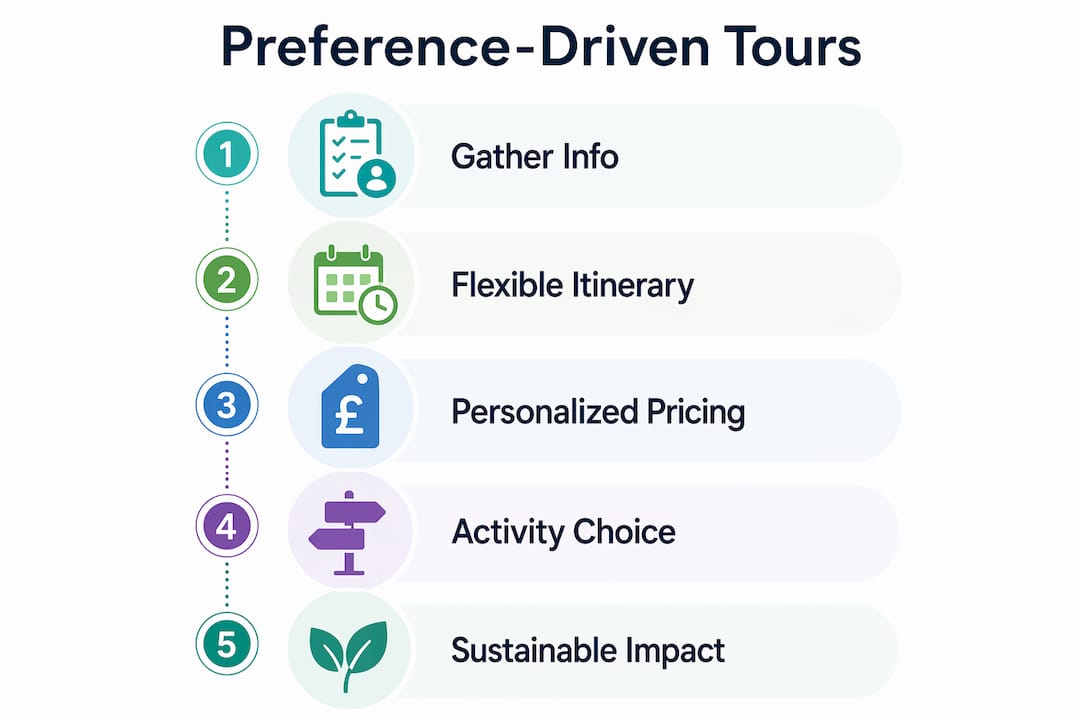
Demographic differences matter here. Younger travellers tend to respond well to flexible add-on pricing, where a base price covers the core tour and optional extras are available at checkout. Older travellers and group bookers often prefer all-inclusive pricing that removes uncertainty entirely. Operators who offer both structures capture a wider audience without discounting their core product.
Pricing strategies that respond effectively to diverse traveller preferences include:
- Transparent base pricing that covers transport, guide, and entry fees with no hidden costs
- Optional add-on bundles for food experiences, specialist guides, or extended hours
- Early-booking discounts that reward planners without penalising spontaneous travellers
- Group-size pricing tiers that reflect the genuine cost difference between small and large parties
- Seasonal value packages that bundle quieter-period tours with accommodation or dining
How do activity preferences shape cultural immersion in tours?
Activity preferences are where the impact of customer choices in tours becomes most visible. Travellers are no longer satisfied with passive sightseeing. A 2026 American Express Global Travel Trends Report found that 79% of Millennials and Gen Z actively seek local immersive workshops, and 89% want dedicated time to explore food culture. Those figures reflect a generational shift from observation to participation.
Expert guides are the mechanism that turns this preference into reality. Research confirms that tour guides facilitate value co-creation, transforming standard itineraries into personalised experiences through real-time responsiveness to group dynamics. A skilled guide at the Glenfinnan Viaduct does not just recite history. They read the group, identify who wants depth and who wants a photograph, and adjust their delivery accordingly.
The concept of choice editing is the operator-side complement to this. Choice editing means curating high-quality, sustainable defaults so travellers are steered towards meaningful experiences without being overwhelmed by options. Rather than listing every distillery in the Scottish Highlands, a well-edited whisky tour presents three that each offer something distinct: one for history, one for production access, and one for tasting depth.
| Activity type | Traveller preference segment |
|---|---|
| Local craft workshops | Millennials and Gen Z seeking hands-on cultural engagement |
| Food and drink experiences | Cross-generational, strongest among 25–54 age group |
| Scenic landscape walks | Active travellers and nature-focused visitors |
| Historical site visits | Older travellers and heritage enthusiasts |
| Small-group cultural talks | Solo travellers and intellectually curious visitors |
Pro Tip: Ask travellers to rank their top two activity types before the tour. This single data point lets guides prioritise depth over breadth in the right areas, which is the difference between a tour that feels rushed and one that feels personal. You can explore how tailored tours transform a trip when activity preferences are taken seriously.
How do customer choices affect ethical and sustainable tourism?
The preference for the cheapest possible holiday carries real consequences beyond the traveller’s wallet. A 2026 industry study found that demand for cheap holidays directly and negatively affects labour conditions across tourism sectors, from underpaid guides to overworked hospitality staff. The connection between what travellers choose and how workers are treated is direct, not abstract.
Choosing responsible providers supports fair wages, better service quality, and long-term tourism sustainability. When travellers prioritise value over the lowest price, they fund the conditions that make great tours possible in the first place.
Operators have a responsibility to educate travellers on this link, not lecture them. The most effective approach is to make the ethical choice the easy choice. Transparent communication about what a price covers, including guide wages and local supplier relationships, builds trust and shifts preferences without requiring travellers to do extra research.
Travellers who want to support ethical tourism can take these practical steps:
- Choose operators who publish their pricing rationale and supplier relationships
- Prioritise small-group tours where guide attention and fair pay are more viable
- Read reviews that mention guide experience and working conditions, not just scenery
- Avoid last-minute deep discounts, which often signal cost-cutting at the labour level
- Ask operators directly whether guides are employed or self-employed contractors
Sustainable tourism is not a niche preference. It is increasingly the baseline expectation of informed travellers, and operators who build it into their model attract the most loyal clients.
How can travellers express their preferences to get more from a tour?
Communicating preferences early is the single most effective thing a traveller can do to improve their tour experience. Operators who receive clear preference information before departure can adjust pacing, pre-book relevant add-ons, and brief guides on group priorities. Travellers who stay silent until they are dissatisfied miss the window where change is easiest.
- Clarify your priorities before booking. Decide whether pace, activity type, group size, or cultural depth matters most to you. Knowing your top two priorities makes it far easier to evaluate whether a tour matches your needs.
- Communicate physical requirements and interests at booking. Mention mobility considerations, dietary needs, and specific interests such as whisky, wildlife, or photography. Good operators build this into the itinerary before you arrive.
- Select operators with flexible planning built in. Look for tours that explicitly offer free time, optional add-ons, or customisable elements. A custom itinerary for Scotland is a concrete sign that an operator takes preferences seriously.
- Engage your guide during the tour. Guides adjust in real time when travellers speak up. If a site is more interesting than expected, say so. If the pace feels rushed, mention it. Guides who facilitate co-creation respond to this input immediately.
- Leave specific feedback after the tour. Detailed post-tour feedback shapes future itineraries. Vague five-star reviews help no one. Specific comments about what worked and what did not give operators the data they need to improve.
Pro Tip: When comparing tours, look for operators who ask you questions before you ask them. A pre-booking questionnaire or a personalised response to your enquiry signals that the operator treats preferences as operational data, not a courtesy.
Travellers interested in cycling experiences worldwide will recognise the same pattern: the best operators in any activity-based tour sector build preference capture into the booking process from the start.
Key takeaways
Customer preferences are the foundation of every satisfying tour, and operators who build preference capture into their process consistently outperform those who do not.
| Point | Details |
|---|---|
| Flexible itineraries drive satisfaction | 97% of travellers want 20–30% free time; the base-plus model delivers this without sacrificing structure. |
| Personalised pricing increases bookings | 55% of travellers rate personalised pricing as the most impactful improvement an operator can make. |
| Activity preferences define immersion | 89% of travellers want food culture time; guides who co-create experiences turn this preference into reality. |
| Cheap holidays carry ethical costs | Demand for the lowest price directly affects labour conditions; choosing responsible operators supports fair wages. |
| Early communication pays off | Sharing preferences at booking gives operators the lead time to personalise before the tour begins. |
Why preference-driven touring is the only model that works long-term
I have spent years watching the gap widen between tours that travellers remember and tours they forget. The difference is almost never the destination. It is whether the operator treated the traveller’s preferences as a design input or an afterthought.
The research from 2026 confirms what experienced guides have known for years: travellers want structure and freedom in the same package. They want an expert to handle the logistics and a guide who listens when they say they would rather spend an extra hour at a distillery than rush to the next viewpoint. That is not a demanding request. It is a reasonable expectation from someone who has paid for a personalised experience.
What I find most interesting about the current moment is the ethical dimension. Travellers are beginning to connect their pricing choices with the conditions of the people serving them. That shift is slow, but it is real. Operators who communicate transparently about what their prices fund are building a different kind of relationship with their clients, one based on shared values rather than transactional convenience.
The 2026 trend data points clearly toward deeper personalisation, smaller groups, and more immersive cultural engagement. Operators who invest in preference capture now, through questionnaires, flexible itinerary design, and guide training in co-creation, will be the ones travellers seek out as this shift accelerates. The travellers who communicate their preferences clearly will get the most from every tour they take.
— Alin
Skyehighlandstours and the art of preference-led touring
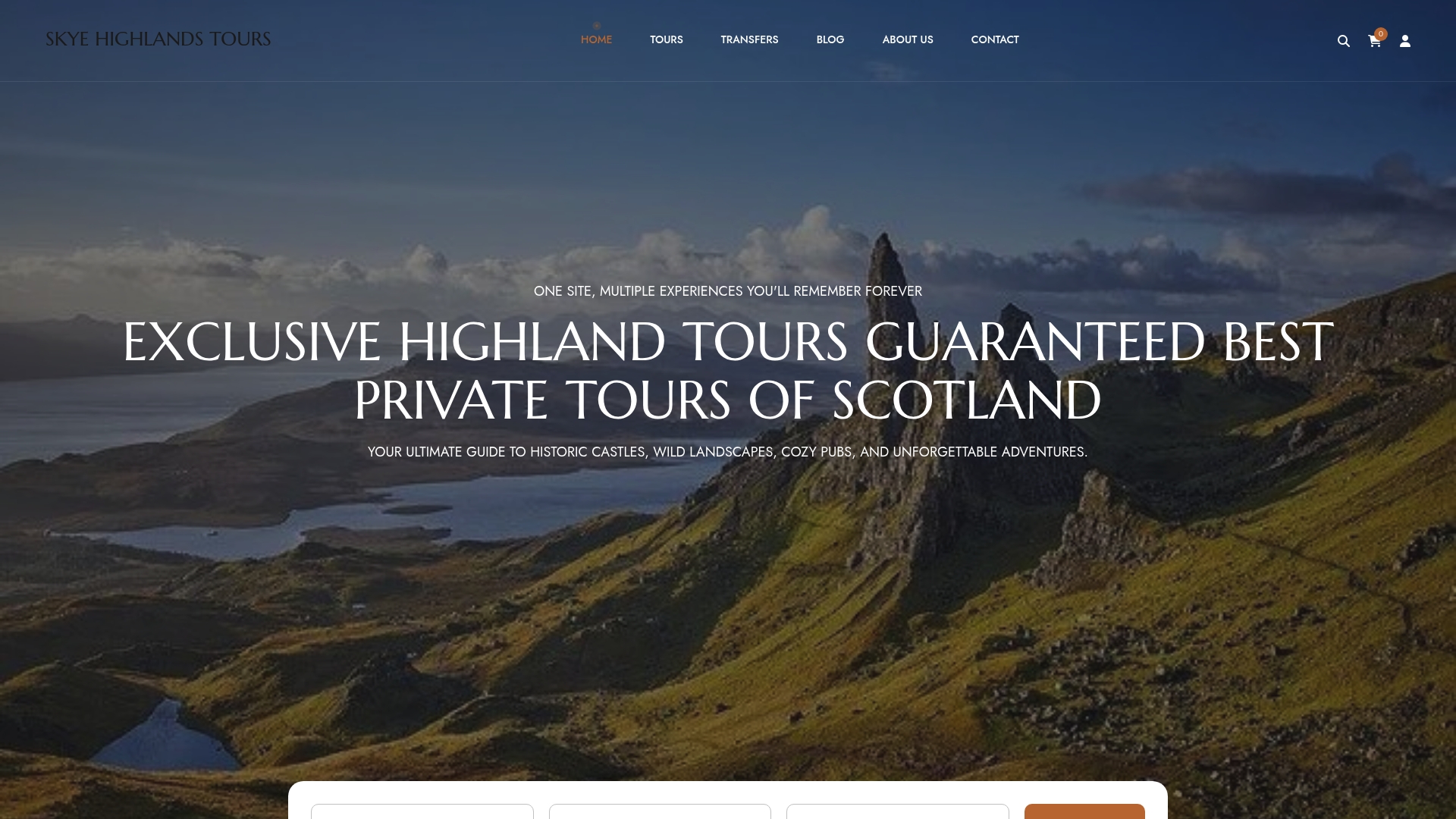
Skyehighlandstours builds every private Highland tour around the preferences travellers bring to the booking process. From the Isle of Skye to Loch Ness and the Glenfinnan Viaduct, each itinerary is designed with the base-plus model in mind: expert-guided structure combined with genuine free time and optional add-ons that reflect individual interests.
Whether you are planning a whisky-focused day, a family trip with mixed activity needs, or a private tour for a special occasion, Skyehighlandstours offers personalised Scottish Highlands tours that start with your priorities, not a fixed template. Explore the full range of Scottish Highlands sightseeing options and find the experience that fits what you actually want from your time in Scotland.
FAQ
What does “role of customer preferences in tours” mean?
The role of customer preferences in tours refers to how traveller priorities, from activity type and pace to pricing and group size, shape itinerary design and overall experience quality. Operators who capture and act on these preferences consistently deliver higher satisfaction.
How much free time should a tour include?
Research from a 2026 survey of 25,000 travellers shows that 97% want 20–30% of their itinerary as unstructured free time. The base-plus model is the standard framework operators use to build this in without losing logistical coherence.
Does personalised pricing really affect booking decisions?
A June 2026 survey found that 55% of travellers rate personalised pricing, including discounts and bundles, as the most impactful improvement an operator can make. Simple, transparent pricing consistently outperforms complex itemised structures in traveller satisfaction.
How do I communicate my preferences to a tour operator?
Share your priorities at the point of booking, including activity interests, physical requirements, and preferred pace. Operators who send pre-departure questionnaires are actively using this information to adjust guides and itineraries before you arrive.
Do my pricing choices affect tourism workers?
A 2026 industry study found a direct link between demand for the cheapest holidays and exploitative labour conditions in tourism. Choosing operators who publish fair-wage commitments and transparent pricing supports better conditions for guides and local staff.
2 Comments