


Your cart is empty Continue Shopping
The Role of Wildlife in Highland Tours Explained
Most travelers heading into the Scottish Highlands think of wildlife as a bonus. A red deer on the ridge, an eagle overhead. Nice to see, not the point of the trip. That assumption undersells something fundamental. The role of wildlife in highland tours extends far beyond a memorable photo. Wildlife shapes ecosystems, drives local economies, and determines whether the landscapes you came to see will still be intact for the next generation. Understanding that connection turns a scenic day out into something much more meaningful.
Table of Contents
- Key Takeaways
- The role of wildlife in highland tours starts with biodiversity
- Wildlife and local economies in highland tourism
- Responsible wildlife observation during highland tours
- How wildlife tours contribute to highland conservation
- My take on wildlife and highland tour experiences
- Plan a wildlife-focused Highland tour with Skyehighlandstours
- FAQ
Key Takeaways
| Point | Details |
|---|---|
| Wildlife drives tour value | Highland wildlife species directly shape the ecological and economic quality of every tour experience. |
| Responsible behavior improves sightings | Quiet, patient observation following conduct guidelines leads to more frequent and closer wildlife encounters. |
| Tourism funds conservation | Revenue from wildlife tourism provides financial incentives that protect habitats more effectively than extractive alternatives. |
| Timing matters enormously | Breeding seasons and early morning hours require specific visitor adjustments to avoid disturbing sensitive species. |
| Operator choice has real impact | Choosing a guide committed to responsible practices directly supports biodiversity and local communities. |
The role of wildlife in highland tours starts with biodiversity
The Scottish Highlands are not one environment. They span moorland, ancient Caledonian pine forest, freshwater lochs, coastal cliffs, and high alpine plateau. Each zone supports a distinct community of species, and the wildlife you encounter changes dramatically depending on where you are, what season it is, and what time you set out.
Mammals like red deer, red squirrels, pine martens, and mountain hares are regulars across the Scottish Highlands. Otters work the river banks and sea lochs. Bottlenose dolphins appear off the Black Isle coast. Golden eagles and white-tailed eagles patrol the ridgelines, while capercaillie, ospreys, and red kites occupy specific forest and wetland habitats.
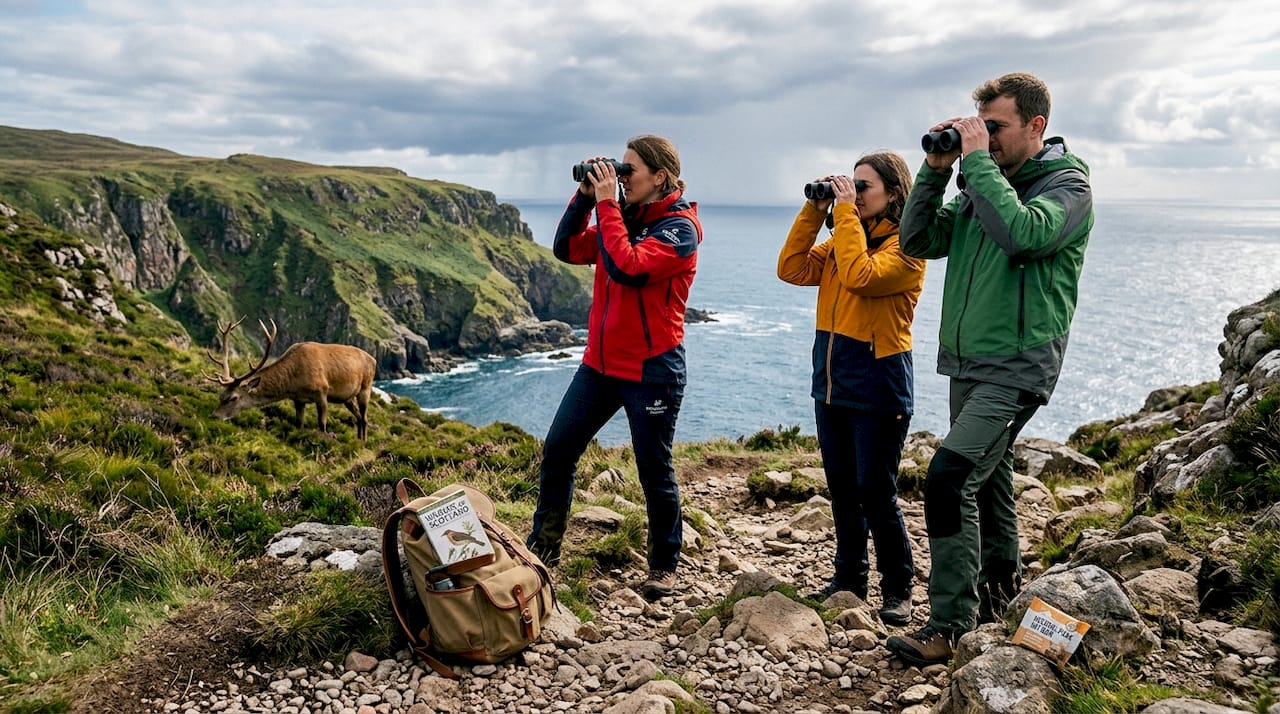
This variety is not accidental. It reflects the intactness of highland ecosystems that have faced significant but not total degradation. Compare that to the Himalayan context: the Kanchenjunga Conservation Area spans five ecological zones with over 40 mammal and 400 bird species across altitudes ranging from 1,200 meters to over 5,000 meters, demonstrating how elevation gradients create concentrated wildlife diversity in highland environments worldwide.
Key species highland travelers are likely to encounter include:
- Red deer: Scotland’s largest land mammal, most visible during the autumn rut from September through October
- Golden eagle: Scotland holds roughly 500 breeding pairs, concentrated in the northwest Highlands and Hebrides
- Pine marten: Once nearly extinct in Scotland, now recovering strongly in the Caledonian forest belt
- Otter: Present along many Highland river systems and sea lochs year-round
- Capercaillie: A legally protected woodland grouse, critically endangered, found in fragments of old-growth Scots pine
Altitude, season, and time of day act as filters. Ptarmigan live above the treeline. Ospreys are only present from April through September. Capercaillie lek at dawn in April and May. Knowing these patterns before you go changes everything about how you experience the landscape.
Wildlife and local economies in highland tourism
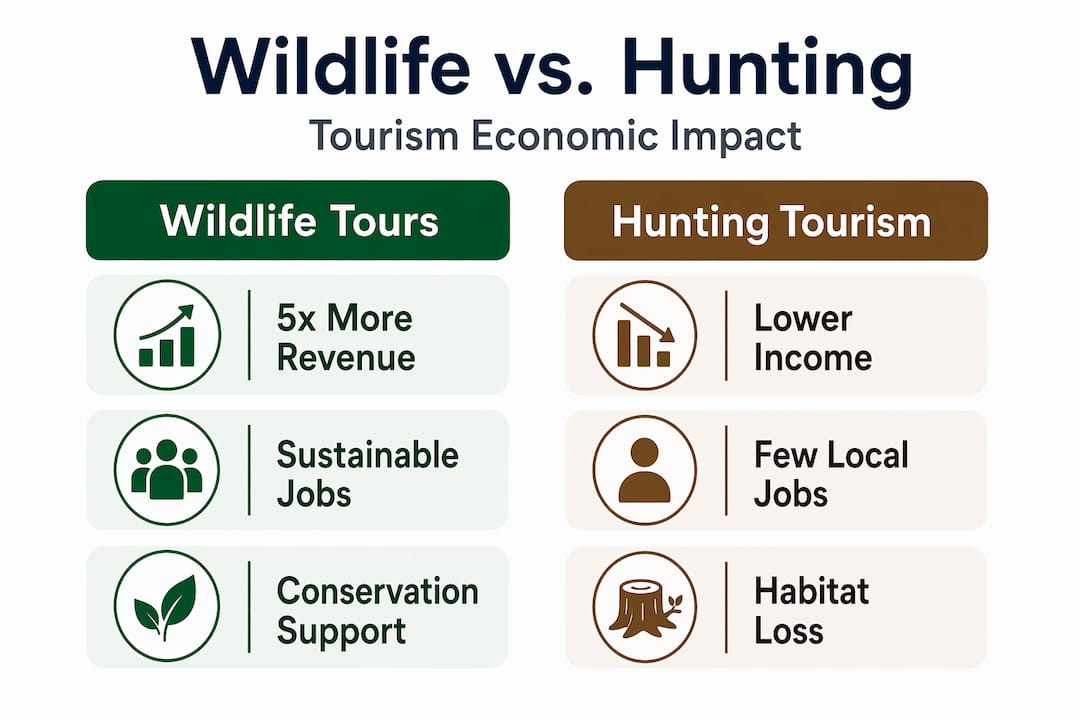
Here is something most travelers do not realize: the economic case for keeping highland wildlife alive is now stronger than the case for exploiting it. Non-consumptive wildlife tourism provides sustainable economic benefits and supports conservation more effectively than extractive practices like trophy hunting, according to a 2025 Springer Nature review.
The numbers reinforce that point. Wildlife tourism contributes over five times more to local economies than the illegal wildlife trade, according to a WTTC report, making responsible wildlife tourism one of the most powerful economic arguments for species protection.
| Revenue model | Conservation outcome | Community impact |
|---|---|---|
| Wildlife tourism (non-consumptive) | Funds habitat protection and anti-poaching | Supports local guides, accommodation, and services |
| Trophy hunting | Mixed; debated effectiveness, high ethical cost | Revenue concentrated, not community-wide |
| Illegal wildlife trade | Actively destroys biodiversity | Profits bypass communities entirely |
| Extractive land use (farming, logging) | Replaces wildlife habitat | Short-term economic gain, long-term ecological loss |
When you book a guided wildlife tour, the money you spend creates a direct financial reason for landowners and communities to keep that habitat intact. A glen with golden eagles is worth more to the local economy as a wildlife watching destination than as a grouse moor. That shift in economic logic is one of the most significant developments in eco-tourism in the highlands over the past two decades.
Pro Tip: Book with operators who are transparent about where tour revenue goes. Ask whether they contribute to local conservation programs or employ local naturalist guides. That single question separates genuine eco-tourism from wildlife-themed sightseeing.
Responsible wildlife observation during highland tours
Good intentions are not enough. How you behave around wildlife determines whether your presence is neutral or actively harmful. The good news: following a few clear principles does not reduce your experience. It measurably improves it.
Low visitor pressure combined with strict behavior protocols leads to better wildlife visibility because animals are less conditioned to avoid humans. In plain terms: quiet, patient, disciplined visitors see more wildlife than groups that chase, shout, or push too close.
The non-negotiable standards for responsible wildlife observation on highland tours include:
- Stay on marked trails and established viewpoints to avoid trampling sensitive vegetation and nesting areas
- Keep noise to an absolute minimum, particularly in forested habitats where capercaillie and other ground-nesting species live
- Never feed wildlife. Feeding habituates animals to humans and creates dependency that often ends badly for the animal
- Maintain generous distances. Use binoculars rather than walking closer. If an animal changes its behavior because of you, you are already too close
- Dispose of all waste properly. Food smells attract predators and disrupt natural foraging behavior
Timing carries its own responsibilities. Scotland’s Cairngorms National Park enforces seasonal path closures before 8:30am until mid-May to protect breeding capercaillie from disturbance during lekking. Disturbing a capercaillie lek is a wildlife crime under the Wildlife and Countryside Act 1981. This is not a suggestion.
Dogs require particular attention. The Scottish Outdoor Access Code requires dogs on short leads from April through July near ground-nesting birds and under close control at all other times. An uncontrolled dog moving through heathland or forest can disturb nesting birds across a wide area even when you are standing completely still. Many travelers do not factor this in.
Pro Tip: Plan your wildlife walks for early evening rather than early morning during spring. You avoid the most critical breeding disturbance periods while still catching excellent light and active wildlife behavior, particularly deer, otters, and raptors.
How wildlife tours contribute to highland conservation
The relationship between tourism and conservation is not automatic. Poorly managed wildlife tourism causes real harm. But well-managed ecotourism imposes lower behavioral impacts on wildlife than commonly assumed, with meta-analysis showing increased vigilance but not significant foraging suppression near tourists in non-extractive contexts.
That distinction matters. The concern that tourists inherently stress wildlife into behavioral collapse is not well-supported when management protocols are in place. The real threat comes from unmanaged access, uncontrolled dogs, and operators who prioritize spectacle over animal welfare.
Well-managed tourism creates something more durable: economic systems that continuously incentivize wildlife protection and minimize ecological exploitation. When a community earns consistent income from wildlife watching, the incentive to convert habitat for agriculture, logging, or intensive grazing weakens. That is not idealism. It is economic logic playing out across the Highlands and in wildlife tourism destinations globally.
Consider the practical chain: a traveler books a private guided tour through the northern Highlands. The guide fee supports a local naturalist. The accommodation spend supports a local business. The wildlife sighting at a specific glen generates a review that brings more conservation-conscious travelers. Over time, that glen becomes more economically valuable as wild habitat than as anything else. Land use decisions follow money, and wildlife tourism redirects that money toward preservation.
The critical factor is disturbance management at sensitive times. Breeding periods require targeted visitor behavior adjustments, with Cairngorms capercaillie protections restricting access during early morning lekking seasons specifically to prevent nest abandonment. Tour operators who understand these windows, and route their itineraries accordingly, are the ones contributing positively rather than neutrally to conservation outcomes.
My take on wildlife and highland tour experiences
I have spent a lot of time in the Highlands watching how different travelers interact with the landscape, and I will say this plainly: the people who see the most wildlife are almost never the ones trying hardest to find it.
The quietest traveler in a group spots the pine marten first. The person who stops moving when the guide stops talking is the one who watches an otter fish for six uninterrupted minutes. That is not luck. It is presence. Most people treat wildlife encounters as something to be acquired rather than received, and the animals respond accordingly.
What I have also learned is that the timing conversation most guides have with travelers is too shallow. People hear “come in spring for wildlife” and book a 9am walk. But disturbance-sensitive species like capercaillie have such narrow optimal windows that the wrong hour on the right day is worse than not going at all. A good guide knows this and plans around it, not just around guest convenience.
The other thing I push hard on is operator selection. The gap between a naturalist-led private tour and a large group bus tour in terms of wildlife impact and wildlife visibility is enormous. Small groups with expert guides who know individual animal territories and behavioral patterns produce better experiences and less disturbance. That is the kind of personalized Highland experience that actually teaches you something about the ecosystem you are walking through.
Wildlife does not owe you an appearance. The Highlands will show you extraordinary things if you approach them on their terms. That shift in attitude is the most practical thing I can offer.
— Alin
Plan a wildlife-focused Highland tour with Skyehighlandstours
If reading this has shifted how you think about wildlife on highland tours, the next step is choosing a tour built around that understanding. Skyehighlandstours offers private guided Highland tours designed specifically around personalized itineraries, expert local guides, and a genuine commitment to responsible wildlife observation. Routes are planned with seasonal wildlife patterns in mind, group sizes stay small, and guides carry the kind of local ecological knowledge that turns a landscape into a living ecosystem rather than a backdrop.
Whether you want to track otters along a sea loch, watch red deer on a glen, or explore the ancient forest habitat of the pine marten, Skyehighlandstours can build an itinerary around what you actually want to see. Browse the available Highland tours and start planning a trip where wildlife is the point, not the bonus.
FAQ
What wildlife can you see on Scottish Highland tours?
The Scottish Highlands support red deer, golden eagles, otters, pine martens, red squirrels, ospreys, and bottlenose dolphins, among many others. Species visibility varies by season, altitude, and habitat type.
How does wildlife improve the highland tour experience?
Wildlife adds ecological depth to highland tours by making landscapes feel active and alive rather than purely scenic. It also provides economic and conservation value that sustains the habitats travelers come to see.
What are the rules for watching wildlife on highland tours?
Visitors should stay on trails, keep noise low, never feed animals, maintain viewing distances, and keep dogs on leads from April through July near nesting birds, as required by the Scottish Outdoor Access Code.
Does wildlife tourism actually help conservation?
Yes. Wildlife tourism generates revenue that creates financial incentives for habitat protection, supporting conservation far more effectively than extractive land uses when managed responsibly.
Why does tour timing matter for wildlife observation?
Certain species like capercaillie have critical breeding windows where early morning disturbance can cause nest abandonment. Seasonal restrictions at sites like Abernethy Forest exist precisely because the margin for harm is narrow and the consequences are serious.
Recommended
- How local guides shape your Scottish Highlands tour – Skye Highlands Tours
- Discover Highland Heritage: Culture, Clans, and Scenic Scotland – Skye Highlands Tours
- How to plan a personalized Scottish Highlands itinerary – Skye Highlands Tours
- Private tours: The personalized Scottish Highlands experience – Skye Highlands Tours