Your cart is empty Continue Shopping
What Is Luxury Highland Tourism in Scotland?
Most travelers assume luxury tourism in the Scottish Highlands is about over-the-top opulence transplanted into a rugged setting. It is not. What is luxury highland tourism, at its truest form, is the art of experiencing one of the world’s most dramatic landscapes with depth, privacy, and intention. It means trading the crowded bus tour for a private Land Rover with a storytelling guide who knows the hills by name. It means sleeping in a Victorian estate with 16,000 pieces of art on the walls rather than a chain hotel off the motorway. This is Scotland at its finest, and it is a world apart.
Table of Contents
- Key Takeaways
- What luxury highland tourism actually means
- Iconic luxury accommodations in the Highlands
- Signature activities that define highland luxury experiences
- How to select a luxury Highland itinerary
- Pricing and exclusivity in luxury Highland getaways
- My honest take on what makes Highland luxury real
- Experience Highland luxury with Skyehighlandstours
- FAQ
Key Takeaways
| Point | Details |
|---|---|
| Luxury means immersion, not excess | Highland luxury centers on curated access to landscape and culture, not flashy displays. |
| Small groups define the experience | Most luxury tours cap guests at 10 or fewer, creating genuine exclusivity and personal attention. |
| Accommodations carry their own stories | From Victorian coaching inns to private estates, upscale lodging here is inseparable from cultural context. |
| Exclusivity has a measurable price | Private estate retreats can reach $100,000 per week, while curated small-group tours offer accessible luxury at a fraction of that. |
| Guide quality is the deciding factor | Expert local guides with deep storytelling ability separate authentic Highland luxury from standard sightseeing. |
What luxury highland tourism actually means
Luxury Highland tourism centers on curated, high-end experiences built around exclusive accommodation, expert small-group guiding, and activities tied to Highland culture and nature rather than mass tourism. That is the working definition. But the spirit of it goes further.
Think of it less as a category of spending and more as a philosophy of travel. You are not buying more of the same thing. You are buying access to something genuinely different: landscapes most visitors never reach, guides who speak about local history like they lived it, and moments of stillness that simply do not exist on a packed coach tour.
The core elements of luxury highland travel include:
- Exceptional accommodations positioned in locations chosen for their scenic and cultural significance, from lochside hunting lodges to Victorian estates on Royal Deeside
- Bespoke or small-group guided experiences designed around your interests, whether that means a private whisky tasting, a walking tour through ancient geology, or a morning watching red deer at dawn
- Premium Highland activities such as fly fishing on private stretches of river, Land Rover safaris across open moorland, sea kayaking off the Isle of Skye, and distillery visits with master blenders
- Exclusivity by design, with limited guest numbers, private-use arrangements, and staffing ratios that ensure genuinely personalized attention
Pro Tip: When comparing luxury Highland options, always ask how many guests share the experience. A tour capped at eight people is a fundamentally different product from one with thirty, regardless of what else is included.
The definition of luxury in the Highlands is also shifting. Comfort should feel appropriate to the setting, never competing with the landscape itself. Warmth, quality materials, exceptional food, and a strong sense of place have replaced formality as the markers of genuine high-end highland getaways.
Iconic luxury accommodations in the Highlands
Where you stay in the Highlands is not just a base for exploration. It is part of the experience itself.
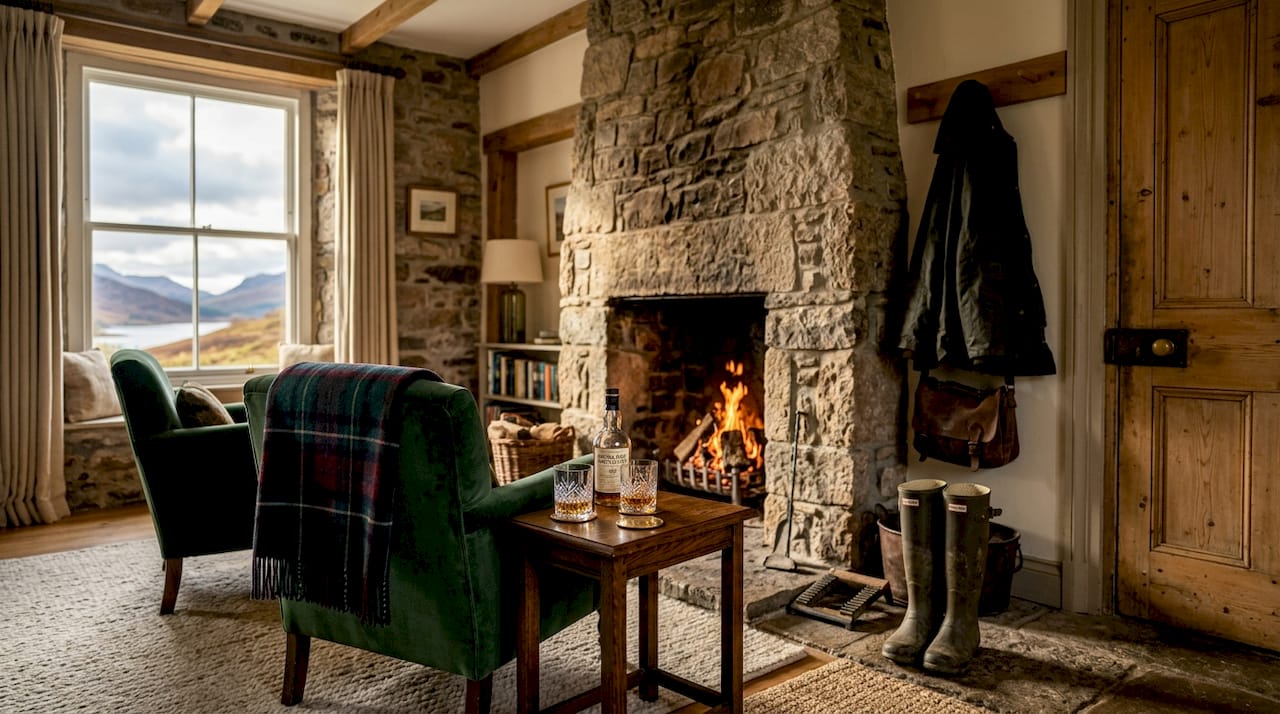
The Fife Arms in Braemar is one of the most talked-about luxury hotels in Scotland. A Victorian coaching inn transformed by art world figures, it holds over 16,000 pieces of art and antiques collected from across the globe, yet the atmosphere is entirely grounded in the local community. Local sourcing, craftsmanship commissions, and staff who have deep roots in the area make it feel like culture rather than decoration.
Inverlochy Castle, at the foot of Ben Nevis, operates more like a private house than a hotel. Guests dine together, rooms are individually designed, and the surrounding grounds feel like they belong to you personally during your stay. Queen Victoria described the views from the grounds as some of the finest she had ever seen, and that reputation has not aged.
“Luxury in the Highlands is not about what you bring to it. It is about what the place gives you when you are finally quiet enough to receive it.”
Across the spectrum, the Scottish Highlands offer options that range from boutique inns in converted farmhouses to full exclusive-use private estates. The common thread is that every top property leans into its setting rather than trying to override it. Curated interiors reference the surrounding landscape. Menus use produce from nearby estates and farms. Even the lighting and architecture seem designed to pull your eye toward the hills outside the window.
Signature activities that define highland luxury experiences
Luxury Highland travel is not passive. The best experiences ask something of you, physically or intellectually, and reward you with access that most visitors never get.
Here is what a well-designed luxury Highland itinerary might look like in practice:
- Morning guided walk through ancient geology with a naturalist who can name every bird call and explain why the rock beneath your feet is 750 million years old. This is the kind of context that turns a hike into something that sticks with you.
- Private distillery visit with a master distiller, not the standard tour, but a session that covers water source, barrel selection, and the economics of single malt production over a dram chosen specifically for your palate.
- Land Rover safari across private moorland, reaching viewpoints and wildlife habitats that are inaccessible on foot or by public road. Red deer, golden eagles, and wild otters are regular sightings.
- Fly fishing on a private river beat, with instruction from a local ghillie who has worked that stretch of water for decades.
- Cultural visits to working craftspeople, from Harris Tweed weavers to traditional boat builders, where you learn the process firsthand rather than watching a demonstration designed for crowds.
Small-group luxury tours often limit guests to a maximum of 10 people and include first-class transport, with guided storytelling covering cultural and geological history throughout. That design is intentional. Smaller numbers create the conditions for genuine conversation and unexpected detours that simply cannot happen at scale.
Pro Tip: Book activities that combine physical engagement with hospitality. A morning hike followed by a picnic lunch prepared by a local chef, eaten beside a loch with no other people in sight, is worth more than any hotel amenity.
For travelers who want to understand how tailored itineraries genuinely transform a Highland trip, the difference between a standard tour and a bespoke one becomes obvious within the first hour.
How to select a luxury Highland itinerary
Not every tour that markets itself as “luxury” delivers the experience the label implies. Knowing what to evaluate before booking saves significant disappointment.
The key criteria for genuine luxury highland travel include:
- Earned access over standard sightseeing. Authentic luxury operators provide access to unique places, fluid schedules, and guides who offer deep local context. If the itinerary looks identical to a mainstream tour with upgraded hotels, look elsewhere.
- Guest limits with real meaning. Ask specifically how many guests share each activity. A property that accepts 40 guests but markets “exclusive experiences” is selling a contradiction.
- Conservation and stewardship credentials. The best Highland operators are connected to land management, rewilding efforts, or local cultural preservation. This is both an ethical indicator and a quality signal.
- Genuinely local guides. A guide born and raised in the Highlands, who knows landowners personally and can unlock private access, is categorically different from a well-trained generalist.
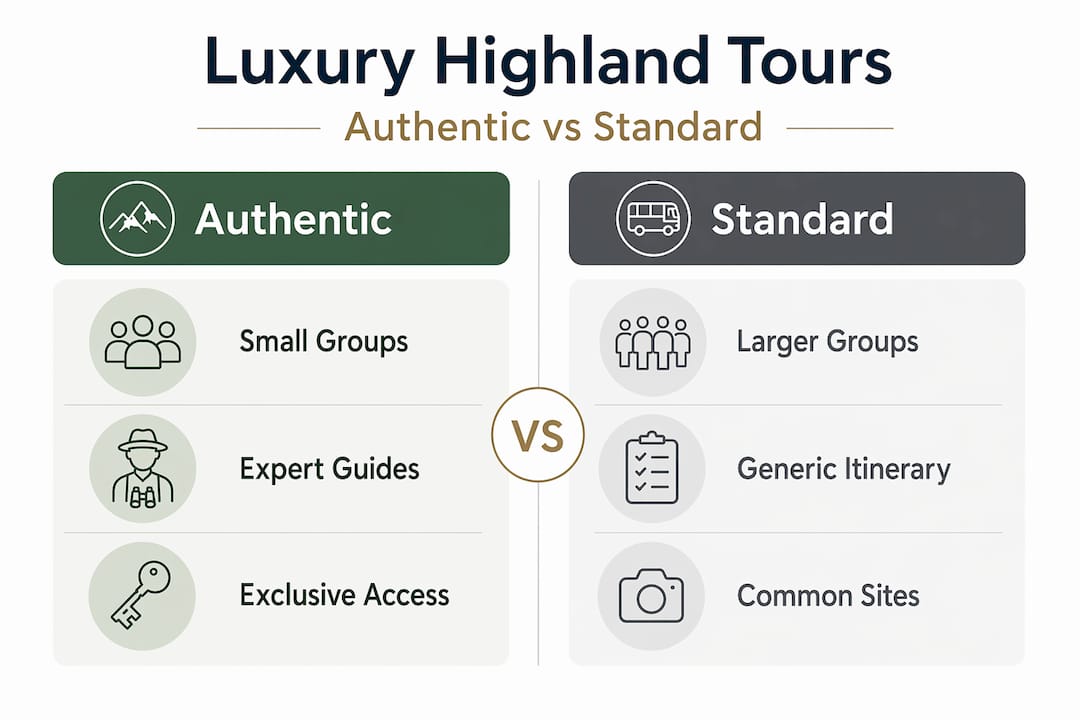
Here is a quick comparison to help you distinguish authentic luxury from surface-level luxury:
| Factor | Authentic luxury Highland tours | Standard Highland tours with “luxury” label |
|---|---|---|
| Group size | Maximum 8 to 10 guests | 20 to 40 guests typical |
| Guide expertise | Deep local knowledge and storytelling | General trained guide |
| Access | Private estates, off-road, exclusive sites | Public roads and standard visitor attractions |
| Itinerary flexibility | Adjusted daily to conditions and interests | Fixed and pre-scheduled |
| Cultural connection | Craftspeople, landowners, local communities | Curated visitor center experiences |
When planning a personalized itinerary, the decisions you make about operator selection will define the experience far more than any single hotel or activity choice.
Pricing and exclusivity in luxury Highland getaways
Exclusive Highland travel comes with a real price range, and understanding what drives those costs helps you identify where genuine value lies.
At the very top end, limited-capacity retreats cap guests at 20 people across 10 bedrooms, with private estate use, curated programming, and dedicated staff. NewTree Ranch’s 2026 Scotland retreat exemplifies this model, priced at $100,000 per week for the full estate. That figure reflects not just accommodation, but a completely private setting, a private chef, exclusive nature and cultural programming, and a staffing ratio that treats each guest as the only one that matters.
Below that tier, a well-structured 7-day luxury tour capped at 10 guests, combining first-class rail travel with stays at a Georgian mansion, a hunting lodge, and a lochside hotel, offers the immersion of luxury travel at a more accessible price point.
| Experience type | Typical price range | Key value driver |
|---|---|---|
| Exclusive estate retreat (private use) | $50,000 to $100,000+ per week | Total privacy, dedicated staff, curated access |
| Small-group luxury tour (6 to 10 guests) | $5,000 to $15,000 per person | Expert guides, premium transport, cultural immersion |
| Boutique hotel stay with guided activities | $500 to $1,500 per night | Unique setting, personalized service, local access |
| Private day tour with expert local guide | $300 to $800 per day | Flexibility, local knowledge, exclusive access |
The consistent thread across all these tiers is that you are paying for what you cannot get on your own. Exclusivity, authenticity, and meaningful engagement with place and culture. That is the value proposition of luxury travel in the Highlands, and it holds at every price point.
My honest take on what makes Highland luxury real
By Alin
I have spent enough time in the Highlands to know that the word “luxury” gets applied to things that do not deserve it. A hotel with a spa and a view is not luxury. It is a hotel with a spa and a view.
What I have found actually qualifies is when the experience requires the Highlands to exist. When the guide’s knowledge of a particular glen’s history changes how you look at every hill for the rest of the trip. When the meal is built around what was caught or foraged that morning within ten miles of the table. When the silence of a particular moor at 6am is treated as something worth protecting, not just a backdrop.
I have also watched this definition shift over the years. Formality is out. Authenticity is in. The best operators I have encountered are not selling showiness. They are selling earned access. Local Scottish guides who can get you onto private land, into a conversation with a whisky maker, or standing at a viewpoint that does not appear in any travel magazine, those are the people who actually deliver luxury.
My honest advice: stop prioritizing the thread count of the sheets and start asking what the guide can unlock that you could not access alone. That is where the real value lives. Every traveler I know who has done it that way comes back changed. The ones chasing amenities come back having had a nice trip.
— Alin
Experience Highland luxury with Skyehighlandstours
Skyehighlandstours specializes in exactly the kind of luxury Highland travel described throughout this article: private, small-group, and built around genuine local access. Every tour is led by expert Scottish guides with the knowledge and connections to take you beyond the standard visitor trail, whether that means a private drive through Glencoe at sunrise, a whisky session with a distiller who has been at the craft for 30 years, or a full day on the Isle of Skye tailored to your pace and interests.
If you are ready to experience the Highlands the way they deserve to be experienced, explore the private tour options available through Skyehighlandstours. You can also consult the guide to booking private adventures to understand how the booking process works and how to tailor your itinerary before you arrive.
FAQ
What is luxury highland tourism?
Luxury highland tourism is a style of travel in the Scottish Highlands centered on exclusive accommodations, small-group or private guided experiences, and activities deeply connected to local culture and landscape. It prioritizes authenticity, privacy, and meaningful access over mass-market sightseeing.
How much does a luxury Highland tour cost?
Prices range from around $300 per day for a private guided tour up to $100,000 per week for a fully exclusive private estate retreat. Small-group luxury tours typically run between $5,000 and $15,000 per person for a week-long itinerary.
What size groups do luxury Highland tours use?
Most authentic luxury Highland tours cap groups at 10 guests or fewer, with top-tier private retreats limiting capacity to 20 guests across an exclusive-use estate. Smaller groups are a reliable indicator of genuine exclusivity and personalized service.
What activities are included in luxury Highland experiences?
Typical activities include private distillery visits, Land Rover safaris across moorland, fly fishing on private river beats, guided geological and cultural walks, and visits to working craftspeople. The best itineraries combine physical engagement with expert storytelling and genuine local access.
How do I choose a genuinely luxury Highland operator?
Prioritize operators that offer earned access to unique locations, limit group sizes, use deeply local guides, and build itineraries with flexibility. Conservation involvement and cultural connections to the local community are strong indicators that an operator delivers real luxury rather than a branded version of mainstream tourism.
Recommended
- Discover Highland Heritage: Culture, Clans, and Scenic Scotland – Skye Highlands Tours
- How to plan a personalized Scottish Highlands itinerary – Skye Highlands Tours
- How tailored tours transform your Scottish Highlands trip – Skye Highlands Tours
- Experience Scotland food: Highland flavors & culinary traditions – Skye Highlands Tours