Your cart is empty Continue Shopping
Scotland off-season travel: 10 reasons to go
Visiting Scotland off-season delivers real, concrete advantages: lower prices, far fewer people at the most-visited sites, and seasonal experiences you simply cannot get in July. The shoulder months of April–May and September–October offer the best balance, with reasonable daylight and most attractions still open. Deep winter (November–March, excluding Christmas and Hogmanay) goes further on savings but demands more planning. VisitScotland actively promotes autumn and winter as distinctive travel windows, and Skyehighlandstours runs private guided tours year-round to help you make the most of whichever season you choose.
Quick month guide:
- April–May (shoulder): Warming weather, long evenings, no midges yet, most attractions open
- September–October (shoulder): Red deer rut, autumn colour, aurora borealis beginning, fewer crowds
- November–March (low season): Deepest savings, Northern Lights at their strongest, Hogmanay festivities in late December/early January — but shorter days and reduced services
Table of Contents
- What does ‘off-season’ actually mean in Scotland?
- 1. Prices drop sharply across almost every category
- 2. Iconic sites feel completely different without the crowds
- 3. Wildlife and seasonal phenomena are genuinely unique
- 4. What you give up and how to manage it
- 5. How to plan an off-season Scotland trip
- 6. How a private guided tour amplifies off-season benefits
- 7. Food and drink experiences that come into their own off-season
- 8. Health and safety in Scotland’s off-season weather
- 9. Where to stay off-season and what to expect
- Key takeaways
- The case for going when everyone else stays home
- Private off-season tours with Skyehighlandstours
- Useful sources for planning your off-season trip
- FAQ
What does ‘off-season’ actually mean in Scotland?
High season runs June through August, when visitor numbers peak, prices follow, and the infamous Highland midge is at its worst. Shoulder season covers April–May and September–October: a sweet spot where conditions are pleasant, most ferries and attractions run full schedules, and crowds thin noticeably. Low season spans November through March, with Christmas and Hogmanay as the notable exceptions when prices spike again.
The practical difference between shoulder and deep winter matters. In shoulder months, most island ferries run close to summer frequency, distilleries and visitor centres stay open, and there are moderate daylight hours. By January, daylight in Inverness can drop to 6–7 hours, some island services reduce significantly, and a handful of smaller attractions close entirely.
| Month window | Daylight | Typical accessibility |
|---|---|---|
| June–August (peak) | Long days (around 16 hrs) | Full services, high prices |
| April–May / Sept–Oct (shoulder) | Moderate daylight (8–10 hrs) | Most services open, good value |
| November–March (low) | Short days (6–8 hrs) | Reduced ferries, some closures |
Check VisitScotland for up-to-date attraction opening patterns before you book, particularly for island destinations.
1. Prices drop sharply across almost every category
Accommodation and travel costs can drop dramatically in deep winter compared with summer peak rates, with reductions ranging from 50–78% for many categories. Mid-range hotels, B&Bs, car hire, and some tours typically see their lowest prices in January, February, and November (outside festive weeks); shoulder months offer substantial savings as well.
Pro Tip: Take the money you save on accommodation and redirect it into one genuinely special night — a boutique lochside B&B or a castle hotel that would be out of reach in peak season.
2. Iconic sites feel completely different without the crowds
Fewer visitors at popular sites means you can stand at the Old Man of Storr or the Fairy Pools without a queue forming behind you. Photography becomes a different proposition entirely. The light in autumn and winter sits low on the horizon for most of the day, casting long golden shadows across the glens that summer’s high sun simply cannot replicate.
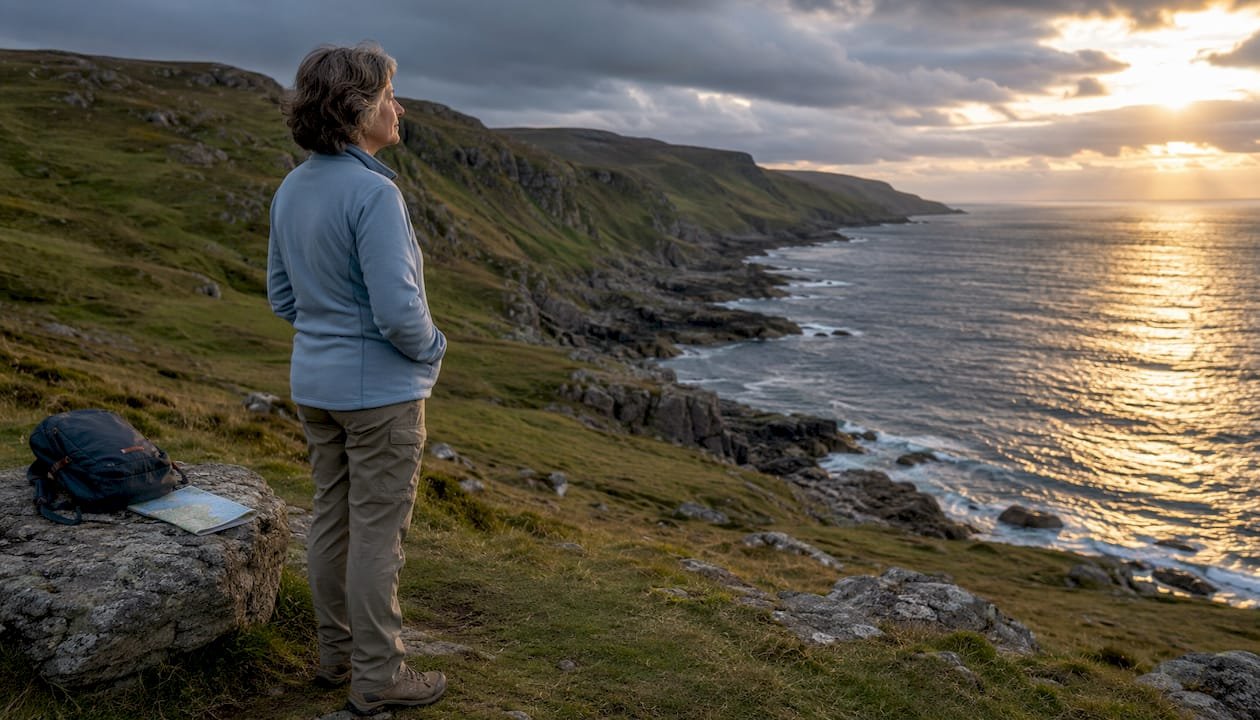
Slow travel in Scotland is about depth rather than distance. Deeper engagement with local culture comes naturally when you are not competing with coachloads for a table at the village pub or a conversation with the distillery guide. You get the authentic Scottish travel experience that peak-season visitors rarely find.
3. Wildlife and seasonal phenomena are genuinely unique
Some of the most memorable things to see in Scotland are only available off-season:
- Red deer rut (September–November): Stags roar across the glens at dawn. Glen Etive and the Cairngorms are reliable spots.
- Northern Lights (October–March, weather permitting): Scotland’s dark skies, particularly in the far north and the Cairngorms National Park, offer genuine aurora opportunities. Solar activity varies, so check Space Weather Prediction Center forecasts close to your dates.
- Autumn colour (September–October): Birch and rowan turn gold and red across Perthshire and Speyside.
- Coastal storm-watching (November–February): The north and west coasts deliver dramatic Atlantic swells. Duncansby Head and the Orkney coast are spectacular.
- Seal pups and winter wildlife (November–January): Grey seal colonies on the east coast are accessible and active.
- Hogmanay and winter festivals (late December–early January): Edinburgh’s Hogmanay street party and the Up Helly Aa fire festival in Shetland (late January) are genuinely world-class events.
- Dark-sky stargazing (October–March): The Galloway Forest Dark Sky Park and Tomintoul are among the best sites in the UK.
Weather and solar activity are variable. For aurora forecasts, use the Met Office Space Weather service; for coastal conditions, check the Met Office marine forecast.
4. What you give up and how to manage it
Off-season travel is not without trade-offs. Being clear-eyed about them is what separates a great trip from a frustrating one.
- Shorter daylight hours mean outdoor itineraries need tighter planning
- Some island ferry services reduce frequency November–March; day-trips to remote islands can become logistically difficult
- A small number of visitor attractions, particularly on the islands, close entirely in deep winter
- Mountain roads can close without warning after snow or ice; the A82 and A87 are the most affected routes
- Weather is more unpredictable, though Scotland’s winters are moderated by the Gulf Stream and rarely as extreme as equivalent latitudes on the continent
Plan island stays as overnights, not day-trips. Reduced winter ferry schedules mean a cancelled sailing can strand you if you have not built in flexibility. Book accommodation on the island itself and treat the extra night as a feature, not a problem.
For winter driving, carry a torch, a warm layer, and a phone charger. Check Traffic Scotland for road conditions before any Highland journey.
5. How to plan an off-season Scotland trip
Packing essentials
- Waterproof outer layer (non-negotiable — rain is the constant, not the cold)
- Waterproof walking boots with ankle support
- Thermal base layers and a mid-layer fleece
- Spare battery pack for cameras and phones
- Headtorch for early sunsets
Itinerary steps
- Check ferry timetables first. CalMac publishes winter schedules months in advance. Island plans should be built around the ferry, not the other way round.
- Schedule light-sensitive activities for mid-morning. In deep winter, the best light arrives around 10 AM and fades by 3 PM. Prioritise coastal and mountain stops in that window.
- Build in at least one buffer day per five days. Weather can close roads or cancel ferries. A flexible day is not wasted — it becomes your best unplanned discovery.
- Pre-book accommodation on islands and popular B&Bs. Off-season does not mean unlimited availability; good places still fill, especially at weekends.
- Check attraction opening hours directly. Do not rely on summer-season listings.
Pro Tip: A private guide who knows the local roads and weather patterns can compress a 6–7 hour winter daylight window into a genuinely full day. Local Scottish guides know which sites catch the best light at which time of year — that knowledge is worth more in winter than in summer.
6. How a private guided tour amplifies off-season benefits
A private tour changes the off-season calculation in several practical ways. Consider what a tailored itinerary actually delivers when daylight is short and conditions are unpredictable:
- Optimised routing: A guide builds the day around the light, not a fixed coach schedule. Coastal stops happen at golden hour; indoor distillery visits fill the grey mid-afternoon.
- Local access: Guides often know which smaller sites stay open in winter and which local events are worth attending — information that does not appear on any booking platform.
- Safety in winter driving: Navigating the A87 to Skye or the single-track roads of Torridon in icy conditions is a different proposition with a local driver who knows the route in all weathers.
- Personalised wildlife priorities: Whether you want to find red deer at dawn or reach a dark-sky site after dinner, a private itinerary bends to your schedule.
- Quieter distillery visits: Off-season whisky tours at smaller Highland distilleries often include conversations with the distiller that simply do not happen when a tour group of thirty arrives in August.
Skyehighlandstours offers flexible tour options across the Highlands year-round, including the Isle of Skye, Loch Ness, and the Black Isle, with itineraries that can be built around your specific dates and daylight window.
7. Food and drink experiences that come into their own off-season
Scotland’s food and drink culture is arguably at its most rewarding between October and March. Distilleries are quieter, which means more time with the people who actually make the whisky. A Speyside whisky tour in November gives you the warehouse to yourself in a way that August never does.
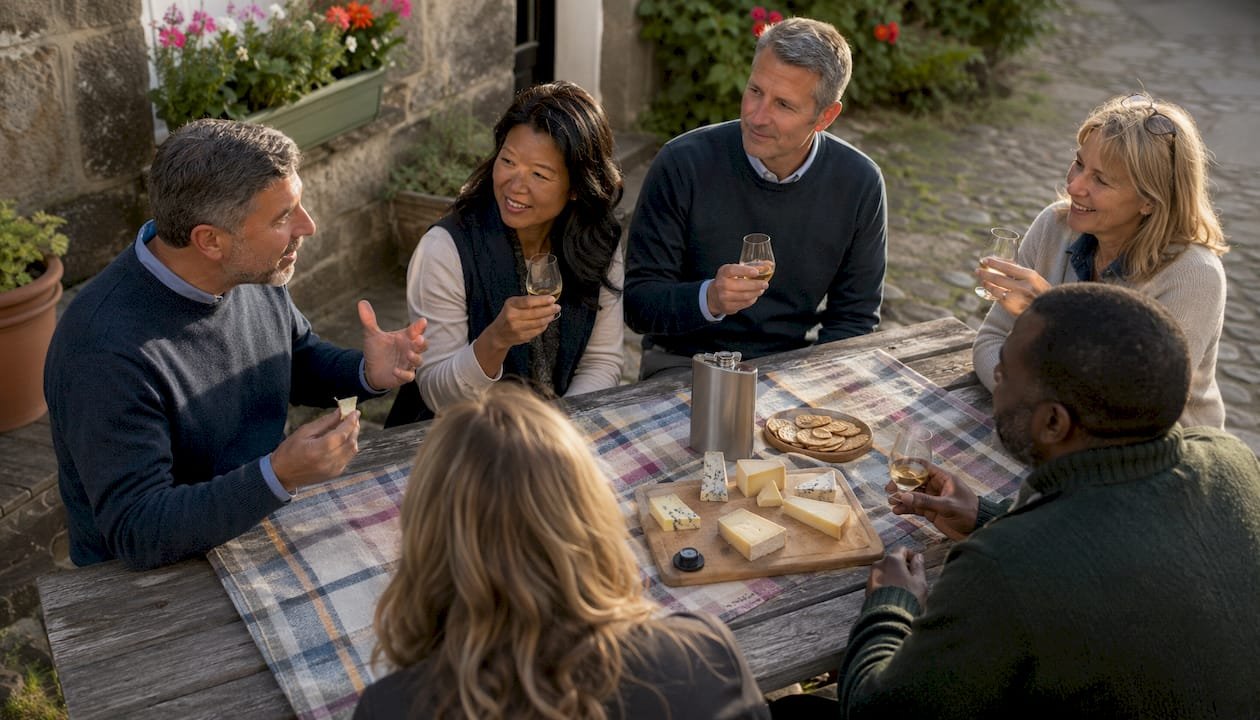
Game is at its best in autumn and early winter. Venison from the red deer rut appears on menus across the Highlands from October onwards, often sourced from the estate next door. Cullen skink, smoked haddock chowder, and Stornoway black pudding are cold-weather staples that taste exactly right when there is rain on the window. Many Highland hotels and inns run special winter menus and whisky-pairing evenings that they simply do not bother with in the busy summer months.
The cultural experiences that come with off-season food and drink go beyond the plate. Burns Night suppers (25 January) are held in village halls and hotels across Scotland, and attending one as a visitor rather than a tourist attraction is a genuinely different experience.
8. Health and safety in Scotland’s off-season weather
Scotland’s winters are wetter and windier than cold, thanks to the Gulf Stream’s moderating influence. That said, the risks are real and worth taking seriously.
Hypothermia is a genuine concern on exposed Highland terrain, particularly if you are caught in wet conditions without adequate layers. The rule is simple: if you are heading above 500 metres in winter, tell someone your route and expected return time. Mountain Rescue Scotland responds to incidents year-round, but prevention is straightforward with proper kit.
Road safety matters more in winter than most visitors expect. Black ice forms quickly on shaded single-track roads, and the Highland Council gritting schedule does not cover every route. Check Traffic Scotland before driving, and carry a basic emergency kit in the car. For anyone not confident driving in these conditions, a private driver removes the risk entirely.
Mental wellbeing is worth a mention too. Short days can feel oppressive if your itinerary is too ambitious. Build in cosy indoor time — a long lunch, an afternoon in a distillery, an evening by a fire — and the short days become part of the atmosphere rather than a problem.
9. Where to stay off-season and what to expect
Off-season accommodation in Scotland splits into a few reliable categories:
Boutique B&Bs and guesthouses are the strongest option for most off-season travellers. Many stay open year-round, prices drop considerably from peak rates, and the hosts are more available for conversation and local advice when they are not managing a full house.
Self-catering cottages suit longer stays and are often better value per night than hotels in winter. Availability is generally good outside the festive period, and many properties have wood-burning stoves that make a wet November evening genuinely pleasant.
Highland hotels vary. Some close entirely from November to March; others run reduced services. Always confirm directly before booking. The ones that stay open often run winter packages that include dinner and activities.
Hostels and bunkhouses remain open in most towns and are the cheapest option for solo travellers or those on tighter budgets. Fort William, Inverness, and Portree all have year-round options.
On the islands, plan overnight stays rather than day-trips in winter. Reduced ferry schedules make same-day returns risky, and the islands themselves are worth more than a rushed afternoon.
Key takeaways
Off-season travel in Scotland offers the most concrete benefits for travellers who prioritise value, solitude, and authentic local experiences over guaranteed sunshine.
| Point | Details |
|---|---|
| Deepest savings in January–February | Accommodation and car hire typically drop by 50–78% below summer peak rates in deep winter. |
| Shoulder months for balance | April–May and September–October give 8–10 hours of daylight with most services running normally. |
| Unique seasonal experiences | Red deer rut, Northern Lights, Hogmanay, and storm-watching are only available off-season. |
| Plan around short daylight | In deep winter, Inverness sees as little as 6–7 hours of daylight; schedule outdoor stops for mid-morning. |
| Skyehighlandstours for private tours | Tailored, private itineraries from Skyehighlandstours help you optimise short daylight windows and navigate winter conditions safely. |
The case for going when everyone else stays home
There is a version of Scotland that most visitors never see, and it is not because it is hard to reach. It is because they go in July. The Highlands in October, with the deer roaring and the birches turning and the light sitting low over Loch Maree at three in the afternoon, is a different country from the one in the guidebooks. The midges are gone. The car parks are empty. The distillery guide has time to talk.
The conventional wisdom says off-season travel is a compromise. I think that gets it backwards. Peak season is the compromise: you pay more, share everything, and get a version of Scotland that has been smoothed out for mass consumption. Off-season is where the place is actually itself.
The one caveat I would press on anyone planning a deep-winter trip is this: do not underestimate the logistics. Short days and reduced services are manageable, but they require a plan. A private guide who knows the roads and the light and the local openings is not a luxury in winter. It is the difference between a trip that works and one that spends two days waiting for weather.
Private off-season tours with Skyehighlandstours
The single sharpest advantage of booking a private off-season tour with Skyehighlandstours is this: you stop fighting the constraints and start using them. Short daylight gets scheduled around, not wasted. Winter road conditions become the guide’s problem, not yours. Quieter distilleries, emptier glens, and local events that never appear on a tourist board leaflet become part of your itinerary because your guide knows they exist.
Skyehighlandstours runs private Highland tours year-round, covering the Isle of Skye, Loch Ness, Glenfinnan Viaduct, and the Black Isle, with fully customisable itineraries built around your dates, interests, and pace. Whisky tours, wildlife-focused days, and special-occasion trips are all available. To see what is possible for your dates, browse the tours or get in touch directly to discuss a tailored itinerary.
Useful sources for planning your off-season trip
- VisitScotland autumn and winter guidance — official tourism body advice on seasonal experiences, festivals, and product ideas for off-peak travel
- Met Office UK weather — reliable forecasts and background on why Scottish winters are milder than expected
- Timeanddate sunrise/sunset for Inverness — exact daylight hours for any date, essential for itinerary planning
- VisitScotland visitor support — attraction opening hours, accessibility information, and travel planning tools
- Skyehighlandstours private tours — booking and itinerary options for private guided off-season trips
Check ferry timetables and weather forecasts as close to your travel dates as possible. Conditions and schedules change, and the most useful information is always the most current.
FAQ
What is considered off-season in Scotland?
Off-season in Scotland generally covers November through March, excluding the Christmas and Hogmanay period. Shoulder season (April–May and September–October) sits between peak and low season and offers a practical middle ground.
What is the cheapest month to visit Scotland?
January and February are typically the cheapest months, with November (outside festive weeks) close behind. Accommodation and car hire can drop by 50–78% below summer rates during these windows.
Can you see the Northern Lights in Scotland off-season?
Yes. Aurora opportunities are strongest between October and March, when nights are longest. The far north, the Cairngorms, and dark-sky sites such as Galloway Forest Park offer the best conditions, though sightings depend on solar activity and clear skies.
Is it worth visiting Scotland in winter with a private guide?
A private guide is particularly valuable in winter because they can plan around short daylight hours, navigate winter road conditions safely, and access quieter local sites and events. Skyehighlandstours offers tailored private tours year-round across the Scottish Highlands.
What are Scottish travel vouchers?
Scottish travel vouchers are periodic discount schemes run by VisitScotland or the Scottish Government to encourage domestic tourism. Availability and eligibility vary by scheme; check the VisitScotland website directly for any current offers.