
Your cart is empty Continue Shopping
Why choose adventure holidays: the real benefits
Adventure holidays are immersive travel experiences that combine physical activity, nature exposure, and cultural engagement to produce measurable improvements in mental wellbeing and personal growth. The term “adventure holiday” is widely used, though travel researchers and psychologists more precisely call this category “experiential adventure travel,” a field now backed by a growing body of scientific evidence. Studies from early 2026 confirm that adventure travel functions as a psychological and biological nutrient, reducing stress and rumination in ways that passive holidays simply cannot replicate. If you are weighing why choose adventure holidays over a standard beach break, the answer lies in what your brain and body actually need from time away.
What are the main benefits of choosing an adventure holiday?
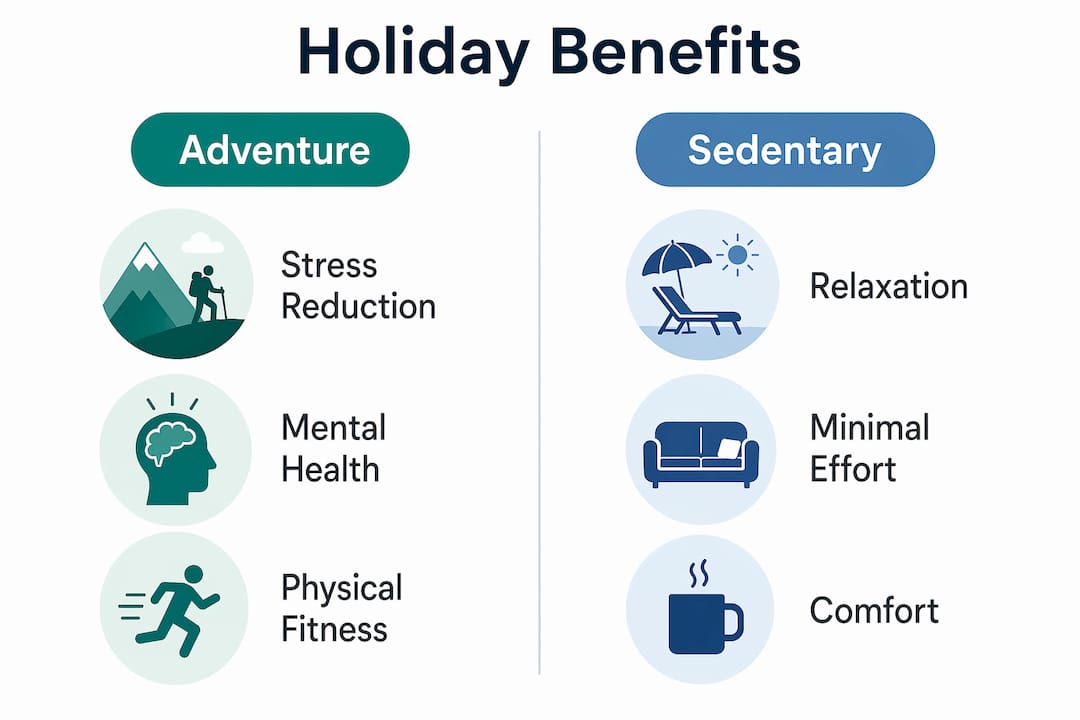
Adventure travel delivers benefits that go well beyond a change of scenery. Research confirms that adventure holidays produce measurable reductions in stress, improved happiness scores, and lower levels of rumination. That matters because rumination, the mental habit of replaying worries, is one of the leading drivers of anxiety and low mood.
The biological mechanism is direct. Adventure activates dopamine, norepinephrine, and endorphins, the neurotransmitters that drive motivation, focus, and pleasure. The Campaign for Adventure describes adventure not as a luxury but as a fundamental requirement for brain health. A week of hiking through a mountain range or kayaking along a coastline delivers a neurochemical reset that a week on a sun lounger does not.
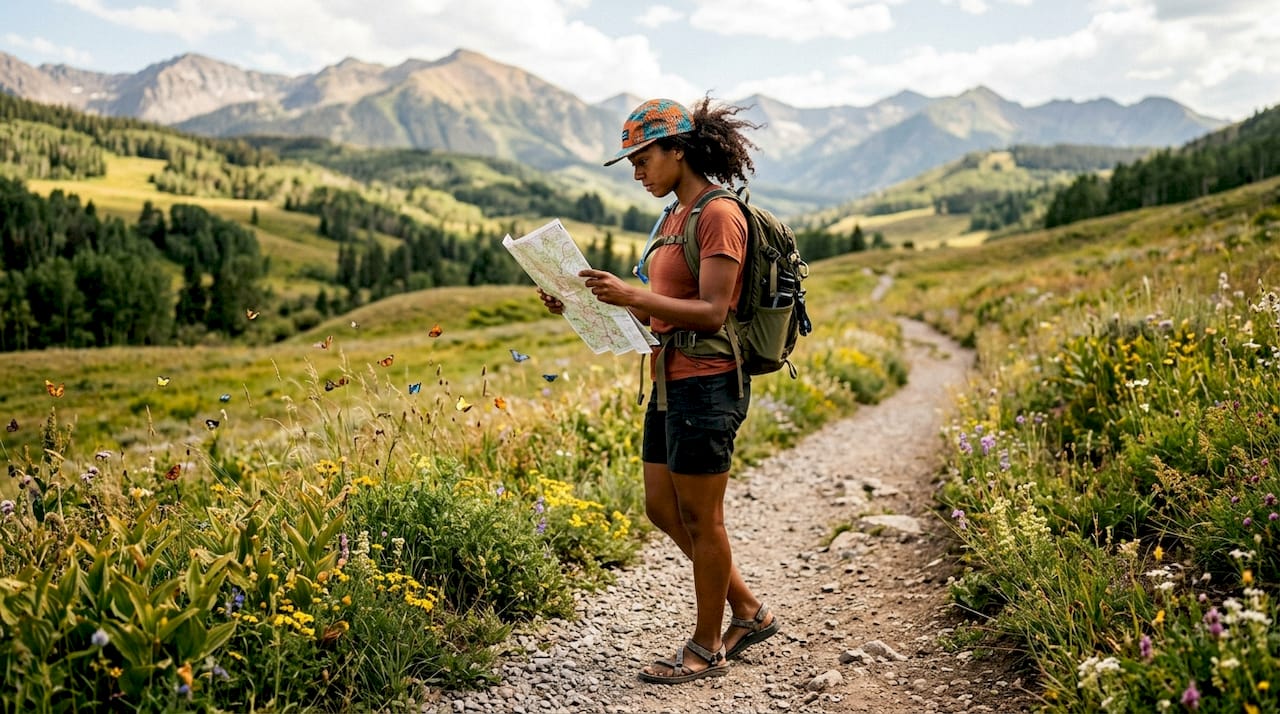
The psychological gains are equally strong. Controlled challenges during adventure trips build self-efficacy, the belief in your own ability to handle difficulty. Self-efficacy is one of the most reliable predictors of long-term mental resilience. Each time you complete a challenging walk, navigate an unfamiliar trail, or push through physical discomfort, you add evidence to your internal record that you are capable.
Memory quality also differs sharply. Novel, emotionally intense experiences embed stronger neural connections than routine or passive activities. This is why travellers recall a Highland ridge walk in vivid detail years later, while a fortnight of poolside relaxation blurs into a vague impression of warmth.
Pro Tip: Book at least one activity that sits just outside your comfort zone. The mild discomfort is precisely what triggers the neurological and psychological gains that make adventure holidays so effective.
| Benefit | Adventure holidays | Sedentary holidays |
|---|---|---|
| Stress reduction | Significant, backed by 2026 research | Moderate, short-lived |
| Memory quality | Vivid, long-lasting | Often vague after weeks |
| Self-efficacy | Actively built through challenge | Unchanged |
| Physical health | Improved through movement | Minimal change |
| Neurochemical boost | Dopamine, endorphins activated | Limited activation |
How do adventure holidays connect travellers more deeply with nature and culture?
Nature does something to the nervous system that no city hotel can replicate. Immersion in natural environments shifts the body from a state of constant alertness to one of presence and emotional openness. Team leaders working in outdoor settings report physiological changes including lower stress markers and a greater capacity for honest communication. The implication for travellers is significant: nature does not just relax you, it changes how you relate to yourself and others.
Cultural engagement deepens when you are physically active within a place rather than observing it from a coach window. Walking through a Highland glen to reach a remote castle, or following a local guide along a whisky distillery trail, places you inside the culture rather than in front of it. This active participation creates genuine connection rather than a curated impression.
The adventure holiday advantages for cultural understanding include:
- Authentic local interaction. Small-group and private tours create natural opportunities for conversation with guides, farmers, and community members.
- Contextual learning. Physical effort to reach a site, such as a clifftop broch or a hidden loch, gives the destination meaning that a car park viewpoint cannot.
- Sensory depth. Smell, sound, temperature, and physical exertion all encode cultural memory more powerfully than photographs alone.
- Slowed pace. Active travel forces a slower rhythm, which allows travellers to notice details that faster itineraries miss entirely.
Responsible adventure travel also benefits local communities directly. Choosing small-group operators and community-run lodges channels spending into destination economies and supports the preservation of natural environments. The adventure holiday advantages here extend beyond the individual traveller to the places visited.
Pro Tip: When choosing an operator, look for those who cap group sizes, employ local guides, and have a stated environmental policy. These details signal genuine commitment to ethical travel rather than marketing language.
What makes adventure holidays accessible and personalised for different travellers?
The most persistent misconception about adventure travel is that it requires elite fitness or prior experience. It does not. Modern operators now offer graded difficulty levels and equipment rental to accommodate travellers across a wide range of fitness levels and ages. A graded approach means that a gentle lochside walk and a multi-day Highland traverse can both qualify as adventure holidays, depending on the individual.
Active recovery trips are a growing category within adventure travel. These itineraries prioritise restorative movement and nature exposure over intensity, making them particularly well-suited to travellers recovering from burnout or returning to physical activity after a break. The emphasis is on pacing rather than performance.
Personalised itineraries take this further by aligning the trip with your specific interests. A traveller fascinated by Scottish history will get more from a tour shaped around special interests than from a generic highlights route. Skyehighlandstours builds itineraries around individual preferences, group sizes, and physical abilities, which means the experience fits the traveller rather than the other way around.
Preparing well makes a significant difference to how much you enjoy an adventure holiday. A practical approach:
- Assess your current fitness honestly. Choose a difficulty grade that challenges you without overwhelming you.
- Research the terrain. Scottish Highlands conditions vary enormously. Check the preparation guide for Highland adventures before booking.
- Pack for the environment, not the Instagram shot. Layering systems, waterproof footwear, and a quality day pack matter far more than aesthetics.
- Build in rest days. Active recovery is part of the experience, not a sign of weakness.
- Communicate your needs to your operator. A good guide adjusts pace, route, and activity based on real-time feedback from the group.
How do adventure holidays create long-term psychological and emotional benefits?
The psychological gains from adventure travel do not end when you return home. The concept of stress inoculation explains why. Stress inoculation is the process by which repeated, manageable exposure to challenge builds the nervous system’s capacity to handle future difficulty. Each adventure holiday functions as a controlled dose of productive stress, which strengthens emotional resilience over time.
Psychological research shows that adventure experiences embed stronger neural connections and generate a sense of personal meaning that passive holidays do not. This is not simply a pleasant feeling. It represents a genuine shift in how travellers perceive their own capability and their relationship to risk. The effect transfers directly to daily life, where problems that once felt paralysing become more manageable after repeated mastery experiences in the field.
The neurological role of awe is particularly important here. Standing at the edge of a Highland glen, watching mist move through a mountain pass, or hearing the silence of a remote sea loch triggers awe, a state that research links to reduced self-focus, expanded perspective, and improved memory consolidation. Awe is not a soft concept. It is a measurable neurological state with lasting effects on how the brain organises experience.
“Adventure travel is not a luxury. It is a fundamental requirement for brain health, activating the neurotransmitters that drive motivation, focus, and pleasure. When paced properly, it does not exhaust travellers. It recalibrates their sense of what time and experience are worth.”
Campaign for Adventure and The Warrior Group, 2026
Long-term value of adventure travel is best understood as a recalibration of personal values. Travellers return with clearer priorities, stronger memories, and a more grounded sense of identity. These are not incidental side effects. They are the core product of a well-designed adventure holiday.
Key takeaways
Adventure holidays deliver lasting psychological, physical, and cultural benefits that sedentary holidays cannot match, making them the most effective form of restorative travel for most people.
| Point | Details |
|---|---|
| Mental wellbeing gains | Adventure travel reduces stress and rumination through neurochemical activation and nature immersion. |
| Self-efficacy building | Controlled challenges build lasting confidence that transfers directly to everyday life. |
| Memory quality | Emotionally intense experiences create vivid, long-lasting memories compared to passive holidays. |
| Accessibility for all | Graded difficulty levels and personalised itineraries make adventure travel suitable for most fitness levels. |
| Long-term recalibration | Adventure holidays shift personal values and perspective in ways that outlast the trip itself. |
Why I think most travellers underestimate what adventure holidays actually do
People often frame the choice between adventure and relaxation as a trade-off between effort and rest. That framing is wrong. The travellers I have observed who return from a week in the Scottish Highlands, walking the Quiraing on Skye or following a guide through the Black Isle, do not come back tired. They come back recalibrated.
The fear I hear most often is “I’m not fit enough.” That fear is almost always misplaced. Fitness is a starting point, not a prerequisite. What matters far more is the quality of support around you. A knowledgeable guide who reads the group, adjusts the pace, and knows when to push and when to rest makes the difference between a trip that depletes and one that restores.
The social dimension surprises people too. Group adventure creates a particular kind of honesty. When you are cold, slightly lost, and laughing about it with strangers on a hillside, the social performance drops away. The connections formed in those moments are disproportionately strong relative to the time spent. That is not sentiment. It is what nature does to the nervous system: it removes the performance layer and replaces it with presence.
My honest advice is to start smaller than you think you need to. One well-chosen day on a Highland ridge, with the right guide and a pace that suits you, will tell you more about what you are capable of than a year of thinking about it. The personalised Highland tour experience exists precisely to meet you where you are, not where you think you should be.
— Alin
Skyehighlandstours: adventure holidays built around you
Skyehighlandstours designs private guided tours across the Scottish Highlands for travellers at every fitness level and with every kind of interest. From the dramatic sea cliffs of the Isle of Skye to the wildlife-rich shores of the Black Isle, every itinerary is shaped around your pace, your preferences, and your group.
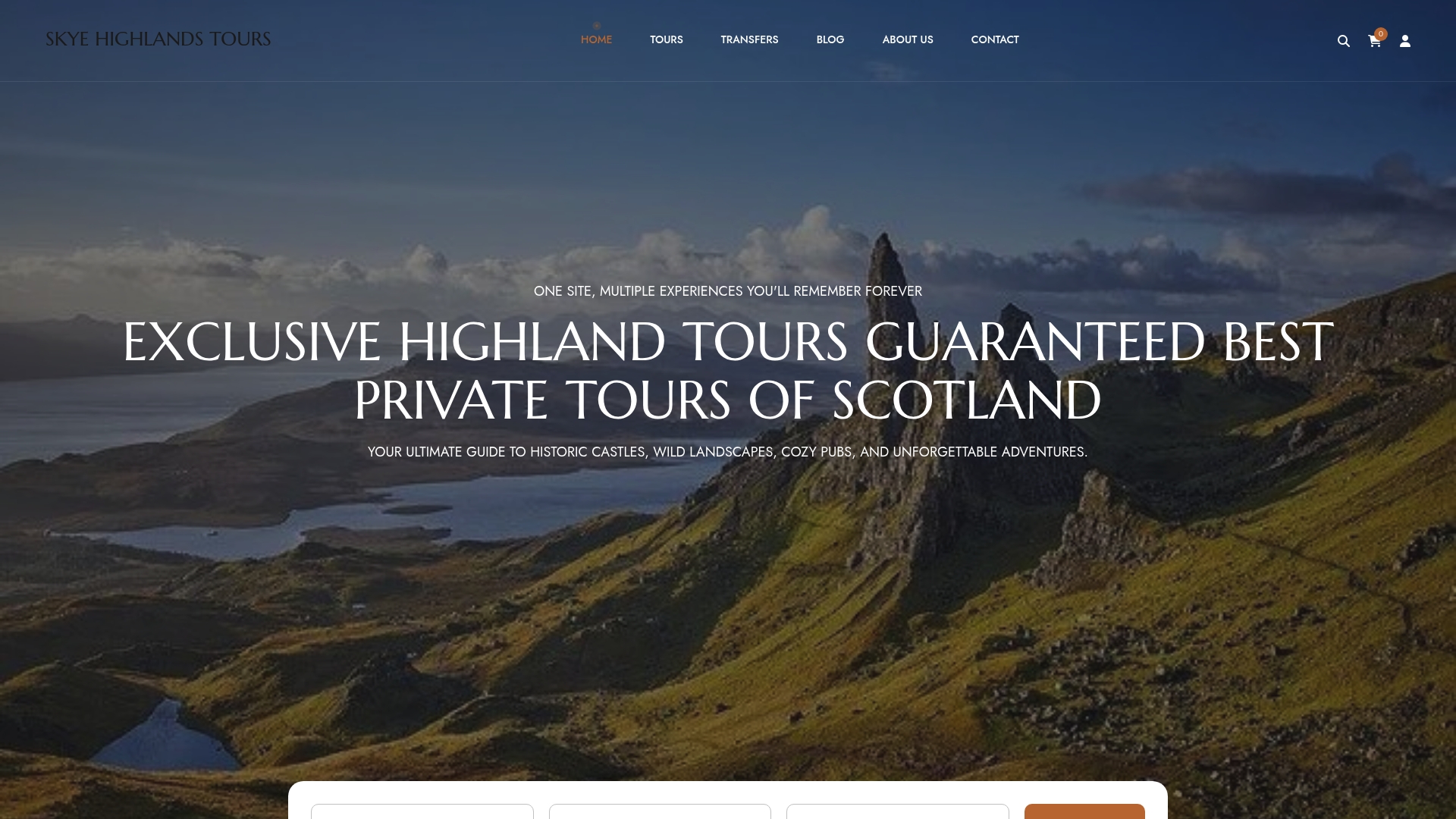
Expert local guides handle the logistics, the pacing, and the storytelling, so you can focus entirely on the experience. Whether you want a single full-day excursion or a custom multi-day itinerary across the Highlands, Skyehighlandstours builds the trip around you. Explore the full range of Scottish Highlands destinations and find the adventure that fits your life right now.
FAQ
What is an adventure holiday?
An adventure holiday is a trip that combines physical activity, nature immersion, and cultural engagement to improve mental wellbeing and personal growth. Research from 2026 classifies adventure travel as a psychological and biological nutrient rather than a leisure option.
Do I need to be fit to go on an adventure holiday?
No. Modern operators offer graded difficulty levels and equipment rental to suit a wide range of fitness levels and ages. Proper pacing and an experienced guide make adventure holidays accessible to most travellers.
How do adventure holidays benefit mental health?
Adventure travel reduces stress and rumination, builds self-efficacy through controlled challenges, and activates dopamine and endorphins. These effects are measurable and persist well beyond the duration of the trip.
Are adventure holidays suitable for families?
Yes. Personalised itineraries and graded activity levels make adventure holidays well-suited to mixed-age groups. Skyehighlandstours offers family-focused Highland adventures tailored to different abilities within the same group.
How do I choose the right adventure holiday operator?
Look for operators who use local expert guides, cap group sizes, offer graded difficulty options, and provide clear environmental policies. These factors consistently produce safer, more meaningful, and more ethical adventure travel experiences. You can also explore adventure travel provider options to compare what different formats offer before booking.