
Your cart is empty Continue Shopping

Highland Games 2026 dates: full calendar for every event
The Royal Scottish Highland Games Association calendar and VisitScotland’s Highland Games listings are the two places to confirm exact 2026 dates before you book anything. Between them they cover the full season, from village gatherings to the events everyone’s heard of.
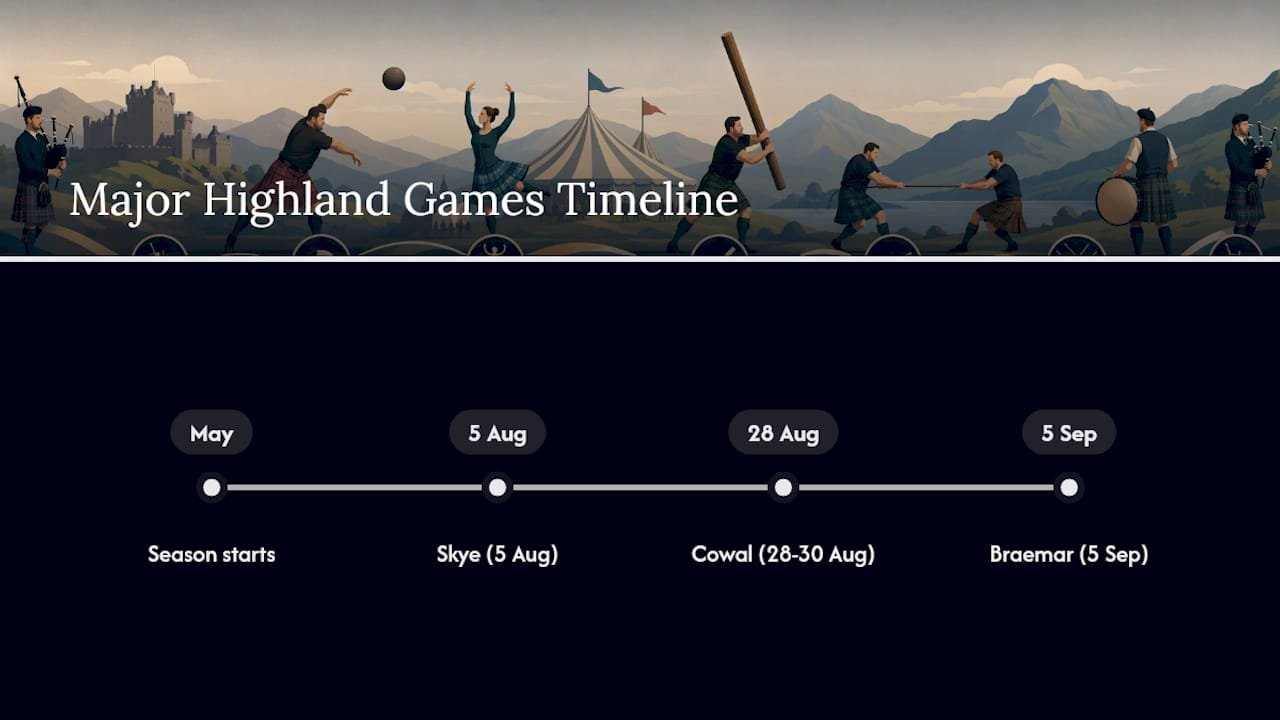
- Braemar Highland Gathering — 5 September 2026, Braemar
- Cowal Highland Gathering — 28-30 August 2026, Dunoon
- Isle of Skye Highland Games — 5 August 2026, Portree
- Stirling Highland Games — August 2026, Stirling
- Crieff Highland Gathering — August 2026, Crieff
- Pitlochry Highland Games — September 2026, Pitlochry
Book your tickets and accommodation the moment a date is confirmed. Braemar alone regularly sells out well ahead of September, and nearby lodging follows suit.
Key Takeaways
The RSHGA calendar and VisitScotland’s listings remain the two most reliable sources for confirming exact 2026 Highland Games dates before booking travel.
| Point | Details |
|---|---|
| Check RSHGA first | Confirm every date on the RSHGA calendar before booking, since local schedules can shift. |
| Book Braemar early | Braemar Highland Gathering falls on 5 September 2026 and regularly sells out accommodation months ahead. |
| Island events need planning | Isle of Skye Highland Games on 5 August 2026 requires ferry or road bookings sorted well in advance. |
| Peak season is July-August | Most games run May to September, with the busiest weekends concentrated in July and August. |
| Consider a private transfer | Skyehighlandstours arranges timed pick-ups and bespoke itineraries for readers attending remote or island games. |
Table of Contents
- When are the Highland Games in 2026?
- Full 2026 Highland Games calendar by month
- Where can I buy tickets for Highland Games in 2026?
- Combining Highland Games dates with a Highlands trip
- Why do the Highland Games still matter?
- What competitions happen at a Highland Games?
- Can visitors take part in the Highland Games?
- What’s new or notable about the 2026 Highland Games season?
- Are the Highland Games accessible for all visitors?
- Let Skyehighlandstours handle the logistics around your games date
- Sources
- FAQ
When are the Highland Games in 2026?
If you only pick a handful of dates to build a trip around, these six earn their place on any shortlist.
- Braemar Highland Gathering, early September 2026, Aberdeenshire. The most famous of the lot, largely because of its long-standing royal patronage and the scale of its heavy events. Book accommodation in Ballater or Braemar itself well in advance.
- Cowal Highland Gathering, late August 2026, Dunoon. Billed as the largest Highland gathering anywhere, with pipe bands from across the world competing over a full weekend.
- Isle of Skye Highland Games, early August 2026, Portree. A genuinely local affair on an island that gets very busy in August, so ferry and road bookings need sorting early.
- Stirling Highland Games, August 2026, Stirling. Easy to reach by train, which makes it a solid pick if you don’t want to hire a car.
- Newtonmore Highland Games, August 2026, Newtonmore. Set in the Cairngorms with a strong shinty tradition alongside the athletics.
- Aboyne Highland Games, August 2026, Aberdeenshire. A well-attended Deeside gathering with a strong dancing programme.
Pro Tip: If you’re torn between Braemar and a quieter alternative on the same weekend, remember that Braemar’s popularity means road closures and full car parks by mid-morning. A smaller games nearby can give you a better view for less queuing.
Full 2026 Highland Games calendar by month
Every event below draws on the RSHGA’s Events 2026 date list, which covers dozens of gatherings across the season, and on VisitScotland’s events overview. Treat this as your working calendar, but always click through to the individual event site before you finalise travel, because dates occasionally shift for weather or local scheduling reasons.
May
- Gordon Castle Highland Games, Gordon Castle
- Blackford Highland Gathering, Blackford
- Atholl Gathering, Blair Atholl
June
- Bowhill Highland Games, Bowhill, Selkirk
- Gomrock Highland Games, various Highland locations
- Helensburgh & District Highland Games, Helensburgh
July
- Lonach Highland Gathering, Strathdon
- Cornhill Highland Games, Cornhill
- A cluster of smaller weekend games across Perthshire and the Highlands
August
- Isle of Skye Highland Games, 5 August, Portree
- Stirling Highland Games, Stirling
- Crieff Highland Gathering, Crieff
- Newtonmore Highland Games, Newtonmore
- Aboyne Highland Games, Aboyne
- Cowal Highland Gathering, 28-30 August, Dunoon
September
- Braemar Highland Gathering, 5 September, Braemar
- Pitlochry Highland Games, Pitlochry
- Birnam Highland Games, Birnam
The RSHGA’s full list runs to dozens of entries once you count every village games, so if a specific town isn’t listed above, the Birnam Highland Games site and equivalent event pages are good models for the kind of detail (times, gates, car parking) you’ll find once you drill into an individual listing. Games organisers do occasionally move a date by a week if a pitch is waterlogged or a pipe band competition clashes, so a final check on the event’s own page the week before travel is worth the two minutes it takes.
Where can I buy tickets for Highland Games in 2026?
Prices vary a fair amount by scale. Large gatherings like Braemar and Cowal typically charge for entry with tiered pricing for grandstand seating, while many village games are free or ask for a modest gate donation. Concessions for children, seniors, and sometimes local residents are common, but the only way to get the current figure is the event’s own page, since prices are reviewed each year.
A few logistics points worth building into your plan:
- Parking at rural venues is often a field with a marshal, and it fills fast. Arrive well before the opening ceremony if you’re driving.
- Public transport works well for Stirling and Pitlochry, both on the rail network, but island and glen events usually need a car or organised transfer.
- Weather in the Highlands changes fast even in August. Pack layers and waterproofs regardless of the forecast; Skyehighlandstours’ packing checklist for the Scottish Highlands covers what actually gets used on a games day.
Pro Tip: If you want grandstand seating at Braemar or Cowal, buy the moment tickets go live. Standing entry stays available longer, but a seated view of the caber toss is worth the early booking.
Combining Highland Games dates with a Highlands trip
Attending a remote or island games usually means choosing between a long day trip and an overnight stay, and that choice changes everything about how the day feels. Skye’s games, for instance, are workable as a day trip from Inverness if you leave early, but an overnight nearby means you’re not racing the last ferry or a three-hour drive home after a long day on your feet.
Private transfers with a fixed pick-up time solve the two hardest parts of games day: getting there before parking fills, and getting back when public transport has stopped for the evening. For readers building a wider trip around a games date, Skyehighlandstours’ guide to must-visit spots in the Highlands pairs well with a games weekend, and a family trip itinerary helps if you’re bringing children who’ll tire before the closing march.
Why do the Highland Games still matter?
The Highland Games trace back centuries, with roots often linked to clan gatherings where chiefs tested the strength and speed of their men for practical purposes: who could carry, throw, or run fastest in service of the clan. Braemar’s own gathering claims a history stretching back to the 11th century in some form, and royal involvement dates to Queen Victoria’s regular attendance in the 1800s, a tradition the Royal Family maintains today.
What’s kept them alive isn’t nostalgia alone. Pipe bands, dancing competitions, and heavy events give each games a structure that’s barely changed in generations, and that consistency is part of the appeal. A visitor in 2026 sees broadly the same caber toss, the same massed pipe bands, and the same tug-of-war format that spectators watched decades ago.
For local communities, the games remain a genuine calendar fixture rather than a tourist product built from scratch. Village committees run most events on a volunteer basis, ploughing gate money back into the following year’s prizes and upkeep. That’s a different footing to a purpose-built festival, and it shows in the small touches: local produce stalls, school pipe bands, and prize categories for children that wouldn’t survive a purely commercial event.
What competitions happen at a Highland Games?
The heavy events are what most visitors come for, and they’re more varied than a quick glance suggests. The caber toss asks a competitor to lift a tapered log, often five to six metres long, and flip it end over end so it lands pointing away from them. Judges score on direction, not distance, which surprises a lot of first-time spectators expecting a throw for length.
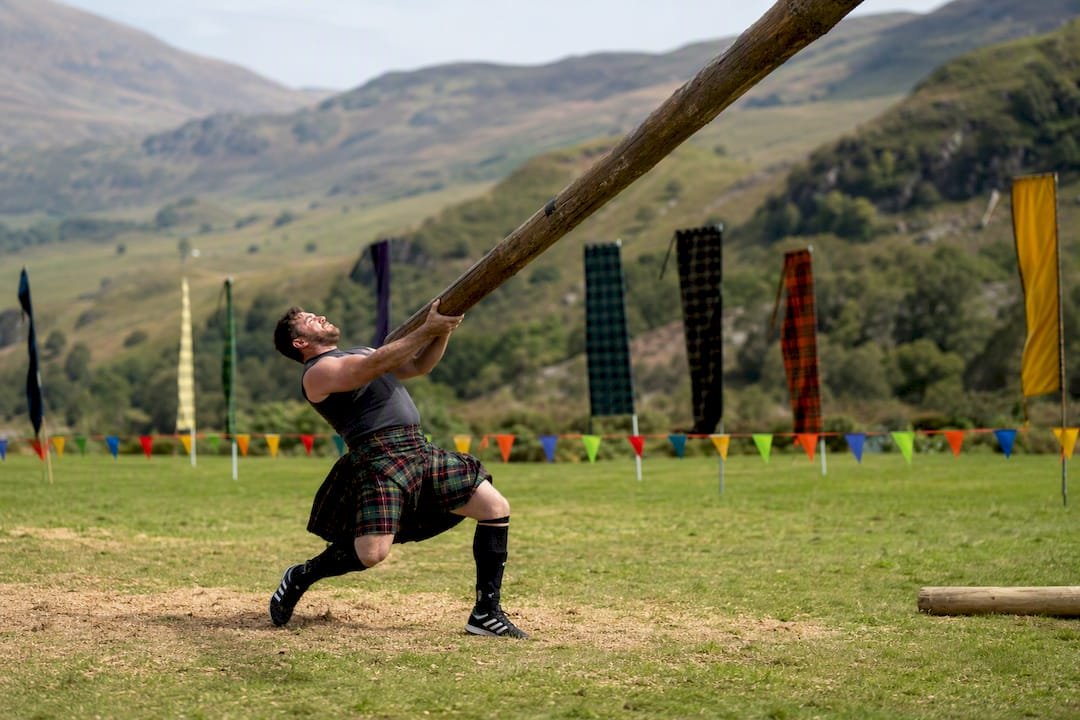
The hammer throw uses a metal ball on a shaft, swung from a stationary position before release, testing rotational power rather than a running start. Weight-for-height sees athletes fling a weight over a raised bar using one hand, while the shot put and weight-throw events reward raw strength in a more familiar format.
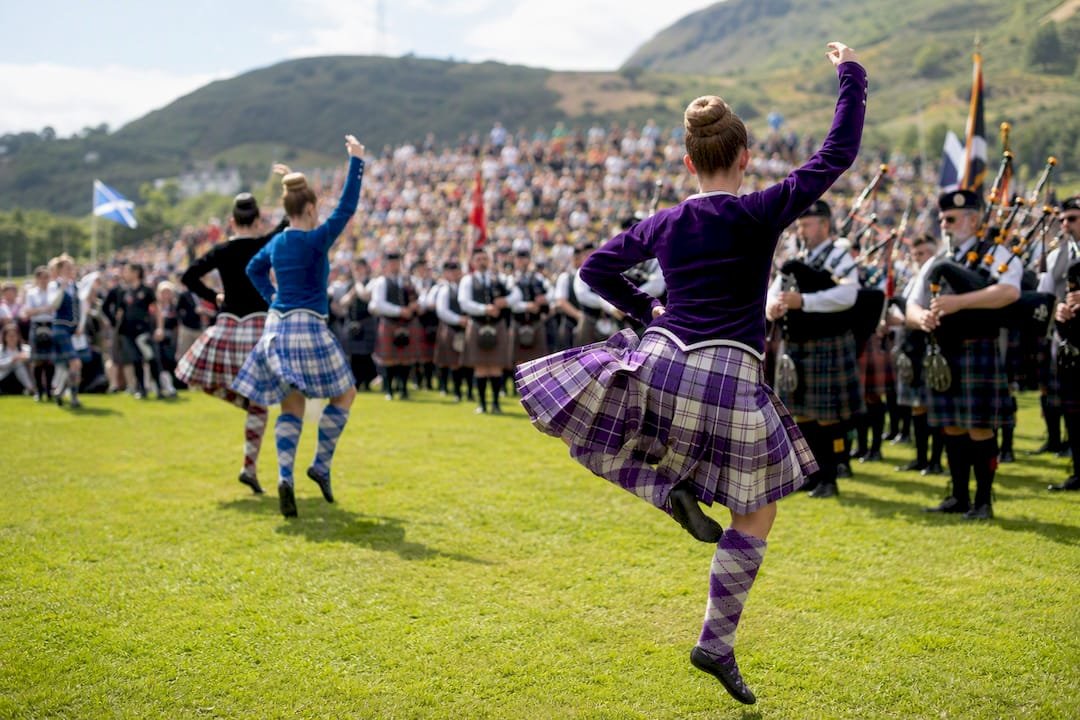
Beyond the heavy events, most games run a full day of pipe band competitions, Highland dancing (often for younger competitors in elaborate categories), tug-of-war, and increasingly, hill races that send runners up and down a nearby summit. Cowal in particular runs one of the largest pipe band competitions in the world alongside its athletics programme, and it’s worth timing your visit around the massed bands finale if piping is your main interest.
Can visitors take part in the Highland Games?
Yes, and it’s more accessible than most people assume. Many games run open heavy events or novice categories that don’t require a competitive athletics background, though serious caber tossing and hammer throwing take practice and a degree of coaching most visitors won’t have.
The more realistic entry point for a first-timer is a fun run or hill race attached to the main event, which several games include alongside the heavy events. Highland dancing competitions are usually restricted to registered dancers with proper training, so that route suits someone already involved in the discipline rather than a casual visitor.
If you want to compete rather than just watch, the practical step is contacting the specific event organiser well before the day, since entry forms, weight categories, and amateur classes vary from games to games and aren’t standardised across the RSHGA’s members. Some events also welcome volunteer marshals and stewards, which is a genuinely good way to see the organisation up close if competing isn’t for you.
What’s new or notable about the 2026 Highland Games season?
The 2026 season follows the pattern VisitScotland describes for the sport generally: a season running from May through September, weighted heavily toward weekends, with July and August carrying the bulk of the larger gatherings. Cowal’s three-day format at the end of August remains the standout for anyone who wants a full weekend rather than a single day, and Braemar in early September continues to close out the season as the highest-profile date on the calendar.
Beyond the headline dates, several smaller games are worth watching for anniversary years or milestone celebrations, since village committees sometimes mark significant anniversaries with an expanded programme. Confirming these specifics means checking the individual event’s own announcements closer to the date, as they’re rarely finalised more than a few months ahead.
Are the Highland Games accessible for all visitors?
Accessibility varies considerably by venue, and it’s worth checking before you commit to a long journey. Larger events like Braemar and Cowal typically provide designated accessible viewing areas, accessible toilets, and some level of parking priority for blue badge holders, details confirmed on each event’s own visitor information page.
Smaller village games are more variable. A field-based venue with no permanent infrastructure may have uneven ground that’s difficult for wheelchair users or anyone with limited mobility, and marshals on the day are usually the best source of real-time guidance on where to park or stand for the clearest view.
Safety at games day is largely a matter of common sense given the setting: heavy events involve genuine projectiles, so stewarded barriers around the throwing circles matter and should never be crossed regardless of how good the sightline looks. Weather is the other practical risk, since exposed hillside venues can turn cold and wet quickly even in August, and dehydration on a hot day is just as real a concern at an all-day outdoor event. If you or someone you’re travelling with has specific access needs, a direct call to the event organiser ahead of time tends to get a far more useful answer than anything published online.
Choosing the right games for your trip
If you want spectacle and don’t mind crowds, Braemar and Cowal deliver it. Families and photographers often do better at a mid-sized games like Aboyne or Newtonmore, where you can actually get close to the action, and island trips like Skye reward anyone who wants culture over scale.
Let Skyehighlandstours handle the logistics around your games date
Skyehighlandstours is the alternative to juggling ferry timetables and rural car parks yourself: a private transfer with a fixed pick-up time, built around your chosen games date rather than a fixed tour schedule.

That matters most for island and remote mainland events, where public transport is thin and a missed connection can mean missing the massed pipe bands finale entirely. Skyehighlandstours arranges bespoke itineraries that combine a games day with the wider Highlands, whether that’s a whisky stop on the way home from Skye or a Glenfinnan Viaduct detour before an Aboyne afternoon. Every tour is planned around real timings rather than a generic route, with a local guide who knows which back road avoids the games-day traffic.
If you’ve settled on a date from the calendar above, the next step is straightforward: get in touch about private tours built around the Scottish Highlands and ask for a games-day pick-up time that fits your event.
Sources
FAQ
What Highland Games events are scheduled for 2026?
Dozens run between May and September 2026, with headline dates including Braemar on 5 September, Cowal on 28-30 August, and the Isle of Skye Highland Games on 5 August, all listed on the RSHGA calendar.
How much do tickets cost for the Pitlochry Highland Games in 2026?
Pitlochry hasn’t published its 2026 pricing at the time of writing; check the event’s own listing on the RSHGA calendar closer to September for confirmed ticket prices and concessions.
Which is the best Highland Games to visit?
It depends on what you want: Braemar and Cowal offer the biggest spectacle and royal history, while Isle of Skye and village games like Aboyne give a closer, more community-focused experience.
Where can I find tickets for the Scottish Highland Games in 2026?
Most events sell tickets directly through their own websites, all linked from the RSHGA calendar, so that’s the best starting point rather than searching site by site.
Recommended
- Must-visit spots in the Highlands: your 2026 guide – Skye Highlands Tours
- Cultural experiences in highlands: your 2026 guide – Skye Highlands Tours
- Private Highland tour options: your practical 2026 guide – Skye Highlands Tours
- Packing checklist for the Scottish Highlands: 2026 guide – Skye Highlands Tours