
Your cart is empty Continue Shopping
May to October: Plan Around Scotland’s Midge Season with Tour Tips
Midge season in Scotland typically spans the warmer months around late spring to early autumn, with the most intense period usually occurring in midsummer. Midges need still, humid air, so dawn and dusk near water or woodland are the danger zones, while wind, cold, bright sun and rain shut them down almost completely. Travel in that window without cancelling anything. Just plan your timings, pick breezier spots and pack the right repellent.
TL;DR:
- Midge activity peaks in midsummer, especially between late June and mid-July, influenced by weather patterns such as warmth, dampness, and spring conditions.
- The strongest midge presence occurs in the west Highlands, islands, and sheltered lowland areas, with significantly lower activity on the east coast and at higher elevations.
- Wind speeds over 6 to 7 mph tend to suppress midges, making breezy coastal or ridgeline locations much more comfortable during outdoor activities.
- Using DEET or picaridin repellents, along with protective clothing and strategic timing, can significantly reduce bites, especially in known high-risk areas.
- Planning routes based on weather forecasts, wind conditions, and microclimates can help avoid peak midge times without cancelling outdoor plans.
Table of Contents
- When is midge season in Scotland? Month by month
- Where in Scotland midges are worst
- What weather and microclimates drive midge activity
- How to avoid midge bites on your Highland trip
- How to use midge forecasts to plan your day
- How Highland guides plan around midges
- Accept the midges, plan properly, enjoy the Highlands anyway
- Book a private Highland tour that adapts to midge conditions
- Sources
- FAQ
When is midge season in Scotland? Month by month
Midges start appearing in late May as ground temperatures climb, but the real trouble builds through June. VisitScotland’s guidance puts the typical window at May through October, with peak activity landing squarely in midsummer. Late June into mid-July is when numbers spike hardest, driven by a combination of warm, damp soil and the emergence of a fresh generation of biting females looking for a blood meal before laying eggs.
The season’s timing varies each year depending on spring weather conditions, with cooler, drier spells tending to delay emergence and warmer, wetter spells causing earlier and potentially heavier midge activity. Watch for these signals when you’re checking conditions ahead of a trip:
- A run of warm, damp weather in the two weeks before you travel usually means an earlier, heavier season.
- Late frosts in April or May tend to delay emergence.
- The season tails off once autumn frosts arrive, according to the Outdoor Access Scotland factsheet, which is why late September and October trips are usually far more comfortable than July ones.
- August often brings a smaller second wave rather than a clean decline, so don’t assume the worst is over once July ends.
Where in Scotland midges are worst
Midge pressure varies enormously depending on where you stand, sometimes within a few hundred metres. Midges are more prevalent in the west Highlands, the islands, and damp, sheltered areas such as peatlands, lochside vegetation, and dense woodlands, which provide ideal breeding conditions.
- The Outdoor Access factsheet confirms Culicoides impunctatus, the species responsible for most bites, is far more abundant in western and northern lowland areas than elsewhere.
- East coast towns and cities tend to experience substantially lower midge activity due to drier ground and windier conditions.
- Midge numbers generally decrease with elevation, with higher and more exposed areas often having very few midges even during peak season.
- Sheltered glens and peat-loch edges can be dreadful in the same week that a nearby hilltop is entirely clear.
That last point is worth building into any itinerary. A short walk uphill or towards open coastline can be the difference between a miserable evening and a genuinely pleasant one.
What weather and microclimates drive midge activity
Midges feed most actively around dawn and dusk, but they can also be active during dull or overcast daylight conditions when light levels are lower. Bright, direct sunshine tends to suppress them, which is one reason a clear July afternoon can feel more bearable than a grey one.
Wind is the single most reliable lever you have. Research on Highland midge behaviour shows they struggle to fly once wind speed passes roughly 6 to 7 mph (10 to 11 kph), so an exposed ridge or coastal path with even a light breeze is usually enough to keep them away. Midges are less active at temperatures below approximately 10 to 12°C and prefer still, humid conditions. Rain also knocks activity down, though it picks back up fast once the rain stops and the air stays warm and damp.
How to avoid midge bites on your Highland trip
Using repellent is effective especially when combined with appropriate timing and selecting locations less favourable to midges. VisitScotland recommends combining repellent with behavioural changes rather than relying on spray to do all the work.
- DEET-based repellents remain the most consistently effective option, applied to exposed skin and reapplied every few hours, particularly after sweating or swimming.
- Picaridin repellents, sold under names like Smidge, offer a gentler alternative for sensitive skin with broadly comparable protection.
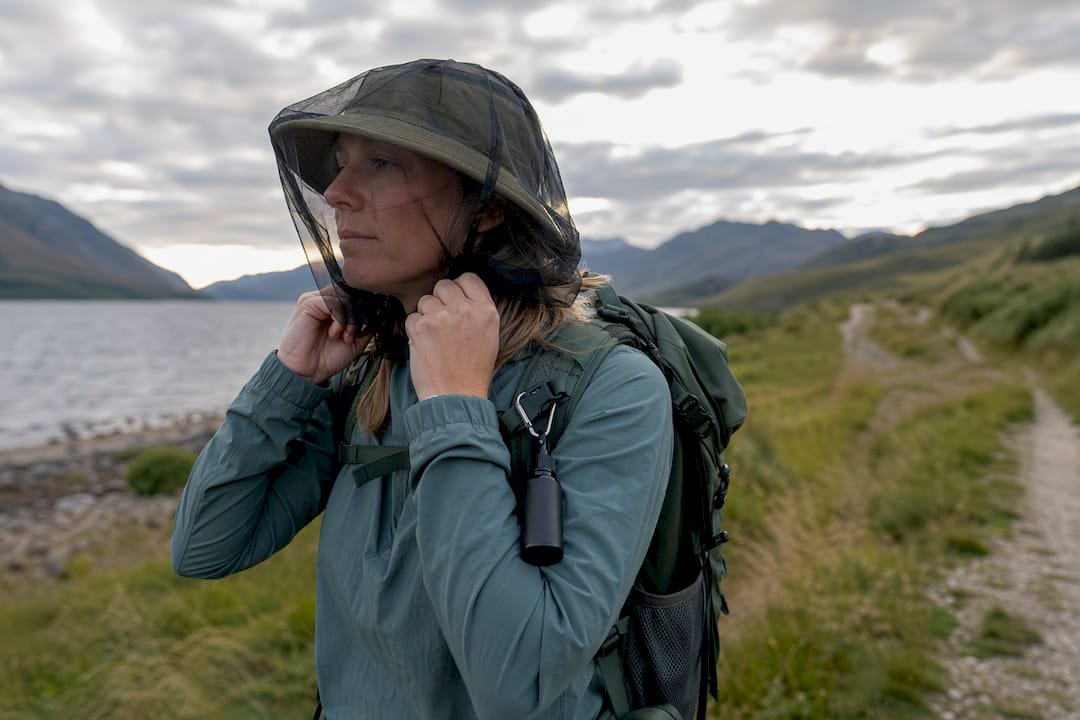
- Head nets are unglamorous but genuinely effective for standing photography stops, wild camping, or any time you’re static near water at dusk.
- Fine-knit long sleeves and trousers stop midges reaching skin far better than loose or thin fabric, since they can bite through very light material.
- Campers should keep tents fully zipped at all times and pitch on higher, more exposed ground rather than sheltered hollows near burns or lochs.
- Favour midday walks over dawn or dusk outings where your schedule allows it, and head for ridgelines or coastal paths rather than sheltered peat loch edges as evening approaches.
Pro Tip: If a swarm finds you, don’t stand and swat. Moving quickly to higher or windier ground works better, because once one midge finds you, pheromones draw others in fast, and the swarm follows rather than dispersing.
For bites that do get through, antihistamines and topical creams handle most cases. The NHS advises seeking medical attention if a bite area swells significantly, shows signs of infection, or if you develop a wider allergic reaction. A properly packed bag makes all of this easier to manage; a Highlands packing checklist covers repellent, clothing and nets alongside the usual weather gear.
How to use midge forecasts to plan your day
The Scottish Midge Forecast combines trap data with local weather readings to produce a daily risk score for locations across the country. A low score doesn’t guarantee a midge-free day everywhere in that area, but it’s a genuinely useful first check before you commit to an outdoor plan.
A simple workflow works well:
- Check the forecast risk band for your area the night before or first thing in the morning.
- Cross-reference it against wind speed and temperature for your specific route, since a sheltered glen can still be bad even when the regional score looks moderate.
- If the forecast and conditions both point to high risk, swap a lochside walk for a coastal path, shorten a woodland route, or move an evening activity indoors instead of cancelling the day outright.
Treat the forecast as one input alongside wind and cloud cover, not a single verdict on whether to leave the house.
How Highland guides plan around midges
Private guides read midge risk the same way experienced hillwalkers do: by wind direction, elevation and time of day, not just the calendar. Stops get scheduled on ridges, coastal viewpoints or breezy lochside spots rather than sheltered woodland edges, particularly in the early evening. Guests are advised to bring repellent, a head net and long, fine-knit sleeves, though guides typically carry spare repellent for anyone caught out. When a forecast flags high risk for a route, itineraries shift towards more exposed stops or an earlier finish, and guests can request a midge-aware plan when booking.
Accept the midges, plan properly, enjoy the Highlands anyway
Midges are a comfort problem, not a health one. They don’t transmit disease in Scotland, and once you understand what shuts them down, wind, height, sunshine, cold, the season stops feeling like a lottery. Pack a decent repellent, favour the ridges and coast at dusk, check a forecast before committing to a route, and you’ll spend far more time enjoying the scenery than swatting at it. A guided day, where someone else is already thinking about wind direction, only makes that easier.
— Alin
Book a private Highland tour that adapts to midge conditions
Skyehighlandstours plans routes around the day’s actual conditions rather than a fixed script, so a high midge forecast becomes a reason to shift towards a coastal viewpoint or exposed ridge, not a reason to cancel.

Every private tour is built around your group’s interests and pace, and that flexibility extends to weather and midge risk on the day. Guides know which stops along routes through Skye, Loch Ness, Glenfinnan and the Black Isle stay comfortable when conditions turn, and itineraries get adjusted accordingly rather than followed rigidly. Families and couples can request a midge-aware plan when booking, and guides carry local knowledge that no forecast app replicates on its own. Explore the Scottish Highlands tour options and check dates that suit your trip, or look at custom tour planning tips if you’re travelling with family and want a route built around comfort as well as scenery.
Sources
- A guide to midges & ticks in Scotland — VisitScotland
- Highland biting midge — Outdoor Access Scotland factsheet
- Highland midge — Wikipedia
- The Scottish Midge Forecast
- Insect bites and stings — NHS
FAQ
What’s the worst month for midges in Scotland?
July is generally the worst month, with the sharpest spike falling between late June and mid July when a fresh generation of biting females emerges in large numbers.
What smells do midges hate?
Midges are repelled by DEET and picaridin, the active ingredients in most effective sprays; beyond these, evidence for other scents is largely anecdotal rather than proven.
How do Scots deal with midges?
Locals plan around wind and time of day, favouring exposed or breezy spots at dawn and dusk, using repellent as backup rather than the main defence, and treating head nets as normal kit rather than a novelty.
Where in Scotland is it worst for midges?
The west Highlands, the islands including Skye, and boggy, sheltered lochside or woodland areas see the highest midge numbers, while east coast towns and higher ground tend to stay far more comfortable.