


Your cart is empty Continue Shopping
Tide Timed Dolphin Watching in Scotland: Arrive 1 Hour After Low Tide
Chanonry Point on the Moray Firth is the most reliable place in Scotland to watch dolphins from land, thanks to a resident pod of around 200 bottlenose dolphins that hunts close to shore as the tide turns. Spey Bay and the west coast Hebrides add strong boat-based alternatives. Sightings are never guaranteed anywhere, but timing your visit to the tide and season stacks the odds firmly in your favour, and a tide-timed private tour takes the guesswork out of it entirely.
TL;DR:
- Peak dolphin activity in the Moray Firth occurs from May to September, with sightings most likely around one hour after low tide during calm, overcast weather.
- Shorewatching at Chanonry Point or Spey Bay is free, reliable, and best suited for those with limited time or seeking a land-based experience, especially in good tide windows.
- Boat trips offer a broader range of species but depend on weather, are more expensive, and do not guarantee sightings, unlike shore-based watching that consistently draws dolphins close to shore.
- Responsible viewing guidelines include maintaining distance, choosing operators in the WISE scheme, and avoiding loud approaches or injured animal contact.
- Private guided tours can adjust timing based on real-time tide conditions, improving the chances of seeing dolphins and accommodating mobility or scheduling needs.
Table of Contents
- Best places in Scotland to see dolphins
- Boat tours versus land-based watching: which suits you?
- When to go: months, tides and weather
- Responsible dolphin watching: what to do and avoid
- Planning your trip: booking, packing and cost
- What local guides know that a fixed timetable doesn’t
- Book a tide-timed dolphin trip with Skye Highlands Tours
- Sources
- FAQ
Best places in Scotland to see dolphins
Scotland’s dolphin watching splits neatly into a handful of regions, and each one suits a slightly different visitor.
Moray Firth: Chanonry Point and Spey Bay. This stretch of coastline holds one of the world’s most northerly resident bottlenose dolphin populations, and Chanonry Point is the headline spot. The narrows here funnel salmon and other prey close to the beach, and the dolphins follow. Spey Bay, home to the WDC Scottish Dolphin Centre, runs regular shorewatch sessions and lends binoculars to visitors who turn up without their own kit.
- Cromarty and the inner Moray Firth: quieter vantage points with an active research presence, good for visitors who want fewer crowds and still decent odds.
- Firth of Forth and Aberdeen: sightings here have grown noticeably in recent years, and both offer accessible urban vantage points for a day trip without much driving.
- West coast and the Hebrides: Mull, the Firth of Lorn, Oban and the wider Hebrides Whale Trail are where boat trips head to find common dolphins, minke whales and bottlenose dolphins feeding offshore.
- Family groups and photographers: Chanonry Point wins on convenience and light; boat trips to the Hebrides win on species variety.
- Shorewatchers with limited time: Spey Bay’s shorewatch programme is built for exactly this, with trained volunteers on hand to point out activity.
If you’re combining a coastal wildlife stop with wider sightseeing, Chanonry Point pairs naturally with a longer Highland itinerary, and it’s a common add-on for visitors already exploring the Scottish Highlands.
Boat tours versus land-based watching: which suits you?
Both formats work. The right choice depends on your budget, your stomach for open water, and how much time you have.
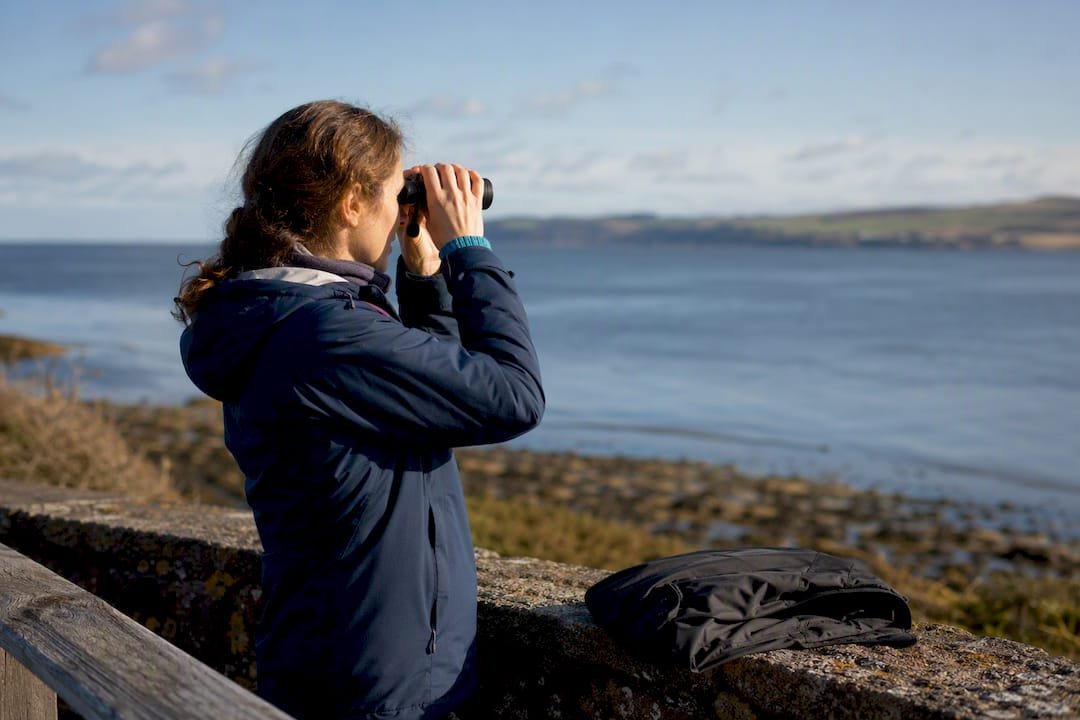
Boat trips cover more ground and reach feeding grounds shore watchers can’t, which means a broader range of species on a good day. The trade-off is cost, weather dependency, and the fact that longer tours visiting multiple feeding grounds tend to raise your odds without ever guaranteeing a sighting.
Land-based watching at Chanonry Point or Spey Bay needs no boat, no seasickness tablets, and almost no equipment beyond a decent pair of binoculars. It’s also remarkably reliable given it costs nothing, because the dolphins come to the narrows rather than the other way round.
- Boat trips: wider species range, higher cost, weather can cancel a trip at short notice.
- Shorewatching: free or low-cost, no seasickness risk, sightings concentrated around tide windows.
- When booking a boat operator, check their cancellation policy, group size limits, and whether they follow WISE-scheme responsible-watching standards.
Pro Tip: If photography is the priority, ask any operator about typical group size before booking. Smaller boats give you room to move for a clean shot; crowded decks rarely do.
When to go: months, tides and weather
Bottlenose dolphins can turn up in the Moray Firth at any time of year, but your odds shift a lot depending on when you show up.
Summer, roughly May to September, is peak season, when prey fish move into the firth and dolphin activity follows.
Tide timing matters more than most visitors realise. At Chanonry Point specifically:
- Check the tide tables for the day, not just the general forecast.
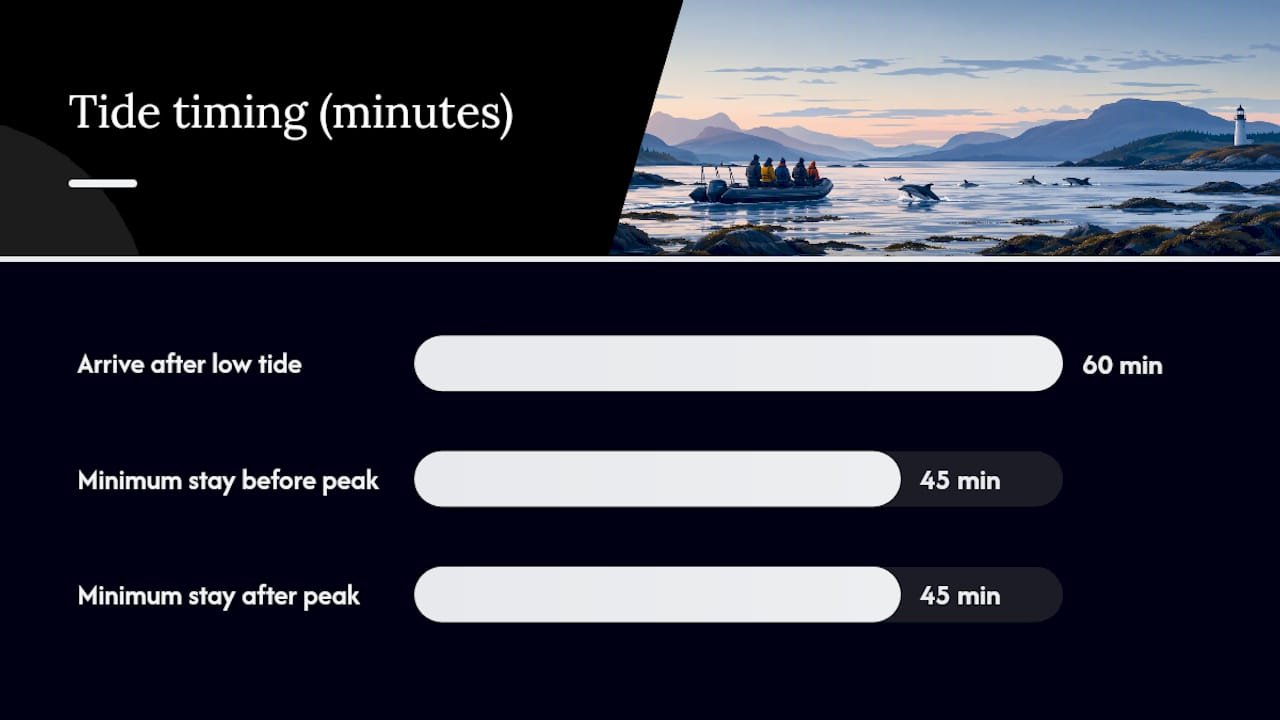
- Aim to arrive around one hour after low tide, as the water starts to turn.
- Stay for at least 45 minutes either side of that window, since prey movement (and dolphin activity) tends to peak as the tide picks up.
- Check the Scottish Dolphin Centre’s shorewatch updates before travelling, since recent sightings shift with weather and prey behaviour.
- Build in flexibility. A blustery morning can shut down visibility even when the tide is perfect.
Weather affects sightings more than most people expect. Choppy water makes dorsal fins harder to spot even when dolphins are active, so a calm, overcast morning often beats a windy blue-sky afternoon.
Responsible dolphin watching: what to do and avoid
Dolphin watching only works long-term if it doesn’t stress the animals it depends on. The Moray Firth population numbers around 200 bottlenose dolphins, one of the most northerly resident groups anywhere, and pressure on that population shows up quickly if operators cut corners.
Statistic callout: The Moray Firth is home to roughly 200 resident bottlenose dolphins, according to the WDC Scottish Dolphin Centre, one of only a few known resident populations at this latitude worldwide.
- Keep your distance and never approach dolphins directly, whether on foot or by boat.
- Choose operators recognised under the WISE scheme, which sets standards for responsible wildlife tourism.
- Avoid loud engine approaches or sudden direction changes near a pod.
- If you find a stranded or injured marine mammal, contact British Divers Marine Life Rescue (BDMLR) immediately rather than approaching it yourself.
- For general coastal safety, the Maritime and Coastguard Agency is the UK authority to know before any boat trip.
No operator, however good, can promise a sighting. The ones worth booking are the ones who say so honestly rather than overselling the odds.
Planning your trip: booking, packing and cost
A little preparation turns a hopeful dolphin watching trip into a genuinely good day out, whether you’re doing it independently or booking a guide.
Before booking any boat trip, ask about trip length, typical search time, refund policy if the weather turns, and maximum group size. Some operators also carry spare binoculars, which is worth checking if you don’t own a pair.
- Warm layers and waterproofs, even in July. The Moray Firth coast is exposed.
- Binoculars and a camera with decent zoom, since dolphins often surface further out than expected.
- Seasickness medication if you’re booking a boat trip and have any doubts about your sea legs.
- Sturdy, grippy footwear for rocky shorelines like Chanonry Point.
Accessibility note: shorewatching at Chanonry Point or Spey Bay tends to suit families, older visitors and anyone prone to seasickness better than an open boat trip, since dolphins come close to shore in the narrows rather than requiring a journey offshore. A private guided visit offers more flexibility again, letting you time the trip around tides without waiting on a fixed departure slot.
Cost varies mainly with trip duration, whether you’re on a shared or private boat, and how far offshore the route runs. Land-based shorewatching, by contrast, costs nothing beyond getting there.
What local guides know that a fixed timetable doesn’t
Tide timing is the single biggest lever most first-time visitors overlook, and it’s the one thing a guide who knows the Moray Firth well can adjust for on the day, not the week before. A fixed-departure boat tour runs whether the tide is right or not; a local guide can shift your Chanonry Point visit by an hour if that’s what the water is doing.
That flexibility matters most for families and anyone uneasy about open water, since it lets a trip stay entirely land-based and still hit peak dolphin activity. It’s also why we treat wildlife viewing as something to build a route around rather than bolt onto a generic sightseeing loop. A guide who’s watched the same narrows across dozens of tide cycles reads the water differently to a first-time visitor with a tide table app.
— Alin
Book a tide-timed dolphin trip with Skye Highlands Tours
Fixed-departure boat tours and DIY shorewatching both work, but neither adjusts to the tide, the weather, or your group’s pace on the day. A private tour with Skye Highlands Tours does exactly that: your Chanonry Point visit gets timed to the actual tide, not a printed timetable, and the route flexes around seasickness concerns, mobility needs, or a family with young children who need a shorter walk to the shore.

Book a private guide for pick-up options, a custom route built around your group, and the chance to combine dolphin watching with other Highland highlights in the same day. Have a look at the private guided tour options and get in touch to plan a tide-timed itinerary around your travel dates.
Sources
- Dolphin Watching – WDC Scottish Dolphin Centre – Spey Bay, Moray Firth
- How to see the dolphins in Scotland – Whale and Dolphin Conservation
- Gov
- Whale and Dolphin Watching | VisitScotland
FAQ
Where is the best place in Scotland to see dolphins?
Chanonry Point on the Moray Firth is widely regarded as the best land-based spot, thanks to its resident population of about 200 bottlenose dolphins hunting close to shore. Spey Bay and the Hebrides offer strong alternatives for shorewatching and boat trips respectively.
Where is the best place in the UK to see dolphins?
The Moray Firth is generally considered the best place in the UK for reliable dolphin sightings, since it holds one of the most northerly resident bottlenose dolphin populations anywhere. Cornwall and Pembrokeshire also see occasional dolphin activity, but nothing matches the Moray Firth’s consistency.
Where can I have a dolphin experience in the UK?
Shorewatching at Chanonry Point or Spey Bay gives a genuine dolphin experience without a boat, while west-coast operators around Mull and Oban run boat trips into the Hebrides Whale Trail. A private tide-timed tour combines shorewatching with a flexible schedule built around your group.
What month is best for dolphin watching?
May to September is peak season for Moray Firth sightings, when prey fish move into the firth and dolphin activity increases. Sightings happen year-round, but summer gives you the strongest odds.
Do I need to book in advance for dolphin watching?
Shorewatching at Chanonry Point needs no booking at all, just good tide timing. Boat trips and private guided tours should be booked ahead, especially in peak summer months when demand is highest.