Your cart is empty Continue Shopping

6–7 Hours of Light: Skye Winter Travel for UK Travellers
Yes, you can visit the Isle of Skye in winter, and for many travellers it beats the summer version entirely. You’ll need three things sorted first: weather-ready clothing and a proper car kit, a flexible schedule that bends around forecasts, and transport suited to icy single-track roads. Do that, and you get near-empty viewpoints and some of the most dramatic light in Scotland. The checklist, safety notes and itineraries below cover exactly how.
TL;DR:
- Winter travel on Skye requires preparation for icy roads, reduced daylight, and variable weather, with a focus on flexible plans and safety precautions.
- Most attractions like the Old Man of Storr and Quiraing depend heavily on weather conditions, so outdoor activities may need quick rescheduling or indoor alternatives.
- Self-driving is manageable with all-wheel drive or winter tires, but travelers should plan fuel stops and check road and ferry disruptions daily.
- Portree serves as the best winter base for access to amenities, but many smaller villages have limited services and reduced opening hours.
- A guided tour offers a safer, more flexible way to explore in winter, especially when weather conditions deteriorate unexpectedly.
Table of Contents
- Skye winter travel checklist: what to pack and prepare
- How much daylight do you actually get in winter?
- Getting to Skye and around it in winter
- What can you actually do on Skye in winter?
- Where to base yourself and what closes for winter
- Winter driving on Skye: the safety rules that matter
- Sample winter itineraries for Skye
- How a local guide changes winter travel on Skye
- Winter events and festivals that shape your visit
- Winter photography on Skye: timing and safety
- Where to find food and supplies in winter
- Why winter rewards the visitors who prepare for it
- A practical winter option: touring Skye with local support
- Sources
- FAQ
Skye winter travel checklist: what to pack and prepare
Before any Skye winter travel, get the basics right at home rather than scrambling in Portree. A short, practical list beats a vague sense that you’ll “layer up.”
- A waterproof outer shell (not just showerproof) plus two or three insulating mid layers you can add or strip off.
- Waterproof, ankle-supporting boots, and gaiters if you’re planning any hill walking near Quiraing or the Fairy Pools.
- Car essentials: a torch or headlamp, a thermal blanket, snacks, water, and a fully charged power bank.
- A paper OS map as backup, plus an offline mapping app such as OS Maps or Google Maps downloaded before you lose signal.
- Confirmation that key attractions and restaurants are actually open. Many reduce hours or close entirely in winter, so ring ahead rather than assume.
- A final weather and road check the morning you travel, using the Met Office forecast and Traffic Scotland’s road updates.
Pro Tip: Screenshot your accommodation address, phone number and driving directions before you leave signal range. Skye’s mobile coverage drops out completely in stretches of Glen Sligachan and much of the Trotternish peninsula.
If you’re travelling as a couple or small group and want to remove most of this planning, a guided day out with Skye Highlands Tours hands the weather calls and route logistics to someone who does this daily, though the checklist above still applies if you’re self-driving any part of the trip.
How much daylight do you actually get in winter?
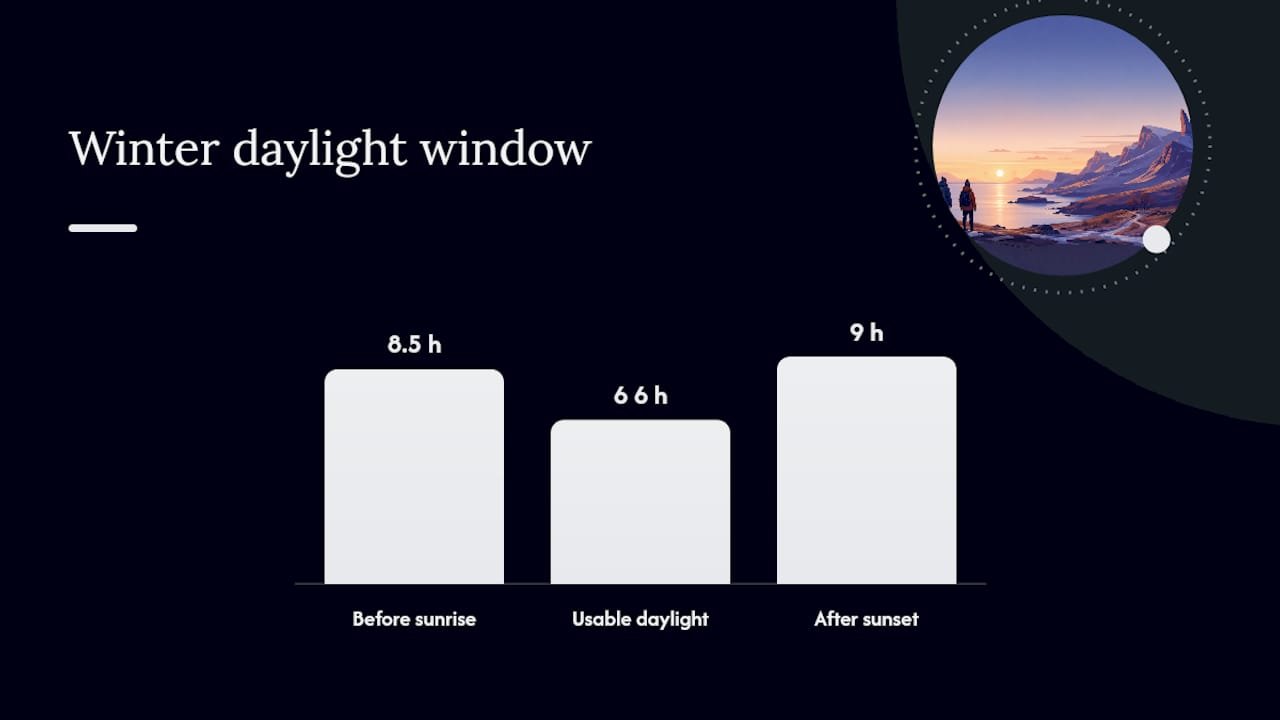
Expect roughly 6 to 7 hours of usable light in late December and January, with sunrise around 8:30am and sunset by 3:30pm, according to Weatherspark’s climate data for Skye. That’s not a lot to work with, and it reshapes how you should plan every day on the island.
Weather compounds the problem. Atlantic squalls roll in fast, bringing strong wind, driving rain and the occasional snow flurry, sometimes all in the same afternoon. One traveller’s account in The Guardian describes conditions shifting from clear skies to horizontal rain within the hour, which is fairly typical rather than exceptional.
Given that window, a few tactical choices make a real difference:
- Aim to reach key viewpoints, like the Old Man of Storr or Quiraing, in mid morning when light is strongest and crowds (what few there are) haven’t gathered.
- Treat the low winter sun as an asset for photography. Golden hour stretches out and the blue hour light on the coast is often better than anything you’ll get in July.
- Build in a low-light backup, such as a distillery tour or gallery, for when the weather simply doesn’t cooperate.
- Check the Met Office site before you leave each morning, and treat amber or red weather warnings as a genuine reason to change plans, not just caution.
Getting to Skye and around it in winter
Most self-drivers reach Skye via the A87 across the Skye Bridge, roughly two and a half hours from Inverness in normal conditions, though winter can stretch that considerably. Rail plus bus is a realistic alternative: ScotRail runs to Kyle of Lochalsh, with a connecting bus over the bridge, and the Caledonian Sleeper from London gets you to Inverness or Fort William overnight if you’d rather avoid a long winter drive altogether.
Once on the island, expect single-track roads with passing places, reduced bus frequency, and ferry services (useful for reaching Skye via Mallaig or Armadale) that can be curtailed by high winds. A few practical points worth acting on before you set off:
- Hire a car with all-wheel drive or winter tyres if you can get one. Standard summer tyres on icy single-track lanes are a genuine hazard.
- Plan fuel stops in advance. Petrol stations on Skye are sparse and some close early in winter.
- If you’re driving an EV, map charging points before you leave. Rural chargers can be offline or occupied with no backup nearby.
- Check Stagecoach and Scottish Citylink for bus timetable changes, CalMac for ferry disruption notices, and Traffic Scotland for road closures before every leg of the journey.
What can you actually do on Skye in winter?
Winter narrows your options but doesn’t eliminate them, and the trade off is worth it: quieter paths, moodier skies, and none of the midges that plague the summer months, as several practical guides to winter Skye point out. The trick is matching the activity to the day’s weather rather than forcing a fixed plan.
- The Old Man of Storr. The short, steep walk up to this rock pinnacle is manageable in winter if the path isn’t iced over, and the reward on a clear morning is one of Scotland’s best views. Check conditions before setting out, since the upper section gets exposed to wind.
- Quiraing. Spectacular, but the most weather-dependent site on this list. The road up can close in poor conditions, and the walk itself is best avoided in high wind or ice. Have a lower-elevation alternative ready.
- Fairy Pools. A gentler walk, though the path turns muddy and occasionally icy near the stream crossings. Good boots make the difference between an easy hour and a miserable one.
- Neist Point. The lighthouse walk is exposed to the full force of Atlantic wind, so this is one to skip entirely on a red or amber warning day.
- Distilleries, galleries and pubs. Talisker and Torabhaig both run tours through winter and make an obvious backup when the outdoors turns hostile. Combine a distillery visit with a proper sit-down seafood lunch in Portree and you’ve salvaged a washout afternoon nicely.
- Stargazing and aurora spotting. Skye’s low light pollution makes it a genuine option for clear winter nights, particularly around the Trotternish peninsula, though aurora sightings depend on solar activity you can’t control.
Pro Tip: If Quiraing is closed, the Old Man of Storr car park often has better shelter and easier access, so build in flexibility to swap one for the other on the day rather than committing weeks in advance.
Where to base yourself and what closes for winter
Portree remains the best hub for winter travel: it has the widest choice of restaurants, fuel, shops and onward transport links, and staying there keeps your options open if plans change at short notice. Smaller villages further out, like Uig or Dunvegan, have real charm but far fewer services once winter sets in.
Many B&Bs, cafes and smaller restaurants reduce their opening hours or shut for the season entirely, a pattern confirmed by VisitScotland’s own seasonal guidance for the island. A few habits save real frustration:
- Ring ahead to confirm a restaurant or café is actually open that day, not just “in season” according to its website.
- Pick accommodation with private parking and reliable heating. Older Highland properties can be draughty, and a cold room in January is no small thing.
- Choose a flexible cancellation rate where possible, since a genuinely bad forecast might mean shifting your whole trip by a day.
- Book popular spots like Talisker Distillery or well-reviewed Portree restaurants in advance, since winter opening hours mean smaller availability windows, not fewer diners wanting a table.
Winter driving on Skye: the safety rules that matter
Vehicle choice matters more here than most UK drivers expect. All-wheel drive or winter tyres are strongly preferable on Skye’s steeper, narrower lanes, and if you can’t get either, the safest approach is simply to drive slower and leave far more space than feels necessary. Practitioner advice on the island consistently points to this as the single biggest factor in avoiding a skid on the climbs near Quiraing or the Bealach na Bà.
Single-track roads bring their own etiquette. Pull into passing places to let oncoming traffic through, watch for sheep wandering onto the road (a genuine hazard, not a cliché), and expect black ice on shaded stretches well into mid-morning, even after the main roads look clear.
A basic emergency kit is worth the boot space: a torch, blanket, food, water, a shovel if snow is forecast, and a fully charged phone with offline maps loaded. None of it is exciting until the one day you need it.
- Treat a Met Office amber or red warning as a firm reason to delay, not a challenge.
- Check Traffic Scotland for closures on the A87 and A855 before committing to a route.
- If visibility on a high pass drops below the length of a football pitch, turn back rather than press on.
Pro Tip: Fill your fuel tank the evening before an early start. Winter mornings on Skye are when queues form at the few open petrol stations, and you don’t want to be stuck behind one.
Sample winter itineraries for Skye
Pace these around daylight, not ambition, using advice on how to plan a road trip itinerary to help organise your daily route and timing. Two well-chosen sites beat five rushed ones, and every plan here has a weather-driven backup.
- One day, Portree loop. Start at 9am once there’s real light, drive 20 minutes to the Old Man of Storr for the morning walk, then head back for a late lunch and an afternoon distillery tour or gallery visit in Portree if the weather has turned. Total driving stays under an hour, leaving room for delays.
- Two days, Trotternish focus. Day one mirrors the loop above. Day two heads further north towards Quiraing, weather permitting, with the Old Man of Storr as your fallback if the Quiraing road is closed. Build in extra travel time between stops, since winter conditions routinely slow single-track driving well below summer pace.
- Three days, West Skye extension. Add a day heading west to Neist Point and Dunvegan Castle, roughly an hour’s drive from Portree each way. Keep a rest or indoor day in reserve, ideally your middle day, so a genuinely bad forecast doesn’t wreck the whole trip. A three-day itinerary built around this pacing gives you room to swap days around without losing the trip’s shape.
How a local guide changes winter travel on Skye
A private guide earns their keep most on the days when plans need to change fast. Local knowledge of which roads are actually passable, and which viewpoints hold up in a squall, means a route can be re-planned on the spot rather than after an hour’s wasted drive toward a closed pass.
The practical upside for winter specifically comes down to a few things:
- Reliable transport that doesn’t depend on you sourcing a winter-tyre hire car yourself.
- A driver who already knows which single-track stretches ice up first and adjusts timing accordingly.
- Immediate indoor alternatives on offer the moment weather turns, rather than a scramble to find one.
- Faster decisions overall, since someone with local experience reads a change in conditions before it becomes a problem.
Skye Highlands Tours lists custom itineraries, direct pick-up and experienced local guides among its core offerings, both for full Isle of Skye tours and for shorter transfers. It’s worth being honest about the trade-off: a guided day costs more than self-driving, but for many winter visitors, the convenience and reduced risk are exactly what they’re paying for.
Winter events and festivals that shape your visit
Skye’s winter calendar is quieter than summer’s, but a handful of dates are worth building a trip around, or avoiding if you’d rather have the island to yourself. Skye Winter Festival, typically held in the darker months, brings live music and local food into venues around Portree, giving visitors an indoor social option precisely when outdoor plans are most likely to fall through.
Hogmanay and New Year celebrations bring a noticeable lift in atmosphere to Portree’s pubs and restaurants, though it also means booking accommodation and tables well ahead, since capacity is limited compared with mainland towns. Burns Night in late January is marked at several restaurants and hotels across the island with traditional suppers, offering a genuinely local evening if you’re travelling during that window.
Outside named events, smaller happenings like ceilidhs or pop-up markets sometimes appear with little notice, usually publicised locally rather than nationally. Checking VisitScotland’s events listings before you travel, and again once you arrive, catches anything that’s been added since you booked. None of these events should anchor your entire itinerary given how weather-dependent winter travel already is, but they’re worth working around rather than missing by accident.
Winter photography on Skye: timing and safety
Winter’s low sun is arguably Skye’s best-kept photography secret. The golden hour stretches far longer than in summer, sometimes lasting the better part of an hour either side of sunrise and sunset, and the blue hour that follows sunset often produces the moodiest coastal shots of the whole trip. Shooting the Old Man of Storr or Neist Point lighthouse in this light, rather than the flatter midday glare, is worth restructuring your whole schedule around.
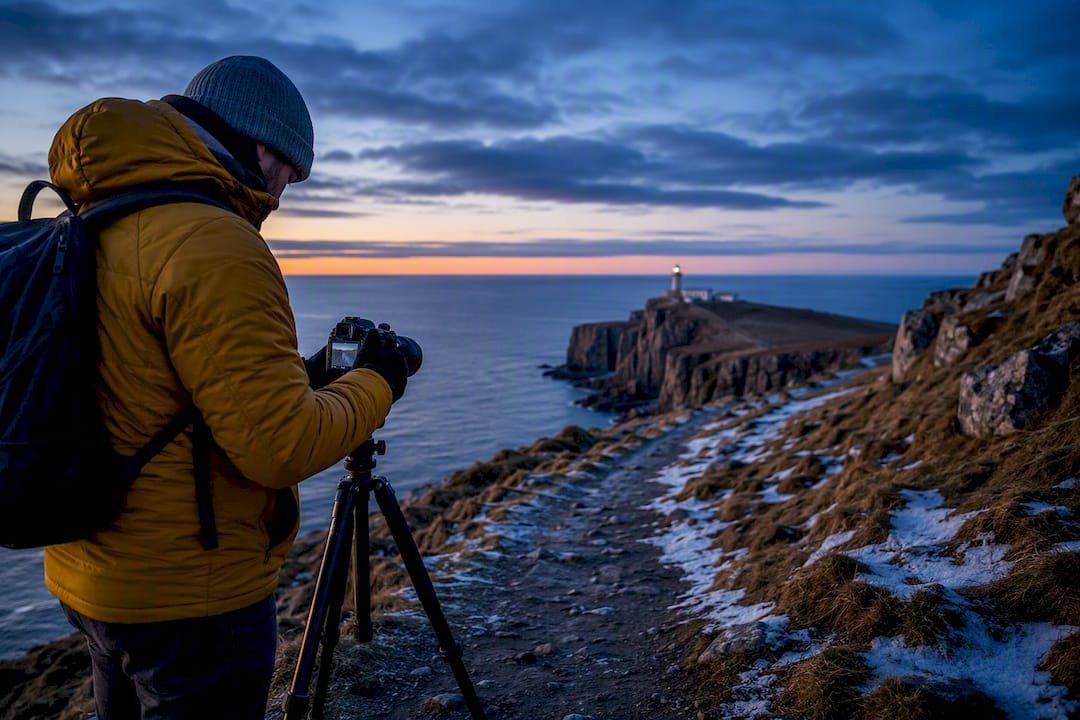
Practical timing matters as much as light quality. Arrive at a viewpoint 20 to 30 minutes before your target light window, since setting up tripods and finding a composition takes longer in the cold, and low winter sun means the good light window closes faster than you’d expect. Cloud cover isn’t necessarily bad news either. Overcast skies can produce even, moody light that suits Skye’s dramatic landscape better than a harsh blue sky.
Safety has to come first, though, especially at exposed spots. Neist Point’s cliff paths get slippery in wet weather, and wind gusts strong enough to unbalance a tripod (or a photographer) are common. Bring a headlamp if you’re shooting sunset, since the walk back to the car will likely be in the dark, and check the forecast for wind speed specifically, not just rain, before committing to a coastal shoot. A pair of gloves that still let you operate camera dials properly is a small thing that makes a real difference after twenty minutes standing still in a January wind.
Where to find food and supplies in winter
Portree is your most reliable base for food and essentials, with a Co-op supermarket, a handful of independent shops and several restaurants that stay open through winter, including the well-regarded seafood spots along the harbour. Stock up here rather than assuming smaller villages will have what you need.
Once you’re outside Portree, options thin out fast. Petrol stations, cafes and small shops in villages like Uig, Dunvegan and Broadford often run reduced winter hours, and some close entirely on quieter weekdays. It’s worth carrying snacks, water and a full fuel tank whenever you’re heading out for a day trip, rather than relying on finding a shop open along the way.
A few practical habits help: buy provisions the evening before an early start, since shops open later in winter and you don’t want to wait around; check opening hours by phone rather than trusting a website, since seasonal hours aren’t always kept current; and treat any working café or pub you pass as worth stopping at, since the next one might be closed. If you’re self-catering, larger accommodation bookings often include information on the nearest functioning shop, which is worth confirming when you book rather than discovering on arrival.
Why winter rewards the visitors who prepare for it
The pay-off for planning around Skye’s winter is real solitude. Standing at the Old Man of Storr with nobody else in sight, watching light change every few minutes, isn’t something summer crowds allow. Winter also forces a slower pace, and that suits the island’s character better than a rushed five-stop day ever could. Plan properly, but hold your plans loosely. The weather will have its say regardless.
— Alin
A practical winter option: touring Skye with local support
Self-driving Skye in winter is entirely doable with the right preparation, but it isn’t the only route. Skye Highlands Tours offers an alternative that removes most of the logistical guesswork: private guided tours with experienced local drivers who already know which roads hold up in bad weather and which indoor stops rescue a washed-out afternoon.

That local knowledge solves the three problems that trip up most winter self-drivers: vehicle reliability on icy single-track lanes, uncertainty over which routes are actually open, and the risk of losing half a short daylight window to a wrong turn. A guided day means someone else is watching the forecast and adjusting the plan while you focus on the scenery. If you want a fully custom day built around your interests, from photography stops to a whisky tour, check the tours page for current options, or get in touch to discuss a tailored winter itinerary before you book anything else.
Sources
Confirm conditions and openings with these before setting off, and again the morning of:
- Average Weather in Island of Skye, United Kingdom — Weatherspark
- Winter Skye: the snow, wind and rain made our trip to Scotland a euphoric experience — The Guardian
FAQ
What is the prettiest town on the Isle of Skye?
Portree is generally considered Skye’s most attractive town, with its coloured harbourfront buildings and easy access to restaurants and services, which also makes it the most practical winter base.
What is the best month to visit the Isle of Skye?
For winter specifically, late November and early December often bring calmer weather than January, though every month from November to February carries a real risk of storms, so flexibility matters more than picking a “perfect” month.
Do I need a passport to go to the Isle of Skye?
No. Skye is part of Scotland within the United Kingdom, so UK residents need no passport, and visitors already legally in the UK can travel there with the same documents used to enter the country.
Where should I stay on Skye in winter?
Portree is the most practical choice thanks to its concentration of restaurants, shops and transport links, though a guided tour booked through Skye Highlands Tours can also organise pick-up from wherever you’re staying, reducing the need to base yourself centrally.