


Your cart is empty Continue Shopping

Essential packing list for Scotland: your 2026 guide
A Scotland packing checklist built around waterproof outerwear, moisture-wicking layers, and broken-in footwear is the single most reliable way to stay comfortable across the country’s famously unpredictable terrain. Scotland’s weather can change four times in one day, which means your clothing system must adapt just as quickly. This guide covers every item on the essential packing list for Scotland, from technical rain jackets to midge repellent, so you arrive prepared for everything from Edinburgh’s cobblestones to the Isle of Skye’s exposed ridgelines.
1. What waterproof outerwear should you pack for Scotland?
A high-quality waterproof jacket is the single most important item on any Scotland travel essentials list. Umbrellas are ineffective in windy cities like Edinburgh; they invert, break, and leave your lower half soaked. A technical jacket with taped seams and an adjustable hood solves all three problems at once.
When choosing a jacket, look for pit zips. These underarm vents release heat during uphill walks without removing the jacket entirely. Taped seams stop water seeping through stitching, which matters on a full day at Glenfinnan Viaduct or Loch Ness. An adjustable, wired hood stays in place in gusting wind rather than flapping across your face.
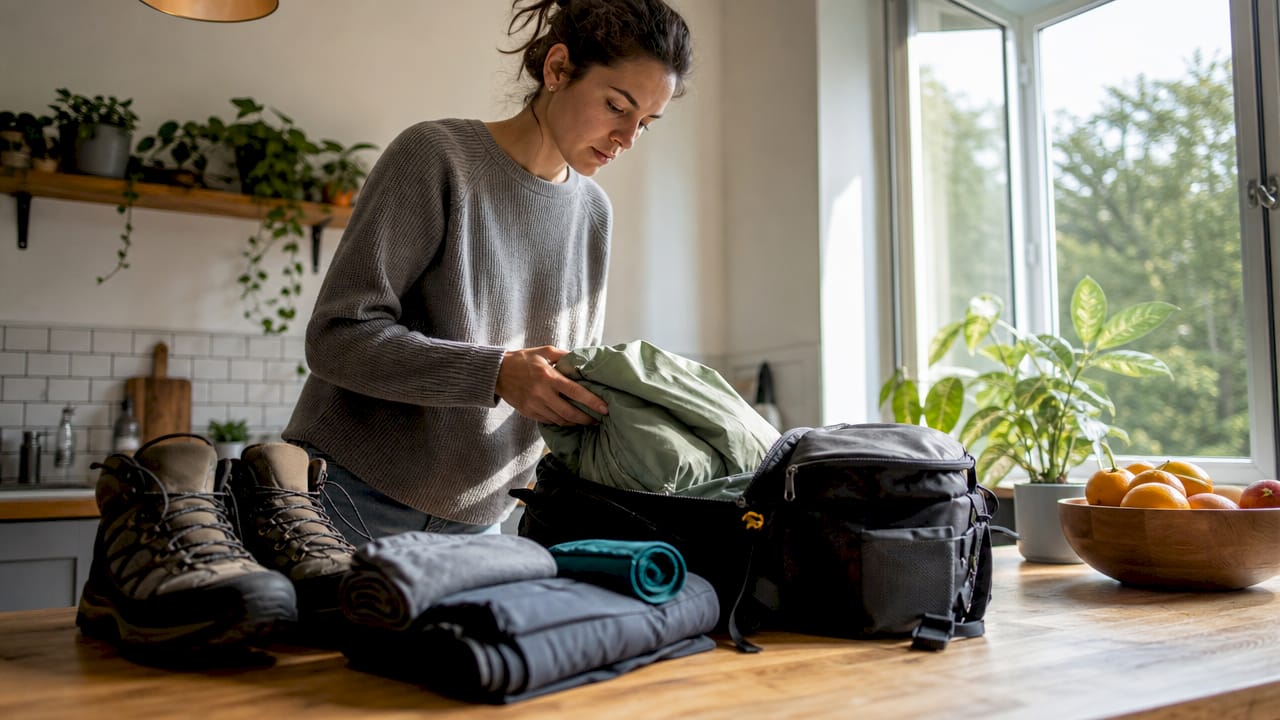
Pro Tip: Pack a lightweight, packable rain jacket as a second layer if you are travelling with a daypack. It compresses to the size of a water bottle and adds almost no weight.
| Feature | Why it matters |
|---|---|
| Taped seams | Prevents water entering through stitch holes |
| Adjustable hood | Stays secure in high winds on exposed Highland ridges |
| Pit zips | Ventilates during strenuous walks without removing the jacket |
| Packable design | Fits into a daypack for unpredictable weather changes |
| Water-resistant zip | Stops rain tracking along the zip line |
2. How to master the layering system for Scotland
Layering in Scotland is not just about warmth. It is about moisture management with synthetic or wool fabrics that dry quickly, unlike cotton, which holds moisture against your skin and chills you fast. The three-layer system, base, mid, and outer, is the standard approach used by experienced Highland walkers.
Your base layer does the most important work. Merino wool base layers regulate temperature and control odour, allowing you to wear the same layer for multiple days without issue. That quality directly reduces how much you need to pack, which matters when you are moving between the Black Isle, Skye, and Edinburgh in a single trip.
Mid-layers add insulation without bulk. A fleece or a lightweight synthetic puffer works well because both dry quickly and compress into a bag. Avoid down puffers unless they are water-resistant treated, as wet down loses its insulating properties entirely.
- Base layer: 100% merino wool, long-sleeve, fits close to the skin
- Mid-layer: Fleece or synthetic puffer, packable preferred
- Outer layer: Technical waterproof jacket with taped seams and pit zips
- Avoid: Cotton in any layer, including t-shirts and jeans
- Extras: Lightweight merino wool hat and gloves for Highland mornings
Pro Tip: Pack two merino base layers maximum. They dry overnight and can be worn multiple days running, so three or four cotton t-shirts are dead weight by comparison.
Local weather varies significantly across Scotland, with Skye experiencing wetter and windier conditions than Edinburgh. Packing the same layers for both is fine, but you will use your outer layer far more frequently on the west coast. Check region-specific forecasts rather than a single national weather report before you leave.
3. Which footwear is essential for Scotland’s terrain?
The Two-Shoe rule is the most practical footwear strategy for Scotland: one pair of waterproof hiking boots for rugged terrain, one pair of stylish water-resistant trainers for city use. This combination covers every situation from a muddy path in Glen Etive to a whisky bar in Inverness without overpacking.
Travellers walking 10,000–20,000 steps daily need footwear that is already broken in before they arrive. New shoes cause blisters by lunchtime on Scotland’s uneven paths and cobblestones. Wear your hiking boots on several long walks at home before the trip. Your feet will thank you by day two.
- Waterproof hiking boots: Essential for Highlands trails, muddy paths, and wet grass
- Water-resistant trainers: Suitable for Edinburgh, Inverness, and casual sightseeing days
- Wool or synthetic hiking socks: Two to three pairs, quick-drying, blister-resistant
- Avoid: Brand-new boots worn for the first time in Scotland
- Optional: Lightweight sandals if you plan beach days on the west coast in summer
For a Highland adventure, ankle-height waterproof boots with a grippy sole are the minimum. Mid-height boots with ankle support are better for longer walks on uneven ground. The extra weight is worth it over a full day on the Quiraing or around Loch Ness.
4. What accessories complete your Scotland packing checklist?
Midges are the most underestimated item on any Scotland trip packing guide. A midge head net costing approximately £5 is non-negotiable for west coast and Highlands visits from late may to early autumn. Areas like Glen Etive become genuinely uncomfortable without one. Smidge is the most widely recommended repellent brand in Scotland and outperforms standard DEET-based products on midges specifically.
Beyond midges, a small set of practical items rounds out your kit without adding significant weight.
- Smidge midge repellent: Apply before outdoor activities from may to september on the west coast
- Midge head net: Lightweight, costs under £5, and transforms evenings outdoors
- Reusable water bottle: Scotland’s tap water is excellent; refilling saves money and plastic
- Portable phone charger: Rural areas have limited charging options; a 10,000mAh bank covers two days
- Head torch: Critical for rural travel and unlit paths at night; often overlooked but practically indispensable
- Small daypack (20–25 litres): Carries layers, water, and snacks on day trips
- Cash: Some rural pubs, car parks, and farm shops are cash-only
Leave space in your luggage for Scottish souvenirs such as woollens and whiskies, which take up more room than expected. Overpacking at the start of a trip is the most common reason travellers end up posting items home or paying excess baggage fees.
5. How should you adjust your packing for different Scottish regions?
Scotland is not one climate. Packing the same kit for a city break in Edinburgh and a multi-day trek on the Isle of Skye is a mistake. Adjusting your Scotland packing checklist by region and season takes ten minutes of planning and saves considerable discomfort.
- Highlands trekking (autumn to early spring): Add a heavier mid-layer such as a 200-weight fleece, a merino wool hat, and lightweight gloves. Temperatures drop sharply after dark even in september.
- Isle of Skye and west coast: Pack your full waterproof system regardless of the forecast. Smidge and a head net are mandatory from may onwards. Expect wind on every exposed walk.
- Edinburgh city break: Your water-resistant trainers and a packable rain jacket cover most situations. A mid-layer is useful for evenings. Midge repellent is unnecessary in the city.
- East coast (Aberdeenshire, Black Isle): Drier than the west coast but still cold. Midges are less prevalent east of the Cairngorms, so you can leave the head net at home.
- Summer beach days (west coast islands): Pack swimwear, but the water temperature rarely rises above 15°C. A quick-dry towel and a windproof layer are more useful than sunscreen alone.
For travellers planning a personalised Highland itinerary, knowing which regions you will visit in advance lets you pack precisely rather than covering every eventuality with extra weight.
6. What documents and practical items should you not forget?
Clothing dominates most packing guides, but practical documents and small items cause the most stress when forgotten. Scotland uses the pound sterling (GBP) throughout, including in the Highlands, though Scottish banknotes are legal tender and widely accepted.
Your travel insurance documents, NHS or EHIC card if applicable, and any prescription medication belong in your carry-on, not your checked luggage. Pharmacies in rural Highland areas are sparse, and the nearest one to some Skye accommodation is a 45-minute drive. Bring enough medication for the full trip plus two extra days.
A printed or downloaded offline map of your route matters more in Scotland than in most European destinations. Mobile signal drops to zero in many Highland glens, including parts of the road to Applecross and sections of the North Coast 500. Google Maps offline downloads cover this, but download them before you leave your accommodation each morning.
Key takeaways
A Scotland trip packing guide built around waterproof outerwear, merino wool layers, and broken-in footwear covers the vast majority of conditions you will encounter across every Scottish region.
| Point | Details |
|---|---|
| Waterproof jacket first | Choose taped seams and pit zips over umbrellas, which fail in Scottish wind. |
| Merino wool base layers | Two layers suffice; they regulate temperature and can be worn multiple days without odour. |
| Two-Shoe rule | Waterproof hiking boots plus water-resistant trainers covers all terrain and social situations. |
| Midge protection | Pack Smidge repellent and a head net for any west coast or Highlands visit from may to september. |
| Leave luggage space | Overpacking prevents you bringing home Scottish woollens or whisky without excess baggage fees. |
What I have learned from packing for Scotland the wrong way
The first time I visited the Isle of Skye, I brought an umbrella and a pair of brand-new walking boots. The umbrella lasted forty minutes before a gust off the Cuillin turned it inside out. The boots gave me blisters before I reached the Old Man of Storr. Both mistakes were entirely avoidable with the right information.
The Two-Shoe rule changed how I pack for every trip, not just Scotland. Carrying two well-chosen pairs of shoes is lighter than carrying three mediocre ones, and it forces you to think clearly about what you will actually do each day. I have seen travellers arrive at Glenfinnan Viaduct in canvas plimsolls and spend the walk back to the car park soaked to the ankle. A pair of waterproof hiking boots weighs less than the regret.
The other lesson I keep coming back to is leaving room in the bag. Scottish woollens from Harris Tweed or a bottle from a Speyside distillery are the kind of things you want to bring home. If your bag is full on arrival, you either leave them behind or pay for it at the airport. Pack light, pack right, and let Scotland fill the gaps.
— Alin
Plan your Scotland trip with Skyehighlandstours
Knowing what to pack is only half the preparation. The other half is knowing where to go and how to get the most from each destination.

Skyehighlandstours offers private Highland tours tailored to your pace, interests, and group size, covering the Isle of Skye, Loch Ness, Glenfinnan Viaduct, and the Black Isle. Every itinerary is built around what you actually want to see, not a fixed coach schedule. Local guides know which paths are accessible after heavy rain, which viewpoints are worth the detour, and where to stop for the best whisky. If you are ready to see Scotland properly, the 2026 sightseeing tour guide is a good place to start planning.
FAQ
What is the single most important item to pack for Scotland?
A waterproof jacket with taped seams and an adjustable hood is the most critical item. Umbrellas are ineffective in Scotland’s wind, particularly in cities like Edinburgh and on exposed Highland routes.
Do I need midge repellent for a Scotland trip?
Midge repellent is non-negotiable for west coast and Highlands visits from late may to early september. Smidge is the most recommended brand, and a head net costing around £5 adds essential protection in areas like Glen Etive.
How many pairs of shoes should I bring to Scotland?
Two pairs cover every situation: waterproof hiking boots for trails and muddy terrain, and water-resistant trainers for city sightseeing. Always break in hiking boots before the trip, as travellers walking 10,000–20,000 steps daily risk blisters from new footwear.
Is cotton clothing suitable for Scotland?
Cotton is the worst fabric choice for Scotland. It retains moisture and keeps you cold when wet. Merino wool and synthetic fabrics dry quickly and regulate temperature far more effectively across Scotland’s variable conditions.
Does the weather differ much between Scottish regions?
Yes, significantly. Skye and the west coast are wetter and windier than Edinburgh or the east coast. Always check region-specific forecasts rather than a single national report, and pack your full waterproof system for any west coast itinerary.