
Your cart is empty Continue Shopping
The role of whisky in Scottish culture explained
Whisky is defined as Scotland’s national drink and its most enduring cultural emblem, known in Gaelic as uisge beatha, meaning “water of life.” The role of whisky in Scottish culture reaches far beyond the glass. It shapes how Scots welcome strangers, mourn the dead, celebrate births, and mark the turning of seasons. Historical records from 1494 confirm that malt was purchased to make aqua vitae, placing distillation at the very foundation of Scottish recorded history. Understanding whisky here means understanding Scotland itself.
How whisky shapes social rituals and community life in Scotland
Whisky functions as a social ritual in Scottish life, not merely a drink. Ordering a dram for a stranger in a pub is an act of welcome. Sharing a bottle at a gathering signals trust. These are not casual gestures. They are cultural performances that communicate belonging, respect, and shared identity.
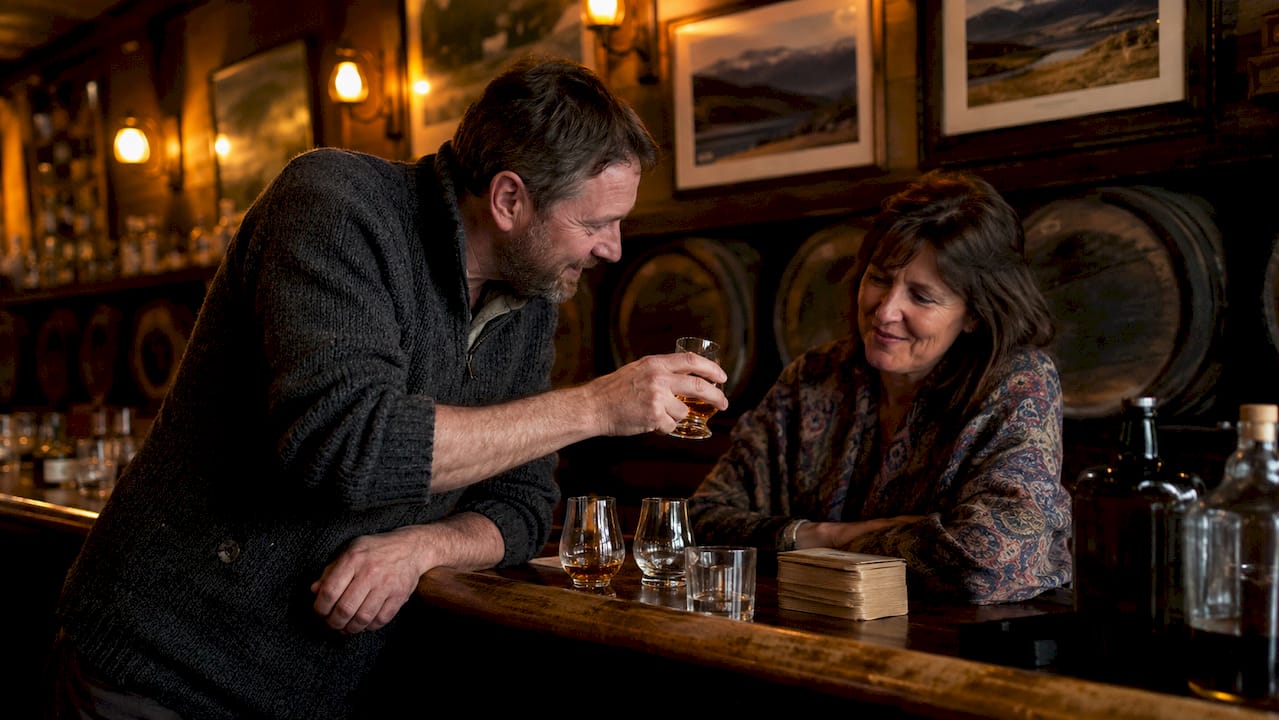
Scotland has over 140 active distilleries, and each one anchors local pride in a specific community. Speyside distilleries like Glenfiddich and Macallan define the identity of their villages as much as any church or school. On Islay, the distilleries at Laphroaig, Ardbeg, and Bowmore are not just employers. They are the reason the island exists in the cultural imagination of whisky lovers worldwide.
Whisky also appears at every significant life event in Scotland. A bottle is opened at weddings, wakes, and Hogmanay. The toast “Slàinte mhath,” meaning “good health” in Gaelic, is spoken at tables across the country every evening. This repetition is not habit. It is ritual, and ritual is the mechanism through which culture is transmitted across generations.
- Sharing a dram is the primary act of Highland hospitality
- Hogmanay and Burns Night both centre on whisky as a ceremonial drink
- Local distilleries reinforce community identity and regional pride
- The toast Slàinte mhath connects modern Scots to Gaelic oral tradition
- Whisky gifting is a recognised social currency in Scottish professional and personal life
Pro Tip: When visiting a Scottish pub, never pour your own whisky if someone else is present. Offering to pour for others first is the culturally correct gesture, and locals will notice.
What does Gaelic whisky language reveal about Scottish identity?
Gaelic whisky terminology shapes how flavour, experience, and geography are understood in Scotland. These words do not function like technical tasting notes. They embed emotional and sensory perceptions rooted in place, memory, and lived experience. That distinction matters enormously.
The Gaelic word dùthchas describes a deep connection to ancestral land. When applied to whisky, it frames a bottle from Islay or Speyside not as a product but as an expression of a specific landscape. The word mothachadh refers to a felt sense of awareness, the kind of full-body attention a Scot might bring to a first sip of a well-aged single malt. These terms encourage a holistic sensory understanding that blends aroma, memory, and place in a single experience.
Regional whisky styles make this connection concrete. Islay malts carry the peat smoke of the island’s boggy terrain directly into the glass. Highland whiskies reflect the clean air and granite of the mountains. Speyside expressions carry the sweetness of fertile river valleys. Geography does not merely influence whisky. It authors it.
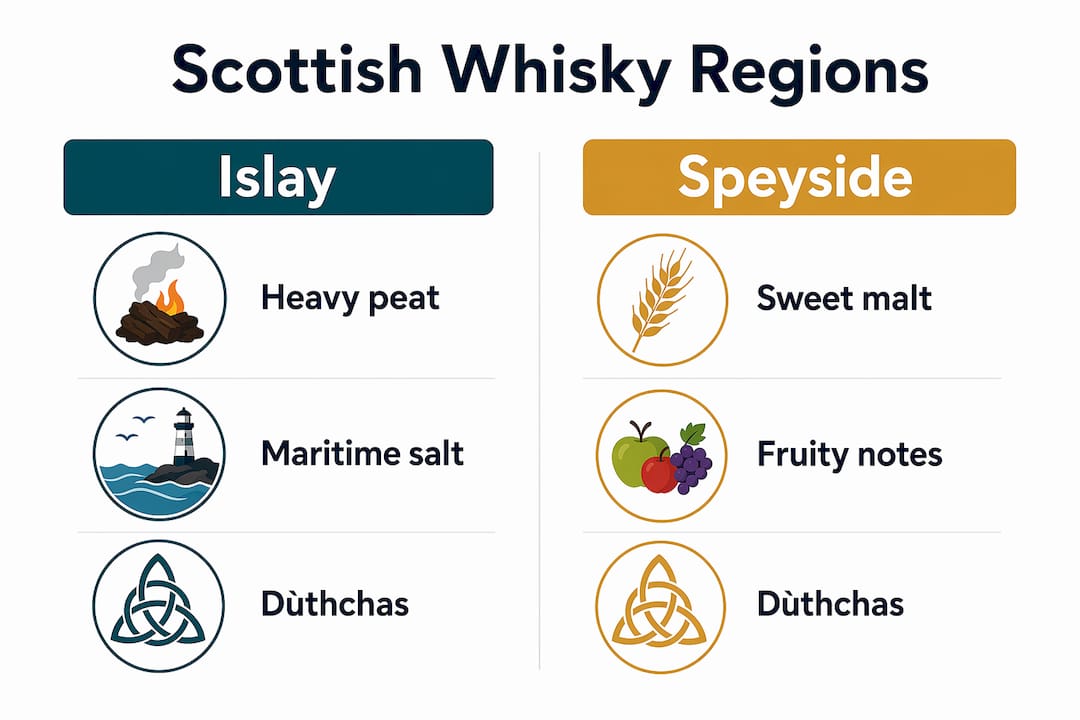
| Region | Defining character | Gaelic cultural link |
|---|---|---|
| Islay | Heavy peat smoke, maritime salt | Dùthchas: connection to ancestral land |
| Speyside | Fruity, honeyed, gentle | Blàths: warmth and sweetness of home |
| Highland | Robust, heathery, complex | Mothachadh: full sensory awareness |
| Lowland | Light, floral, approachable | Sìth: peace and gentle ease |
Pro Tip: When tasting a regional Scotch, ask the distillery guide about the local landscape before you sip. Knowing the geography first changes what you taste. This is the Gaelic approach to whisky appreciation.
The importance of whisky in Scotland is best understood through place, encompassing landscape, labour, and Gaelic oral tradition rather than marketing narratives. Whisky is, in this sense, liquid geography.
What is whisky’s economic and tourism impact on Scotland?
Scotch whisky exports were valued at £5.36 billion in 2025, with approximately 43 bottles shipped abroad every second. That figure makes whisky Scotland’s single most important manufactured export. No other product carries Scottish identity into as many countries or as many conversations.
Whisky tourism reinforces this economic weight with a cultural dimension. Scotland attracted over 2 million distillery visits annually, supported by more than £300 million in investment over a decade, and sustaining around 1,100 jobs directly tied to visitor experiences. Those numbers reflect a heritage industry that has successfully converted cultural pride into a living tourism economy.
Distillery visitor centres are not simply tasting rooms. They are cultural storytelling hubs. At the Scotch Whisky Experience on Edinburgh’s Royal Mile, visitors receive a structured introduction to Scottish whisky heritage before they taste a single drop. At Glenfarclas in Speyside, the Grant family guides guests through six generations of distilling history. These experiences do not sell whisky. They transmit culture.
| Metric | Figure |
|---|---|
| Annual distillery visits | Over 2 million |
| Decade investment in whisky tourism | Over £300 million |
| Jobs supported by whisky tourism | Approximately 1,100 |
| Scotch whisky export value (2025) | £5.36 billion |
- Distillery visitor centres serve as primary cultural education points for international tourists
- Whisky tourism integrates with Scottish Highlands hospitality across the country
- The Scotch Whisky Association actively promotes heritage alongside commercial interests
- Regional whisky trails, such as the Malt Whisky Trail in Speyside, draw dedicated cultural tourists
How do Scottish whisky drinking customs reflect cultural values?
Authentic Scottish whisky drinking involves specific rituals that communicate respect, patience, and shared meaning. These customs are not arbitrary. They are the accumulated social wisdom of a culture that has used whisky as a tool for bonding for centuries.
The correct way to drink Scotch in Scotland follows a clear sequence:
- Choose your glass with care. A tulip-shaped glass, such as a Glencairn, concentrates the aroma. Scots take the nose of a whisky seriously before the first sip.
- Add a small amount of still water. A few drops open the spirit and release compounds that heat suppresses. This is not dilution. It is chemistry in service of pleasure.
- Pace yourself deliberately. A dram is not a shot. Drinking whisky quickly is considered disrespectful to the craft and to your host.
- Offer a toast before drinking. Slàinte mhath is the standard. At formal occasions, a longer Gaelic toast may be offered. The words matter as much as the drink.
- Never refuse a dram offered in hospitality. Declining a whisky offered by a Scot in their home is a social misstep. Accepting, even symbolically, honours the gesture.
The historical development of peat use in whisky production began as pure necessity. Peat was the available fuel for drying malted barley in regions where wood was scarce. Over time, the smoky character it imparted became prized rather than tolerated. What began as a practical constraint became a defining cultural signature. This pattern, where necessity becomes tradition, runs throughout Scottish whisky heritage.
Whisky’s evolution from a medicinal spirit, documented in the Exchequer Rolls of 1494, to a cultural icon took several centuries. The shift was not driven by marketing. It was driven by the way communities used whisky to mark time, share grief, and celebrate survival. That origin gives Scottish whisky a moral weight that no other spirit quite matches.
Pro Tip: At a Scottish whisky tasting, wait until your host lifts their glass before you drink. This small act of synchrony is a sign of respect that experienced guides and distillery staff will recognise immediately.
Key takeaways
Whisky is Scotland’s most complete cultural artefact, encoding language, landscape, social ritual, and economic identity into a single spirit.
| Point | Details |
|---|---|
| Gaelic origin defines meaning | Uisge beatha frames whisky as life-giving, not merely alcoholic, shaping its cultural weight. |
| Social ritual over consumption | Sharing a dram is a cultural performance that communicates belonging and hospitality. |
| Geography authors flavour | Regional styles like Islay peat smoke express landscape directly through taste. |
| Economic and cultural force | Scotch whisky exports reached £5.36 billion in 2025, making it Scotland’s defining export. |
| Ritual drinking carries values | Specific customs around toasting, pacing, and glassware transmit cultural respect across generations. |
Why whisky is the soul of Scotland, not just its spirit
I have spent years guiding visitors through the Scottish Highlands, and the question I hear most often is some version of: “Why does whisky matter so much here?” My honest answer is that whisky is not the subject of Scottish culture. It is the medium through which Scottish culture operates.
What strikes me every time is how whisky forces people to slow down. You cannot rush a dram. You cannot multitask through a proper tasting. That enforced attention is itself a Scottish value, one that the culture has embedded into its most iconic product. When a Highlander hands you a glass and says nothing, waiting for you to nose it first, that silence is a lesson in how to be present.
The storytelling dimension is what I find most underappreciated. Every distillery visit I have joined has involved a guide explaining not just production but family history, land disputes, weather patterns, and Gaelic words that have no English equivalent. Whisky is the hook that makes people listen to Scottish history who would never pick up a history book. That is a remarkable cultural function for a drink to perform.
The cultural significance of whisky is not nostalgia. It is active. Young Scottish distillers are experimenting with new cask types and grain varieties while still honouring the Gaelic framework of place and patience. Whisky is not a relic. It is a living conversation between Scotland’s past and its future.
— Alin
Taste Scottish whisky heritage on a private Highland tour
Whisky culture is best experienced in the places that created it. Reading about Islay peat or Speyside sweetness is one thing. Standing inside a working distillery, nosing a cask sample with a local guide, is another entirely.

Skyehighlandstours offers private whisky tours across the Scottish Highlands, including dedicated routes through Speyside and the north. Each tour is tailored to your group, your pace, and your level of whisky knowledge. Whether you are a seasoned enthusiast or a curious first-timer, the guides bring the cultural story to life at every stop. You can also explore the full range of Highland whisky experiences to find the itinerary that fits your interests best.
FAQ
What does uisge beatha mean in Scottish whisky culture?
Uisge beatha is the Gaelic phrase for “water of life” and is the direct linguistic origin of the word whisky. It frames the spirit as life-giving rather than simply alcoholic, which explains the cultural reverence Scots extend to it.
How many distilleries are there in Scotland?
Scotland has over 140 active distilleries, spread across regions including Islay, Speyside, the Highlands, and the Lowlands. Each region produces a distinct style that reflects its local landscape and tradition.
What is the correct way to toast with whisky in Scotland?
The standard Scottish whisky toast is Slàinte mhath, pronounced “slanj-uh vah,” meaning “good health.” It is spoken before the first sip and is considered a mark of respect for both the drink and the company.
How significant is whisky to Scotland’s economy?
Scotch whisky exports were valued at £5.36 billion in 2025, making it Scotland’s most important manufactured export. Whisky tourism adds further value, drawing over 2 million distillery visits annually and supporting approximately 1,100 jobs.
Why do Islay whiskies taste so smoky?
The smoky character of Islay malts comes from peat, which was historically used as fuel for drying malted barley because wood was scarce on the island. What began as a practical necessity became a defining regional signature that distilleries like Laphroaig and Ardbeg now celebrate as their identity.
Recommended
- The role of Scottish cultural heritage in identity and arts – Skye Highlands Tours
- Experience Scotland food: Highland flavors & culinary traditions – Skye Highlands Tours
- Cultural experiences in Scotland: your 2026 guide – Skye Highlands Tours
- What Is Authentic Scottish Travel: A Real Traveler’s Guide – Skye Highlands Tours
1 Comment