
Your cart is empty Continue Shopping
Whisky tasting experience guide: master every dram
A whisky tasting experience is defined as a structured sensory evaluation in which you assess a whisky’s colour, aroma, palate, and finish in sequence. The industry standard term for this process is “sensory assessment,” and it follows the three-phase framework of nose, palate, and finish recognised by whisky professionals worldwide. This guide gives you the practical tools to conduct your own tastings with confidence, whether you are a complete beginner or a seasoned enthusiast planning a distillery visit in Scotland. You will learn how to prepare correctly, read flavour profiles, and get the most from every dram.
What do you need for a whisky tasting experience guide?
The right preparation separates a memorable tasting from a forgettable one. Three factors matter most: glassware, pour size, and environment.
Glassware is the single biggest variable under your control. A tulip-shaped Glencairn glass concentrates aromas at the rim and directs them straight to your nose. Wide-mouthed tumblers disperse those same aromas before they reach you. The Glencairn design is the professional standard for a reason.
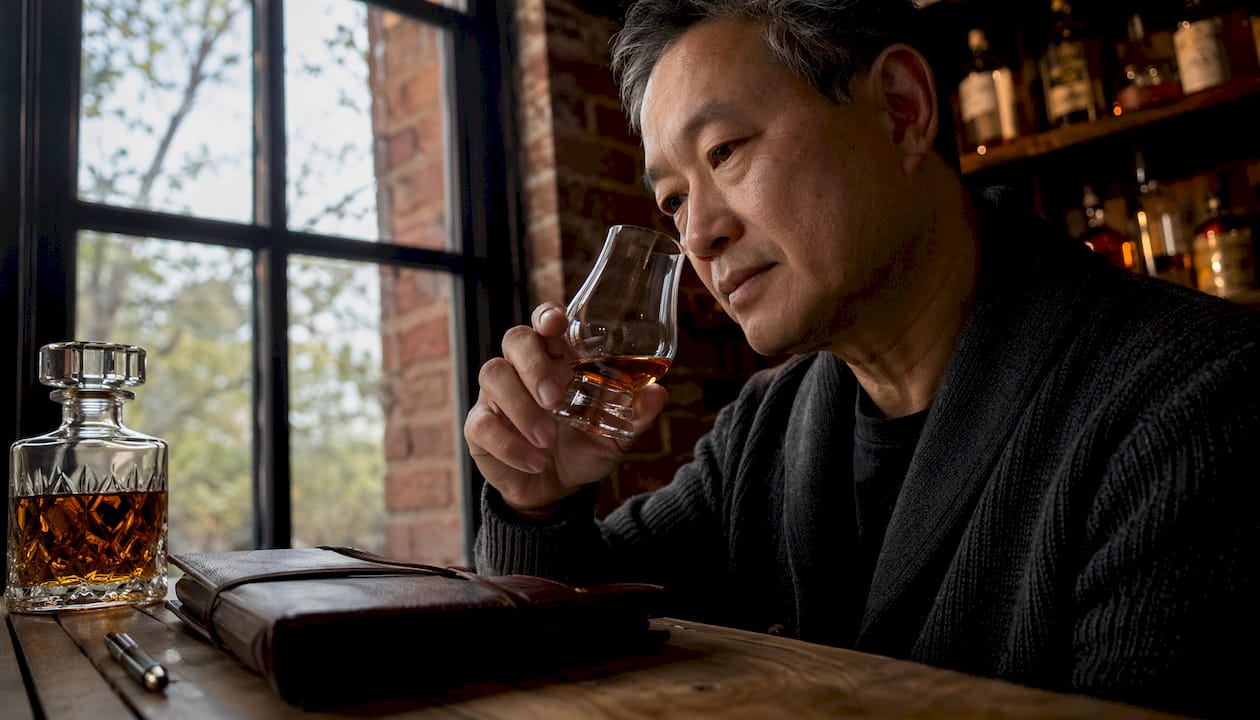
Pour size matters because too much whisky overwhelms the senses. A 25–30ml pour is the professional standard, lasting roughly five minutes per dram. That volume gives you enough to nose repeatedly, sip twice, and still add water without running dry.
Environment is often overlooked. Tasting in a room with strong cooking smells, perfume, or background noise reduces your ability to detect subtle notes. Choose a well-lit, neutral-smelling space. Good lighting lets you assess colour accurately against a white background.
Pre-tasting habits also affect your results. Consuming coffee, mint, or spicy food up to 60 minutes before a tasting distorts your palate. Stick to plain water and neutral crackers if you need something beforehand.
- Use a Glencairn-style tulip glass
- Pour 25–30ml per dram
- Taste in a neutral-smelling, well-lit space
- Avoid coffee, mint, and spicy food for at least an hour beforehand
- Use room-temperature still water for dilution, never cold or sparkling
Pro Tip: Warm the glass gently in your cupped hands for 30 seconds before nosing. The heat releases volatile aromatic compounds and gives you a richer, more complex first impression.
How do you taste whisky step by step?
The industry-standard sensory assessment follows a clear sequence. Work through each phase without rushing.
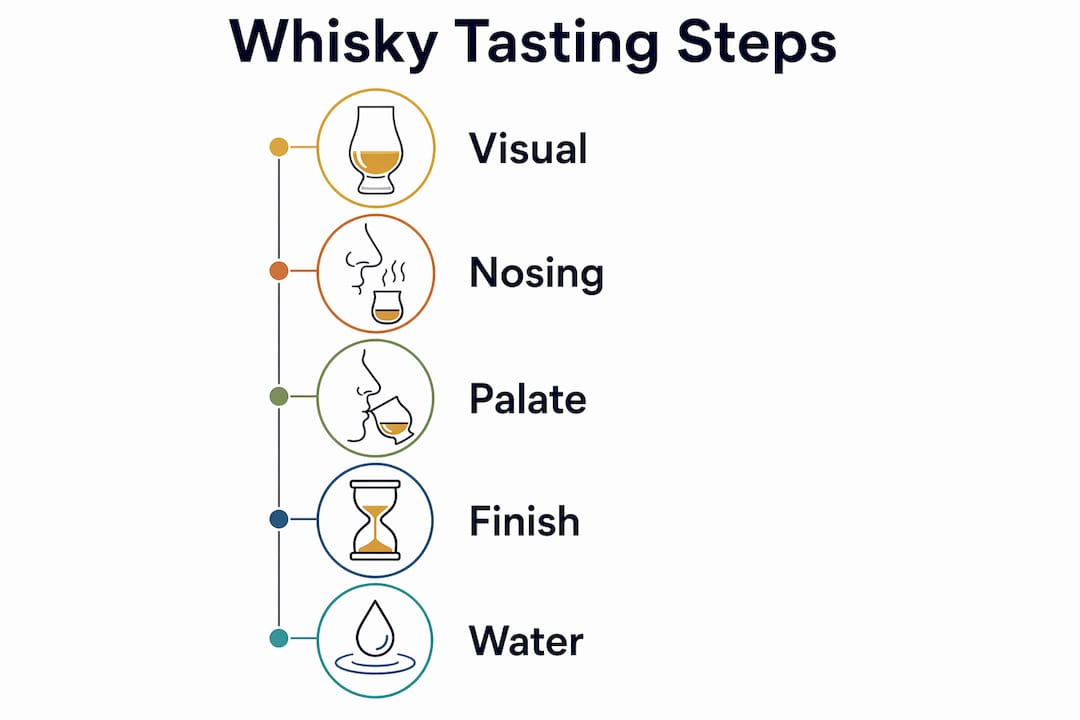
1. Visual examination
Hold the glass up to a white background and note the colour. Deep amber suggests long cask ageing or sherry wood influence. Pale gold often points to ex-bourbon barrels. Tilt the glass and watch the “legs” (the streaks that run down the inside). Thick, slow legs indicate higher sugar content or alcohol concentration.
2. Nosing
Position the glass at chin height, not directly under your nose. Short, gentle sniffs with your mouth slightly open reduce ethanol overload and reveal subtle aromas far better than deep inhalations. Take three or four short sniffs, then rest. High-ABV whiskies above 55% can fatigue your olfactory receptors quickly, so hold the glass slightly further away on your first approach.
3. Palate
Take a small sip and let it coat your entire mouth. The “Kentucky Chew” technique involves gently chewing the whisky to ensure it reaches every taste receptor: sweet at the tip of the tongue, salt and acid along the sides, and bitter at the back. This method reveals layers that a passive sip misses entirely.
Next, use retro-nasal olfaction. Breathe out gently through your nose while holding the whisky in your mouth. This technique unlocks spice, oak, and fruit notes that simple sniffing cannot detect. It is the most effective method for identifying complex flavour components.
4. Finish
Swallow and pay attention to what lingers. Finish duration varies significantly by style: a light grain whisky may fade in 15 seconds, while a heavily sherried expression can persist for over 60 seconds. Note whether the finish is warming, drying, spicy, or sweet.
5. Adding water
A few drops of room-temperature still water soften the alcohol burn and release ester compounds, bringing new aromatic layers to the surface. Add water gradually, one drop at a time, and nose and taste again after each addition. Never use cold or sparkling water, as both impede accurate flavour perception.
| Tasting phase | What to assess | Key technique |
|---|---|---|
| Visual | Colour, clarity, legs | White background, tilt glass |
| Nose | Fruit, smoke, floral, cereal | Short sniffs, chin height |
| Palate | Sweet, salt, acid, bitter | Kentucky Chew, retro-nasal |
| Finish | Duration, character | Note warmth, dryness, spice |
| With water | Evolved aromas, softened ABV | One drop at a time |
Pro Tip: Keep a small notebook beside you and write down three words after each phase: one dominant flavour, one texture, and one memory the whisky evokes. This habit builds your flavour vocabulary faster than any other practice.
What are the main whisky flavour profiles?
Whisky flavour falls into six broad categories: fruity, smoky, spicy, sweet, cereal, and woody. Understanding these categories gives you a framework to articulate what you are tasting rather than simply saying “nice” or “strong.”
Regional production methods, cask types, and warehouse microclimates all shape the final flavour. Speyside malts, aged predominantly in ex-sherry and ex-bourbon casks, tend towards orchard fruit, honey, and gentle spice. Islay malts, produced near the sea and heavily peated, deliver medicinal, smoky, and briny notes. Highland whiskies occupy a broad middle ground, ranging from heathery and floral in the north to rich and fruity in the south.
- Fruity: apple, pear, citrus, dried fruit (common in Speyside and Highland expressions)
- Smoky/Peaty: bonfire, iodine, seaweed (characteristic of Islay and some northern distilleries)
- Spicy: black pepper, cinnamon, ginger (often from ex-rye or virgin oak casks)
- Sweet: vanilla, caramel, toffee (typical of ex-bourbon maturation)
- Cereal: malt, biscuit, porridge (prominent in younger or lightly aged expressions)
- Woody: oak, sandalwood, dark chocolate (from long ageing or heavily charred casks)
| Region | Typical flavour profile | Common cask influence |
|---|---|---|
| Speyside | Fruity, honeyed, gentle spice | Ex-sherry, ex-bourbon |
| Islay | Smoky, peaty, briny, medicinal | Ex-bourbon, heavily peated malt |
| Highlands | Heathery, floral, rich fruit | Mixed cask types |
| Lowlands | Light, grassy, floral | Triple-distilled, ex-bourbon |
Single malts come from one distillery and one grain, making them the clearest expression of regional character. Blends combine multiple malt and grain whiskies, which creates consistency and broader flavour accessibility. Both styles reward careful tasting. Flavour wheels, such as those published by the Scotch Whisky Research Institute, give you a visual map to locate and name what you detect. Using one during a tasting session accelerates your ability to distinguish between expressions.
Tasting whiskies side by side sharpens your palate faster than tasting them in isolation. Comparative tasting forces your brain to identify contrasts rather than simply registering impressions in the abstract.
How do distillery visits deepen your tasting experience?
A distillery visit transforms whisky tasting from an abstract exercise into a grounded, sensory story. Whisky tourism has evolved into multi-day immersive experiences where travellers engage directly with master distillers, production processes, and the landscapes that shape each dram. That context changes how you taste.
Distillery tastings typically cover five elements: colour, body, nose, palate, and finish, often across two to five different expressions. Masterclass sessions go further, introducing blending workshops and warehouse tastings where you draw spirit directly from the cask. These hands-on formats build sensory memory in a way that no book or video can replicate.
Food pairing adds another dimension. Highland malts with their rich, fruity character complement Scottish game and aged cheeses. Peaty Islay expressions cut through the fat of smoked salmon or charcuterie. Lightly sherried Speyside whiskies pair well with dark chocolate or dried fruit. The principle is simple: match intensity with intensity, and contrast texture where possible.
- Allow at least three hours per distillery to absorb the experience without rushing
- Book masterclass sessions in advance, as they fill quickly at popular distilleries
- Ask your guide about the water source and warehouse conditions, as both directly affect flavour
- Pair food thoughtfully: match flavour intensity rather than defaulting to cheese and oatcakes
- Take notes during the tour so you can revisit and compare expressions at home
Pro Tip: Visit a Speyside distillery and a northern Highland distillery on the same trip. The contrast in flavour profiles, driven by geography and production tradition, teaches you more in one day than months of solo tasting.
Planning a whisky tour in Scotland requires matching the right regions to your flavour preferences and travel pace. Rushing through three distilleries in a day leaves you with blurred impressions. Two distilleries with time for a proper meal and reflection between them is the more rewarding format.
Key takeaways
A structured sensory assessment using the nose, palate, and finish framework is the most effective method for developing a confident whisky tasting practice.
| Point | Details |
|---|---|
| Use the right glass | A tulip-shaped Glencairn glass concentrates aromas and improves every phase of assessment. |
| Follow the three-phase framework | Assess nose, palate, and finish in sequence for consistent, comparable results. |
| Prepare your palate | Avoid coffee, mint, and spicy food for 60 minutes before tasting to prevent distortion. |
| Add water deliberately | One drop of room-temperature still water at a time reveals new aromatic compounds. |
| Visit distilleries in contrasting regions | Comparing Speyside and Islay expressions in context accelerates flavour recognition. |
Why slow tasting changed how I experience whisky
The first time I genuinely slowed down during a tasting, I was standing in a warehouse on the north coast of Scotland, glass in hand, with no agenda and no time pressure. That single session taught me more than a dozen rushed pub tastings ever had.
Mindfulness in whisky tasting shifts focus from consumption to active sensory engagement. It improves memory and flavour recognition in a measurable way. Most people rush through the nose and go straight to the palate. The nose is where the story begins. Spending 90 seconds just nosing a dram, before a single sip, changes everything you detect afterwards.
Note-taking feels awkward at first. Stick with it. After six sessions, you will notice patterns: the same vanilla note appearing in every ex-bourbon cask expression, the same dry finish in every heavily peated malt. Those patterns become your personal flavour map, and they make every subsequent tasting richer.
Distillery visits are not optional extras for the serious enthusiast. They are the fastest way to connect flavour to place, process, and people. When you understand that the water at a Highland distillery runs over granite and peat before it reaches the still, the mineral note in your glass stops being abstract. It becomes a fact you can taste.
My honest advice: resist the urge to collect expressions before you have truly understood a few. Depth beats breadth every time. Pick one region, taste six expressions from it over a month, and take notes on each. Your palate will develop faster than you expect.
— Alin
Plan your whisky tasting tour with Skyehighlandstours
Scotland’s whisky regions are best experienced with a guide who knows the distilleries, the roads, and the stories behind every dram.

Skyehighlandstours offers private whisky tours across the Scottish Highlands, including dedicated routes through Speyside and the north. Each tour is tailored to your flavour preferences, group size, and pace, with expert local guides who connect you to the production context that makes tasting meaningful. Whether you want a focused North Whisky Tour or a fully customised Highland itinerary, Skyehighlandstours builds the experience around you, not a fixed schedule.
FAQ
What is a whisky tasting experience?
A whisky tasting experience is a structured sensory evaluation covering colour, aroma, palate, and finish. The industry-standard framework uses three phases: nose, palate, and finish, assessed in sequence.
How much whisky should you pour for a tasting?
The professional standard is a 25–30ml pour per dram. That volume is sufficient for repeated nosing, two sips, and water dilution without overwhelming the senses.
What is the Kentucky Chew technique?
The Kentucky Chew involves gently chewing the whisky in your mouth to coat every taste receptor. This ensures sweet, salt, acid, and bitter notes all register, revealing layers that a passive sip misses.
How does adding water change whisky?
A few drops of room-temperature still water soften alcohol burn and release ester compounds, bringing new aromatic layers to the surface. Always add water gradually, one drop at a time.
What flavours define Speyside versus Islay whiskies?
Speyside whiskies typically show orchard fruit, honey, and gentle spice from sherry and bourbon cask ageing. Islay whiskies are characterised by peat smoke, iodine, and brine, driven by heavily peated malt and coastal warehouse conditions.
Recommended
- Discover Highland Whisky Tasting: Flavors, Tours, and Tradition – Skye Highlands Tours
- Step by step whisky tour planning: your 2026 guide – Skye Highlands Tours
- Essential tips for unforgettable Highland whisky tours – Skye Highlands Tours
- How to customise whisky tours: your practical guide – Skye Highlands Tours
1 Comment