
Your cart is empty Continue Shopping
Examples of highland glens: Scotland’s finest valleys
Scotland’s most celebrated glens include Glen Coe, Glen Affric, Glen Lyon, Glen Feshie, Glen Torridon, Glen Nevis, Glen Etive, Glen Sligachan, Glen Clova, Glen Derry, Glen Quoich, Glen Strathfarrar, Glen Garry, Glen Orchy, Gleann Mor (Alladale), Strathdearn, Strontian Glen, and Glen Tilt. A glen is a Gaelic term for a steep-sided valley carved by glaciers during the last Ice Age, distinguishing it from a strath, which is a broader, flatter valley floor. These eighteen glens represent the full range of Highland scenery: ancient pinewoods, volcanic rock faces, rewilded river corridors, and remote moorland that sees almost no visitors.
At a glance, the key examples of highland glens are:
- Glen Coe (Lochaber): volcanic caldera, glacial U-shape, historic massacre site
- Glen Affric (Inverness-shire): ancient Caledonian pinewoods, Loch Affric, highest northern Munros
- Glen Lyon (Perthshire): longest enclosed glen in Scotland, Fortingall Yew, prehistoric monuments
- Glen Feshie (Cairngorms): rewilding flagship, braided river, regenerating native woodland
- Glen Strathfarrar (Inverness-shire): remote, locked gate access, pristine pinewood
- Glen Torridon (Ross-shire): ancient Torridonian sandstone, dramatic north-side peaks
- Glen Garry (Lochaber/Inverness-shire): deep loch, forested slopes, accessible from the A87
- Glen Orchy (Argyll): waterfalls, gorges, accessible walking
- Glen Etive (Lochaber): long single-track road, filming location, Buachaille Etive Mòr views
- Glen Clova (Angus): Munros Mayar and Driesh, corrie lochs, Angus Glens character
- Glen Derry (Cairngorms): ancient pinewood remnants, Loch Etchachan, National Trust for Scotland stewardship
- Gleann Mor, Alladale (Sutherland): regenerating birchwood, rewilding estate, rarely visited
- Glen Nevis (Lochaber): foot of Ben Nevis, gorge walk, most visited glen in Scotland
- Glen Quoich (Cairngorms): pinewood, Beinn a’ Bhuird approach, restored landscape
- Glen Sligachan (Isle of Skye): Cuillin peaks, Red Hills, Skye Trail corridor
- Strathdearn (Monadhliath): upper River Findhorn, golden eagles, “Raptor Alley”
- Strontian Glen (Ardgour): ancient oakwoods of Ariundle, historic lead mines
- Glen Tilt (Perthshire): no public road, Falls of Tarf, backpacker through-route
What makes each Highland glen distinctive?
Glen Coe
Glen Coe is the most famous of all Scottish glens, and the reasons are geological as much as historical. The rocks here are the remnants of an ancient supervolcano whose caldera-forming eruptions occurred around 420 million years ago during the Silurian period. Glaciers then carved the valley into a U-shape roughly 12.5 kilometres long, with a floor less than 700 metres wide at its narrowest point, the Pass of Glen Coe. The result is a corridor of near-vertical mountain walls that feels genuinely oppressive on a grey day and extraordinary on a clear one.
The south side of the glen is defined by the Three Sisters, shoulders of the Bidean nam Bian massif, while the north side is the unbroken Aonach Eagach ridge, one of the finest mainland scrambles in Scotland. Bidean nam Bian itself reaches a peak over 1,100 metres, and the ridge holds two notable Munros including Sgorr nam Fiannaidh and Meall Dearg. The National Trust for Scotland has managed the glen since 1935, maintaining extensive footpaths to protect the ecosystem and give walkers access without damaging the ground.
The 1692 Massacre of Glencoe, in which 38 members of Clan MacDonald were killed by their guests acting on government orders, gives the glen a weight that purely scenic places lack. Glen Coe has also appeared in Harry Potter, Skyfall, Braveheart, and Rob Roy, which draws visitors who might never otherwise have come. The eco-friendly visitor centre near the foot of the glen includes a reconstruction of a 17th-century turf and creel house.
Glen Affric
Glen Affric makes as strong a claim as anywhere in Scotland to being the most beautiful glen in the country. The middle reaches hold one of the largest remnants of ancient Caledonian pine forest in Scotland, with Scots pine, birch, rowan, and juniper several hundred years old. Forestry and Land Scotland and the Affric estate have worked together on forest regeneration for decades, and the results are visible on every hillside. Loch Affric sits at the heart of the glen, a clear freshwater loch with a forested shoreline and sandy bays quite unlike the peaty moorland lochs of the northwest.
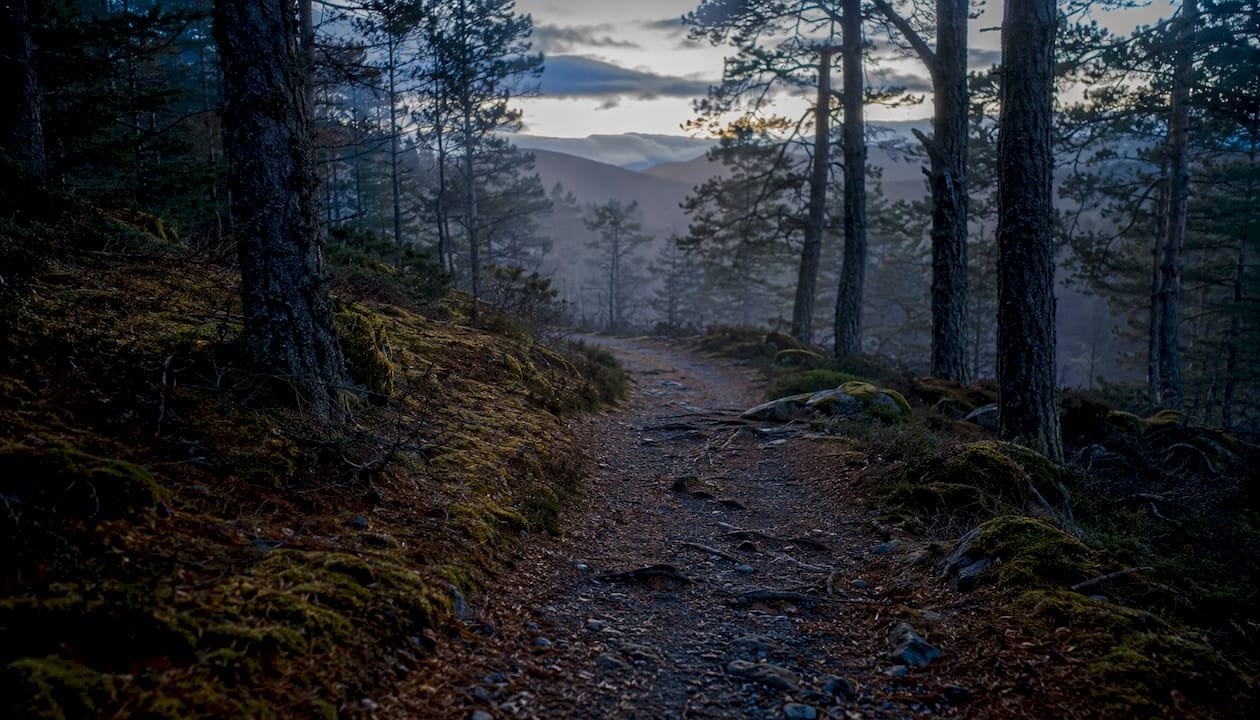
The Munros here, Mam Sodhail (1,181 metres) and Càrn Eige (1,183 metres), are the highest peaks in the northern Highlands outside Ben Nevis. The glen lies 40 kilometres from Inverness, and the road ends at the second car park by the River Affric. Beyond that point, travel is on foot only. The classic introduction is the Loch Affric circuit, an 11-kilometre path through pine and birch that gives close views of the high peaks. The serious undertaking is the Affric–Kintail Way, a multi-day through-route requiring an overnight at Alltbeithe Youth Hostel, the most remote hostel in Britain.
Glen Lyon
Glen Lyon runs west from Fortingall for 56 kilometres, making it the longest enclosed glen in Scotland. The lower glen is green and agricultural, with the River Lyon winding through flood meadows. The middle section tightens around Bridge of Balgie, and the upper glen becomes moorland, reservoir, and high deer forest. This diversity of landscape within a single valley is unusual even by Highland standards.
The archaeological density here is remarkable. Ring forts at Fortingall, an Iron Age dùn on the south side, carved stones in the old churchyard, and the Fortingall Yew, dated by tree-ring analysis to between 2,000 and 5,000 years old and considered one of the oldest trees in Europe, all sit within the glen’s length. The Munros on the north side, Stuchd an Lochain and Meall Buidhe, are rarely busy. Ben Lawers (1,214 metres), the highest Munro in the southern Highlands, is technically accessed from the south via the A827, but the Lyon gives access to its quieter flanks.
Glen Feshie
Glen Feshie, deep within the Cairngorms National Park, has become the most-cited example of rewilding in Scotland. The River Feshie is unusually dynamic, frequently reshaping its course and creating braided channels across the floodplain rather than running in a fixed line. Reduced grazing pressure has allowed young native trees to regenerate naturally, and the ancient Caledonian pine forest here is recovering without large-scale planting. Sgòr Gaoith and Mullach Clach a’ Bhlàir are the Munros above the valley floor, both rewarding experienced walkers with panoramas across the Cairngorm plateau.
Wildlife in the glen includes red squirrels, roe deer, mountain hares, ptarmigan, and red grouse. The lower glen has wide estate tracks suitable for most fitness levels, following the river through open woodland. Remnants of old shielings and stone structures hint at the communities who once relied on seasonal grazing here.
Glen Strathfarrar
Glen Strathfarrar sits a couple of glens north of Glen Affric and shares something of its character: ancient pinewoods, a long loch, and a sense of genuine remoteness. Access is controlled by a locked gate at the foot of the glen, which limits visitor numbers and has helped preserve the pinewood in excellent condition. The glen is less visited than Affric precisely because of this barrier, which makes it worth the minor inconvenience of checking gate opening times before you go.
Glen Torridon
Torridon is built on some of the oldest rock in Britain, Torridonian sandstone laid down around 750 million years ago. The great peaks on the north side of the glen, Beinn Eighe, Liathach, and Beinn Alligin, give the area its reputation, but the glen itself has a grandeur that rivals Glen Coe. Pinewood remnants survive near the sea loch at the lower end, and the National Nature Reserve status of Beinn Eighe, the first in Britain, reflects the ecological importance of the area.
Glen Garry
Glen Garry runs south from the A87 between Invergarry and Kyle of Lochalsh, following Loch Garry and Loch Quoich deep into the hills. The forested lower slopes give way to open deer forest higher up. It is accessible by road and offers straightforward walking without the crowds of Glen Coe or Glen Nevis.
Glen Orchy
Glen Orchy follows the River Orchy south from Bridge of Orchy towards Dalmally in Argyll. The river drops through a series of falls and gorges that are among the most photogenic in the Highlands, particularly after heavy rain. The glen is compact and accessible, making it a good choice for visitors with limited time who want genuine Highland scenery without a long drive into remote country.
Glen Etive
Glen Etive runs south from the head of Glen Coe, following a long single-track road with no through-route to the sea loch of Loch Etive. The road passes below Buachaille Etive Mòr (1,022 metres), one of the most photographed mountains in Scotland. The glen was used as a filming location for the James Bond film Skyfall, and the combination of mountain, loch, and river scenery makes it one of the most rewarding drives in the Highlands. Wild camping along the river has become popular, though this has brought pressure on the landscape in recent years.
Glen Clova
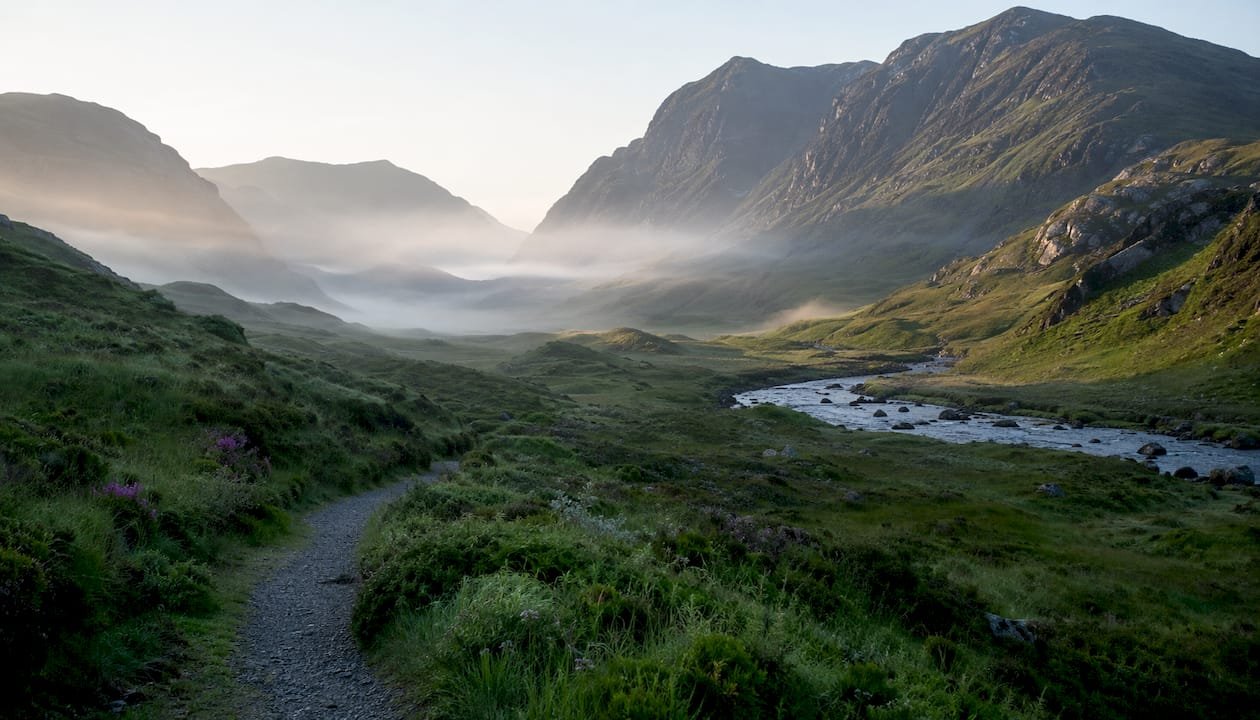
Glen Clova is the best known of the Angus Glens, a group of valleys that cut north into the hills from the lowlands of Angus. The Munros Mayar (928 metres) and Driesh (947 metres) sit above the glen, and the corrie lochs of Loch Brandy and Loch Wharral on the eastern flanks are worth seeking out. The glen has a different character from the western Highlands: greener, more enclosed, and less dramatic in scale, but with a quiet beauty that rewards those who take the time.
Glen Derry
Glen Derry begins at Derry Lodge in the Cairngorms and leads through a magnificent remnant of ancient pinewoods to a wild upper glen, with its source at Loch Etchachan, the highest-altitude lake of any significant size in the UK. The National Trust for Scotland’s custodianship of the glen is gradually allowing the pinewoods to regenerate, healing deforestation that stripped much of the Cairngorms over centuries. The glen forms a natural approach route to several high Cairngorm peaks.
Gleann Mor, Alladale
Gleann Mor is a branch heading south from Glen Alladale in Sutherland, and few visitors have heard of it. The natural birch woods here, both planted and regenerating, have recovered through a combination of deer fencing and reduced grazing pressure on the estate. The result is a glen of unusual beauty, with young woodland softening a landscape that would otherwise be bare moorland. It is one of the better examples of what the Highlands might look like with sustained ecological management.
Glen Nevis
Glen Nevis runs from Fort William to the foot of Ben Nevis (1,345 metres), the highest mountain in the UK, making it the most visited glen in Scotland by some margin. The lower glen is broad and pastoral, but the upper glen narrows into a spectacular gorge with the Steall Falls, a 120-metre waterfall, at its head. The gorge walk is one of the finest short walks in the Highlands, accessible to most walkers and requiring no specialist equipment beyond good footwear.
Glen Quoich
Glen Quoich, in the Cairngorms, shares much of Glen Derry’s character. It has its own beautiful pinewood and serves as the main approach to Beinn a’ Bhuird, one of the great Cairngorm plateaux. A bulldozed track that once scarred the ridge has been carefully restored by the National Trust for Scotland, and the wild landscape here has largely recovered. The glen rewards walkers who are happy to cover long distances on foot without dramatic mountain scenery immediately on either side.
Glen Sligachan
Glen Sligachan on the Isle of Skye is bordered on the west by the Black Cuillin, the most technically demanding mountain range in Britain, and on the east by the Red Hills and Marsco. The Skye Trail, a long-distance walking route, passes through the glen from Sligachan to Camasunary en route to Elgol. The combination of gabbro peaks, open moorland, and the River Sligachan running through the middle gives the glen a raw, elemental quality that is unlike anything on the Scottish mainland.
Strathdearn
Strathdearn follows the upper River Findhorn through the Monadhliath mountains. Despite the name, the upper section is a true glen rather than a broad strath, and it is perhaps more often visited by birdwatchers than walkers. Golden eagles, peregrines, and buzzards are regular enough that local guides have nicknamed it “Raptor Alley.” The lower half has a narrow road; the upper half is accessible only on foot.
Strontian Glen
Strontian Glen in Ardgour is defined by the ancient oakwoods of Ariundle in its middle reaches, one of the finest Atlantic oakwood remnants in the Highlands. Higher up the glen are the remains of the Strontian lead mines, which gave the element strontium its name when the mineral strontianite was first identified here in 1790. The great peak of Sgurr Dhomhnuill towers above the upper glen.
Glen Tilt
Glen Tilt runs far into the mountains of the Mounth from Blair Atholl in Perthshire. There is no public road up the glen, but good tracks allow rapid progress into wild country. The Falls of Tarf, deep in the upper glen, repay the effort needed to reach them. Glen Tilt also serves as a through-route to Glen Geldie, enabling backpackers to reach the Linn of Dee, Glen Feshie, or even the Lairig Ghru on extended trips.
How do these glens compare for scenery, wildlife, and access?
The eighteen glens covered here differ considerably in what they offer and how easy they are to reach. This overview covers the four dimensions most useful for planning.
| Glen | Scenic features | Wildlife and ecological significance | Accessibility and visitor facilities | Notable landmarks or historical importance |
|---|---|---|---|---|
| Glen Coe | Volcanic rock faces, U-shaped valley, Three Sisters, Aonach Eagach | Upland birds, NTS-managed habitat | A82 road, visitor centre, footpaths, car parks | 1692 Massacre, supervolcano caldera, Skyfall filming |
| Glen Affric | Ancient pinewoods, Loch Affric, high Munros | Caledonian pine regeneration, red squirrels, otters | Road ends at car park; foot access only beyond | Affric–Kintail Way, Alltbeithe Hostel, cleared villages |
| Glen Lyon | Broad agricultural valley to tight moorland defile | Upland birds, ancient woodland fragments | Single-track road, no through-route, unsuitable for motorhomes beyond Bridge of Balgie | Fortingall Yew, Iron Age forts, longest enclosed glen |
| Glen Feshie | Braided river, open woodland, Cairngorm plateau | Rewilding flagship, red squirrels, mountain hares, ptarmigan | Estate tracks in lower glen, Munros above | Rewilding project, old shielings |
| Glen Strathfarrar | Long loch, ancient pinewoods | Well-preserved pinewood, limited visitor pressure | Locked gate limits access; check opening times | Remote, rarely visited |
| Glen Torridon | Ancient Torridonian sandstone, dramatic peaks | Beinn Eighe National Nature Reserve, first NNR in Britain | Road through glen, NTS ranger service | Oldest rock in Britain, Liathach, Beinn Eighe |
| Glen Nevis | Gorge, Steall Falls, pastoral lower glen | Upland habitats below Ben Nevis | Road to upper car park, well-maintained paths | Ben Nevis (1,345m), Steall Falls (120m) |
| Glen Etive | Mountain and loch scenery, Buachaille Etive Mòr | Open moorland, red deer | Single-track road, no through-route | Skyfall filming location |
| Glen Sligachan | Black Cuillin, Red Hills, open moorland | Upland birds, red deer | Road to Sligachan Hotel, Skye Trail path | Cuillin ridge, Skye Trail |
| Glen Clova | Corrie lochs, green enclosed valley | Upland flora, corrie loch habitats | Road to glen head, hotel and hostel | Munros Mayar and Driesh, Angus Glens character |
| Glen Derry | Ancient pinewoods, remote upper glen | Pinewood regeneration, NTS custodianship | Long walk-in from Linn of Dee | Loch Etchachan (UK’s highest sizeable lake) |
| Gleann Mor, Alladale | Regenerating birchwood, remote moorland | Birchwood recovery, reduced deer grazing | Remote, estate access only | Rewilding estate, rarely visited |
| Glen Quoich | Pinewood, open hill | Restored landscape, NTS work | Walk-in from Linn of Dee | Beinn a’ Bhuird approach, restored track |
| Strathdearn | River Findhorn corridor, Monadhliath hills | Golden eagles, peregrines, buzzards | Narrow road in lower glen, foot only above | “Raptor Alley” birdwatching |
| Strontian Glen | Atlantic oakwood, mine remains | Ariundle oakwood, Atlantic woodland species | Road to Ariundle, waymarked paths | Strontianite discovery, element strontium named here |
| Glen Tilt | Remote mountain corridor, Falls of Tarf | Upland habitats, red deer | No public road; tracks from Blair Atholl | Falls of Tarf, backpacker through-route |
| Glen Garry | Forested loch shores, open deer forest | Red deer, woodland birds | A87 access, loch-side road | Loch Quoich, accessible from main road |
| Glen Orchy | River gorges, waterfalls | Riparian habitats, salmon river | B8074 road, short walks | Falls of Orchy, compact and accessible |
The glens split broadly into three tiers for accessibility. Glen Coe, Glen Nevis, and Glen Orchy are the easiest: main roads, visitor facilities, and well-marked paths. Glen Affric, Glen Feshie, Glen Clova, and Glen Torridon require a drive to a car park and then a walk, but the infrastructure is there. Glen Tilt, Glen Derry, Glen Quoich, and Gleann Mor demand real commitment: long walk-ins, no facilities, and in some cases restricted access.
How to plan your visit to the Highland glens
Getting to the right glen for your interests and fitness level takes a little preparation, but the planning is straightforward once you know what each glen demands.
Access routes and transport
- Glen Coe and Glen Etive are reached via the A82 from Glasgow or Fort William; Glen Coe is on the main road north, making it the most accessible of all.
- Glen Affric requires the A831 from Cannich, then a single-track road to the car parks; the glen is 40 kilometres from Inverness.
- Glen Lyon is reached from Aberfeldy or Killin; the road is single-track throughout and becomes very narrow beyond Bridge of Balgie.
- Glen Nevis is signposted from Fort William town centre and has a road to the upper car park.
- Glen Sligachan is accessed from the A87 on Skye, with parking at the Sligachan Hotel.
- Glen Tilt has no public road; the approach is on foot or by bicycle from Blair Atholl.
- Glen Derry and Glen Quoich are reached via the Linn of Dee road from Braemar, then a long walk-in.
- Strathdearn follows the B851 south from Daviot near Inverness into the Monadhliath.
Vehicle considerations
Motorhomes and large vehicles are unsuitable for Glen Lyon beyond the lower section, Glen Strathfarrar, and Glen Etive. Single-track roads with limited passing places require patience and awareness of oncoming traffic. Many glens have no through-route, so you will return the same way you came.
Duration and key activities
- A half-day covers the Glen Coe visitor centre, a short walk, and the Three Sisters viewpoint from the road.
- A full day allows the Loch Affric circuit (11 kilometres) or the Glen Nevis gorge walk with time to spare.
- Glen Lyon deserves a full day just for the drive and the Fortingall Yew; add a Munro and you need two.
- Glen Tilt and the Affric–Kintail Way are multi-day routes requiring overnight accommodation at bothies or remote hostels.
Essential gear for remote glens
- Waterproof jacket and trousers: Highland weather changes within the hour.
- Boots with ankle support: estate tracks are often stony and wet.
- Map and compass or a downloaded OS map: mobile signal is absent in most upper glens.
- Midge repellent from late May to August, particularly in Glen Affric and Glen Nevis.
- Food and water for full-day walks; there are no shops beyond the lower glen in most cases.
Visitor facilities
Glen Coe has the most developed infrastructure: an eco-friendly visitor centre, car parks, a café, and the village of Glencoe nearby. Glen Nevis has a visitor centre in Fort William and a campsite at the glen head. Glen Clova has a hotel and a small hostel. Most other glens have car parks and little else; Glen Tilt and Glen Derry have nothing at the trailhead.
Pro Tip: Visit Glen Strathfarrar or Gleann Mor in September or October. The birch and rowan colour is at its peak, the midges are gone, and you will have the glen almost entirely to yourself. These are two of the finest examples of highland glens that most visitors never reach.
For a guided approach to the Scottish Highlands that takes the logistics off your hands, Skyehighlandstours offers private tours covering many of the glens listed here, with expert local guides who know the access roads, the best viewpoints, and the seasonal conditions.
Why Highland glens matter ecologically and culturally
What is a glen, geologically speaking?
A glen is a glacially carved, steep-sided valley, distinct from a strath in that the walls are close and the floor is narrow. During the last Ice Age, glaciers moving down pre-existing river valleys eroded the rock into the characteristic U-shape visible in Glen Coe, Glen Nevis, and Glen Affric. Where a smaller tributary glacier joined a main glacier, the tributary valley was left hanging above the main floor when the ice retreated, creating hanging valleys. These elevated tributary valleys produce the waterfalls that define so many Highland glens, including the classic example at Glen Bruar.
The rocks of different glens tell very different stories. Glen Coe sits on the remnants of a Silurian supervolcano. Glen Torridon is built on Torridonian sandstone laid down around 750 million years ago, some of the oldest surface rock in Britain. Glen Feshie and the Cairngorm glens cut through granite. This geological variety is part of what makes the Highland glens collectively so striking.
Rewilding and ecological restoration
The most significant conservation story in the Highland glens over the past two decades is rewilding. Glen Feshie is the most cited example: reduced deer numbers have allowed native woodland to regenerate naturally, and the River Feshie has been allowed to reshape its own floodplain rather than being constrained by estate management. The result is a recovering Caledonian pine forest and a river corridor that looks genuinely wild.
Glen Derry and Glen Quoich tell a similar story under National Trust for Scotland management. The ancient pinewoods in both glens are slowly recovering from centuries of deforestation, with the custodianship of the NTS providing the long-term commitment that private ownership rarely sustains. Gleann Mor at Alladale has seen birchwood recovery through deer fencing and reduced grazing, demonstrating that even heavily degraded glens can recover given the right conditions.
Cultural heritage and clan history
Glen Coe carries the heaviest historical weight of any glen in Scotland. The 1692 massacre, in which government troops billeted with the MacDonalds killed 38 of their hosts, remains one of the most notorious episodes in Scottish history. The cultural significance of the glen extends beyond the massacre: the Coire Gabhail, the “hidden valley” on the south side, was used by the MacDonalds to conceal cattle, and the landscape itself shaped the clan’s way of life for centuries.
Glen Lyon’s archaeological record is exceptional. The Fortingall Yew, the Iron Age dùn, the ring forts, and the carved churchyard stones together represent an unbroken thread of human occupation stretching back several thousand years. Strontian Glen has a different kind of historical significance: the lead mines here produced the mineral strontianite, from which the element strontium was identified and named in 1790. Glen Tilt was the site of a famous access dispute in 1847, when the Duke of Atholl attempted to block geologist James Forbes and a party of walkers, a case that contributed to the eventual establishment of the right to roam in Scotland.
Biodiversity in the glens
The wildlife in Highland glens is shaped by altitude, aspect, and the degree of woodland cover. Glens with surviving or recovering native woodland, Glen Affric, Glen Feshie, Glen Derry, and Strontian Glen, support red squirrels, pine martens, crossbills, and crested tits. Open moorland glens like Strathdearn and the upper sections of Glen Tilt hold golden eagles, peregrines, and red grouse. Riparian habitats along rivers like the Orchy and the Feshie support otters, dippers, and goosanders. The corrie lochs of Glen Clova hold upland plant communities found almost nowhere else in Britain.
The National Trust for Scotland maintains extensive footpath networks in the glens it manages, with the dual purpose of protecting fragile ecosystems from erosion and giving visitors access that does not damage the ground. Walking the trails rather than driving through is not just a conservation preference; it is the only way to actually see the glens properly.
FAQ
What are some famous glens in Scotland?
The most famous Scottish glens are Glen Coe, Glen Affric, Glen Nevis, Glen Lyon, and Glen Torridon. Glen Coe is the best known, celebrated for its dramatic volcanic scenery, the 1692 massacre, and its appearance in films including Skyfall and Harry Potter.
What is considered a glen in Scotland?
A glen is a steep-sided valley carved by glaciers, derived from the Scottish Gaelic word for valley. It differs from a strath, which is a broader, flatter valley; most Highland glens were formed during the last Ice Age.
Is Glasgow a Highland or Lowland city?
Glasgow is a Lowland city, situated in the Central Belt of Scotland well south of the Highland Boundary Fault. The Highlands begin roughly north and west of a line running from Helensburgh on the Firth of Clyde to Stonehaven on the east coast.
What are the Scottish Glens?
The Scottish Glens are the glacially carved valleys that run through the Highlands and parts of the Southern Uplands. The Highland glens are the most dramatic, including examples such as Glen Coe, Glen Affric, Glen Feshie, and Glen Sligachan, each with distinct scenery, wildlife, and historical character.
How do you get to remote glens like Glen Tilt or Glen Derry?
Glen Tilt is accessed on foot or by bicycle from Blair Atholl in Perthshire; there is no public road up the glen. Glen Derry is reached via the Linn of Dee road from Braemar, followed by a long walk-in on estate tracks. Both require a full day and proper hill-walking equipment.
Key takeaways
Scotland’s Highland glens are glacially carved steep-sided valleys, and the finest examples span the full range from accessible road-side spectacles like Glen Coe to remote rewilding corridors like Glen Feshie and Glen Tilt.
| Point | Details |
|---|---|
| Glen definition | A glen is a steep-sided, glacially carved valley, distinct from a broader strath. |
| Most famous glen | Glen Coe is the best-known Highland glen, managed by the National Trust for Scotland since 1935. |
| Longest enclosed glen | Glen Lyon runs for 56 kilometres, making it the longest enclosed glen in Scotland. |
| Rewilding leader | Glen Feshie in the Cairngorms is Scotland’s most prominent rewilding site, with recovering native woodland and a dynamic braided river. |
| Access planning | Many glens have single-track roads unsuitable for large vehicles, and several, including Glen Tilt and Glen Derry, require long walk-ins with no public road access. |
Ready to see these glens in person? Skyehighlandstours offers private guided Highland tours covering Glen Coe, Glen Affric, Glen Nevis, and beyond, with expert local guides who handle the route planning so you can focus on the scenery. Whether you want a single full-day excursion or a custom multi-day itinerary, the team tailors every trip to your group’s pace and interests.
4 Comments