
Your cart is empty Continue Shopping
Castle dinner experiences: real examples and how each one differs
Castle dinner experiences are meals held inside working or historic castles, ranging from costumed medieval banquets with mead and minstrels to quiet, seasonal tasting menus in a converted Great Hall. What separates them from a normal restaurant booking is the setting itself, stone walls, centuries of provenance, and often a script or ritual built around the food. The main choice you’ll face is entertainment versus cuisine: do you want spectacle and audience participation, or careful, chef-led cooking in a dramatic room, as described in this traveler’s guide to culinary experiences? Four examples show the range: Bunratty Castle’s four-course medieval feast with costumed performers; Warwick Castle’s ticketed themed dining nights; Langley Castle’s weekend tasting menu in a restored medieval hall; and Glenapp Castle’s fixed-price afternoon tea built around local produce.
Medieval banquet (Bunratty): mead, hand-eating, live music, a long-running event since 1963 with millions of guests served
Themed event night (Warwick Castle): family-facing ticketed evenings tied to a seasonal calendar
Fine-dining castle restaurant (Langley Castle): a weekend-only tasting menu ordered by the whole table
Afternoon tea / light dining (Glenapp Castle): seasonal, locally sourced set menus at a published price
Key Takeaways
The best castle dinner experience depends on whether you want performance-led atmosphere or food-led quality, not on which venue has the most history.
| Point | Details |
|---|---|
| Two main categories exist | Choose between entertainment-led banquets (Bunratty, Knappogue, Warwick) and food-led fine-dining (Langley, Glenapp). |
| Ritual drives immersion | Toasts, costumed welcomes, and ceremonies matter more to atmosphere than the menu itself. |
| Booking rules vary by venue | Some tasting menus require whole-table orders; some banquets need minimum guest numbers. |
| Accessibility needs checking early | Historic halls can have step access or uneven floors, confirm before booking. |
| Skye Highlands Tours simplifies logistics | A private guide can coordinate timing, transport, and menu choices around a castle dinner booking. |
Table of Contents
- Examples of castle dinner experiences by type
- Notable castle dinner examples worth booking
- What actually happens on the night
- Choosing between a banquet and a fine-dining night
- Booking tips and what castle dinners tend to cost
- Why the ritual matters more than the menu
- Sources
- FAQ
Examples of castle dinner experiences by type
Not every castle dinner is built the same way, and knowing the category helps before you start comparing venues. Five formats cover almost everything on offer across the UK and Europe.
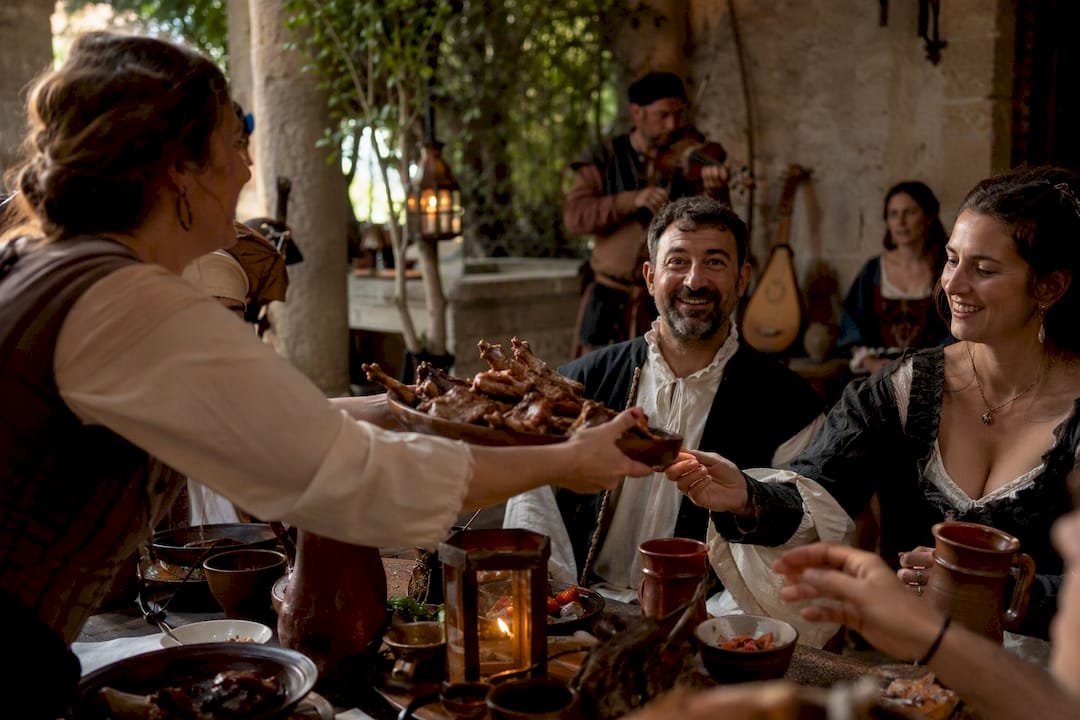
A medieval banquet puts you at long shared tables in a Great Hall, usually with costumed hosts, mead on arrival, and a menu designed to feel period-appropriate rather than seasonal-modern. Themed banquets or shows borrow the same communal setup but attach a specific story, a fantasy theme, a Tudor court, a Christmas spectacle, with more scripted performance and audience interaction. Murder mystery or immersive theatre dinners turn the meal into a plot: guests are given roles or clues, and the courses are paced around a live investigation rather than a kitchen’s timing. Private fine-dining strips the theatre away entirely; you get a chef’s tasting menu, careful service, and a room booked for you or your party. Afternoon tea or light castle dining is the low-commitment entry point, a couple of hours, a fixed-price set menu, and none of the costume or scripted ceremony.
Banquets and themed nights: high atmosphere, open ticketed dates, communal tables, moderate dietary flexibility
Murder mystery dinners: strong entertainment focus, smaller group sizes, advance booking usually required
Fine-dining and private hire: quietest atmosphere, best for dietary customisation, typically pricier per head
Afternoon tea: shortest duration, most family-friendly, easiest to book last-minute
Mobility matters more than people expect. Great Halls are often original stone rooms with uneven floors or step access, so it’s worth checking before assuming easy wheelchair access. If you’re weighing a castle dinner against other cultural stops on a trip, it helps to see how they slot into a wider day out; a guide to cultural experiences in Scotland covers how historic dining fits alongside sightseeing.
Notable castle dinner examples worth booking
A handful of venues across the UK, Ireland, and continental Europe show just how differently “castle dinner” can be interpreted.
Leeds Castle, Kent, runs a mix of formats rather than sticking to one, its dining and hire pages list themed nights, murder mystery evenings, and private fine-dine-and-stay packages, so it suits readers who want options under one roof.
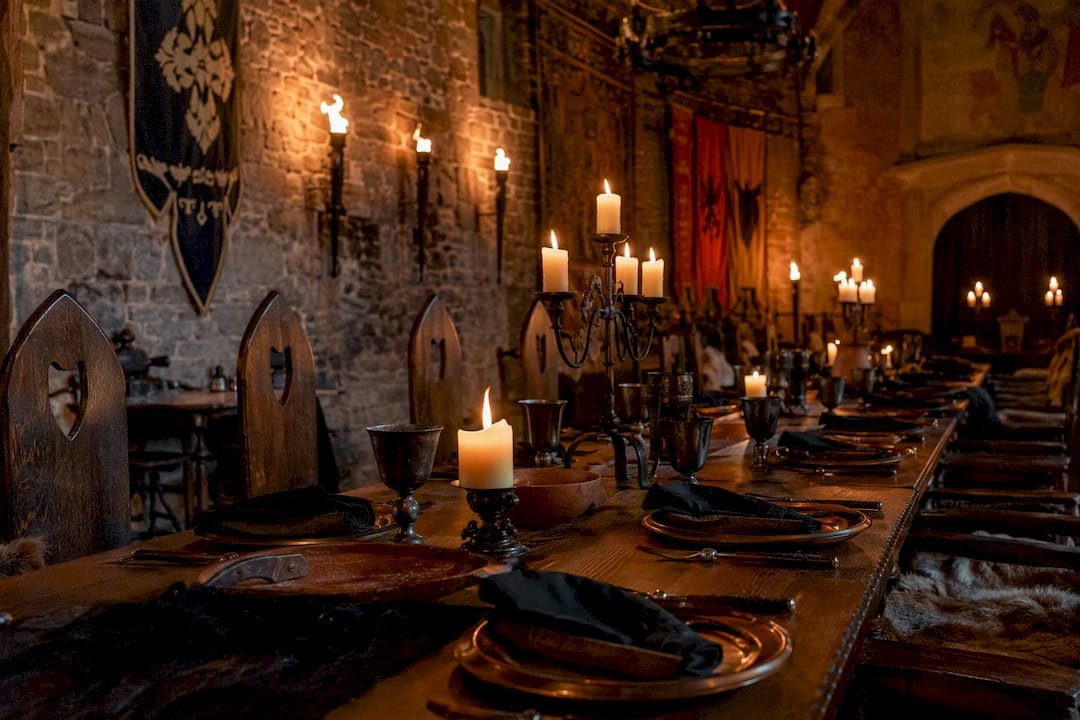
Warwick Castle leans into family-facing spectacle. Its themed dining events are ticketed alongside the castle’s other attractions, which makes it a strong pick if you’re combining a dinner with a full day of sightseeing rather than a standalone evening out.
Glenapp Castle, Ayrshire, sits at the opposite end of the spectrum. It publishes sample three-course and six-course menus built around local sea bream, duck, and Loch Duart salmon, plus a fixed-price afternoon tea, food-led, quiet, and seasonal rather than theatrical.
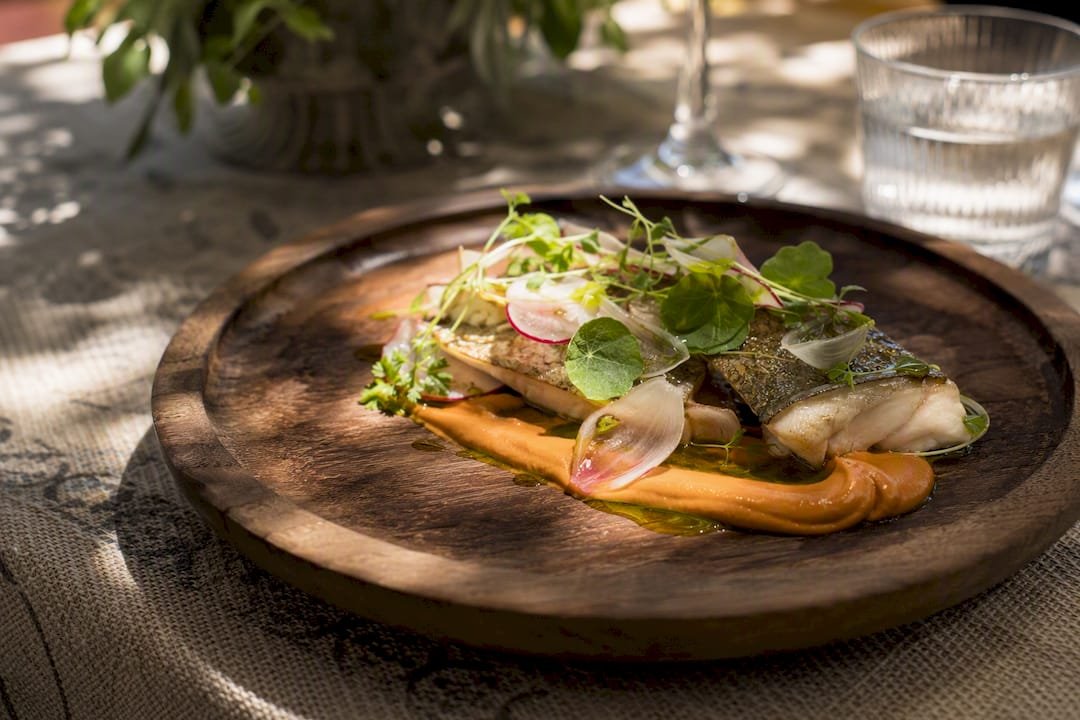
Langley Castle, Northumberland, offers an award-winning restaurant in a restored medieval building. Its tasting menu only runs Friday to Sunday evenings and must be ordered by the whole table, a booking quirk worth knowing before you call.
Beyond the UK, three continental examples fill out the picture:
- Bunratty Castle, Ireland: nightly medieval banquet since 1963, spiced parsnip soup, spare ribs in honey-and-whiskey sauce, and a Bramley apple dessert served with mead (a long-established event)
- Knappogue Castle, Ireland: banquet in the Dalcassian Hall with harp and choral music and a signature Rastin dessert
- Reichsburg Cochem, Germany: a Knight’s Meal that pairs a guided castle tour with a hands-on medieval feast, including a ceremonial knighting
What actually happens on the night
Most banquet-style evenings follow a similar shape: arrival and a welcome drink, a costumed introduction or short show, three to four courses served over roughly two to three hours, and a musical or ceremonial finale. Fine-dining nights are looser, arrive, be seated, work through a tasting menu at the kitchen’s pace.
Entertainment sets the rhythm more than the food does. Expect live music, storytellers, and sometimes a mock knighting or crowning ceremony that pulls guests into the performance rather than letting them watch passively.
- Dress code ranges from suggested period costume at banquet nights to smart casual at restaurants like Langley or Glenapp
- Family-friendliness varies; themed nights at venues like Warwick Castle are built for children, while some evening tasting menus are adults-only in practice
- Allergy handling is usually fine if flagged at booking, but ask specifically rather than assuming a set banquet menu can flex easily
- Wheelchair access can be limited in original stone halls; always confirm before booking rather than on arrival
Pro Tip: Some medieval-style banquets serve food on wooden platters and encourage eating with your hands as part of the period theming, which is charming for one evening but worth knowing in advance if you’d rather use cutlery.
Choosing between a banquet and a fine-dining night
If you want spectacle, shared tables, and a social buzz, book an entertainment-led banquet. If you want quiet, a proper tasting menu, and a table to yourselves, book private fine-dining or a small-group hire instead.
- Decide your party’s real priority: fun and noise, or food and conversation
- Check group size against the venue’s format, banquets suit larger parties, private dining suits couples or small groups
- Flag dietary needs early, fine-dining kitchens flex more easily than set banquet menus
- Gauge your tolerance for audience participation, some guests love being pulled into the show, others don’t
- Set a budget band, ticketed banquets are usually cheaper per head than a chef’s tasting menu
Hosts running both formats report the same trade-off consistently: banquets win on atmosphere and communal energy, fine-dining wins on food quality, pacing, and privacy. Neither is objectively better, it depends what the evening is actually for.
Booking tips and what castle dinners tend to cost
Themed banquets usually run on fixed weekly or seasonal dates, so early booking matters if you want a specific weekend. Fine-dining tasting menus, like Langley Castle’s, are often restricted to certain days, in that case, Friday to Sunday evenings only, and booked further ahead as tables fill.
Price cues vary by format rather than by country: banquet tickets tend to sit at a fixed per-person rate, tasting menus and afternoon tea are typically priced per head with fixed courses, and private hire is quoted separately. Some continental venues, including Castillo de Almodóvar’s medieval dinners, require a minimum guest count, sometimes 150 to 200 people, and will reschedule or refund if that threshold isn’t met.
- Ask whether tasting menus require the whole table to order the same option
- Confirm deposit and cancellation terms before paying
- Check minimum group numbers for banquet-style events
- Flag dietary restrictions and mobility needs at the time of booking, not on arrival
Why the ritual matters more than the menu
The detail that separates a memorable castle dinner from an average one usually isn’t the food itself, it’s the ritual around it. A welcome toast, a scripted introduction from a costumed host, a knighting ceremony partway through the meal, these moments are what make a banquet feel immersive rather than just a big dinner in an old room.
That’s the trade-off worth understanding before you book: high-energy themed nights deliver atmosphere and shared memory, while quieter private dining rewards you with better-paced food and more attentive service. Neither format does both well at once.
The welcome toast, the storytelling, the small ceremonies built into a banquet evening often do more to create atmosphere than the food itself, food alone rarely makes a castle dinner memorable; the ritual around it usually does.
A local guide’s view on getting the timing right
Booking a castle dinner around a busy sightseeing day is trickier than it looks, transport, timing, and limited availability all collide. A guide who knows the region can build the evening into your itinerary properly, suggest menu choices worth prioritising, and coordinate transfers so you’re not rushing from a loch-side stop straight into formal dining.
Let a private tour handle the logistics
Skye Highlands Tours plans exactly this kind of detail for special occasions in Scotland, working out timing, transport, and private access so a castle dinner fits naturally into a day of sightseeing rather than competing with it.
A birthday trip, for instance, might combine a Speyside distillery stop with an evening whisky tour built around a castle dinner featuring local spirit pairings, planned as one seamless day rather than two separate bookings. If you’re weighing up a special-occasion itinerary that includes a castle dinner, start with our guide to arranging special occasion tours and get a plan built around your dates.
Sources
- Best Medieval Banquet Ireland | Bunratty Medieval Banquet | Bunratty Castle & Folk Park
- Medieval Banquet Clare | Castle Events Ireland | Knappogue Castle
- Award Winning Restaurant LANGLEY CASTLE HOTEL
- Dining at Glenapp Castle
FAQ
What kind of food can I eat at Leeds Castle?
Leeds Castle’s dining pages list a mix of formats, themed banquet menus for event nights and more conventional fine-dining courses for private hire and stay packages, so the food style depends on which event you book.
What were medieval castles like inside for dining?
Historic castle halls centred on one large communal room, the Great Hall, where meals were served on long shared tables, often eaten by hand off wooden platters, a style several modern medieval banquets, including Bunratty’s, deliberately recreate today.
How long does a typical castle banquet last?
Most medieval banquet evenings run two to three hours, covering a welcome drink, several courses, and a musical or ceremonial finale.
Do I need to book a whole table for a castle tasting menu?
At some venues, yes, Langley Castle requires its weekend tasting menu to be ordered by the entire table rather than individual guests.
Can Skye Highlands Tours help arrange a castle dinner as part of a trip?
Yes, a private guide can plan timing, transport, and menu suggestions around a castle dinner booking so it fits naturally into a wider Scottish itinerary.
Recommended
- Private tours: The personalized Scottish Highlands experience – Skye Highlands Tours
- Experience Scotland food: Highland flavors & culinary traditions – Skye Highlands Tours
- Why book a birthday tour: the case for experience over parties – Skye Highlands Tours
- Why personalized Highland tours create lasting memories – Skye Highlands Tours