
Your cart is empty Continue Shopping

The best Glenfinnan Viaduct viewpoint and how to reach it fast
The upper hillside viewpoint is where you want to stand for the classic full-curve shot of the Glenfinnan Viaduct, the one with all 21 arches sweeping through the glen towards Loch Shiel. It sits above the National Trust for Scotland car park, a short climb up a signed path from the road.
Two routes get you there. Drive along the A830 and turn into the NTS visitor centre car park, then walk up. Or take the train to Glenfinnan station, from where the same viewpoint is a walk of similar length in the opposite direction. Either way, give yourself more time than feels necessary.
- Best spot: upper hillside viewpoint, reached from the NTS car park or Glenfinnan station
- Fastest by car: A830 to the NTS car park, then a signed climb of roughly 10–20 minutes
- Fastest by train: alight at Glenfinnan station and walk towards the viaduct on the marked path
- Timing rule: arrive with a solid buffer before any scheduled crossing (more on this below)
Key Takeaways
The upper hillside viewpoint delivers the classic full-curve photograph, but reaching it in time for the train depends far more on parking and buffer time than on the walk itself.
| Point | Details |
|---|---|
| Best viewpoint | The upper hillside viewpoint, a 10 to 20 minute climb from the NTS car park, gives the full 21 arch curve. |
| Parking realities | NTS car park costs around £5 (free for members) and fills fast in peak season; roadside parking risks towing. |
| Walk options | Lower viewpoint is a flat 15 minute walk, the car park view is fully accessible, the upper path is not. |
| Verify before travel | Jacobite timetables are seasonal and published by West Coast Railways; always check before setting off. |
| Guided alternative | Skyehighlandstours offers private tours that handle parking, timing and viewpoint choice for a stress-free visit. |
Where to check before you travel
Check NTS for facilities, West Coast Railways for timetables, and the Met Office for weather.
Table of Contents
- How to get to the Glenfinnan Viaduct viewpoint
- Where can you park for the Glenfinnan Viaduct?
- Which Glenfinnan Viaduct viewpoints should you walk to?
- How do you photograph the Jacobite steam train at Glenfinnan?
- What time does the train cross the Glenfinnan Viaduct?
- Are the Glenfinnan Viaduct viewpoints accessible?
- What should you avoid doing at the Glenfinnan Viaduct?
- What visitors get wrong about visiting Glenfinnan
- Book a guided visit to the Glenfinnan Viaduct
- Sources
- FAQ
How to get to the Glenfinnan Viaduct viewpoint
Getting to the viewpoint itself is straightforward once you know which junction to take and which platform to step off. The confusion usually starts with timing, not navigation.
- Driving via the A830. Coming from Fort William, the drive to Glenfinnan takes around 25 minutes along the A830, the main road linking Fort William to Mallaig. Watch for the NTS signage on the left as you approach the head of Loch Shiel; the turn into the visitor car park is well marked and easy to miss only if you are driving too fast to read signs, which happens more than you would think on this stretch of single-carriageway road.
- Arriving by train. ScotRail services and the seasonal Jacobite steam train both call at Glenfinnan station on the West Highland Line. From the platform, a short path leads towards the viaduct, and you can reach either the lower viewpoint or continue up towards the hillside path. If your connecting train into Glenfinnan is running late, remember you are trying to beat a fixed steam-train crossing time, not a flexible one, so build in slack rather than hoping for the best.
- Bus and shuttle options. Scottish Citylink services run along the A830 corridor and can drop passengers near Glenfinnan, though frequency is limited outside peak tourist months. Check current routes before relying on this option for a same-day return.
- Cycling in. The A830 has stretches of cycle path and quieter side roads nearby, and cycling avoids the car park entirely, useful if you have arrived in the area by another means and want to reach Glenfinnan without competing for a parking space.
Whichever route you choose, checking live timetables before you travel matters more here than at almost any other Highland attraction, because the entire point of the trip is timed around a train that passes once, twice, or not at all depending on the season and day.
Where can you park for the Glenfinnan Viaduct?
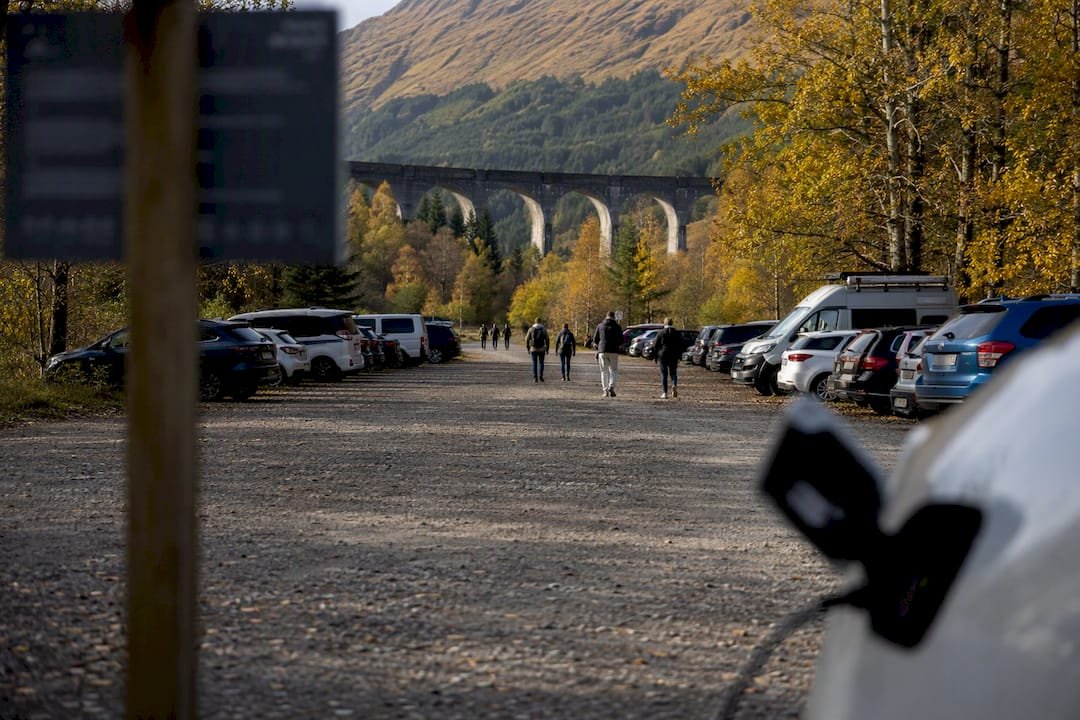
The NTS visitor car park charges around £5 for the day, and parking is free if you are a National Trust for Scotland member. It sits right next to the visitor centre, making it the obvious first choice for most visitors.
A community-run car park operates alongside it, absorbing overflow when the main site fills, which happens regularly during the Jacobite’s summer running season.
Statistic to plan around: Both car parks often reach capacity during peak crossing windows in the high season, and the National Trust for Scotland is explicit that roadside parking along the A830 is strictly monitored, with vehicles at risk of towing.
That last point catches people out every season. The verges look wide enough to pull onto, and after a long drive it is tempting. Don’t. The road is narrow, sightlines are poor, and enforcement is real, not theoretical.
- NTS visitor car park: around £5, free for NTS members, closest to the paths
- Community car park: useful overflow when the main site is full
- Disabled parking bays are available near the visitor centre, closer than the general car park
- Public transport arrival by train or bus sidesteps the parking problem entirely, and NTS actively encourages it during busy periods
If you arrive to find both car parks full, your realistic options are waiting for a space to clear, walking in from a pull-in further down the A830 (carefully, on foot only, well clear of the carriageway), or coming back on the next crossing.
Which Glenfinnan Viaduct viewpoints should you walk to?
Three distinct vantage points cover almost everyone’s needs, and choosing between them comes down to mobility, time, and what kind of photograph you actually want.
- The upper hillside viewpoint. From the NTS car park, follow the signed path uphill; NTS puts the climb at 10 to 20 minutes depending on pace, over uneven, occasionally steep ground. This is the spot for the postcard shot: all 21 arches in profile, the Glenfinnan Monument below, and Loch Shiel stretching out behind. From Glenfinnan station, the walk takes a broadly similar length of time in the other direction.
- The lower viaduct viewpoint. A flat walk of around 15 minutes from the car parks brings you close to the base of the arches. You lose the panoramic curve but gain scale and drama, especially when steam pools under the stonework. It is quieter than the upper path and easier going, which makes it a strong option with young children or if the hillside route looks like more than you fancy that day.
- The car-park viewpoint. For visitors who cannot manage either walk, there is a partial view of the viaduct from near the visitor centre itself. It is not the classic shot, but it is genuinely accessible, level ground the whole way.
For a longer outing, a circular trail links the upper viewpoint with paths around the monument and loch shore, extending the visit to two hours or more if you want to make a proper walk of it rather than a quick photo stop.
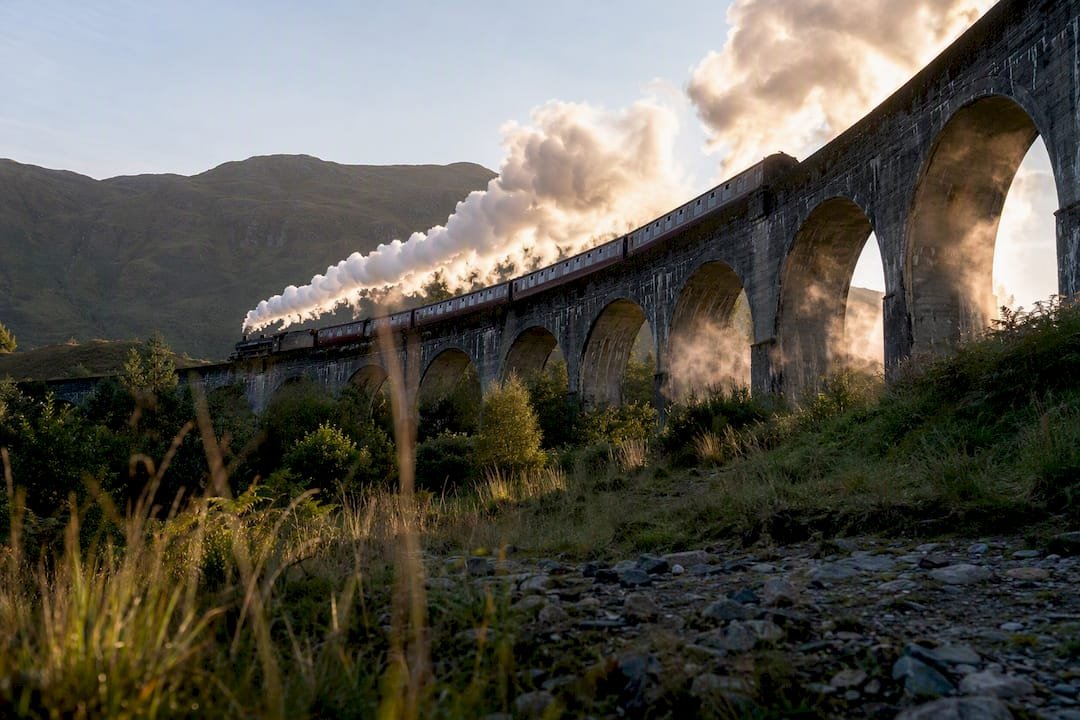
Pro Tip: If the upper path looks busy from below, the lower viewpoint often has space and gives you a genuinely different photograph, not just a consolation prize. Steam pooling under the arches at close range can outshoot the classic curve on the right day.
How do you photograph the Jacobite steam train at Glenfinnan?
The upper viewpoint rewards a telephoto lens in the 100–400mm range, which lets you fill the frame with the train against the full curve of arches without cropping in later and losing quality. A wider lens, something around 24–70mm, suits the broader landscape shot that includes the loch and monument, useful once the train has passed and you want the scenic version.
For freezing the train itself, a faster shutter speed is essential; the crossing happens quicker than it looks from a distance, and a hesitant setting produces a blurred smear instead of a crisp locomotive. Shooting in RAW gives you more room to recover shadow and highlight detail afterwards, particularly useful given how variable Highland light can be within the same afternoon.
- Set up on the upper viewpoint at least 20 minutes before the scheduled crossing to claim a clear line of sight
- A slight sideways shift of a few metres along the path often clears other visitors’ heads from your frame without you needing to ask anyone to move
- Use benches or rocky outcrops as foreground interest rather than empty grass
- If you must ask someone to shift position, do it early and politely, not as the train appears
Worth knowing: steam behaviour depends on wind direction. An easterly wind tends to push steam back across the arches for a more dramatic frame, while a westerly wind can blow it away from the viaduct almost entirely, leaving a cleaner but less atmospheric shot. There is no fixing this with camera settings, only with which side of the viewpoint you choose to shoot from.
Even on days the Jacobite runs, steam volume varies with driver technique and conditions, and ScotRail’s regular services cross year-round with no steam at all, so check which service you are actually planning around before setting expectations too high.
What time does the train cross the Glenfinnan Viaduct?
The Jacobite runs on a seasonal timetable, broadly spring through autumn, and West Coast Railways publishes the official Jacobite timetables covering running dates and scheduled times. ScotRail’s ordinary West Highland Line services cross the viaduct year-round, but without any guarantee of steam.
Times shift with the season and can change at short notice, so treat any figure you read anywhere, including here, as a starting point to verify rather than a fixed fact to build your whole day around.
The advice repeated by guides and visitor-centre staff alike is to arrive with a comfortable buffer before your intended crossing, not because the walk itself takes long, but because:
- You need time to find parking, which can take longer than expected once car parks near capacity
- The walk up to the upper viewpoint adds another chunk of time on top of that
- Prime photography positions fill early, and latecomers end up shooting over shoulders
Local guides and visitor-centre staff are often the best live source on the day, since they will know if access has changed or where the crowd is thinning out.
Are the Glenfinnan Viaduct viewpoints accessible?
The NTS visitor centre runs a seasonal café with benches nearby, and toilets are available on-site, though opening hours shift outside peak months, so don’t assume year-round access to every facility.
- The car-park viewpoint and the lower riverside path are broadly suitable for wheelchairs and pushchairs, being level or gently sloped
- The upper hillside viewpoint is not suitable for wheelchairs or standard pushchairs; the path is uneven and includes a genuine climb
- Glenfinnan Station Museum is small but worth a stop, and offers seasonal luggage storage, handy if you are travelling on afterwards without a car
What should you avoid doing at the Glenfinnan Viaduct?
Never cross or stand on the railway line or the viaduct itself; it is both illegal and genuinely dangerous, not a rule invented for effect. Keep well clear of the A830 verges, both for parking and for standing to take photographs, since sightlines are poor and traffic does not expect pedestrians there.
- Follow any stewarding or signage during busy crossing periods without arguing the point
- Keep noise and litter to a minimum; this is a working railway and a quiet glen, not a viewing gallery
- If you have claimed a good spot early, be gracious about sharing the view once the crowd builds
Pro Tip: If a steward asks you to move back from an edge or a verge, they’ve usually seen something you haven’t. Comply first, ask questions after.
What visitors get wrong about visiting Glenfinnan
Most people underestimate how much the parking search and the walk eat into their buffer before a crossing. They plan for the train time and forget everything that has to happen before they are even standing still with a camera ready.
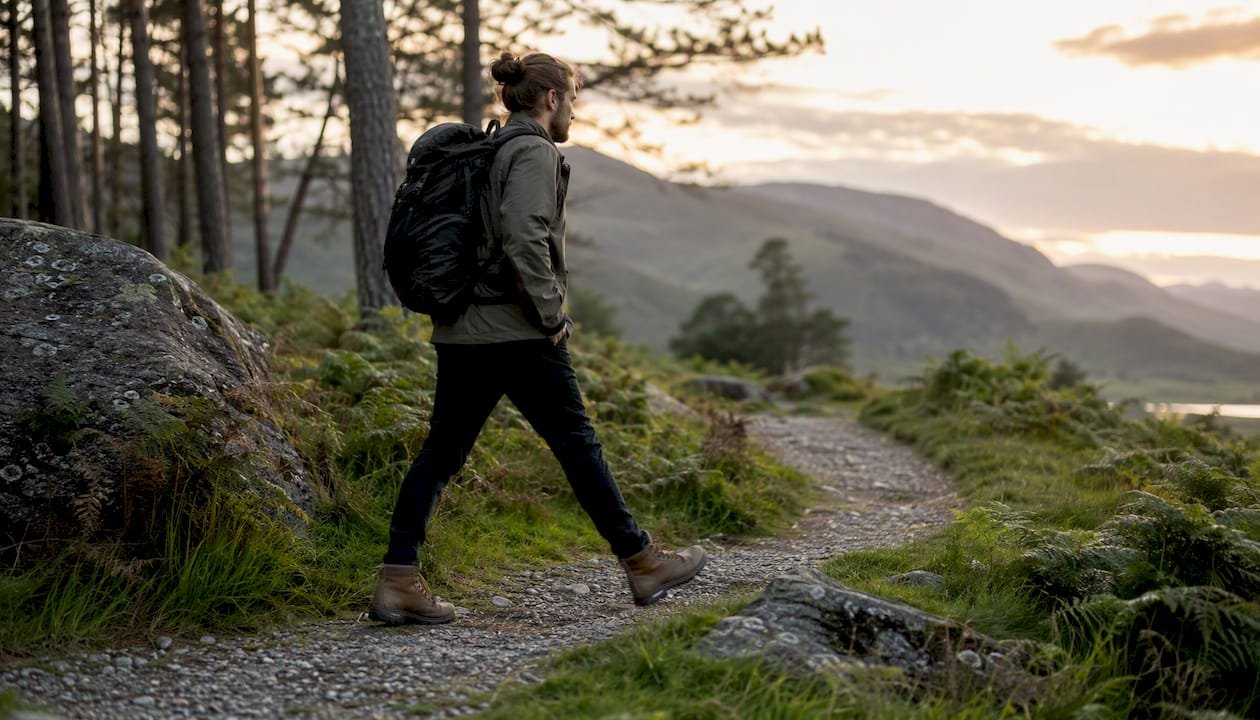
The other common mistake is picking a viewpoint based on a photograph they saw online without checking whether it matches their fitness, their group, or the weather that day. The upper viewpoint photograph everyone wants is genuinely rewarding, but it is not the only good option, and treating it as the only acceptable one leads to rushed, stressed visits.
A guide who knows the site removes most of that friction: which car park still has space, which side the wind favours today, whether the crowd has already claimed the best ground. None of that is complicated knowledge, but it saves the exact hour that turns a good visit into a frustrating one.
— Alin
Book a guided visit to the Glenfinnan Viaduct
If the timing, parking, and viewpoint choices above sound like more coordination than you want to manage on your own day out, a private guided tour handles all of it for you. Skyehighlandstours builds Glenfinnan into a wider Highland day, arriving with the crossing time already factored in, parking sorted, and your driver knowing which viewpoint suits your group before you have even stepped out of the car.

That local knowledge is the actual advantage over doing it solo: no scrambling for a space in a full car park, no guessing which side the steam will drift towards, no standing in the wrong spot while everyone with a guide walks straight to the clear line of sight. Tours can combine Glenfinnan with Mallaig or slot into a broader itinerary across the Scottish Highlands. Get in touch to check availability and build a day around the crossing time that suits you.
Sources
- National Trust for Scotland — Glenfinnan monument accessibility guide
- West Coast Railways — Jacobite timetables
- Glenfinnan Station Museum — plan your visit
- Jacobite Trail — Glenfinnan viaduct viewpoints and photography advice
FAQ
Where is the best view of the Glenfinnan Viaduct?
The upper hillside viewpoint above the NTS car park gives the classic full-curve photograph with all 21 arches, Loch Shiel, and the Glenfinnan Monument in frame.
How long is the walk from the car park to the viewpoint?
The upper viewpoint is a climb of roughly 10 to 20 minutes from the NTS car park, while the lower viewpoint is a flatter walk of about 15 minutes.
How do I get to the Glenfinnan Viaduct viewpoint?
Drive the A830 to the NTS visitor car park and walk up, or take the train to Glenfinnan station and walk towards the viaduct on the marked path; check timetables before travelling.
What time does the train cross the Glenfinnan Viaduct?
Crossing times vary by season and change at short notice, so always verify the current schedule through West Coast Railways before you travel rather than relying on a fixed time.
Can Skyehighlandstours help me time my visit around the train?
Yes, private guided tours from Skyehighlandstours build the Glenfinnan crossing into the day’s itinerary, handling parking and viewpoint choice so you arrive with time to spare.
1 Comment