Your cart is empty Continue Shopping
What is premium tourism? A guide for operators and marketers
Premium tourism is travel designed to deliver measurable, experience-led value rather than ostentation. It prioritises intentionality, local expertise, and genuine connection over conspicuous spending. For operators and marketers, the practical implication is clear: competing on price or amenity count is the wrong game. The segment that pays more per trip and books across shoulder seasons is won through relevance, trust, and frictionless execution.
Skyehighlandstours, which runs private guided tours across the Scottish Highlands, is a working example of this model in the UK market. Industry bodies such as VisitBritain and the UNWTO increasingly frame premiumisation as a destination strategy, not just a product tier, and the evidence supports that framing.

Table of Contents
- What are the defining pillars of a premium tourism product?
- How does premium tourism differ from luxury, and why does it matter for UK providers?
- What types of premium tourism experiences work best, with UK and Highlands examples?
- Why are destinations and operators shifting towards premium tourism?
- How do you design and market a premium tourism product?
- Key takeaways
- The gap between “premium” and what most operators actually deliver
- Skyehighlandstours: private Highland tours built on the premium pillars
- Useful sources
- FAQ
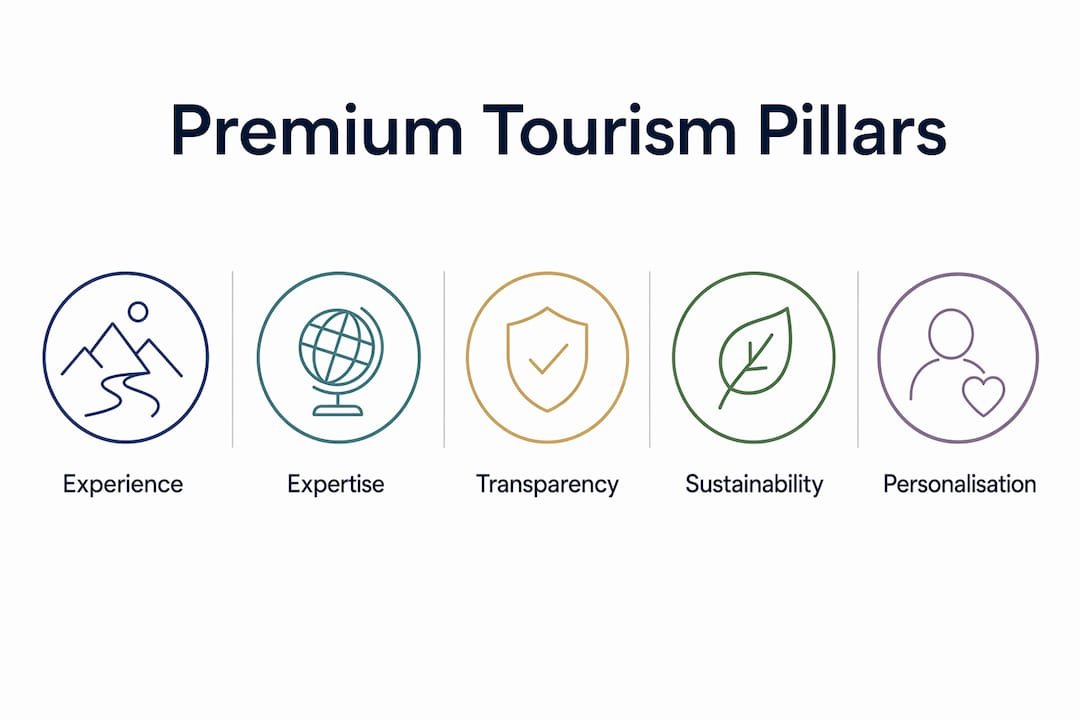
What are the defining pillars of a premium tourism product?
Modern premium tourism is built on intentionality rather than excess. Each of the following pillars shows up in concrete product and service decisions, not just in marketing copy.
- Purpose-led design. Every element of the itinerary serves a defined guest outcome. There is no filler activity included to pad a day rate.
- Local expertise. Guides are credentialled, community-rooted, and genuinely knowledgeable. The difference between a scripted performance and a real conversation with a local expert is something guests feel immediately. Local guide credentials are among the strongest trust signals an operator can publish.
- Embedded sustainability. Responsible choices are built into the product, not offered as an optional add-on. Operators that transparently link experiences to conservation or community outcomes perform better on perceived value.
- Bespoke logistics. Transfers, timings, and access are arranged before the guest thinks to ask. Removing small friction points drives satisfaction more reliably than adding amenities.
- Frictionless service. Booking, communication, and on-tour support are smooth and responsive. This is where technology earns its keep, handling back-end coordination so the guest-facing experience stays human.
- Transparent pricing. Premium travellers are not price-insensitive; they are value-sensitive. Clear, bundled pricing with no hidden costs signals confidence in the product.
- Trust signals. Guide credentials, provenance statements, guest testimonials, and honest impact reporting all reinforce purchase intent. Premium travellers research extensively before booking, and eight out of ten sources they consult are online.
Statistic callout: Research from IE Insights found that premium travellers review far more sites than standard travellers during the inspiration phase, making them more discerning and more influential through social media during and after their trips.
Pro Tip: The highest-value place to add measurable quality without inflating cost is guide preparation time. A guide who has read a guest’s interests in advance and tailored their commentary accordingly delivers a premium experience at zero additional materials cost.
How does premium tourism differ from luxury, and why does it matter for UK providers?
The distinction is not about price brackets; it is about motivation. Luxury travellers prioritise status and exclusivity while premium travellers emphasise value, shoulder-season travel, and longer, immersive stays. Conflating the two leads to misaligned product design and wasted marketing spend.
Key operational and commercial differences:
- Price sensitivity. Premium travellers are willing to pay more, but they want to understand what they are paying for. Luxury travellers at the top of the market are less price-sensitive and more focused on exclusivity signals.
- Seasonality. Premium travellers are more flexible on timing and more likely to book in shoulder seasons, producing a more stable revenue stream across the year. Luxury demand tends to concentrate in peak windows.
- Trip length. Premium guests typically book longer, more immersive itineraries. Luxury guests may book shorter, higher-intensity experiences with more logistical complexity.
- Booking behaviour. Premium travellers research heavily online and value peer reviews and editorial content. Luxury travellers at the very top of the market often rely on specialist travel advisers and personal referrals.
- Loyalty. Premium travellers who feel genuinely seen by an operator become strong advocates. Luxury guests are more likely to chase novelty.
For a UK provider, the marketing implications are direct. Premium messaging should lead with authenticity, local expertise, and community benefit rather than five-star superlatives. Channels should include editorial content, review platforms, and social media, since that is where premium travellers self-educate. Pricing should be bundled and transparent rather than itemised to signal exclusivity.
Operationally, staffing for premium means investing in guide knowledge and briefing processes. Supplier partnerships should be chosen for provenance and reliability, not just cost. Cancellation and disruption policies should be generous and clearly communicated; a premium guest who encounters a rigid policy will not return.

A practical example: a UK operator offering tailored Highland itineraries might price a shoulder-season private day tour at a rate that reflects guide expertise and bespoke logistics, bundled with transfers and a pre-tour briefing call. The same operator targeting a luxury segment would need to layer in exclusive access, private accommodation partnerships, and a higher level of concierge support, at a meaningfully different price point and with different marketing language entirely.
Pro Tip: For value-based luxury sailing holidays, the same principle applies: lead with the experience outcome and the expertise behind it, not the vessel specification. Premium buyers buy the story and the guide, not the hardware.
What types of premium tourism experiences work best, with UK and Highlands examples?
Premium experiences cluster into a handful of recognisable categories. Each suits a different traveller profile and carries different duration and pricing signals.
- Bespoke private tours. Fully tailored itineraries for individuals, couples, or small families. In the Scottish Highlands, this means a private full-day tour of the Isle of Skye or Loch Ness, designed around the guest’s specific interests and pace. Suits travellers who have done group tours before and want something that feels genuinely theirs.
- Specialist themed tours. Experiences built around a single subject: whisky, geology, Jacobite history, wildlife. Skyehighlandstours’s whisky tours are a clear example, taking guests to working distilleries with a guide who can contextualise production, provenance, and regional character. Suits enthusiasts and gift-givers; typically half-day to full-day.
- Slow itineraries and multi-day programmes. Longer stays that prioritise depth over coverage. Rather than ticking off landmarks, guests spend meaningful time in fewer places. Suits families, couples celebrating occasions, and travellers recovering from high-pressure careers.
- Cultural and heritage workshops. Immersive participation rather than passive observation: traditional craft, Gaelic language, local cooking. The cultural experiences available across the Highlands fit this category well, particularly for travellers motivated by learning.
- Nature-custodian experiences. Guided access to ecologically sensitive or remote landscapes, framed around conservation. Guests feel like participants in stewardship rather than visitors consuming scenery. Suits environmentally motivated travellers; pairs naturally with transparent impact reporting.
- Small-group curated voyages. Shared experiences with a maximum group size that preserves intimacy. Personalised yacht holidays for groups and families follow the same logic: the small group is itself a premium signal.
- Special occasion and milestone tours. Birthdays, anniversaries, honeymoons, and family reunions. The premium element here is the operator’s ability to anticipate and personalise without being asked. Suits any demographic; the key variable is the emotional weight of the occasion.
Skyehighlandstours demonstrates the core pillars across several of these categories. Private tours of the Scottish Highlands are built around expert local guides with deep knowledge of the landscape, history, and culture. Itineraries are tailored to group size, physical ability, and stated interests before departure. Specialist themes such as whisky and Jacobite history give guests a clear reason to choose one tour over another. Cruise transfer services extend the model to guests arriving by sea, removing a logistical friction point that would otherwise diminish the experience.
Why are destinations and operators shifting towards premium tourism?
The shift is being driven by economics, sustainability pressures, and changing consumer expectations simultaneously. Travellers want personal relevance and are willing to trade up for experiences that feel meaningful rather than simply more expensive. That willingness to pay creates a commercial case that destinations are increasingly acting on.
Main market drivers:
- Consumer premiumisation. Across income brackets, travellers are choosing fewer, better trips over more frequent, cheaper ones. The post-pandemic recalibration of what travel is for accelerated this trend.
- Higher per-capita revenue. Premium visitors spend more on accommodation, dining, and experiences, stay longer, and engage more with local businesses and artisans. The economic contribution per visitor is substantially higher than in mass-market segments.
- Volume management. Destinations facing overtourism, from Edinburgh’s Old Town to the Fairy Pools on Skye, have a direct incentive to attract fewer visitors who spend more. Premium positioning is a volume-management tool as much as a revenue strategy.
- Sustainability and community benefit. Premium travellers increasingly want to know their visit supports rather than exploits host communities. Operators that communicate local economic benefits strengthen purchase intent and reduce the reputational risk of backlash from residents.
- Technology-enabled personalisation. CRM systems, pre-arrival surveys, and booking-platform data allow operators to personalise at scale without proportionally increasing staff costs. Technology handles the logistics; guides handle the relationship.
Statistic callout: Premium travellers often book longer stays and are more flexible on timing, producing a more stable revenue stream across shoulder seasons than conventional luxury guests concentrated in peak windows.
In the UK context, destination policy levers matter too. Planning restrictions, access management in national parks, and community benefit agreements all shape how premiumisation plays out on the ground. VisitBritain’s quality frameworks and the UNWTO’s sustainable tourism standards provide reference points for operators building credible premium propositions. Operators who choose Scottish Highlands destinations wisely and manage visitor impact are better positioned to maintain access and community goodwill over time.
How do you design and market a premium tourism product?
A premium product is not a standard product with a higher price tag. It requires deliberate design from the guest outcome backwards.
Product design checklist:
- Define the guest outcome first. What should the guest feel, know, or have experienced by the end? Write this down before designing any itinerary element.
- Embed local expertise. Identify guides with genuine community roots and specialist knowledge. Publish their credentials and stories; provenance is a trust signal.
- Remove friction before the guest notices it. Map every logistical touchpoint: transfers, timing, access, dietary requirements, physical ability. Resolve each one in advance.
- Set transparent, bundled pricing. Include transfers, guide fees, and any specialist access in a single price. Hidden costs erode trust faster than a high headline price.
- Test itineraries in shoulder season. Shoulder-season runs expose logistical weaknesses with lower reputational risk. They also build the revenue case for year-round operation.
- Build in sustainability credentials. Identify one or two concrete community or conservation commitments and communicate them clearly. Vague claims (“we care about the environment”) are worse than no claim at all.
- Gather and publish guest testimony. Specific, named testimonials about guide expertise and personal moments outperform generic five-star ratings.
Essential questions to ask customers before and during booking:
- What is the primary purpose of this trip (celebration, learning, relaxation, adventure)?
- Are there any physical considerations or accessibility requirements?
- Which aspects of the destination interest you most?
- Have you visited this region before, and if so, what did you see?
- Are there any experiences you specifically want to avoid?
Pricing signals and red flags:
Bundled pricing signals confidence. Itemised pricing with long add-on lists signals a product that has not been properly designed. Avoid performative luxury (unnecessary extras that signal cost rather than value), opaque supplier claims (e.g. “exclusive access” with no explanation of what that means), and inconsistent guide quality across repeat bookings.
Pro Tip: Use a booking platform or CRM to automate pre-arrival logistics communications, confirmation sequences, and post-tour follow-up. This frees guides to focus entirely on the guest experience rather than administrative tasks, and it is one of the clearest ways to deliver frictionless service at scale without inflating headcount.
Key takeaways
Premium tourism succeeds when operators lead with local expertise, transparent value, and embedded sustainability rather than competing on amenities or headline price.
| Point | Details |
|---|---|
| Definition | Premium tourism delivers experience-led value through intentionality, expertise, and sustainability, not excess. |
| Premium vs luxury | Premium travellers prioritise value and shoulder-season flexibility; luxury travellers prioritise status and exclusivity. |
| Core design principle | Remove friction before guests notice it; this drives satisfaction more reliably than adding amenities. |
| Market driver | Premium visitors generate higher per-capita revenue and more stable off-peak demand than mass-market segments. |
| Skyehighlandstours | Skyehighlandstours demonstrates the premium model through expert local guides, tailored itineraries, and specialist themed tours across the Scottish Highlands. |
The gap between “premium” and what most operators actually deliver
There is a version of “premium” that is really just standard tourism with better photography and a higher price. You see it constantly: a tour described as bespoke that runs the same route every day, a guide described as an expert who reads from a laminated card, a sustainability claim that amounts to a recycling bin in the minibus. Guests in the premium segment have usually travelled enough to spot the difference immediately.
What actually separates a genuine premium product from a dressed-up standard one is the quality of the briefing before the tour begins. An operator who asks the right questions before departure, adjusts the day accordingly, and has a guide who can speak to the landscape, history, and community with genuine authority is delivering something that cannot be faked or replicated cheaply. That is the competitive moat.
The other thing most operators underestimate is the value of transparency about what the product is not. A premium guest who is told clearly that a particular route involves a steep walk and a 45-minute drive will arrive prepared and grateful. The same guest who discovers those facts on the day will feel deceived, regardless of how good the scenery is. Honest pre-trip communication is a premium signal in itself.
The Highlands market is well-suited to genuine premiumisation because the raw material, landscape, culture, and history, is extraordinary. The operators who will build durable businesses here are the ones who invest in guide knowledge and guest briefing rather than in vehicle upgrades and branded merchandise.
Skyehighlandstours: private Highland tours built on the premium pillars
Private guided tours of the Scottish Highlands are exactly the kind of product where the premium model pays off most clearly, and Skyehighlandstours is built around it. Every tour is private, every itinerary is tailored to the group’s interests and pace, and every guide brings genuine local knowledge of the landscapes, history, and culture of the Highlands.
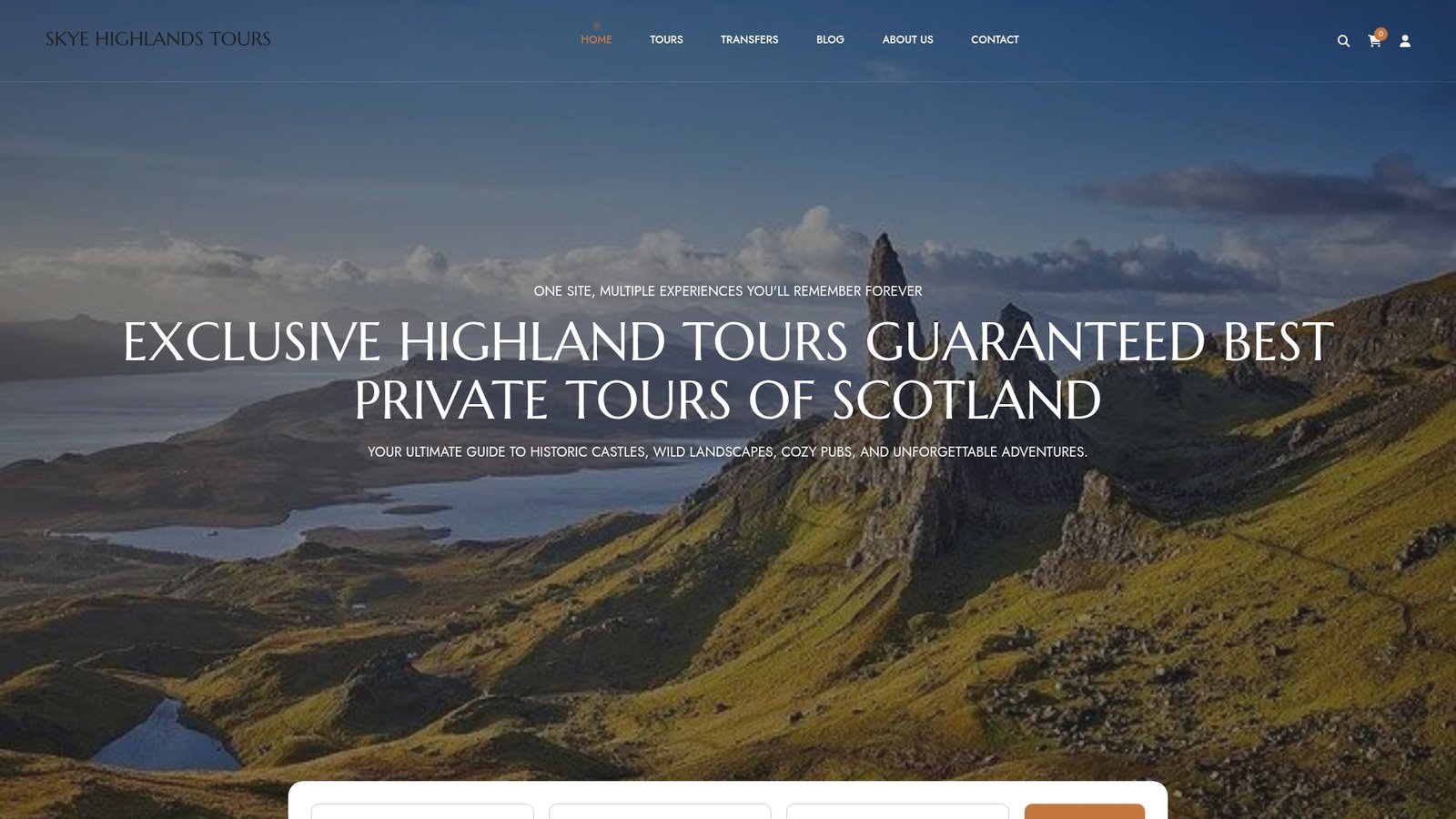
The range covers the full breadth of the premium experience types described in this article: private tours of the Scottish Highlands for couples and families, specialist whisky tours for enthusiasts, cultural and heritage experiences, and cruise transfer services for guests arriving by sea. Itineraries can be adjusted for group size, physical ability, special occasions, and specific interests, with no fixed route and no unnecessary extras.
If you are designing a premium product or looking for a private Highland experience that delivers on the pillars outlined here, view the Scottish Highlands tour options or get in touch to discuss a tailored itinerary.
Useful sources
The following sources were used in preparing this article or offer authoritative further reading for operators and marketers working in the premium tourism space.
- The Travel Institute: Premium vs. Luxury Travelers — Detailed analysis of the behavioural and commercial differences between premium and luxury segments, including seasonality and booking patterns. Cited in this article.
- IE Insights: Understanding the Premium Traveller — Research-based study of how premium travellers plan, research, and make decisions, including their digital behaviour and social media influence. Cited in this article.
- Glion: Luxury Tourism — What Makes a Destination Truly High End? — Covers the shift from status-led to experience-led luxury, including the role of community benefit in perceived value. Cited in this article.
- Euromonitor: Beyond Affordability — How Premium Drives Value in Travel — Market intelligence on consumer premiumisation and willingness to pay for personal relevance. Cited in this article.
- Ethical Adventures: Premium Tourism Experiences — Practitioner perspective on purpose-led and sustainability-aware premium product design. Cited in this article.
- CBI: European Market Potential for Luxury Tourism — Detailed market intelligence on European luxury and premium tourism demand, including UK buyer behaviour and emerging trends.
- Tourism Reporter: Europe’s Tourism Industry Bets Big on High-Spending Travellers — Overview of how European destinations are recalibrating strategy around premium and high-value visitors.
- GSTC: What Is Sustainable Tourism? — The Global Sustainable Tourism Council’s standards framework, relevant for operators building credible sustainability credentials into premium products. Cited in this article.
FAQ
What is premium tourism in simple terms?
Premium tourism is travel that prioritises meaningful, personalised experiences over volume or status. It is defined by local expertise, intentional design, and transparent value rather than five-star excess.
What are the four main types of tourism?
Tourism is broadly categorised as leisure, business, cultural, and adventure travel. Premium tourism cuts across all four categories, applying experience-led and sustainability-aware design principles to any of them.
How does premium tourism differ from luxury tourism?
Premium and luxury travellers represent distinct segments: luxury travellers prioritise status and exclusivity, while premium travellers emphasise value, shoulder-season flexibility, and longer immersive stays.
Why are European destinations shifting to premium tourism experiences?
Destinations are shifting to attract fewer visitors who spend more, manage overtourism, and generate more resilient off-peak revenue. Premium visitors also engage more with local businesses and cultural institutions, producing broader community benefit.
What is an example of a premium tourism experience in the UK?
A private guided whisky tour of the Scottish Highlands, such as those offered by Skyehighlandstours, is a clear example: it combines specialist local knowledge, a tailored itinerary, and authentic cultural framing in a small-group format with no fixed route.
Recommended
- Role of customer preferences in tours: 2026 guide – Skye Highlands Tours
- Seasonal variations in tours: the 2026 guide for UK operators – Skye Highlands Tours
- The role of special interests in tours: your 2026 guide – Skye Highlands Tours
- Why opt for local experiences: the 2026 guide – Skye Highlands Tours